Rajasthan Women Supervisor result 2026 expected before Diwali for 72 vacancies
In short
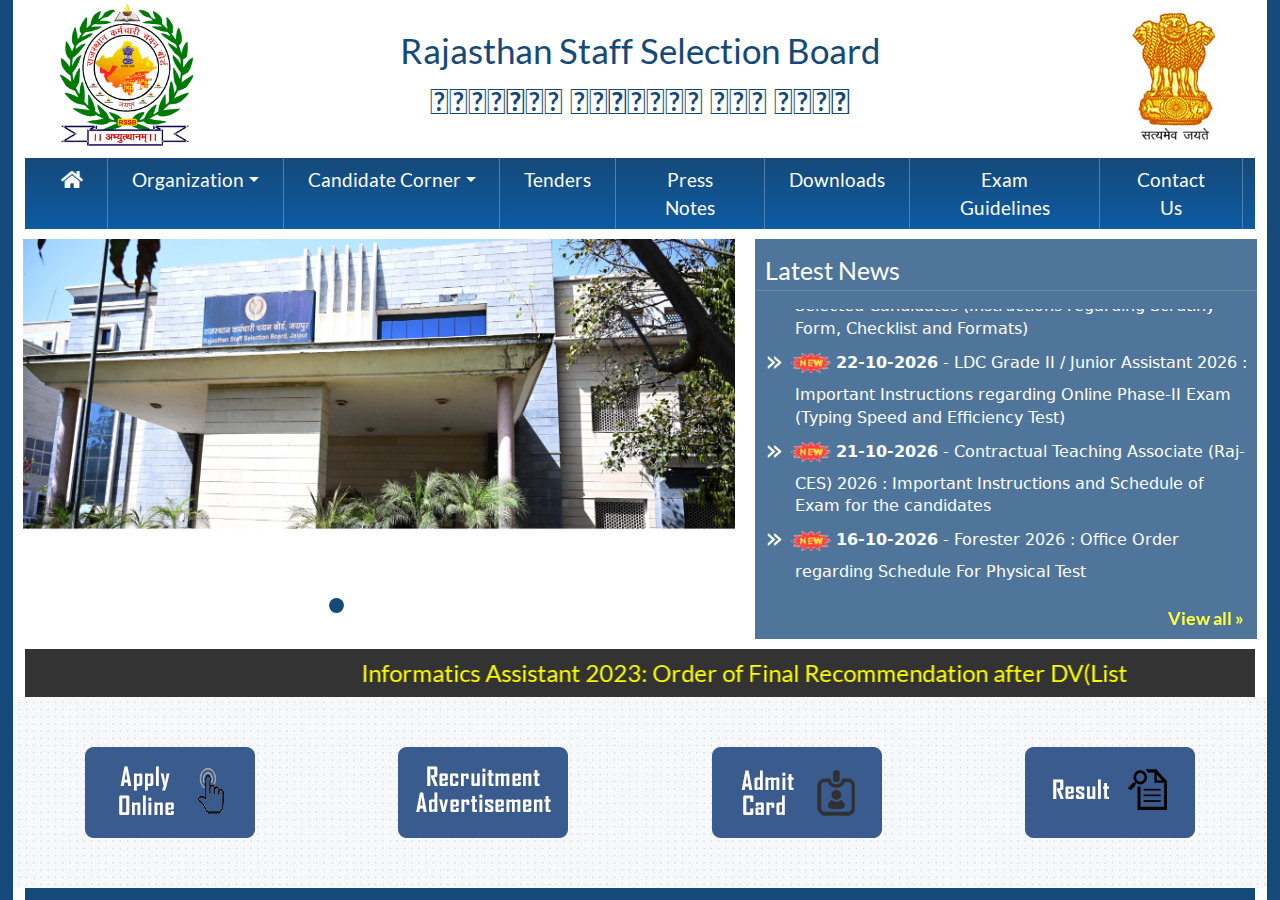
- The Rajasthan Staff Selection Board (RSSB) is expected to announce the Rajasthan Women Supervisor result 2026 before Diwali, according to board chairman Alok Raj.
- Candidates who appeared for the Mahila Supervisor recruitment examination on July 24, 2026, can check their status on rssb.rajasthan.gov.in once results are declared.
- The recruitment drive aims to fill 72 Women Supervisor vacancies under the Child Development and Welfare Department across Rajasthan.
- The official result date has not yet been announced by the board, and the expected timeline should not be considered a confirmed declaration date.
- To download scorecards, candidates must visit the 'Results' section of the official RSSB website and locate the relevant link.
The Rajasthan Staff Selection Board (RSSB) is expected to announce the Rajasthan Women Supervisor result 2026 and merit list before Diwali, according to an update attributed to board chairman Alok Raj. The written examination for the Mahila Supervisor recruitment was conducted on July 24, 2026.
This recruitment drive aims to fill a total of 72 Women Supervisor vacancies under the Child Development and Welfare Department in Rajasthan. While an expected timeline has been indicated, the board has not yet announced an official result date, and candidates are advised to treat the pre-Diwali expectation as an unconfirmed declaration date.
Examination Details and Candidate Participation
The Mahila Supervisor recruitment examination was held on July 24, 2026, in a single shift from 11 am to 2 pm. The exam was conducted across 14 district centers in Rajasthan. Approximately 68% attendance was recorded, with over 82,000 candidates appearing for the examination.
The examination included subjects such as Hindi and English, Mathematics and Reasoning, General Knowledge, Managerial Qualities, and Women and Child Development. The overall difficulty level of the exam was assessed as easy to moderate. A negative marking of 1/3 was applicable for every wrong answer, and candidates were required to fill a 5th option if they did not wish to answer a question. Leaving more than 10% of questions blank would render candidates ineligible. The offline OMR-based exam was 3 hours long, with at least 10 minutes allocated for filling the 5th option.
Vacancy Distribution and Application Process
The recruitment drive is for a total of 72 Women Supervisor positions, with 57 vacancies designated for Non-TSP (Tribal Sub-Plan) areas and 15 for TSP areas. The application period for the RSMSSB Female Supervisor Recruitment 2026 ran from January 7, 2026, to February 5, 2026.
The application fees varied by category, with a correction fee also applicable. The minimum age limit for applicants was 18 years, and the maximum age limit was 40 years. The selection process for this recruitment includes a written exam, a skill test (if required), document verification, and a medical test.
| Category | Fee |
|---|---|
| UR / OBC | 600/- |
| OBC-NCL / SC / ST | 400/- |
| For Correction | 300/- |
| Name of Post | Area | No. of Posts |
|---|---|---|
| Female Supervisor | Non-TSP | 57 |
| Female Supervisor | TSP | 15 |
Checking Results and Next Steps
Once the results are declared, candidates can check their selection status through the official RSSB website, rssb.rajasthan.gov.in. Candidates should keep their examination roll numbers and other relevant details ready to access the merit list.
To download scorecards, candidates must visit the official RSSB website, open the ‘Results’ section, and look for the link titled ‘Women Supervisor Direct Recruitment 2026’ or a corresponding notification. Candidates should download the result PDF, open the document, and use Ctrl+F to locate their examination roll number. It is advised that candidates verify their roll numbers and other details in the merit list and read the official notification for information regarding the next stage of recruitment. The appearance of a roll number in the result list should be interpreted according to conditions specified by RSSB. Candidates should regularly check the board’s website for the latest announcements regarding the result and subsequent recruitment procedures.

Further reading
📰 More Education News
- APLAWCET 2026 second phase counselling registration opens today: register by October 28Oct 26, 2026 • Nishit Kumar
- NTA releases revised exam calendar: check dates for UGC NET, JEE Main, CUET PGOct 26, 2026 • Nishit Kumar
- AIIMS INICET: Download your PG admit card today, October 26, 2026Oct 26, 2026 • Nishit Kumar
- NLC India Apprentice Recruitment 2026: apply for 1,067 posts by November 9Oct 26, 2026 • Nishit Kumar