Bachelors in Anaesthesia Technology in Journalism Entrance Exams 2026
Nishit Kumar is a senior EdTech industry leader with over a decade of experience in building and scaling education platforms, shaping their product, content, and growth strategy. At…
Latest update: Bachelors in Anaesthesia Technology in Journalism 2026 admissions & dates updated. Read more ›
Navigating the admission process for a unique and interdisciplinary program like the Bachelors in Anaesthesia Technology in Journalism requires a clear understanding of the entrance exams involved. This comprehensive guide provides prospective students and parents with all the essential information regarding the 2026 entrance examinations, eligibility criteria, application procedures, and what to expect from this specialized paramedical stream.
What is the Bachelors in Anaesthesia Technology in Journalism Course?
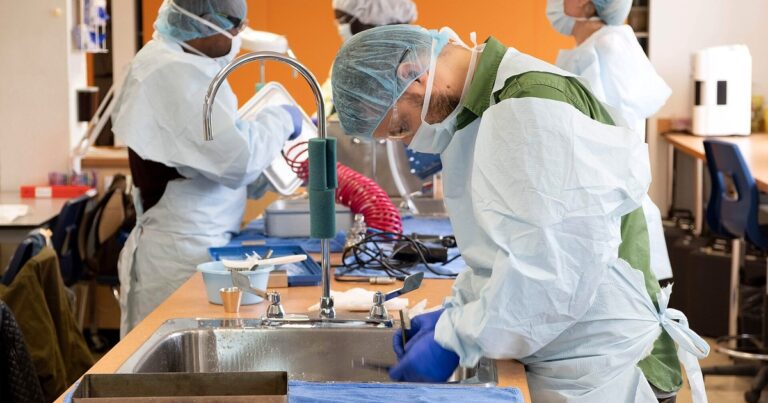
The Bachelors in Anaesthesia Technology in Journalism is an innovative undergraduate program (typically 3-4 years) that blends the core principles of anaesthesia technology with essential journalism skills. It aims to produce professionals who not only possess the technical expertise to assist anaesthesiologists but also have the communication and reporting acumen to document, explain, and disseminate information related to medical procedures, healthcare advancements, and public health issues, particularly within the anaesthesia domain. This unique combination prepares graduates for roles in medical reporting, health communication, and specialized technical support.
What are the Eligibility Criteria for Bachelors in Anaesthesia Technology in Journalism Entrance Exams in 2026?
To be eligible for the Bachelors in Anaesthesia Technology in Journalism entrance exams in 2026, candidates typically must have completed their 10+2 (or equivalent) examination with a science stream, including Physics, Chemistry, and Biology (PCB) as compulsory subjects. A minimum aggregate score, usually ranging from 45% to 50%, is required, though this can vary by institution. Some colleges might also consider candidates with Physics, Chemistry, and Mathematics (PCM) if they demonstrate a strong aptitude for biological sciences or have relevant vocational training.
- Educational Qualification: 10+2 or equivalent from a recognized board.
- Compulsory Subjects: Physics, Chemistry, Biology (PCB) are generally mandatory. Some institutions may accept PCM with specific conditions.
- Minimum Marks: An aggregate of 45-50% in the qualifying examination is commonly required.
- Age Limit: Generally, candidates must be at least 17 years old as of December 31st of the admission year. There is usually no upper age limit, but specific institutions might have their own policies.
- Nationality: Indian nationals are eligible. Some institutions may have provisions for NRI/International students.
Which Entrance Exams are Required for Bachelors in Anaesthesia Technology in Journalism in 2026?
Admission to the Bachelors in Anaesthesia Technology in Journalism program in 2026 is primarily through state-level paramedical entrance exams or university-specific entrance tests. As this is a niche interdisciplinary course, a dedicated national-level exam is less common. Candidates should research the specific requirements of their target institutions.
Common entrance exams include:
- State Paramedical Common Entrance Tests (e.g., UP CNET, BCECE, MHT CET for paramedical streams): Many states conduct common entrance exams for various paramedical courses, and this program might fall under their purview.
- University/College Specific Entrance Exams: Prestigious universities or private institutions offering this unique course will likely conduct their own entrance examinations. Examples might include exams by Manipal Academy of Higher Education (MAHE), SRM Institute of Science and Technology, or other deemed universities with strong paramedical and media departments.
- Merit-Based Admissions: A few institutions might offer admission based purely on 10+2 academic merit, especially if the program is newly introduced or has limited seats. However, an entrance test is increasingly common.
What is the Exam Pattern and Syllabus for Bachelors in Anaesthesia Technology in Journalism Entrance Exams?
The exam pattern for Bachelors in Anaesthesia Technology in Journalism entrance exams typically focuses on assessing a candidate’s scientific aptitude and general awareness. The syllabus generally covers subjects from the 10+2 science curriculum, along with sections on general knowledge and English.
Typical Exam Pattern:
- Mode: Usually offline (OMR-based) or online (CBT – Computer Based Test).
- Duration: 90 minutes to 3 hours, depending on the exam.
- Question Type: Multiple Choice Questions (MCQs).
- Marking Scheme: Generally +1 or +4 for correct answers, with negative marking (e.g., -0.25 or -1) for incorrect answers in some exams.
- Total Marks: Varies significantly by exam (e.g., 100 to 600 marks).
Common Syllabus Components:
- Physics: Mechanics, Thermodynamics, Optics, Electrodynamics, Modern Physics (10+2 level).
- Chemistry: Physical Chemistry, Organic Chemistry, Inorganic Chemistry (10+2 level).
- Biology: Botany and Zoology, including Human Physiology, Genetics, Ecology, Biotechnology (10+2 level).
- English Language & Comprehension: Grammar, Vocabulary, Reading Comprehension, Sentence Correction.
- General Knowledge/Current Affairs: Basic knowledge of India and the world, current events, healthcare news, basic journalism concepts.
- Logical Reasoning/Aptitude: Basic analytical and problem-solving skills.
When are the Application and Exam Dates for 2026?
The application and exam dates for Bachelors in Anaesthesia Technology in Journalism in 2026 will largely align with the schedules of state-level paramedical exams or specific university admissions. While exact dates for 2026 are yet to be announced, based on previous years, here’s an estimated timeline:
| Event | Estimated Timeline (2026) | Notes |
|---|---|---|
| Application Window Opens | March – April | Online application forms become available. |
| Application Window Closes | May – June | Last date for submission, often with a late fee option. |
| Admit Card Release | Late May – Early July | Usually 1-2 weeks before the exam date. |
| Entrance Exam Dates | June – July | Specific dates vary by state/university. |
| Result Declaration | July – August | Results are typically released within 2-4 weeks of the exam. |
| Counselling/Admission | August – September | Merit list based counselling rounds begin. |
Students are strongly advised to regularly check the official websites of their preferred institutions and state examination boards for precise 2026 dates.
How Much Does the Bachelors in Anaesthesia Technology in Journalism Course Cost?
The cost of pursuing a Bachelors in Anaesthesia Technology in Journalism varies significantly based on the type of institution (government vs. private) and its reputation. Generally, private institutions will have higher fees than government-funded colleges.
- Government Colleges: Annual fees can range from INR 20,000 to INR 80,000. These institutions often receive subsidies, making them more affordable.
- Private Colleges/Universities: Annual fees typically range from INR 80,000 to INR 3,00,000 or more. Premier private universities with advanced facilities and industry connections may charge at the higher end.
Additional costs include hostel fees, examination fees, study materials, and other miscellaneous charges, which can add another INR 50,000 to INR 1,50,000 annually.
Is Bachelors in Anaesthesia Technology in Journalism Worth It for Jobs? What are the Career Prospects?
Yes, the Bachelors in Anaesthesia Technology in Journalism can be highly worth it for jobs, offering a unique blend of technical and communication skills that are increasingly valuable in the healthcare and media sectors. Graduates are equipped for specialized roles that traditional paramedical or journalism degrees alone cannot fulfill.
Career Prospects:
- Anaesthesia Technologist/Assistant: Working in hospitals, surgical centers, and clinics, assisting anaesthesiologists during procedures.
- Medical Journalist/Reporter: Specializing in reporting on anaesthesia, surgery, critical care, and medical technology for news outlets, health magazines, and online platforms.
- Health Content Writer/Editor: Creating educational content, articles, and reports for healthcare organizations, pharmaceutical companies, and medical device manufacturers.
- Medical Communications Specialist: Managing internal and external communications for hospitals, research institutions, or public health bodies, focusing on technical medical information.
- Clinical Documentation Specialist: Ensuring accurate and comprehensive medical records, particularly for anaesthesia-related procedures.
- Public Relations in Healthcare: Handling media relations and public perception for healthcare providers, with a deep understanding of medical procedures.
Salary Expectations (Entry-Level):
Entry-level salaries for graduates of Bachelors in Anaesthesia Technology in Journalism can vary based on the role, institution, and location. A combined skill set often commands a premium.
| Job Role | Average Annual Salary Range (INR) | Key Responsibilities |
|---|---|---|
| Anaesthesia Technologist | 2.5 – 4.5 Lakhs | Assisting anaesthesiologists, preparing equipment, patient monitoring. |
| Medical Content Writer | 3.0 – 5.0 Lakhs | Writing articles, blogs, patient education materials for healthcare. |
| Health Reporter (Specialized) | 3.5 – 6.0 Lakhs | Reporting on medical news, research, and health policies. |
| Medical Communications Exec. | 3.0 – 5.5 Lakhs | Developing communication strategies for medical organizations. |
With experience, specialized knowledge, and networking, salaries can significantly increase, especially in roles that leverage both technical and journalistic expertise.
How Does Bachelors in Anaesthesia Technology in Journalism Compare to Other Paramedical or Journalism Courses?
The Bachelors in Anaesthesia Technology in Journalism stands out due to its unique interdisciplinary nature, offering a distinct advantage over traditional single-stream programs.
- Vs. Pure Anaesthesia Technology (B.Sc. AT): While both provide technical skills, the Journalism stream adds critical communication, reporting, and analytical abilities, opening doors to media and communication roles in healthcare that a pure B.Sc. AT graduate would not typically access.
- Vs. Pure Journalism/Mass Communication (BJMC): A BJMC degree focuses broadly on media. The Anaesthesia Technology component provides a deep, specialized understanding of a critical medical field, making graduates highly credible and sought-after for health and medical journalism, unlike general journalists.
- Vs. Other Paramedical Courses (e.g., BMLT, B.Sc. Radiology): These courses focus on specific technical aspects of healthcare. The Journalism blend in this program offers a career path beyond direct clinical support, into documentation, public education, and health advocacy, leveraging both technical knowledge and communication skills.
This program is ideal for students who are passionate about healthcare and technology but also possess a strong inclination towards communication, storytelling, and public engagement.
Explore more on FindMyCollege
Related pages for Bachelors in Anaesthesia Technology in Journalism aspirants on findmycollege.com:
Frequently Asked Questions
Is there any age limit for Bachelors in Anaesthesia Technology in Journalism entrance exams?
Most institutions require candidates to be at least 17 years old by December 31st of the admission year. While there’s usually no upper age limit, it’s always best to check the specific guidelines of your target college or university.
Can I pursue this course if I had PCM in 10+2 instead of PCB?
While PCB is generally preferred, some institutions might consider candidates with PCM if they demonstrate a strong aptitude for biological sciences or have completed relevant bridge courses. It’s crucial to verify this with the admissions department of each college.
What kind of interview or group discussion is part of the admission process?
Some premier institutions, especially those with their own entrance exams, may include a personal interview (PI) or a group discussion (GD) round. This assesses communication skills, general awareness, and motivation for the unique interdisciplinary program.
Are there scholarships available for this program?
Yes, many government and private institutions offer scholarships based on merit, financial need, or specific categories. Students should inquire directly with the colleges or explore national/state scholarship portals.
What are the job prospects abroad after completing this degree?
Graduates with this unique blend of skills could find opportunities abroad, particularly in countries with advanced healthcare systems and a demand for specialized medical communicators or technologists. However, specific licensing and accreditation requirements would need to be met for each country.
What are the key skills required to excel in this course?
Key skills include a strong foundation in science (especially biology and chemistry), excellent communication (written and verbal), critical thinking, attention to detail, empathy, and an ethical approach to both medical practice and journalism.
How can I prepare effectively for the entrance exams?
Effective preparation involves thoroughly reviewing 10+2 Physics, Chemistry, and Biology syllabi, practicing English grammar and comprehension, staying updated on current affairs (especially in healthcare), and solving previous years’ question papers for the specific exams you plan to take.