BBA in Logistics (Management) India 2026: Course Overview
Nishit Kumar is a senior EdTech industry leader with over a decade of experience in building and scaling education platforms, shaping their product, content, and growth strategy. At…
Latest update: BBA in Logistics 2026 admissions & dates updated. Read more ›
Welcome to the comprehensive overview of the BBA in Logistics (Management) program in India for the academic year 2026. This page is designed to provide prospective students and their parents with a deep understanding of this dynamic undergraduate degree, covering everything from its core definition to career outcomes and financial considerations. As global supply chains become increasingly complex, the demand for skilled logistics professionals is soaring, making this BBA specialization a highly relevant and rewarding choice for management aspirants.
What is BBA in Logistics (Management)?
The BBA in Logistics (Management) is an undergraduate degree program focused on the study of planning, implementing, and controlling the efficient, effective forward and reverse flow and storage of goods, services, and related information between the point of origin and the point of consumption to meet customers’ requirements. It equips students with essential business administration skills alongside specialized knowledge in supply chain management, transportation, warehousing, inventory management, and global logistics operations.
Why Choose BBA in Logistics in 2026?
Choosing a BBA in Logistics in 2026 is a strategic decision given the rapid evolution of e-commerce, globalization, and technological advancements like AI and automation in supply chains. The program prepares graduates for critical roles in an industry that is the backbone of global trade and commerce, offering robust job security and growth potential.
What is the Eligibility for BBA in Logistics in India?
To be eligible for a BBA in Logistics (Management) in India, candidates typically need to have completed their 10+2 (or equivalent) examination from a recognized board with a minimum aggregate score, usually ranging from 45% to 50%. While specific subject requirements can vary, a background in Commerce or Science is often preferred, though Arts stream students with strong quantitative skills are also considered.
Detailed Eligibility Criteria for 2026 Admissions:
- Educational Qualification: Successful completion of 10+2 or equivalent from a recognized Indian or international board.
- Minimum Marks: Generally, 45% to 50% aggregate marks in 10+2. Some top-tier colleges might require higher percentages (e.g., 60% or above).
- Age Limit: While most colleges do not have a strict upper age limit, some might specify a maximum age of 22-25 years.
- Entrance Exams: Many prominent colleges require candidates to appear for national or university-level entrance exams (e.g., CUET, SET, IPU CET, NPAT).
- Reserved Categories: Relaxation in minimum marks is typically provided for SC/ST/OBC (non-creamy layer) candidates as per government norms.
How to Apply for BBA in Logistics in 2026?
The application process for BBA in Logistics in 2026 generally involves several steps, starting with researching colleges and their specific admission requirements, followed by application submission, entrance exams, and counseling. It’s crucial to keep track of deadlines for each stage.
Step-by-Step Application Process:
- Research & Shortlist: Identify colleges offering BBA in Logistics and check their eligibility criteria, fee structure, and placement records.
- Entrance Exam Registration: Register for relevant entrance exams (e.g., CUET, SET, IPU CET, NPAT) as per the college requirements.
- College Application: Fill out the application forms for your shortlisted colleges, either online or offline, providing all necessary academic and personal details.
- Admit Card & Exam: Download your admit card for the entrance exam and appear for it on the scheduled date.
- Results & Counseling: Check entrance exam results. Shortlisted candidates will be called for further rounds, which may include Group Discussions (GD) and Personal Interviews (PI).
- Admission & Fee Payment: Upon selection, complete the admission formalities and pay the first installment of the tuition fee.
Key Admission Dates (Tentative for 2026):
While exact dates vary by institution and exam, here’s a general timeline:

| Event | Tentative Dates (2026) | Notes |
|---|---|---|
| Application Start (Entrance Exams) | December 2025 – February 2026 | Varies by exam (e.g., CUET, SET, NPAT) |
| Application Deadline (Entrance Exams) | March – April 2026 | Strict deadlines; apply early |
| Entrance Exam Dates | April – June 2026 | Multiple slots available for some exams |
| Results Declaration | May – July 2026 | Check official websites |
| GD/PI Rounds | June – July 2026 | Conducted by individual colleges |
| Admission & Counseling | July – August 2026 | Final selection and enrollment |
How much does BBA in Logistics cost in India?
The cost of a BBA in Logistics (Management) in India varies significantly based on the type of institution (government vs. private), its reputation, location, and facilities. Generally, government colleges offer more affordable fees compared to private universities.
BBA in Logistics Fee Ranges (Per Annum, Tentative 2026):
| Institution Type | Average Annual Fee Range (INR) | Key Factors Influencing Cost |
|---|---|---|
| Government/Public Universities | ₹30,000 – ₹1,00,000 | Subsidized education, often higher competition |
| Private Universities/Colleges | ₹1,00,000 – ₹4,00,000+ | Infrastructure, faculty, placements, accreditations |
| Top-Tier Private Institutions | ₹3,00,000 – ₹6,00,000+ | Premium facilities, international collaborations, strong industry ties |
Additional costs include hostel fees (₹50,000 – ₹1,50,000 per annum), examination fees, study materials, and personal expenses.
What is the Syllabus for BBA in Logistics (Management)?
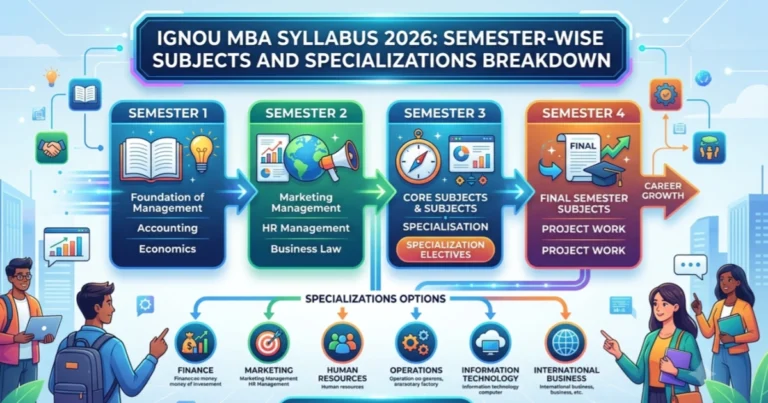
The BBA in Logistics (Management) syllabus is designed to provide a strong foundation in core business principles alongside specialized knowledge in logistics and supply chain. It typically spans three years, divided into six semesters, blending theoretical concepts with practical applications.
Core Subjects & Specializations:
The curriculum covers a wide array of subjects, including:
- Foundational Business Courses: Principles of Management, Business Economics, Financial Accounting, Marketing Management, Business Law, Organizational Behavior.
- Core Logistics & Supply Chain Courses:
- Introduction to Logistics & Supply Chain Management
- Inventory Management
- Warehousing & Distribution Management
- Transportation Management (Road, Rail, Air, Sea)
- International Logistics & Trade
- Supply Chain Analytics & IT
- Procurement & Sourcing
- Operations Management
- Logistics & Supply Chain Strategy
- E-commerce Logistics
- Cold Chain Logistics
- Quantitative & Analytical Skills: Business Statistics, Operations Research, Data Analytics for Logistics.
- Soft Skills & Professional Development: Business Communication, Presentation Skills, Ethics in Business.
- Practical Components: Internships, industrial visits, case studies, and project work are integral parts of the curriculum.
Is BBA in Logistics worth it for jobs? What are the career prospects?
Yes, a BBA in Logistics (Management) is highly worth it for jobs, offering excellent career prospects in a rapidly expanding industry. Graduates are in high demand across various sectors, including manufacturing, retail, e-commerce, shipping, consulting, and third-party logistics (3PL) providers.
Top Job Roles and Average Salary Ranges (Entry-Level, Per Annum, India):
Upon graduation, students can expect to find roles with competitive starting salaries, which grow significantly with experience and further specialization.
| Job Role | Average Annual Salary (INR) | Key Responsibilities |
|---|---|---|
| Logistics Coordinator | ₹2.5 Lacs – ₹4.5 Lacs | Managing shipments, tracking orders, coordinating with carriers. |
| Supply Chain Analyst | ₹3.0 Lacs – ₹5.5 Lacs | Analyzing data, optimizing processes, identifying cost-saving opportunities. |
| Warehouse Supervisor | ₹2.8 Lacs – ₹5.0 Lacs | Overseeing warehouse operations, inventory control, staff management. |
| Procurement Assistant | ₹2.7 Lacs – ₹4.8 Lacs | Assisting in sourcing, vendor management, purchase order processing. |
| Inventory Controller | ₹2.6 Lacs – ₹4.7 Lacs | Managing stock levels, forecasting demand, minimizing waste. |
| Export/Import Executive | ₹3.0 Lacs – ₹5.2 Lacs | Handling customs documentation, international shipping, compliance. |
With 3-5 years of experience, salaries can range from ₹6 Lacs to ₹12 Lacs, and for senior management roles, they can exceed ₹20 Lacs per annum.
Career Growth and Higher Education:
Graduates can pursue higher education like an MBA in Logistics & Supply Chain Management, which significantly enhances career progression and earning potential. Certifications in specific logistics software or methodologies (e.g., Six Sigma, Lean Logistics) are also highly valued.
BBA in Logistics vs. BBA General: Which is better?
Choosing between BBA in Logistics and a BBA General depends on your career aspirations. A BBA in Logistics offers specialized knowledge and a direct pathway into a high-demand industry, while a BBA General provides a broader business foundation, allowing for more flexibility in choosing a specialization later.
Comparison Table: BBA in Logistics vs. BBA General
| Feature | BBA in Logistics (Management) | BBA General |
|---|---|---|
| Focus | Specialized in supply chain, transportation, warehousing, inventory. | Broad overview of all business functions (marketing, finance, HR, operations). |
| Curriculum | Deep dive into logistics concepts, analytics, international trade. | Foundational courses across various business disciplines. |
| Career Path | Direct entry into logistics, supply chain, procurement roles. | Opens doors to diverse entry-level business roles; often requires further specialization (e.g., MBA). |
| Industry Demand | High and growing demand for specialized professionals. | Consistent demand, but often for generalist roles or those requiring specific skills. |
| Skill Set | Analytical, problem-solving, operational efficiency, global trade knowledge. | Managerial, communication, basic business acumen, adaptability. |
| Ideal For | Students passionate about operations, global trade, and optimizing processes. | Students seeking a broad business education before deciding on a specific field. |
If you have a clear interest in the mechanics of how goods move globally and want to contribute to operational efficiency, BBA in Logistics is a more focused and potentially faster route to a specialized career. If you prefer to explore various business functions before committing, a BBA General might be more suitable.
Frequently Asked Questions
Which are the top colleges for BBA in Logistics in India?
Some of the top colleges offering BBA in Logistics or related specializations in India include Symbiosis International University (Pune), Amity University (Noida), Lovely Professional University (Phagwara), SRM Institute of Science and Technology (Chennai), and various state universities affiliated with strong management departments. Research specific program offerings and accreditations.
Are there any entrance exams for BBA in Logistics?
Yes, many prominent colleges and universities require candidates to clear entrance exams such as CUET (Common University Entrance Test), SET (Symbiosis Entrance Test), NPAT (NMIMS Programs After Twelfth), IPU CET (Guru Gobind Singh Indraprastha University Common Entrance Test), or their own university-specific entrance tests.
What is the scope of BBA in Logistics abroad?
The scope of BBA in Logistics abroad is excellent. Many developed countries have advanced logistics infrastructures and a high demand for skilled professionals. Graduates can pursue higher studies (e.g., Master’s in Supply Chain Management) or seek employment in global logistics firms, e-commerce giants, and multinational corporations worldwide.
Can I pursue an MBA after BBA in Logistics?
Absolutely. An MBA is a very common and highly recommended progression after a BBA in Logistics. An MBA, especially with a specialization in Supply Chain Management, Operations, or International Business, can significantly boost your career prospects, leading to senior management and leadership roles.
What skills are essential for a career in Logistics?
Essential skills for a career in logistics include strong analytical abilities, problem-solving skills, attention to detail, organizational skills, communication (both written and verbal), negotiation, proficiency in logistics software, and an understanding of global trade regulations and technology trends.
Is mathematics compulsory for BBA in Logistics?
While not always strictly compulsory at the 10+2 level for admission, a basic understanding of mathematics and quantitative aptitude is highly beneficial for BBA in Logistics. The curriculum involves subjects like business statistics, operations research, and supply chain analytics, where mathematical and logical reasoning skills are crucial.
What is the difference between Logistics and Supply Chain Management?
Logistics is a part of Supply Chain Management. Logistics focuses on the efficient movement and storage of goods, services, and information within the supply chain. Supply Chain Management is a broader concept that encompasses all activities involved in the flow of goods from raw materials to the final consumer, including procurement, manufacturing, logistics, and customer service.
Are internships mandatory in BBA Logistics?
While not always strictly mandatory by all universities, internships are highly recommended and often integrated into the curriculum of most reputable BBA Logistics programs. They provide invaluable practical experience, industry exposure, and networking opportunities, significantly enhancing employability upon graduation.