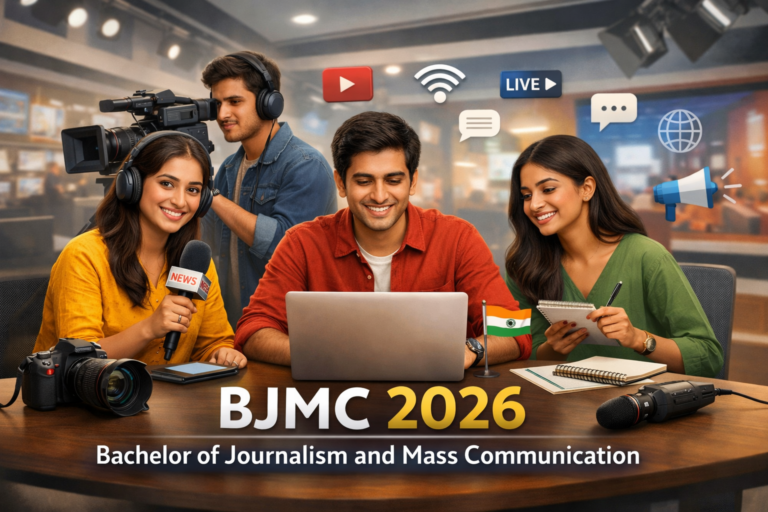
Bachelor of Mass Communication Distance/Online India 2026
Nishit Kumar is a senior EdTech industry leader with over a decade of experience in building and scaling education platforms, shaping their product, content, and growth strategy. At…
Latest update: Bachelor of Mass Communication 2026 admissions & dates updated. Read more ›
Pursuing a Bachelor of Mass Communication (BMC) Distance / Online program in India offers a flexible and accessible pathway for aspiring media professionals. This comprehensive guide covers everything students and parents need to know about these programs for the 2026 academic year, from eligibility and fees to career outcomes and top institutions.
What is Bachelor of Mass Communication (BMC) Distance / Online?
A Bachelor of Mass Communication (BMC) Distance / Online program allows students to earn an undergraduate degree in mass communication without attending regular on-campus classes. This mode of study provides flexibility, making it ideal for working professionals, students in remote areas, or those seeking a more self-paced learning environment.
These programs typically involve online lectures, digital study materials, virtual assignments, and sometimes proctored online examinations. The curriculum is designed to impart fundamental knowledge and practical skills in various facets of mass media, including journalism, public relations, advertising, film studies, and digital media.
Is a Distance/Online Bachelor of Mass Communication Degree Valid in India?
Yes, a Distance/Online Bachelor of Mass Communication degree from a university recognized by the University Grants Commission (UGC) and its Distance Education Bureau (DEB) is absolutely valid in India. It holds the same academic and professional recognition as a regular on-campus degree, provided the institution and program are approved by these regulatory bodies.
Students should always verify the accreditation status of the university and the specific program before enrolling to ensure the degree’s validity for further education or employment.
What is the Eligibility for Bachelor of Mass Communication Distance / Online?
The primary eligibility criterion for a Bachelor of Mass Communication Distance / Online program is typically the completion of 10+2 (or equivalent) from a recognized board. Some universities may have specific minimum percentage requirements or age limits.
While most programs do not require specific streams (Science, Commerce, Arts) at the 10+2 level, a good command of English and general awareness are often beneficial. There are generally no entrance exams for most distance/online BMC programs, with admissions often based on merit from the qualifying examination.
How Much Does Bachelor of Mass Communication Distance / Online Cost in India?
The cost of a Bachelor of Mass Communication Distance / Online program in India varies significantly based on the institution, its recognition, and the specific program structure. Generally, distance learning is more affordable than on-campus programs.
Government-recognized open universities tend to have lower fees compared to private institutions offering online degrees. The total fee typically includes tuition, study materials, and examination fees.
Bachelor of Mass Communication Distance / Online Fee Ranges (2026)
| Institution Type | Approximate Annual Fee Range (INR) | Total Program Fee Range (3 Years) (INR) |
|---|---|---|
| Government/Open Universities (e.g., IGNOU) | ₹6,000 – ₹15,000 | ₹18,000 – ₹45,000 |
| Private Universities (Online Mode) | ₹25,000 – ₹60,000 | ₹75,000 – ₹1,80,000 |
What is the Syllabus for Bachelor of Mass Communication Distance / Online?
The syllabus for a Bachelor of Mass Communication Distance / Online program is designed to provide a comprehensive understanding of media theories, practices, and technologies. While specific subjects may vary slightly between universities, the core curriculum covers foundational aspects of journalism, advertising, public relations, and digital media.
Typical Subjects Covered (Semester-wise Example)
- Year 1: Foundation & Introduction
- Introduction to Mass Communication
- Reporting and Editing Techniques
- Media Laws and Ethics
- Communication Theories
- History of Media
- Year 2: Core Areas & Specialization Basics
- Advertising: Principles and Practices
- Public Relations: Concepts and Strategies
- Radio and Television Production
- Digital Media and Social Media Marketing
- Photography and Visual Communication
- Year 3: Advanced Topics & Practical Application
- Media Research Methods
- Event Management
- Corporate Communication
- Film Studies and Appreciation
- Project Work / Internship (often virtual)
What is the Admission Process for Bachelor of Mass Communication Distance / Online in 2026?
The admission process for Bachelor of Mass Communication Distance / Online programs in 2026 is generally straightforward, primarily involving online application and document verification. Most universities offer admissions in two cycles: January and July/August.
Step-by-Step Admission Process:
- Research & Select University: Identify UGC-DEB recognized universities offering the BMC Distance / Online program.
- Check Eligibility: Ensure you meet the 10+2 qualification and any specific percentage requirements.
- Online Application: Fill out the application form on the university’s official website.
- Document Upload: Upload scanned copies of required documents (10th & 12th mark sheets, ID proof, photographs, etc.).
- Application Fee Payment: Pay the non-refundable application fee online.
- Merit List/Admission Offer: Universities typically release a merit list or send an admission offer based on 10+2 marks.
- Fee Payment & Enrollment: Pay the first installment of the program fee to confirm your admission.
- Study Material Access: Once enrolled, you will gain access to the online learning portal and study materials.
Key Dates for 2026 Admissions (Approximate)
| Admission Cycle | Application Period | Admission Confirmation | Session Start |
|---|---|---|---|
| January Cycle | October – December 2025 | December 2025 – January 2026 | January/February 2026 |
| July/August Cycle | April – June 2026 | June – July 2026 | July/August 2026 |
Is Bachelor of Mass Communication Distance / Online Worth It for Jobs?
Yes, a Bachelor of Mass Communication Distance / Online degree can be highly worth it for jobs, especially for individuals seeking flexibility, career changers, or those looking to upskill. The key is to choose a recognized university and actively build a portfolio and practical skills alongside theoretical knowledge.
Employers increasingly value skills and experience over the mode of education, provided the degree is from an accredited institution. Distance learners often develop strong self-discipline, time management, and digital literacy, which are highly valued in the media industry.
Career Prospects and Average Salary Ranges (Entry-Level)
| Job Role | Average Annual Salary Range (INR) | Description |
|---|---|---|
| Journalist/Reporter | ₹2.0 – ₹4.5 Lakhs | Gathering, writing, and presenting news for various media. |
| Content Writer | ₹2.5 – ₹5.0 Lakhs | Creating engaging content for websites, blogs, social media, etc. |
| Social Media Manager | ₹3.0 – ₹6.0 Lakhs | Managing social media presence, campaigns, and engagement. |
| PR Executive | ₹2.5 – ₹5.5 Lakhs | Managing public image and communication for organizations. |
| Advertising Executive | ₹2.8 – ₹5.0 Lakhs | Assisting in planning and executing advertising campaigns. |
| Copywriter | ₹3.0 – ₹6.0 Lakhs | Writing persuasive text for advertisements and marketing materials. |
Salaries can vary based on skills, location, company size, and practical experience gained through internships or freelance work during the program.
What are the Pros and Cons of Distance/Online BMC?
Understanding the advantages and disadvantages helps in making an informed decision about pursuing a Distance/Online Bachelor of Mass Communication.
Pros of Distance/Online BMC:
- Flexibility: Study anytime, anywhere, at your own pace. Ideal for working professionals or those with other commitments.
- Affordability: Generally lower tuition fees compared to traditional on-campus programs.
- Accessibility: Removes geographical barriers, allowing access to quality education from remote locations.
- Self-Paced Learning: Allows students to manage their study schedule according to their learning style and availability.
- Skill Development: Fosters self-discipline, time management, and digital literacy.
- Diverse Peer Group: Opportunity to interact with students from various backgrounds and locations.
Cons of Distance/Online BMC:
- Lack of Direct Interaction: Limited face-to-face interaction with faculty and peers, which might hinder networking.
- Self-Discipline Required: Requires strong self-motivation and discipline to stay on track without direct supervision.
- Practical Experience: Hands-on practical experience (e.g., studio work, field reporting) might be less extensive than in traditional programs, requiring proactive effort from the student.
- Technical Requirements: Requires reliable internet access and basic computer literacy.
- Perception: While validity is established, some employers might still prefer traditional degrees (though this is changing rapidly).
- Networking Challenges: Building professional networks can be more challenging in an online environment.
Which are the Top Universities for Bachelor of Mass Communication Distance / Online in India?
When choosing a university for a Bachelor of Mass Communication Distance / Online program, it’s crucial to prioritize institutions recognized by the UGC-DEB. Some prominent universities offering or known for their distance/online learning initiatives in mass communication include:
- Indira Gandhi National Open University (IGNOU): A pioneer in distance education, offering a robust Bachelor of Arts (Journalism & Mass Communication) program.
- Symbiosis Centre for Distance Learning (SCDL): While primarily known for PG diplomas, they often have related undergraduate offerings or strong online infrastructure.
- Amity University Online: Offers various online undergraduate degrees, including in mass communication, with a strong focus on digital learning.
- Manipal University Jaipur (Online): Provides UGC-DEB approved online degrees, including B.A. in Journalism & Mass Communication.
- Lovely Professional University (LPU Online): Offers online B.A. in Journalism & Mass Communication with a focus on industry relevance.
Always check the latest UGC-DEB list of approved online programs and universities for 2026 to ensure the chosen institution’s accreditation.
Explore more on FindMyCollege
Related pages for Bachelor of Mass Communication aspirants on findmycollege.com:
Frequently Asked Questions
Can I pursue a Master’s degree after a Distance/Online BMC?
Yes, a valid Bachelor of Mass Communication degree obtained through distance or online mode from a UGC-DEB recognized university is accepted for pursuing a Master’s degree (e.g., MA in Mass Communication, MBA in Media Management) in India and abroad, provided you meet the specific entrance and eligibility criteria of the postgraduate program.
Are there any entrance exams for Distance/Online BMC?
Generally, most Distance/Online BMC programs do not require specific entrance exams. Admissions are typically based on the merit of your 10+2 examination. However, some private universities might conduct a basic aptitude test or interview, so it’s always best to check the specific university’s admission guidelines.
How are exams conducted for online BMC programs?
Exams for online BMC programs are usually conducted through various methods, including online proctored exams (where you are monitored via webcam), assignment-based evaluations, project submissions, or sometimes at designated examination centers. The method depends on the university’s policy.
Can I get an internship while studying Distance/Online BMC?
Yes, you can and should actively seek internships while studying Distance/Online BMC. Many media organizations offer virtual internships or project-based work that can be done remotely. Proactive networking and building a strong portfolio are crucial for securing these opportunities, which are vital for practical exposure.
What is the difference between BA (Journalism & Mass Communication) and BMC?
While often used interchangeably, BA (Journalism & Mass Communication) typically has a stronger emphasis on journalism, reporting, and writing. BMC (Bachelor of Mass Communication) often offers a broader curriculum covering advertising, public relations, film, and digital media more extensively, alongside journalism. The distinction can vary by university, so always check the specific program’s syllabus.
Is a laptop and good internet connection mandatory for online BMC?
Yes, a reliable laptop or desktop computer with a stable internet connection is essential for pursuing an online BMC program. You will need it for accessing online lectures, study materials, submitting assignments, participating in virtual discussions, and potentially for online examinations. Basic software like word processors and presentation tools will also be necessary.