B.Sc Biochemistry Salary in India 2026: Jobs & Prospects
Nishit Kumar is a senior EdTech industry leader with over a decade of experience in building and scaling education platforms, shaping their product, content, and growth strategy. At…
Latest update: B.Sc in Biochemistry 2026 admissions & dates updated. Read more ›
Welcome to our comprehensive guide on B.Sc in Biochemistry salary in India for 2026. This page is designed for prospective students and parents seeking detailed, factual information about career prospects, earning potential, and the overall value of pursuing a Bachelor of Science in Biochemistry. We delve into various job roles, salary ranges, eligibility criteria, and the scope of this dynamic science stream, ensuring you have all the information needed to make an informed decision.
What is B.Sc in Biochemistry?
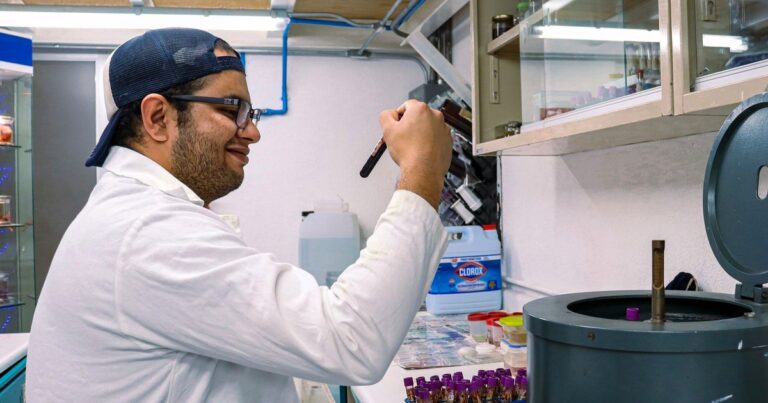
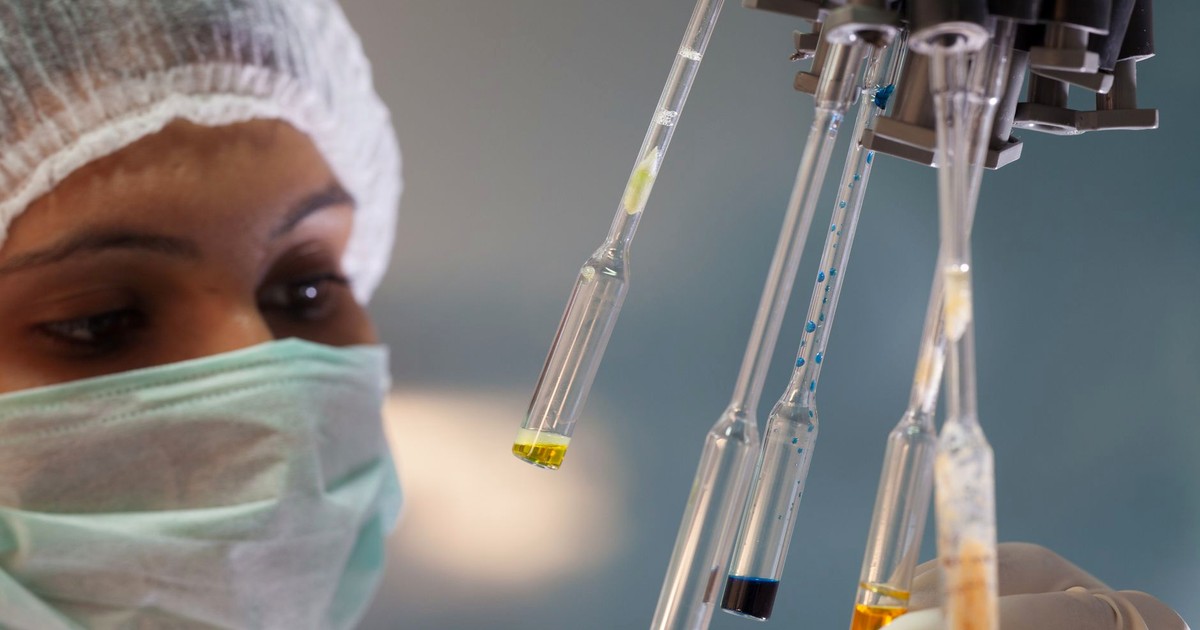
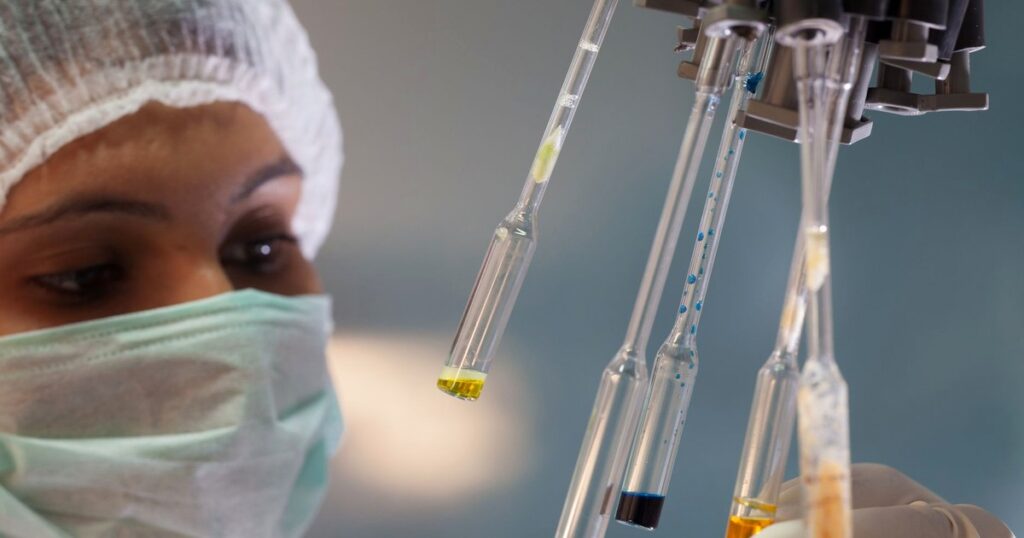
B.Sc in Biochemistry is an undergraduate science program that focuses on the chemical processes within living organisms. It combines biology and chemistry to explore the molecular basis of life, covering topics such as metabolism, genetics, molecular biology, and enzymology. This three-year course typically spans six semesters, equipping students with strong analytical and laboratory skills.
What is the average B.Sc Biochemistry salary in India for 2026?
The average B.Sc Biochemistry salary in India for freshers in 2026 typically ranges from INR 2.5 LPA to INR 4.5 LPA. With 2-5 years of experience, this can increase to INR 4.0 LPA to INR 7.0 LPA, and for experienced professionals (5+ years), salaries can go upwards of INR 8.0 LPA to INR 15.0 LPA or more, depending on the role, industry, and location.
Factors Influencing B.Sc Biochemistry Salary
- Experience Level: Salaries significantly increase with more years of experience.
- Job Role: Specialized roles like Research Scientist or Biotechnologist often command higher salaries than entry-level lab technician positions.
- Industry: Pharmaceutical, biotechnology, and healthcare sectors generally offer better remuneration.
- Location: Metropolitan cities like Bangalore, Hyderabad, Mumbai, and Pune tend to offer higher salaries due to more opportunities and higher cost of living.
- Skills: Proficiency in advanced lab techniques, data analysis, bioinformatics, and specific software can boost earning potential.
- Higher Education: Pursuing an M.Sc or Ph.D in Biochemistry or related fields can lead to significantly higher-paying research and academic positions.
What are the top job roles after B.Sc in Biochemistry and their salaries?
Graduates of B.Sc Biochemistry can pursue diverse roles across various sectors. Here’s a look at some prominent job profiles and their expected salary ranges in India for 2026:
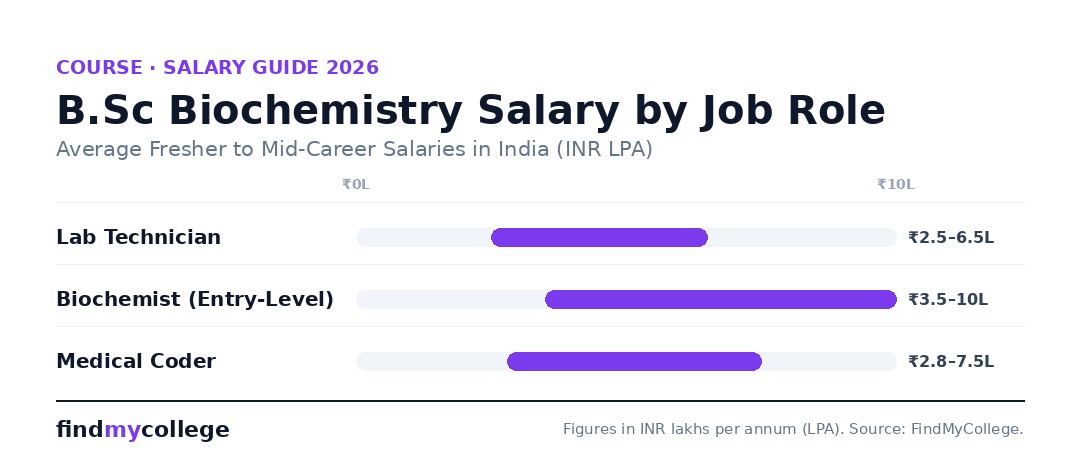
| Job Role | Average Fresher Salary (INR LPA) | Average Mid-Career Salary (INR LPA) | Key Responsibilities |
|---|---|---|---|
| Lab Technician | 2.5 – 3.8 | 4.0 – 6.5 | Conducting routine lab tests, preparing samples, maintaining equipment. |
| Research Assistant | 3.0 – 4.5 | 5.0 – 8.0 | Assisting senior scientists in experiments, data collection, literature review. |
| Biochemist (Entry-Level) | 3.5 – 5.0 | 6.0 – 10.0 | Analyzing biological samples, developing new assays, quality control. |
| Medical Coder | 2.8 – 4.2 | 4.5 – 7.5 | Translating medical reports into standardized codes for billing and data analysis. |
| Quality Control Analyst | 3.0 – 4.8 | 5.5 – 9.0 | Ensuring product quality and safety in pharmaceutical/food industries. |
| Biotechnology Sales Executive | 3.0 – 5.0 | 5.0 – 9.5 | Promoting and selling biotech products and services to clients. |
| Food Scientist/Technologist | 3.2 – 4.8 | 5.5 – 9.0 | Developing new food products, ensuring food safety and quality. |
Which industries hire B.Sc Biochemistry graduates?
B.Sc Biochemistry graduates are in demand across a wide array of industries due to their versatile skill set. Key sectors include:
- Pharmaceutical Industry: For drug discovery, development, quality control, and manufacturing.
- Biotechnology Companies: In areas like genetic engineering, vaccine development, and bioinformatics.
- Healthcare Sector: Hospitals, diagnostic labs, and pathology centers for clinical analysis.
- Food and Beverage Industry: For quality assurance, product development, and nutritional analysis.
- Research and Development (R&D): In government and private research institutions.
- Agriculture Sector: For crop improvement, pest control, and soil analysis.
- Environmental Agencies: For pollution control and bioremediation.
- Academia: As lab assistants or pursuing higher studies to become lecturers/professors.
Is B.Sc in Biochemistry worth it for jobs and career growth?
Yes, B.Sc in Biochemistry is a valuable degree for job prospects and career growth, especially when combined with practical skills and/or higher education. The foundational knowledge gained is highly relevant to rapidly growing sectors like pharmaceuticals, biotechnology, and healthcare. While entry-level salaries might be moderate, the potential for growth is significant with experience, specialization, and advanced degrees (M.Sc, Ph.D), leading to roles like Research Scientist, Senior Biochemist, or even managerial positions.
What are the eligibility criteria for B.Sc in Biochemistry?
To be eligible for a B.Sc in Biochemistry program in India, candidates must have successfully completed their 10+2 (or equivalent) examination with Physics, Chemistry, and Biology (PCB) as compulsory subjects. Some colleges may also accept candidates with Physics, Chemistry, and Mathematics (PCM) if they have a strong interest in the biological aspects. A minimum aggregate score, typically ranging from 45% to 60%, is required, varying by institution. Some top universities might also conduct entrance examinations.
Common Entrance Exams for B.Sc Biochemistry
While many colleges offer admission based on 10+2 merit, some prestigious institutions or state universities may require entrance exams. These typically test knowledge in PCB subjects at the 10+2 level. Examples include:
- CUET (Common University Entrance Test): For admission to various central universities.
- NEST (National Entrance Screening Test): For integrated M.Sc programs in basic sciences, which can include biochemistry.
- University-specific entrance exams: Conducted by institutions like Delhi University, Pune University, etc., for their science programs.
What is the fee structure for B.Sc in Biochemistry in India?
The fee structure for B.Sc in Biochemistry in India varies significantly between government and private institutions. Government colleges generally have lower fees, while private colleges, offering more facilities and potentially better industry exposure, charge higher.
| Type of Institution | Average Annual Fee Range (INR) | Total Course Fee (INR) |
|---|---|---|
| Government Colleges | 10,000 – 50,000 | 30,000 – 1,50,000 |
| Private Colleges | 50,000 – 2,00,000+ | 1,50,000 – 6,00,000+ |
Additional costs may include hostel fees, examination fees, and study materials.
What are the career prospects after B.Sc Biochemistry abroad?
A B.Sc in Biochemistry from India can open doors to international career opportunities, particularly if you pursue higher education abroad. Countries like the USA, UK, Canada, Germany, and Australia have robust biotechnology and pharmaceutical industries, offering advanced research roles and competitive salaries. An M.Sc or Ph.D from a reputable international university significantly enhances global employability.
What are the best higher education options after B.Sc in Biochemistry?
Many B.Sc Biochemistry graduates opt for higher education to specialize and improve their career prospects and earning potential. Popular options include:
- M.Sc in Biochemistry: The most direct progression, offering deeper specialization.
- M.Sc in Biotechnology: Focuses on the application of biological processes for industrial and medical purposes.
- M.Sc in Microbiology: Specializes in microorganisms and their impact.
- M.Sc in Molecular Biology: Explores biological activity at the molecular level.
- M.Sc in Clinical Research: Focuses on the design, conduct, and analysis of clinical trials.
- MBA (Healthcare Management/Biotechnology): For those interested in managerial roles in the life sciences sector.
- Ph.D in Biochemistry/Biotechnology: Essential for research-intensive careers, academia, and senior R&D roles.
- Post Graduate Diploma courses: In areas like Bioinformatics, Medical Lab Technology, or Pharmaceutical Management.
How does B.Sc Biochemistry compare to other science degrees in terms of salary?
B.Sc Biochemistry offers a competitive salary structure, especially when compared to general B.Sc degrees, but it might start lower than highly specialized engineering or medical degrees. However, its interdisciplinary nature provides a broader range of career paths than some other pure science degrees. With higher education and specialization, the earning potential can often surpass that of many other B.Sc streams.
| Course | Average Fresher Salary (INR LPA) | Career Growth Potential |
|---|---|---|
| B.Sc Biochemistry | 2.5 – 4.5 | High (with specialization/PG) |
| B.Sc Chemistry | 2.0 – 4.0 | Moderate to High |
| B.Sc Microbiology | 2.8 – 4.8 | High |
| B.Sc Zoology | 2.0 – 3.5 | Moderate |
| B.Tech Biotechnology | 3.5 – 6.0 | High |
| B.Pharm | 3.0 – 5.0 | High |
Explore more on FindMyCollege
Related pages for B.Sc in Biochemistry aspirants on findmycollege.com:
Frequently Asked Questions
Is B.Sc Biochemistry a tough course?
B.Sc Biochemistry is considered challenging due to its interdisciplinary nature, requiring a strong grasp of both chemistry and biology. It involves complex concepts and extensive laboratory work, but with dedication and interest, it is highly manageable and rewarding.
What are the practical skills gained in B.Sc Biochemistry?
Students gain hands-on experience in various laboratory techniques such as chromatography, electrophoresis, spectroscopy, PCR, cell culture, enzyme assays, and data analysis, which are highly valued in research and industry.
Can I get a government job after B.Sc Biochemistry?
Yes, government jobs are available in research institutions (e.g., ICMR, CSIR), forensic labs, food safety departments (FSSAI), and environmental agencies. Many require qualifying competitive exams.
What is the scope of B.Sc Biochemistry in the pharmaceutical industry?
The pharmaceutical industry offers significant scope for biochemists in drug discovery, formulation, quality control, R&D, and clinical trials, contributing to the development of new medicines and therapies.
Are there any scholarships for B.Sc Biochemistry students?
Yes, various government and private scholarships are available based on merit, financial need, or specific categories. Students should check with their chosen college, state education boards, and national scholarship portals.
What are the top colleges for B.Sc Biochemistry in India?
Some of the top colleges include St. Xavier’s College (Mumbai), Miranda House (Delhi), Mount Carmel College (Bangalore), Fergusson College (Pune), and Presidency College (Chennai), among many others across India.