B.Tech Agriculture Engg vs B.Tech Food Tech & More (2026)
Nishit Kumar is a senior EdTech industry leader with over a decade of experience in building and scaling education platforms, shaping their product, content, and growth strategy. At…
Latest update: B.Tech in Agriculture Engineering 2026 admissions & dates updated. Read more ›
B.Tech in Agriculture Engineering vs B.Tech Food Technology, B.Tech Civil Engineering, B.Sc Agriculture: Quick Comparison (2026)
| Course | Duration | Eligibility | Avg Fees (range) | Top Careers | Avg Starting Salary | Best For |
|---|---|---|---|---|---|---|
| B.Tech in Agriculture Engineering | 4 Years | 10+2 with PCM/PCMB (min 50%) | ₹80,000 – ₹3,00,000 per year | Agricultural Engineer, Farm Manager, Soil & Water Conservationist, Food Processing Engineer | ₹3,50,000 – ₹6,00,000 per year | Students interested in applying engineering principles to agriculture, food production, and rural development. |
| B.Tech in Food Technology | 4 Years | 10+2 with PCM/PCMB (min 50%) | ₹70,000 – ₹2,50,000 per year | Food Technologist, Quality Control Manager, Product Development Scientist, Food Safety Officer | ₹3,00,000 – ₹5,50,000 per year | Students focused on food processing, preservation, safety, and new product development in the food industry. |
| B.Tech in Civil Engineering | 4 Years | 10+2 with PCM (min 50%) | ₹1,00,000 – ₹4,00,000 per year | Civil Engineer, Structural Engineer, Construction Manager, Urban Planner | ₹4,00,000 – ₹7,00,000 per year | Students keen on designing, constructing, and maintaining infrastructure like buildings, roads, and bridges. |
| B.Sc Agriculture | 4 Years | 10+2 with PCB/PCMB/PCM (min 50%) | ₹40,000 – ₹1,50,000 per year | Agronomist, Agricultural Scientist, Extension Officer, Farm Manager, Horticulturist | ₹2,50,000 – ₹4,50,000 per year | Students passionate about the biological and scientific aspects of crop production, soil science, and animal husbandry. |
B.Tech in Agriculture Engineering vs B.Tech in Food Technology
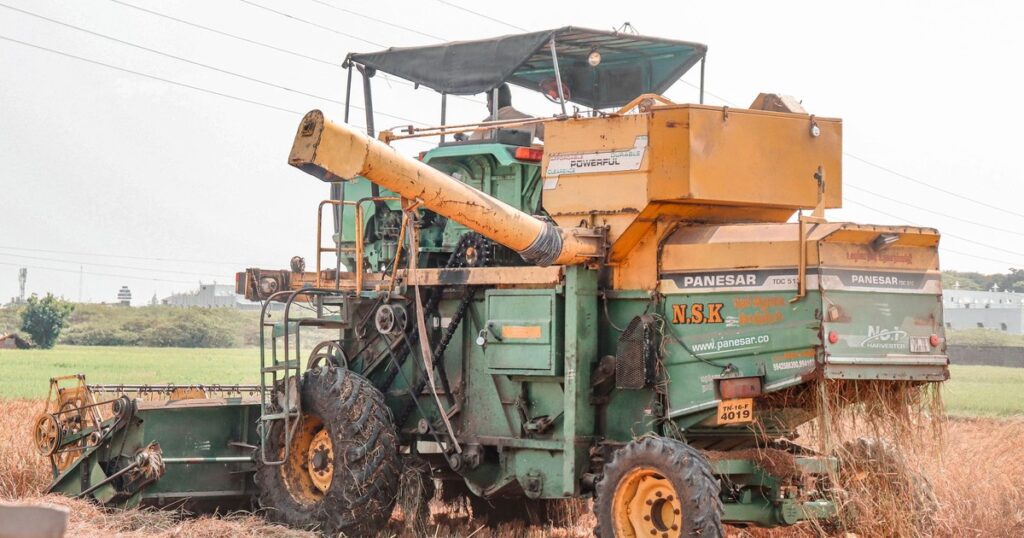
B.Tech in Agriculture Engineering focuses on the engineering aspects of agricultural production, including farm machinery, irrigation systems, soil and water conservation, and post-harvest technology. In contrast, B.Tech in Food Technology is primarily concerned with the processing, preservation, packaging, and quality control of food products after they leave the farm. Agriculture Engineering deals with the ‘farm to gate’ aspects, while Food Technology handles the ‘gate to plate’ journey. Agriculture Engineering suits those interested in field-level innovation and infrastructure, while Food Technology is for those keen on industrial food processing and product development.
B.Tech in Agriculture Engineering vs B.Tech in Civil Engineering
While both are engineering disciplines, B.Tech in Agriculture Engineering applies engineering principles specifically to agricultural systems and rural infrastructure, such as designing farm structures, irrigation networks, and machinery for crop production. B.Tech in Civil Engineering, on the other hand, is a broader field focused on the design, construction, and maintenance of public and private infrastructure like buildings, roads, bridges, and urban water systems. Agriculture Engineering offers a specialized niche within a vital sector, whereas Civil Engineering provides a wider scope in general infrastructure development. Agriculture Engineering is ideal for those wanting to contribute to sustainable farming and rural development, while Civil Engineering is for those interested in large-scale urban and national infrastructure projects.
People Also Read


B.Tech in Agriculture Engineering vs B.Sc Agriculture
B.Tech in Agriculture Engineering is an engineering degree that emphasizes the application of engineering sciences and technology to improve agricultural productivity and sustainability. It involves subjects like farm power and machinery, soil and water engineering, and processing. B.Sc Agriculture is a science-based degree focusing on the biological, chemical, and management aspects of agriculture, including agronomy, horticulture, plant pathology, and entomology. The B.Tech program is more hands-on with design and machinery, while B.Sc is more research-oriented and focused on crop and soil science. B.Tech Agriculture Engineering is for students seeking a technical, problem-solving role in agriculture, while B.Sc Agriculture is for those interested in the scientific and managerial aspects of farming and agricultural research.
Which one should you choose?
If you are passionate about applying engineering principles to enhance agricultural productivity, design farm machinery, manage water resources for farming, or develop post-harvest technologies, B.Tech in Agriculture Engineering is your ideal choice. If your interest lies more in the science of food processing, preservation, and developing new food products for the consumer market, B.Tech in Food Technology would be a better fit. For those who envision themselves building large-scale infrastructure like roads, bridges, or urban buildings, B.Tech in Civil Engineering offers a broader scope. Lastly, if you are more inclined towards the biological and scientific aspects of crop cultivation, soil management, and agricultural research, B.Sc Agriculture is the appropriate path.
Explore more on FindMyCollege
Related pages for B.Tech in Agriculture Engineering aspirants on findmycollege.com:
Frequently Asked Questions
Which course is easier, B.Tech Agriculture Engineering or B.Sc Agriculture?
B.Sc Agriculture is generally considered less mathematically and physics-intensive than B.Tech Agriculture Engineering. B.Tech involves rigorous engineering mathematics, physics, and design principles, making it more challenging for those not strong in these subjects. B.Sc focuses more on biological sciences, chemistry, and agronomy.
Which B.Tech course offers better salary prospects in India?
While B.Tech Civil Engineering generally has higher average starting salaries due to the vast infrastructure sector, B.Tech Agriculture Engineering offers competitive salaries, especially with specialization in areas like precision agriculture, food processing equipment, or water management. Salary depends heavily on skills, university, and industry demand.
Can I get government jobs after B.Tech in Agriculture Engineering?
Yes, B.Tech in Agriculture Engineering graduates are eligible for various government jobs in departments like the Ministry of Agriculture, Water Resources Department, Food Corporation of India, NABARD, and state agricultural departments. They can also appear for UPSC and state PSC exams for engineering and technical posts.
Is B.Tech in Agriculture Engineering a good career choice for the future?
Absolutely. With increasing global food demand, climate change challenges, and the need for sustainable farming practices, agricultural engineers are crucial. The field is growing with advancements in precision agriculture, automation, and renewable energy in farming, ensuring strong future scope.
Can I switch from B.Tech Agriculture Engineering to a different engineering field later?
While direct switching is difficult after a B.Tech, graduates can pursue M.Tech or MBA programs in related fields like Food Technology, Environmental Engineering, or even General Management, leveraging their engineering foundation. Some might also transition to IT or data analytics roles with additional skill acquisition.
What is the main difference in job roles between B.Tech Agriculture Engineering and B.Tech Food Technology?
B.Tech Agriculture Engineering graduates typically work on farm-level solutions, irrigation projects, farm machinery design, and rural infrastructure. B.Tech Food Technology graduates, on the other hand, are employed in food processing plants, quality control labs, product development, and food safety agencies, focusing on the industrial aspects of food.
Which course is better for entrepreneurship in the agricultural sector?
Both B.Tech Agriculture Engineering and B.Sc Agriculture offer excellent foundations for entrepreneurship. Agriculture Engineering graduates can start ventures in farm equipment manufacturing, irrigation solutions, or post-harvest technology. B.Sc Agriculture graduates can focus on organic farming, agri-consultancy, or agri-input supply businesses. The choice depends on whether your entrepreneurial interest is technology-driven or farm-management focused.