Diploma in Elementary Education (D.El.Ed) 2026: Overview
Nishit Kumar is a senior EdTech industry leader with over a decade of experience in building and scaling education platforms, shaping their product, content, and growth strategy. At…
Latest update: Diploma in Elementary Education 2026 admissions & dates updated. Read more ›
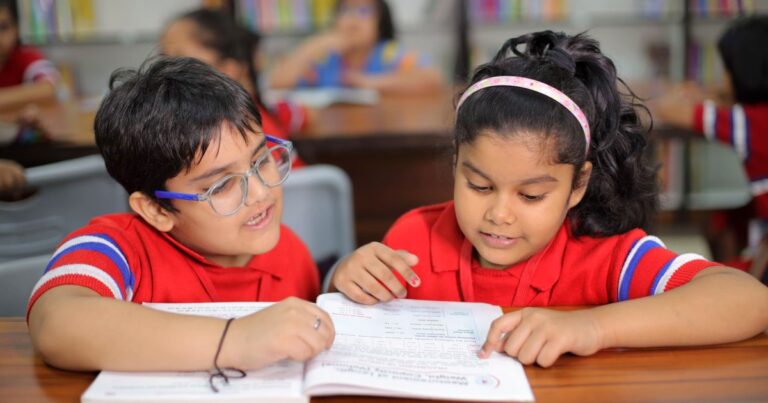
Welcome to the comprehensive overview of the Diploma in Elementary Education (D.El.Ed) program in India for the 2026 academic year. This page is designed for prospective students and parents seeking detailed information about this crucial course for aspiring elementary school teachers. The D.El.Ed is a foundational program that equips individuals with the pedagogical skills and knowledge required to teach at the primary and upper primary levels.
What is the Diploma in Elementary Education (D.El.Ed)?
The Diploma in Elementary Education (D.El.Ed) is a two-year, full-time diploma course focused on training teachers for elementary schools (Classes I to VIII). It covers child development, pedagogy, curriculum design, and practical teaching methodologies, preparing graduates to foster a conducive learning environment for young children.
The program is mandated by the National Council for Teacher Education (NCTE) and is essential for anyone aspiring to teach at the elementary level in government or private schools across India. It blends theoretical knowledge with practical experience, including compulsory internships and teaching practice sessions.
What is the eligibility for Diploma in Elementary Education (D.El.Ed) in 2026?
To be eligible for the D.El.Ed program in 2026, candidates must typically have completed their 10+2 (Higher Secondary) examination or an equivalent qualification from a recognized board with a minimum aggregate score, usually between 45% to 50%. Specific percentage requirements may vary slightly by state and institution, with some offering relaxations for reserved categories.
Are there any age limits or specific subject requirements for D.El.Ed?
While there is generally no upper age limit for D.El.Ed admission, some state-specific entrance exams might have a maximum age criterion, typically around 35 years for general category candidates, with relaxations for SC/ST/OBC. There are usually no specific subject requirements at the 10+2 level; students from Arts, Science, or Commerce streams are generally eligible, provided they meet the minimum percentage criteria.
How much does Diploma in Elementary Education (D.El.Ed) cost in India?
The cost of a D.El.Ed program in India varies significantly based on the type of institution (government vs. private) and the state. Generally, government colleges offer the program at a much lower fee, ranging from INR 5,000 to INR 25,000 per year, while private colleges can charge anywhere from INR 30,000 to INR 70,000 per year, excluding hostel and examination fees.
D.El.Ed Fee Structure (Annual, 2026 Estimates)
| Institution Type | Annual Tuition Fee Range (INR) | Additional Costs (Approx. Annual) |
|---|---|---|
| Government Colleges | 5,000 – 25,000 | 1,000 – 5,000 (Exam, Library, Misc.) |
| Private Colleges | 30,000 – 70,000 | 5,000 – 15,000 (Exam, Practical, Study Material) |
| Hostel Fees (if applicable) | 20,000 – 60,000 | (Per year, varies widely) |
What is the admission process for D.El.Ed in 2026?
The admission process for D.El.Ed in 2026 typically involves either a merit-based selection based on 10+2 marks or an entrance examination conducted by the state education board or specific universities. Some states may combine both, giving weightage to both academic performance and entrance test scores.
Key Steps in the D.El.Ed Admission Process:
- Application Form Release: Colleges/State Boards release application forms, usually online, between April and June.
- Entrance Exam (if applicable): Many states conduct a D.El.Ed entrance exam (e.g., Bihar D.El.Ed CET, UP D.El.Ed Entrance) in June/July.
- Merit List/Results: Based on 10+2 marks or entrance exam scores, a merit list is published.
- Counseling: Qualified candidates are called for counseling sessions where they select colleges based on their rank and availability.
- Document Verification & Admission: Final admission is granted after verifying original documents and paying the first installment of fees.
Tentative D.El.Ed 2026 Admission Dates (Varies by State)
| Event | Tentative Timeline (2026) |
|---|---|
| Application Form Release | April – June |
| Application Deadline | May – July |
| Entrance Exam (if applicable) | June – August |
| Result/Merit List Declaration | July – September |
| Counseling & Admissions | August – October |
| Classes Begin | September – November |
What is the D.El.Ed syllabus and subjects covered?
The D.El.Ed syllabus is designed to provide a holistic understanding of child development, educational psychology, and teaching methodologies for elementary levels. It typically includes core subjects, pedagogical courses, and practical components like internships.
Common Subjects in D.El.Ed (Across Semesters/Years):
- Childhood and Development of Children: Understanding growth stages, cognitive and emotional development.
- Education, Society, Curriculum and Learner: Philosophical and sociological foundations of education.
- Pedagogy of Environmental Studies/Science/Mathematics/Language: Subject-specific teaching methods.
- Work and Education: Integrating work experience into the curriculum.
- Health, Physical Education and Yoga: Importance of holistic well-being.
- Art Education: Fostering creativity through art.
- Understanding the Self: Personal and professional development of the teacher.
- School Experience Programme (Internship): Compulsory teaching practice in schools.
- Action Research: Developing problem-solving skills in educational settings.
Is Diploma in Elementary Education (D.El.Ed) worth it for jobs in 2026?
Yes, the D.El.Ed is absolutely worth it for individuals aspiring to teach at the elementary level in India, as it is a mandatory qualification for primary and upper primary teacher positions in both government and private schools. The demand for qualified elementary teachers remains consistently high across the country.
Career Prospects and Job Roles after D.El.Ed:
- Primary School Teacher: Teaching Classes I-V.
- Upper Primary School Teacher: Teaching Classes VI-VIII (often requires additional qualifications like a B.Ed for some states/schools, or specific subject expertise).
- Assistant Teacher: In various educational institutions.
- Content Developer: For educational materials and e-learning platforms.
- Private Tutor: Offering personalized coaching.
Average Salary after D.El.Ed (Entry-Level, Annual, 2026 Estimates)
| Job Role | Government School (INR Lakhs) | Private School (INR Lakhs) |
|---|---|---|
| Primary Teacher | 3.5 – 6.0 | 1.8 – 3.5 |
| Upper Primary Teacher | 4.0 – 7.0 | 2.0 – 4.0 |
| Assistant Teacher | 3.0 – 5.5 | 1.5 – 3.0 |
Note: Government salaries are often higher due to fixed pay scales, allowances, and benefits. Private school salaries can vary widely based on school reputation, location, and experience.
D.El.Ed vs. B.Ed: Which is better for teaching?
The choice between D.El.Ed and B.Ed depends entirely on the desired teaching level. D.El.Ed is specifically for teaching at the elementary level (Classes I-VIII), while B.Ed (Bachelor of Education) is for teaching at the secondary (Classes IX-X) and senior secondary (Classes XI-XII) levels. Both are essential qualifications for their respective domains.
Key Differences: D.El.Ed vs. B.Ed
- Target Level: D.El.Ed for Primary/Upper Primary; B.Ed for Secondary/Senior Secondary.
- Eligibility: D.El.Ed requires 10+2; B.Ed requires a Bachelor’s degree.
- Duration: Both are typically 2-year programs.
- Focus: D.El.Ed focuses on early childhood pedagogy; B.Ed focuses on adolescent learning and subject specialization.
Many D.El.Ed graduates pursue a B.Ed later to expand their teaching opportunities to higher grades, often through distance learning or integrated courses.
What are the pros and cons of pursuing D.El.Ed?
Pursuing a D.El.Ed offers a clear path into elementary education but also comes with certain limitations regarding career progression.
Pros of D.El.Ed:
- Direct Entry to Elementary Teaching: It’s the primary and often mandatory qualification for primary teacher roles.
- High Demand: Consistent need for qualified elementary teachers across India.
- Relatively Shorter Duration: A 2-year diploma allows quicker entry into the workforce compared to a 4-year degree.
- Practical Focus: Strong emphasis on practical teaching skills and child psychology.
- Foundation for Higher Education: Can be a stepping stone for B.Ed or other education-related degrees.
Cons of D.El.Ed:
- Limited to Elementary Level: D.El.Ed alone does not qualify you to teach secondary or senior secondary classes.
- Lower Starting Salaries (Private Sector): Private school salaries can be modest, especially for freshers.
- Competitive Government Exams: Securing a government teaching job requires clearing highly competitive state-level TET (Teacher Eligibility Test) and other recruitment exams.
- Continuous Learning: The field requires ongoing professional development and adaptation to new pedagogies.
Frequently Asked Questions
Is D.El.Ed recognized by NCTE?
Yes, all D.El.Ed programs offered by recognized institutions in India must be approved by the National Council for Teacher Education (NCTE). It is crucial to ensure that the college you choose has valid NCTE recognition.
Can I pursue D.El.Ed through distance learning?
Yes, D.El.Ed can be pursued through distance learning mode, primarily offered by institutions like IGNOU (Indira Gandhi National Open University) or state open universities. These programs are also NCTE-approved and valid for teaching positions.
What is the minimum percentage required for D.El.Ed admission?
The minimum percentage required for D.El.Ed admission is typically 45% to 50% in 10+2, though it can vary by state and institution. Reserved categories often receive a 5% relaxation.
Are there any entrance exams for D.El.Ed?
Many states in India conduct their own entrance exams for D.El.Ed admission (e.g., Bihar D.El.Ed CET, UP D.El.Ed Entrance Exam, Haryana D.El.Ed Entrance Exam). Some institutions may also conduct their own tests, while others rely solely on merit.
Can D.El.Ed graduates teach in private schools?
Yes, D.El.Ed graduates are fully qualified to teach at the primary and upper primary levels in private schools across India. However, some private schools might prefer candidates with a B.Ed or a Master’s degree for upper primary classes.
What is the scope of D.El.Ed after 10+2?
The D.El.Ed after 10+2 offers a direct pathway to becoming an elementary school teacher. It provides foundational knowledge and practical skills, making graduates eligible for various teaching roles in both government and private primary schools. It also serves as a strong base for further studies in education.