Diploma in Elementary Education (D.El.Ed) Fees in India 2026
Nishit Kumar is a senior EdTech industry leader with over a decade of experience in building and scaling education platforms, shaping their product, content, and growth strategy. At…
Latest update: Diploma in Elementary Education 2026 admissions & dates updated. Read more ›
Navigating the financial landscape for higher education can be complex. This comprehensive guide provides a detailed breakdown of the Diploma in Elementary Education (D.El.Ed) fees in India for the academic year 2026, addressing common student and parent queries. The D.El.Ed program is a crucial stepping stone for aspiring primary school teachers, equipping them with the pedagogical skills and theoretical knowledge required for elementary education.
What is the Diploma in Elementary Education (D.El.Ed) Course?
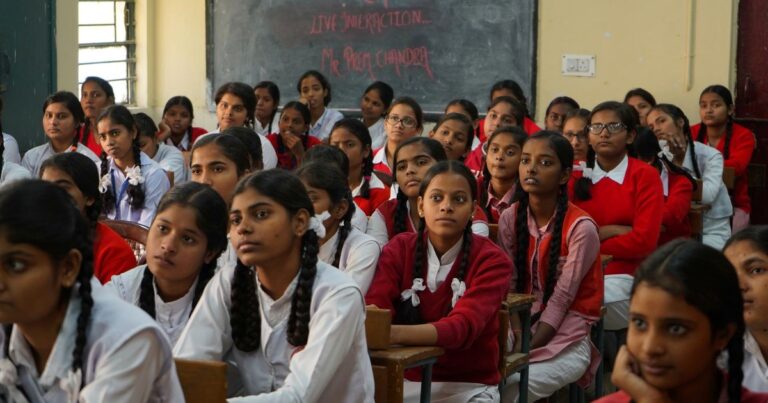
The Diploma in Elementary Education (D.El.Ed) is a two-year, full-time diploma program designed to train teachers for the primary and upper primary levels of schooling. It focuses on child psychology, teaching methodologies, curriculum development, and practical classroom management, preparing candidates to effectively educate children aged 6-14 years.
How much does a Diploma in Elementary Education (D.El.Ed) cost in India for 2026?
The cost of a D.El.Ed program in India for 2026 varies significantly, typically ranging from INR 10,000 to INR 1,00,000 per annum, depending on whether the institution is government-funded or privately managed. Government colleges generally offer more affordable fees compared to private institutions.
D.El.Ed Fees in Government Colleges (2026)
Government D.El.Ed colleges are substantially more affordable due to subsidies and state funding. The annual fees in these institutions usually fall within the range of INR 10,000 to INR 30,000. This makes government colleges a highly sought-after option for students seeking quality education at a lower cost.
D.El.Ed Fees in Private Colleges (2026)
Private D.El.Ed colleges, while offering similar curricula, often have higher fees due to their self-financing nature and sometimes better infrastructure or additional facilities. Annual fees in private colleges can range from INR 40,000 to INR 1,00,000 or more. These institutions may also offer various payment plans or installment options.
Here’s a general overview of D.El.Ed fee ranges for 2026:
| Type of Institution | Annual Fee Range (INR) | Total Course Fee Range (INR) |
|---|---|---|
| Government Colleges | 10,000 – 30,000 | 20,000 – 60,000 |
| Private Colleges | 40,000 – 1,00,000+ | 80,000 – 2,00,000+ |
What factors influence D.El.Ed fees?
Several factors contribute to the variation in D.El.Ed fees across India. Understanding these can help students make informed decisions.
- Type of Institution: As discussed, government colleges are significantly cheaper than private ones.
- Location: Colleges in metropolitan cities or regions with higher living costs might have slightly higher fees.
- Affiliation: Colleges affiliated with prestigious universities or state boards might command slightly higher fees.
- Infrastructure and Facilities: Institutions offering advanced labs, libraries, digital resources, or hostel facilities may have higher fees.
- Faculty Expertise: Colleges with highly experienced and renowned faculty might justify higher fees.
- Additional Charges: Some colleges include examination fees, library fees, lab fees, and other miscellaneous charges within the tuition, while others charge them separately.
What is the eligibility for Diploma in Elementary Education (D.El.Ed)?
The primary eligibility criterion for D.El.Ed is completing 10+2 (Higher Secondary) or an equivalent examination from a recognized board with a minimum aggregate score, typically 50%. Some states or institutions may offer a relaxation of 5% for reserved categories (SC/ST/OBC).
- Minimum Age: Generally, candidates must be at least 17 years old.
- Maximum Age: There is usually no upper age limit, but some states might have specific regulations.
- Subject Requirements: While there are no strict subject requirements, a background in Arts or Humanities is often preferred, though Science and Commerce students are also eligible.
Are there any scholarships or financial aid options for D.El.Ed students?
Yes, several scholarships and financial aid options are available for D.El.Ed students, particularly for those from economically weaker sections or reserved categories. These can significantly reduce the financial burden.
- Government Scholarships: State and Central governments offer various scholarships like the National Scholarship Portal (NSP) scholarships, Post Matric Scholarships for SC/ST/OBC, and scholarships for minorities.
- Institution-Specific Scholarships: Some private colleges offer their own merit-based or need-based scholarships.
- Education Loans: Banks offer education loans with favorable interest rates for diploma courses.
- Fee Waivers: Certain government colleges might offer partial or full fee waivers based on merit or economic background.
What is the admission process for D.El.Ed in 2026?
The admission process for D.El.Ed in 2026 typically involves either a merit-based selection (based on 10+2 marks) or an entrance examination, followed by counseling.
- Application: Candidates apply online or offline to their preferred colleges/state boards.
- Entrance Exam (if applicable): Many states conduct a common entrance test (e.g., UP D.El.Ed, Bihar D.El.Ed, Haryana D.El.Ed) to shortlist candidates.
- Merit List/Results: A merit list is prepared based on either entrance exam scores or 10+2 marks.
- Counseling: Shortlisted candidates participate in counseling sessions where they select colleges based on their rank and availability.
- Document Verification & Fee Payment: Final admission is granted after successful document verification and payment of the first installment of fees.
Key dates for D.El.Ed admissions in 2026 will typically fall between May and August, with applications opening in May-June and counseling/admissions concluding by August.
Is pursuing a Diploma in Elementary Education (D.El.Ed) worth it for jobs?
Yes, pursuing a D.El.Ed is highly worth it for individuals aspiring to become primary school teachers, as it is a mandatory qualification for teaching at the elementary level in government and many private schools across India. The demand for qualified elementary teachers remains consistently high.
The D.El.Ed program provides a direct pathway to employment in both public and private school sectors. Graduates are eligible to appear for various Teacher Eligibility Tests (TETs) like CTET (Central TET) and state-level TETs, which are essential for securing government teaching positions.
What are the career prospects and average salaries after D.El.Ed?
After completing D.El.Ed, graduates primarily work as Primary Teachers (Classes 1-5) or Upper Primary Teachers (Classes 6-8). They can find employment in:
- Government Primary Schools (after clearing TETs)
- Private Primary and Middle Schools
- Pre-schools and Nurseries
- Educational NGOs
- Coaching Centers for elementary students
The average salary for D.El.Ed graduates varies based on the type of school, location, and experience:
| Role | Average Annual Salary Range (INR) – Entry Level | Average Annual Salary Range (INR) – Experienced |
|---|---|---|
| Government Primary Teacher | 3,00,000 – 5,00,000+ | 5,00,000 – 8,00,000+ |
| Private Primary Teacher | 1,80,000 – 3,50,000 | 3,50,000 – 6,00,000+ |
| Pre-school Teacher | 1,50,000 – 2,50,000 | 2,50,000 – 4,00,000 |
Note: Government teacher salaries are often higher due to fixed pay scales, allowances, and benefits.
Can I pursue further studies after D.El.Ed?
Yes, D.El.Ed graduates can definitely pursue further studies to enhance their qualifications and career prospects. Common pathways include:
- Bachelor of Education (B.Ed): This is a popular choice for those who wish to teach at secondary or senior secondary levels. D.El.Ed graduates often get lateral entry or specific quotas in B.Ed programs.
- Bachelor’s Degree (e.g., BA, B.Sc, B.Com): Graduates can enroll in a regular bachelor’s degree program, often through open universities, to gain a graduate qualification.
- Master’s Degree: After a bachelor’s degree, one can pursue a Master’s in Education (M.Ed) or other relevant fields.
Explore more on FindMyCollege
Related pages for Diploma in Elementary Education aspirants on findmycollege.com:
Frequently Asked Questions