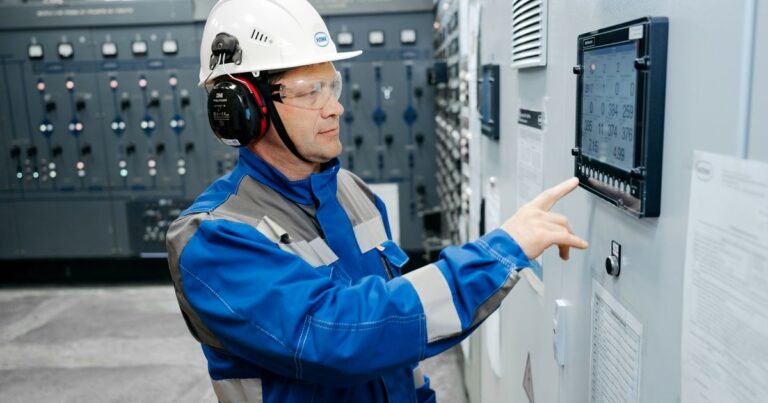
Diploma in Electrical and Electronics Engineering (DEEE) Full Form
Nishit Kumar is a senior EdTech industry leader with over a decade of experience in building and scaling education platforms, shaping their product, content, and growth strategy. At…
Latest update: Diploma in Electrical and Electronics Engineering 2026 admissions & dates updated. Read more ›
Welcome to the comprehensive guide for students and parents exploring the Diploma in Electrical and Electronics Engineering (DEEE) Full Form in India for the academic year 2026. This page provides an in-depth look at what this diploma entails, its career prospects, eligibility criteria, and more, helping you make an informed decision about this popular engineering stream.
What is the Full Form of DEEE?
The full form of DEEE is Diploma in Electrical and Electronics Engineering. It is a three-year undergraduate diploma course focusing on the fundamental principles and practical applications of electrical and electronic systems, preparing students for entry-level technical roles in various industries.
What is Diploma in Electrical and Electronics Engineering (DEEE)?
A Diploma in Electrical and Electronics Engineering (DEEE) is a vocational course that provides students with foundational knowledge and practical skills in both electrical and electronics engineering disciplines. This program is designed to equip students with the ability to design, develop, test, and maintain electrical and electronic equipment and systems, making them job-ready for diverse technical roles.
What is the eligibility for Diploma in Electrical and Electronics Engineering?
The primary eligibility criterion for a Diploma in Electrical and Electronics Engineering (DEEE) is successful completion of 10th standard (SSLC/Matriculation) or its equivalent from a recognized board. Candidates must typically have studied Science and Mathematics as core subjects and meet a minimum aggregate percentage, which usually ranges from 35% to 50% depending on the institution and state.
Eligibility Edge Cases and Specific Requirements:
- Age Limit: While most institutions do not have an upper age limit, some may specify a minimum age (e.g., 15 or 16 years old by the admission year).
- Subject Requirements: Physics, Chemistry, and Mathematics (PCM) are often preferred or mandatory at the 10th standard level.
- Direct Second Year Admission (Lateral Entry): Students who have completed 12th standard with Physics, Chemistry, and Mathematics (PCM) or have an ITI certificate in a relevant trade may be eligible for direct admission into the second year of the DEEE program.
- Domicile Requirements: State-level diploma admissions often have domicile criteria, prioritizing residents of that particular state.
How long is the Diploma in Electrical and Electronics Engineering course?
The standard duration for the Diploma in Electrical and Electronics Engineering (DEEE) course is three years. This is typically divided into six semesters, with each semester focusing on a distinct set of subjects and practical training modules.
What subjects are covered in Diploma in Electrical and Electronics Engineering?
The DEEE curriculum is comprehensive, covering core concepts from both electrical and electronics engineering. Students gain knowledge in areas such as circuit theory, power systems, digital electronics, microcontrollers, and communication systems, alongside practical lab work.
Typical Subjects per Semester (Illustrative):
| Semester | Key Subjects |
|---|---|
| Semester 1 | Applied Mathematics, Applied Physics, Applied Chemistry, Basic Electrical Engineering, Engineering Drawing |
| Semester 2 | Applied Mathematics II, Electrical Circuits, Basic Electronics, C Programming, Workshop Practice |
| Semester 3 | Electrical Machines I, Digital Electronics, Electrical & Electronic Measuring Instruments, Analog Electronics |
| Semester 4 | Electrical Machines II, Power Electronics, Microcontrollers & Applications, Communication Engineering |
| Semester 5 | Power System I, Industrial Automation, Electrical Estimation & Costing, Control Systems, Elective I |
| Semester 6 | Power System II, Renewable Energy Systems, Project Work, Industrial Management, Elective II |
How much does Diploma in Electrical and Electronics Engineering cost?
The cost of a Diploma in Electrical and Electronics Engineering (DEEE) varies significantly based on the type of institution (government vs. private) and its location. Generally, government colleges are more affordable, while private institutions have higher fees.
DEEE Fee Ranges (Annual, India 2026):
| Institution Type | Annual Fee Range (INR) |
|---|---|
| Government Colleges | ₹5,000 – ₹30,000 |
| Private Colleges | ₹30,000 – ₹1,00,000+ |
These figures are indicative and can change. Additional costs may include hostel fees, examination fees, and study materials.
What are the admission process and key dates for DEEE in 2026?
The admission process for DEEE in 2026 typically involves applying to state-level common entrance tests or directly to institutions based on 10th standard marks. Many states conduct a centralized counseling process.
General Admission Process Steps:
- Application Form: Fill out the application form online or offline, usually released between March and May.
- Entrance Exam (if applicable): Appear for state-level entrance exams (e.g., DET, POLYCET) in May/June.
- Merit List/Counseling: Based on exam scores or 10th marks, a merit list is published, followed by counseling for seat allocation in June/July.
- Document Verification & Fee Payment: Complete the admission formalities by verifying documents and paying the first semester fees.
Tentative Key Dates for DEEE Admissions 2026 (India):
| Event | Tentative Month (2026) |
|---|---|
| Application Form Release | March – April |
| Application Deadline | April – May |
| Entrance Exam (if applicable) | May – June |
| Result Declaration | June |
| Counseling & Allotment | June – July |
| Classes Begin | August |
Is Diploma in Electrical and Electronics Engineering worth it for jobs?
Yes, a Diploma in Electrical and Electronics Engineering (DEEE) is highly valuable for securing entry-level technical jobs in various sectors. The curriculum is designed to be industry-relevant, providing practical skills that are in demand. Graduates can find employment in manufacturing, power generation and distribution, telecommunications, electronics design, and maintenance roles.
What are the career prospects and salary expectations after DEEE?
Graduates of DEEE have diverse career opportunities in both government and private sectors. They can work as junior engineers, technicians, supervisors, or even pursue higher education.
Common Job Roles and Average Starting Salaries (Annual, India):
| Job Role | Average Starting Salary (INR) |
|---|---|
| Junior Electrical Engineer | ₹2,00,000 – ₹3,50,000 |
| Electronics Technician | ₹1,80,000 – ₹3,00,000 |
| Maintenance Technician | ₹1,50,000 – ₹2,80,000 |
| Electrical Supervisor | ₹2,20,000 – ₹3,80,000 |
| Field Service Engineer | ₹2,00,000 – ₹3,50,000 |
Salaries can increase significantly with experience, additional certifications, and higher education.
What are the advantages and disadvantages of pursuing DEEE?
Like any educational path, DEEE has its pros and cons, which students should consider before enrolling.
Advantages:
- Job-Oriented: Focuses on practical skills, making graduates readily employable.
- Cost-Effective: Generally less expensive than a full B.Tech degree.
- Quicker Entry to Workforce: Shorter duration (3 years) compared to B.Tech (4 years).
- Lateral Entry Option: Provides a pathway to B.Tech (2nd year) for those wishing to pursue higher education.
- Diverse Opportunities: Opens doors to various industries like power, manufacturing, telecom, and IT.
Disadvantages:
- Limited Career Progression (without further education): May hit a ceiling in senior management or R&D roles without a B.Tech/BE.
- Lower Starting Salaries: Generally lower than B.Tech graduates initially.
- Intense Practical Focus: May not appeal to students preferring a more theoretical or research-oriented approach.
- Competition: High competition for government jobs and top private sector roles.
How does DEEE compare to other diplomas like DCE or DME?
While all are engineering diplomas, DEEE, Diploma in Civil Engineering (DCE), and Diploma in Mechanical Engineering (DME) focus on distinct engineering branches. DEEE combines electrical and electronics, DCE focuses on infrastructure, and DME on machinery and manufacturing.
Comparison Table: DEEE vs. DCE vs. DME
| Feature | Diploma in Electrical & Electronics Engineering (DEEE) | Diploma in Civil Engineering (DCE) | Diploma in Mechanical Engineering (DME) |
|---|---|---|---|
| Focus Area | Electrical systems, electronic circuits, power generation, control systems. | Design, construction, and maintenance of physical and natural built environments. | Design, analysis, manufacturing, and maintenance of mechanical systems. |
| Key Subjects | Circuit Theory, Power Systems, Digital Electronics, Microcontrollers. | Structural Mechanics, Surveying, Construction Materials, Hydraulics. | Thermodynamics, Fluid Mechanics, Machine Design, Manufacturing Processes. |
| Industries | Power, Manufacturing, Telecom, IT, Automation, Consumer Electronics. | Construction, Infrastructure Development, Public Works, Urban Planning. | Automotive, Manufacturing, Aerospace, HVAC, Robotics. |
| Job Roles | Jr. Electrical Engineer, Electronics Technician, Maintenance Supervisor. | Jr. Civil Engineer, Site Supervisor, Draftsman, Quantity Surveyor. | Jr. Mechanical Engineer, Production Supervisor, Design Assistant, Quality Control. |
What are the options for higher education after DEEE?
After completing a DEEE, students have excellent opportunities for higher education, primarily through lateral entry into a B.Tech/BE program. This allows them to join the second year of an undergraduate engineering degree in Electrical, Electronics, or related fields.
Higher Education Pathways:
- B.Tech/BE (Lateral Entry): The most common path, allowing direct admission to the second year of a 4-year engineering degree. This saves a year compared to starting B.Tech after 12th.
- AMIE (Associate Member of the Institution of Engineers): A professional certification equivalent to a degree, allowing diploma holders to gain engineering qualifications.
- Specialized Certifications: Pursuing short-term courses in PLC, SCADA, Embedded Systems, Robotics, etc., to enhance specific skill sets.
Explore more on FindMyCollege
Related pages for Diploma in Electrical and Electronics Engineering aspirants on findmycollege.com:
Frequently Asked Questions
Is DEEE equivalent to 12th standard?
No, DEEE is not equivalent to 12th standard. It is a post-10th diploma course that provides specialized technical education, whereas 12th standard is a general academic qualification. However, DEEE graduates are often considered for higher education pathways that typically require a 12th pass, such as lateral entry into B.Tech.
Can I get a government job after DEEE?
Yes, many government organizations, including State Electricity Boards, Railways, PWD, BSNL, and various PSUs (Public Sector Undertakings), recruit DEEE graduates for roles like Junior Engineer, Technician, and Supervisor. These jobs often require clearing competitive examinations.
Which is better: Diploma in Electrical Engineering or Diploma in Electronics Engineering?
The choice between a pure Diploma in Electrical Engineering and a pure Diploma in Electronics Engineering depends on your specific interest. DEEE offers a blend of both, providing a broader skill set. If you are interested in power generation, transmission, and heavy machinery, Electrical is better. If you prefer circuits, microcontrollers, and communication, Electronics might be more suitable. DEEE provides a good balance.
Are there any entrance exams for DEEE admission?
Yes, many states in India conduct common entrance tests for diploma admissions, such as DET (Diploma Entrance Test), POLYCET (Polytechnic Common Entrance Test), or similar exams. Some private colleges may also conduct their own entrance exams or admit students based on 10th standard marks.
What is the scope of DEEE abroad?
The scope of DEEE abroad can be good, especially in countries with strong manufacturing and industrial sectors. However, direct employment might require additional certifications or a bachelor’s degree to meet international qualification standards. Many DEEE graduates pursue a bachelor’s degree abroad to enhance their global career prospects.
Is DEEE difficult?
The difficulty of DEEE depends on the individual student’s aptitude for science and mathematics, as well as their dedication to practical learning. It involves a good balance of theoretical concepts and hands-on lab work. Students who enjoy problem-solving and practical applications generally find it manageable and engaging.
Can I do B.Tech after DEEE?
Yes, after completing DEEE, you can pursue a B.Tech (Bachelor of Technology) degree through lateral entry. This means you can directly join the second year of a 4-year B.Tech program in a relevant engineering discipline, saving one year of study compared to starting B.Tech after 12th grade.
What are the top colleges for DEEE in India?
Some of the top colleges for DEEE in India include various Government Polytechnics in different states (e.g., Delhi, Maharashtra, Karnataka, Tamil Nadu), as well as reputable private polytechnic colleges affiliated with state technical boards. Specific top colleges vary by state and ranking, but generally, government institutions are highly regarded for their quality education and affordability.