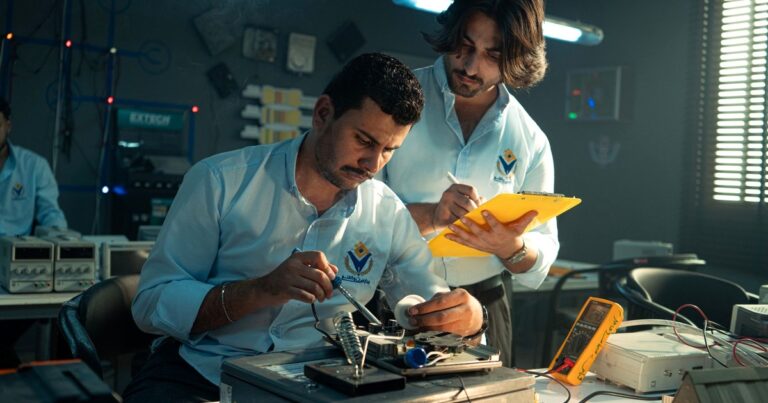
Diploma in Electrical Engineering Full Form & 2026 Guide
Nishit Kumar is a senior EdTech industry leader with over a decade of experience in building and scaling education platforms, shaping their product, content, and growth strategy. At…
Latest update: Diploma in Electrical Engineering 2026 admissions & dates updated. Read more ›
Welcome to the comprehensive guide for students and parents exploring the Diploma in Electrical Engineering (DEE) Full Form in India for the 2026 academic year. This page provides an in-depth look into what DEE entails, its eligibility criteria, admission process, career prospects, and everything else you need to know to make an informed decision about this foundational engineering program.
What is the Full Form of Diploma in Electrical Engineering?
The full form of Diploma in Electrical Engineering is DEE. It is a polytechnic-level undergraduate program focused on providing students with fundamental knowledge and practical skills in the field of electrical engineering.
This 3-year program (typically 6 semesters) equips students to work as junior engineers, supervisors, or technicians in various industries dealing with electricity generation, transmission, distribution, and utilization. It serves as a strong stepping stone for both immediate employment and further higher education, such as a B.Tech degree through lateral entry.
What is Diploma in Electrical Engineering? An Overview
Diploma in Electrical Engineering (DEE) is a technical diploma course that covers the study of electricity, electronics, electromagnetism, and their applications. The curriculum is designed to impart both theoretical understanding and hands-on experience in areas like electrical circuits, machines, power systems, control systems, and basic electronics.
Graduates are trained to assist in the design, development, testing, and maintenance of electrical equipment and systems. The program emphasizes practical skills, making its graduates highly employable in sectors ranging from manufacturing and power generation to telecommunications and IT infrastructure.
What is the Eligibility for Diploma in Electrical Engineering in 2026?
To be eligible for the Diploma in Electrical Engineering program in 2026, candidates must typically have completed their 10th standard (Matriculation) or equivalent examination from a recognized board, with a strong emphasis on Science and Mathematics.
Specific eligibility criteria can vary slightly between states and institutions, but the general requirements are:
- Educational Qualification: Successful completion of Class 10th or equivalent.
- Minimum Marks: A minimum aggregate percentage, usually between 35% to 50% in the qualifying examination, with Science and Mathematics as compulsory subjects. Some colleges may specify minimum marks in individual subjects.
- Age Limit: While many polytechnic courses do not have an upper age limit, some institutions might specify a minimum age (e.g., 15 or 16 years).
- Domicile: For state-level entrance exams and government colleges, domicile rules of the respective state often apply.
Eligibility Edge Cases and Important Considerations:
- Vocational Stream Students: Students who have completed Class 10+2 with vocational subjects related to electrical technology may also be eligible for direct admission to the second year (lateral entry) in some states.
- NIOS/Open Schooling: Candidates from recognized open schooling boards like NIOS are generally eligible, provided they meet the subject and percentage criteria.
- Reserved Categories: SC/ST/OBC candidates typically receive relaxation in minimum percentage requirements as per government norms.
How to Get Admission to Diploma in Electrical Engineering in 2026?
Admission to Diploma in Electrical Engineering programs in 2026 is primarily based on either merit in the 10th standard examination or performance in state-level polytechnic entrance examinations.
The admission process generally involves the following steps:
- Research Colleges: Identify polytechnic colleges offering DEE in your preferred region and check their specific admission criteria and application deadlines.
- Appear for Entrance Exam (if applicable): Many states conduct common entrance tests for polytechnic admissions (e.g., JEECUP in UP, DET in Haryana, DCET in Karnataka). Prepare for and appear in these exams.
- Application Submission: Fill out the application form for the chosen colleges or state-level counseling, providing all necessary academic and personal details.
- Merit List/Counseling: Based on entrance exam scores or 10th-grade marks, a merit list is prepared. Qualified candidates are then called for counseling sessions where they can choose their preferred college and branch.
- Document Verification & Fee Payment: Once a seat is allotted, candidates must verify their original documents and pay the admission fees to confirm their enrollment.
Key 2026 Admission Dates (Tentative):
These dates are indicative and based on previous years’ trends. Students should refer to official state polytechnic board websites for precise 2026 schedules.
| Event | Tentative Dates (2026) | Common Entrance Exams |
|---|---|---|
| Application Start | March – April | JEECUP (UP), DET (Haryana), JEXPO (WB), BCECE (Bihar) |
| Application End | April – May | TS POLYCET (Telangana), AP POLYCET (Andhra Pradesh) |
| Entrance Exam | May – June | Karnataka DCET (Lateral Entry) |
| Result Declaration | June – July | |
| Counseling & Admissions | July – August |
How Much Does Diploma in Electrical Engineering Cost? (2026 Fees)
The cost of a Diploma in Electrical Engineering in 2026 varies significantly between government and private institutions. Government polytechnics are considerably more affordable, while private colleges have higher fees due to infrastructure, faculty, and facilities.
Typical Fee Ranges per Annum (2026):
| Institution Type | Annual Fee Range (INR) | Additional Costs |
|---|---|---|
| Government Polytechnic Colleges | ₹5,000 – ₹25,000 | Exam fees, hostel (if applicable), study materials |
| Private Polytechnic Colleges | ₹30,000 – ₹1,000,000+ | Admission fees, development charges, lab fees, hostel, uniform, transport |
Note: These are approximate ranges. Some top-tier private institutions might have fees exceeding ₹1,00,000 per annum. Always check the specific college’s prospectus for the exact fee structure.
Is Diploma in Electrical Engineering Worth It for Jobs? Career Scope & Salary
Yes, a Diploma in Electrical Engineering is highly worth it for securing immediate employment in a wide array of industries. The program’s practical focus ensures graduates possess job-ready skills, making them valuable assets in the electrical sector.
Career Scope:
DEE graduates find opportunities in:
- Power Generation & Distribution: Power plants, electricity boards, transmission companies.
- Manufacturing: Electrical equipment manufacturing, automotive, consumer electronics.
- Construction: Building electrical systems, infrastructure projects.
- Railways & Metro: Maintenance and operation of electrical systems.
- Telecommunications: Installation and maintenance of network infrastructure.
- IT & Software (Hardware side): Data centers, hardware testing.
- Public Sector Undertakings (PSUs): BHEL, NTPC, PGCIL, DRDO, ISRO (through competitive exams).
- Self-Employment: Starting electrical contracting businesses, repair services.
Common Job Roles and Average Starting Salaries (India, 2026):
Starting salaries for DEE graduates typically range from ₹1.8 LPA to ₹3.5 LPA, depending on the company, location, and individual skill set. With experience, salaries can significantly increase.
| Job Role | Description | Average Starting Salary (INR/Year) |
|---|---|---|
| Junior Engineer (Electrical) | Assists in design, installation, maintenance of electrical systems. | ₹2,00,000 – ₹3,50,000 |
| Electrical Supervisor | Oversees electrical work on-site, manages technicians. | ₹2,20,000 – ₹3,80,000 |
| Electrical Technician | Installs, repairs, and maintains electrical equipment. | ₹1,80,000 – ₹3,00,000 |
| Maintenance Engineer | Ensures smooth operation and upkeep of electrical machinery. | ₹2,50,000 – ₹4,00,000 |
| Field Service Engineer | Provides on-site technical support and troubleshooting. | ₹2,20,000 – ₹3,70,000 |
Diploma in Electrical Engineering vs. B.Tech in Electrical Engineering: Which is Better?
The choice between a Diploma in Electrical Engineering (DEE) and a B.Tech in Electrical Engineering depends entirely on a student’s career goals, academic background, and financial situation. DEE offers quicker entry into the job market, while B.Tech provides a deeper theoretical foundation and higher-level career progression.
Key Differences:
- Duration: DEE is typically 3 years; B.Tech is 4 years.
- Entry Qualification: DEE after 10th; B.Tech after 12th (PCM) or DEE (lateral entry).
- Focus: DEE is more practical and skill-oriented; B.Tech is more theoretical, research-oriented, and design-focused.
- Job Roles: DEE graduates typically work as junior engineers, supervisors, technicians. B.Tech graduates often take on roles as design engineers, project managers, R&D engineers.
- Salary & Growth: B.Tech graduates generally start with higher salaries and have a faster career progression to senior management or specialized roles.
Pathways:
- A DEE graduate can pursue a B.Tech degree through lateral entry, joining the second year of the B.Tech program. This is a popular pathway for students who want to start working early and then upgrade their qualifications.
- A B.Tech graduate can pursue M.Tech or Ph.D. for advanced research and academic careers.
What Subjects are Taught in Diploma in Electrical Engineering? (Syllabus Overview)
The Diploma in Electrical Engineering syllabus is structured to provide a strong foundation in core electrical concepts, coupled with practical laboratory work. While specific subjects may vary slightly by institution, the core curriculum remains consistent.
Typical Subjects per Semester (Illustrative):
The program is generally divided into 6 semesters.
- Semester 1 & 2 (Foundation):
- Applied Mathematics
- Applied Physics
- Applied Chemistry
- Engineering Drawing
- Basic Electrical Engineering
- Workshop Practice
- Computer Fundamentals
- Semester 3 & 4 (Core Electrical):
- Electrical Circuits
- Electrical Machines-I (DC Machines, Transformers)
- Analog Electronics
- Digital Electronics
- Electrical Measurement & Instrumentation
- Power System-I (Generation)
- Electrical Wiring & Estimation
- Semester 5 & 6 (Advanced & Applications):
- Electrical Machines-II (AC Machines)
- Power System-II (Transmission & Distribution)
- Control Systems
- Microcontrollers & PLCs
- Industrial Electronics & Drives
- Renewable Energy Systems (Elective)
- Project Work & Industrial Training
- Entrepreneurship Development
Practical labs are an integral part of almost every subject, ensuring hands-on skill development.
Explore more on FindMyCollege
Related pages for Diploma in Electrical Engineering aspirants on findmycollege.com:
Frequently Asked Questions
Is Diploma in Electrical Engineering difficult?
The difficulty of Diploma in Electrical Engineering is subjective, but it is generally considered manageable for students with a strong foundation in Class 10th Science and Mathematics. It involves a good balance of theoretical concepts and practical applications, requiring dedication to both classroom learning and lab work.
Can I do B.Tech after Diploma in Electrical Engineering?
Yes, absolutely. After completing a Diploma in Electrical Engineering, you can pursue a B.Tech degree through the lateral entry scheme. This allows you to directly join the second year (3rd semester) of a B.Tech in Electrical Engineering program, saving one year compared to starting B.Tech after 12th grade.
What is the highest salary for a Diploma in Electrical Engineering?
While starting salaries are modest, experienced Diploma in Electrical Engineering professionals can earn significantly. With 5-10 years of experience, a skilled diploma holder in supervisory or specialized roles can earn anywhere from ₹5 LPA to ₹10 LPA or more, especially in PSUs or large private sector companies, or by starting their own successful contracting business.
Which is better, ITI or Diploma in Electrical Engineering?
A Diploma in Electrical Engineering is generally considered a higher qualification than an ITI (Industrial Training Institute) certificate. ITI courses are typically shorter (1-2 years) and focus on very specific trade skills (e.g., Electrician, Wireman). A Diploma provides a broader engineering foundation, more theoretical knowledge, and opens doors to junior engineering and supervisory roles, as well as lateral entry to B.Tech. ITI is ideal for immediate entry into skilled labor roles, while Diploma offers more career progression opportunities.
Are there government jobs after Diploma in Electrical Engineering?
Yes, there are numerous government job opportunities for Diploma in Electrical Engineering graduates. PSUs (Public Sector Undertakings) like NTPC, BHEL, PGCIL, Railways, State Electricity Boards, and various government departments (e.g., PWD, Irrigation) regularly recruit Diploma holders for Junior Engineer (JE) positions through competitive examinations.
What are the future prospects for Diploma in Electrical Engineering?
The future prospects for Diploma in Electrical Engineering graduates are strong, driven by India’s growing infrastructure, industrialization, and focus on renewable energy. Demand for skilled electrical professionals is consistent in sectors like power, manufacturing, smart cities, and electric vehicles. Continuous learning and upskilling in emerging technologies like automation, IoT, and renewable energy will further enhance career growth.
Can a Diploma holder become an Electrical Engineer?
Yes, a Diploma holder can become an Electrical Engineer. While the initial designation might be Junior Engineer or Supervisor, with experience and continuous learning, they can take on more complex engineering responsibilities. Many also opt for lateral entry to a B.Tech degree, which formally qualifies them as a graduate Electrical Engineer, opening up higher-level design and management roles.