DMLT Course Subjects and Year-Wise Syllabus Overview
Nishit Kumar is a senior EdTech industry leader with over a decade of experience in building and scaling education platforms, shaping their product, content, and growth strategy. At…
The DMLT (Diploma in Medical Laboratory Technology) course is a 2-year diploma program structured across 4 semesters.
Below is a detailed guide to the year-wise and semester-wise DMLT syllabus, covering core subjects, elective specialisations, practical training requirements, entrance exam topics, reference books, and admission steps.
| Parameter | Details |
|---|---|
| Course Duration | 2 Years (4 Semesters) |
| Eligibility | 10+2 with Physics, Chemistry, and Biology/Mathematics (minimum 45%-50% aggregate) |
| Minimum Age Limit | 17 Years |
| Internship Duration | 3 to 6 Months |
| Average Starting Salary | INR 1.9 LPA to INR 2.8 LPA |
DMLT Electives and Specialisations
Alongside core clinical subjects, DMLT programs offer elective specialisations that allow candidates to develop domain-specific expertise in modern diagnostic fields such as molecular testing, automated instrumentation, and blood transfusion management.
| Category | Subject Name | Subject Description & Scope |
|---|---|---|
| Core Subject | Human Anatomy & Physiology | Study of body structures, organ systems, and biological functions essential for lab diagnosis |
| Core Subject | Clinical Biochemistry | Chemical analysis of body fluids to identify metabolic disorders, liver/kidney diseases, and diabetes |
| Core Subject | Histopathology & Cytology | Microscopic examination of biological tissues and cells for disease identification and tumors |
| Elective Subject | Blood Banking & Transfusion | Safe collection, blood grouping, cross-matching, preservation, and transfusion practices |
| Elective Subject | Molecular Biology Techniques | DNA/RNA extraction methodologies, Polymerase Chain Reaction (PCR), and genetic testing |
| Elective Subject | Medical Instrumentation | Operation, calibration, safety monitoring, and maintenance of laboratory diagnostic devices |
| Elective Subject | Cytogenetics | Chromosome analysis and genetic testing protocols used in diagnostic screening |
DMLT Practicals and Projects
- Lectures & Theory Classes: Provide foundational knowledge in pathology, microbiology, and biochemistry.
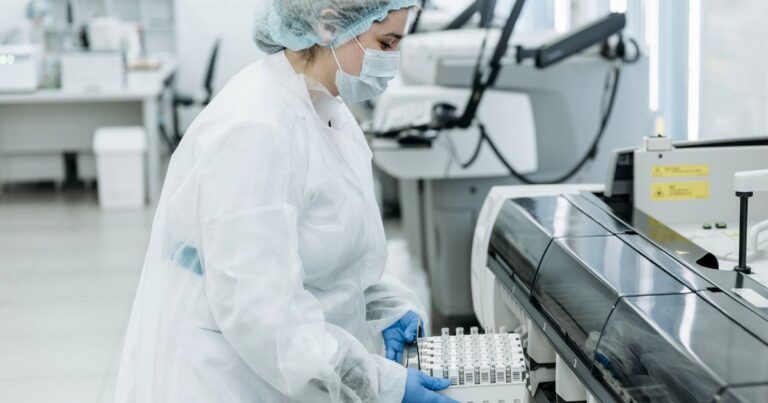
- Lab Practicals: Offer hands-on training in diagnostic techniques and laboratory equipment usage.
- Demonstrations: Show live or video demonstrations of specimen collection and testing procedures.
- Clinical Internship: Provide real-world exposure in hospitals or diagnostic labs under supervision.
- Assessments & Viva: Evaluate progress through practical exams, internal assessments, theory tests, and viva voce.
DMLT instruction combines theoretical classroom lectures, practical laboratory sessions, internal assessments, viva voce, and a mandatory 3-6 month internship. This structure offers clinical exposure in real healthcare settings prior to graduation.
Books for DMLT
| Subject Area | Book Title | Author / Publisher |
|---|---|---|
| Human Anatomy & Physiology | Human Anatomy Regional and Applied | B.D. Chaurasia & K. Garg |
| Human Anatomy & Physiology | Introduction to Human Anatomy and Physiology | E.A. Solomon |
| Human Anatomy | A Text Book of Human Anatomy | T.S. Ranganathan |
| Biochemistry | Text Book of Biochemistry for Medical Students | D. Vasudevan & S. Sree Kumari |
| Biochemistry | Biochemistry | U. Satyanarayana |
| Clinical Chemistry | Clinical Chemistry | Tietz |
| Medical Lab Technology | Medical Laboratory Technology | Kanai L. Mukherjee |
| Medical Lab Technology | Laboratory Technology | Ramnik Sood |
| Hematology | Hematology: Principles and Procedures | Barbara A. Brown |
DMLT Entrance Exam Syllabus
While many paramedical colleges admit students based on 10+2 marks, several institutions and state bodies conduct entrance examinations such as CET Delhi, SRMJEEE, AMU Entrance Test, AIIMS Nursing Entrance Exam, JIPMER, and PPMET. Certain institutes also recognize NEET scores for admission into paramedical and DMLT courses.
| Section | Key Syllabus Topics Covered |
|---|---|
| Physics | Units and Measurement, Mechanics of Solids/Fluids, Heat & Thermodynamics, Electricity & Magnetism, Oscillations & Waves, Ray & Wave Optics |
| Chemistry | Atomic Structure, Chemical Bonding, States of Matter, Thermodynamics, Electrochemistry, Hydrocarbons, Organic Compounds containing O & N, Biomolecules |
| Biology | Cell Biology & Genetics, Human Physiology, Plant Physiology, Microbiology, Immunology, Environmental Science, Biotechnology & Applications |
| Mathematics (if applicable) | Sets & Functions, Complex Numbers, Matrices & Determinants, Calculus, Analytical Geometry, Statistics & Probability |
How to Apply for DMLT Admission in 2026: Step by Step
- Register for Entrance Exam (If Applicable): Apply for state or university entrance exams such as CET Delhi, SRMJEEE, AMU Entrance Test, PPMET, or relevant nursing/paramedical entrance tests.
- Participate in Merit List / Counselling: Attend merit-based or score-based counselling for seat allotment in government or private paramedical colleges.
- Document Verification and Fee Payment: Submit 10th and 12th marksheets, medical fitness certificate, and pay tuition fees (ranging from INR 10,000 to INR 3.50 Lakh depending on government vs private college).
| What to do | Where | Link |
|---|---|---|
| Compare colleges, fees and cutoffs | DMLT colleges in India | findmycollege.com |
FAQs
Is NEET required for DMLT?
No, NEET is generally not mandatory for DMLT. Most colleges grant admission based on 10+2 merit in PCB/PCM or through specific state/university entrance exams like CET Delhi or AMU Entrance Test, though some institutes consider NEET scores.
What are the minimum qualifications required to get a diploma in medical laboratory science?
Candidates must have passed 10+2 in the Science stream with Physics, Chemistry, and Biology/Mathematics, securing at least 45% to 50% aggregate marks from a recognised board, and be at least 17 years old.
What are the main subjects in DMLT 1st year?
DMLT 1st-year subjects include Human Anatomy, Physiology, Basic Biochemistry, Fundamentals of Medical Laboratory Technology, Basics of Microbiology, Fundamentals of Histopathology & Cytology, and English Communication.
What are the key subjects covered in DMLT 2nd year?
DMLT 2nd-year subjects focus on Clinical Microbiology, Clinical Pathology, Histopathological Techniques, Clinical Biochemistry, Advanced Hematology, Blood Banking, and Research Methodology.
What is the average salary after completing a DMLT course?
A fresh DMLT graduate working as a Medical Laboratory Technician earns an average starting salary between INR 1.9 LPA and INR 2.8 LPA in hospitals, diagnostic labs, and clinics.
What recommended books are used for DMLT subjects?
Standard recommended books include B.D. Chaurasia’s Human Anatomy, D. Vasudevan’s Text Book of Biochemistry, Kanai L. Mukherjee’s Medical Laboratory Technology, and Ramnik Sood’s Laboratory Technology.