Fisheries Course Details: Eligibility Criteria, Duration and Scope
- 23 Oct 2026ICAR AIEEA Mop-Up Round Seat Allotment Released
The ICAR AIEEA mop-up round seat allotment process was declared with candidate seat acceptance fee payments conducted on 23-24 October 2026.
Fisheries Science courses in India, primarily the 4-year Bachelor of Fisheries Science (B.F.Sc), cover aquaculture, fish processing, and aquatic ecosystem management.
Scoring above 700 marks in CUET UG places candidates in the 95+ percentile band for admissions to top central universities. Below is complete information on B.F.Sc eligibility criteria, 8-semester syllabus breakdown, entrance exam requirements, institutional fee structures, top colleges, and career job roles.
| Parameter | Details |
|---|---|
| Degree Levels | UG (B.F.Sc / B.Sc), PG (M.F.Sc), PhD, Diploma, Certification |
| UG Course Duration | 4 Years (8 Semesters) for B.F.Sc; 3 Years for B.Sc Fisheries |
| Minimum Eligibility | 10+2 with Physics, Chemistry, Biology (PCB) with 50% aggregate marks |
| Average Course Fees | INR 3,000 to INR 6.4 Lakh (Government colleges start at INR 1,590/year) |
| Major Entrance Exams | ICAR AIEEA, CUET UG, MCAER CET, CUSAT CAT, OUAT, KCET, CIFNET Entrance Test |
| Key Recruiters | FSI, MPEDA, EIA, CAA, FSSAI, INCOIS, NIO, WHO |
What is B.F.Sc Fisheries Science
Fisheries Science is an interdisciplinary study covering fish processing, aquaculture, oceanography, limnology, fish nutrition, disease diagnosis, and bioeconomics. The Bachelor of Fisheries Science (B.F.Sc) is a 4-year undergraduate degree program structured into 8 semesters. The program equips students with technical skills required to manage capture and culture fisheries, aquatic health, and post-harvest technology.
The curriculum combines classroom lectures, field practicals, and practical exposure.
B.F.Sc Fisheries Science Eligibility
- UG Courses: Class 12 with Physics, Chemistry, and Biology (PCB) with at least 50% aggregate score.
- PG Courses: Undergraduate degree in B.F.Sc or relevant discipline with at least 50% aggregate marks.
- Doctorate: Postgraduate degree in M.F.Sc or relevant discipline.
- Uttarakhand In-Service Candidates: Nominated by the Fisheries Department require 10+2 with Biology and a minimum of 55% marks in both 10th and 12th standard.
General eligibility for undergraduate B.F.Sc courses requires passing 10+2 with PCB subjects with at least 50% aggregate score. Nominated in-service candidates from Uttarakhand require a minimum of 55% marks in both 10th and 12th standard.
B.F.Sc Fisheries Science Admission Process
Admission to B.F.Sc programs across Indian universities is primarily entrance-based. Candidates must qualify in national, state, or university-level entrance examinations to secure merit-based seats in state agricultural and fisheries universities.
A score above 700 marks in the CUET UG examination places candidates in the 95+ percentile band, improving admission prospects at top central and deemed universities.
B.F.Sc Fisheries Science Syllabus and Subjects
The final year emphasizes experiential learning.
| Semester | Subjects Taught |
|---|---|
| Semester I | Principles of Aquaculture, Taxonomy of Finfish & Shellfish, Meteorology & Geography, Principles of Biochemistry, Fishery Economics |
| Semester II | Information & Communication Technology, Freshwater Aquaculture, Anatomy & Biology of Finfish and Shellfish, Soil & Water Chemistry, Limnology, Food Chemistry |
| Semester III | Culture of Fish Food Organisms, Inland Fisheries, Oceanography, Fish Nutrition & Feed Technology, Marine Biology, Refrigeration and Freezing Technology |
| Semester IV | Aquaculture Engineering, Ornamental Fish Production, Coastal Aquaculture & Mariculture, Fishing Craft & Gear Technology, Extension Education, Legislation |
| Semester V | Aquatic Ecology & Biodiversity, Finfish & Shellfish Hatchery Management, Diseases & Management, Marine Fisheries, Navigation & Seamanship |
| Semester VI | Biotechnology & Bioinformatics, Fishery Genetics & Breeding, Fish Population Dynamics, Aquatic Pollution, Fish By-products, Financing & Marketing |
| Semester VII | Hands-on Training in Fisheries (Experiential Learning Module) |
| Semester VIII | In-plant Training in Fisheries Industry and Field Stations |
| College | City | Ownership | Total course fee |
|---|---|---|---|
| Fisheries College and Research Institute | Thoothukudi | Government | ₹28,915 |
| College of Fisheries Mangalore | Mangalore | Government | ₹1.11 lakh |
| Annamalai University | Chidambaram | Government | ₹1.11 lakh |
| Central Institute of Fisheries Nautical and Engineering Training | Kochi | Government | ₹1.56 lakh |
| Maharashtra Animal and Fishery Sciences University | Nagpur | Government | ₹2.18 lakh |
| College | City | Total course fee | NIRF rank |
|---|---|---|---|
| ShereKashmir University of Agricultural Sciences and Technology of Jammu | Jammu | ₹92,200 | 7 (Overall, 2025) |
| Govind Ballabh Pant University of Agriculture and Technology | Pantnagar | ₹1.54 lakh | 9 (Overall, 2025) |
| Chaudhary Charan Singh Haryana Agricultural University | Hisar | ₹62,180 | 10 (Overall, 2025) |
| Dr. Rajendra Prasad Central Agricultural University | Samastipur | ₹69,780 | 14 (Overall, 2025) |
| Assam Agricultural University | Jorhat | ₹41,010 | 18 (Agriculture, 2025) |
| Orissa University of Agriculture and Technology | Bhubaneswar | ₹83,210 | 19 (Overall, 2025) |
| Central Agricultural University | Imphal | ₹74,720 | 24 (Overall, 2025) |
| Guru Angad Dev Veterinary and Animal Sciences University | Ludhiana | ₹1.76 lakh | 30 (Overall, 2025) |
| Chandra Shekhar Azad University of Agriculture and Technology | Kanpur | ₹1.07 lakh | 30 (Agriculture, 2023) |
| Kerala University of Fisheries and Ocean Studies Panangad | Kochi | ₹1.18 lakh | 31 (Agriculture, 2025) |
| City | Colleges | Fee range | Well-known options |
|---|---|---|---|
| Ludhiana | 3 | ₹1.76 lakh – ₹1.83 lakh | Guru Angad Dev Veterinary and Animal Sciences University, College of Fisheries Ludhiana |
| Pantnagar | 2 | ₹1.54 lakh – ₹1.71 lakh | Govind Ballabh Pant University of Agriculture and Technology, College of Technology, GB Pant University of Agriculture & Technology |
| Kolkata | 2 | ₹44,280 – ₹2.69 lakh | The Neotia University, West Bengal University of Animal and Fishery Sciences |
| Kochi | 2 | ₹1.18 lakh – ₹1.56 lakh | Kerala University of Fisheries and Ocean Studies Panangad, Central Institute of Fisheries Nautical and Engineering Training |
| Srinagar | 1 | ₹92,200 – ₹92,200 | ShereKashmir University of Agricultural Sciences and Technology of Kashmir |
| Berhampur | 1 | ₹2.00 lakh – ₹2.00 lakh | College of Fisheries Berhampur |
| Hisar | 1 | ₹62,180 – ₹62,180 | Chaudhary Charan Singh Haryana Agricultural University |
| Junagadh | 1 | — | Junagadh Agricultural University |
B.F.Sc Fisheries Science Career Scope and Salary
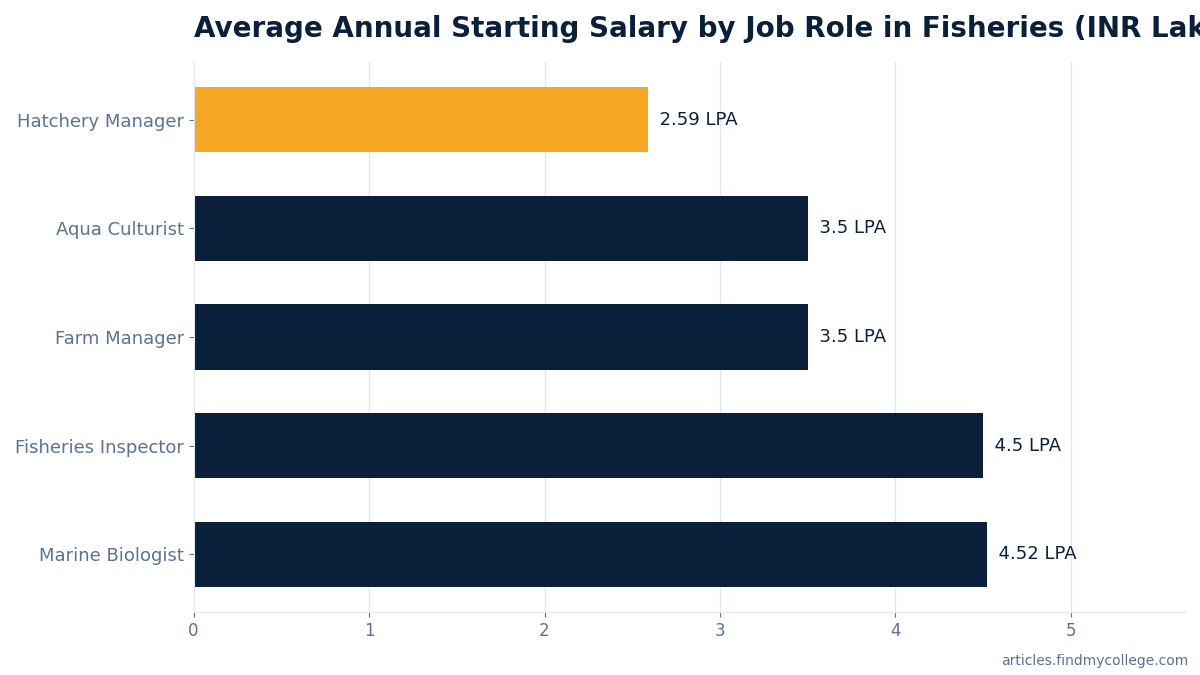
Fisheries Science offers diverse career paths across both public and private sectors. Key government job designations for fisheries graduates include Fisheries Inspector, Sub-Inspector of Fisheries, Assistant Fisheries Development Officer (AFDO), and Fisheries Extension Officer (FEO) in state fisheries departments and central bodies.
In the private sector, job roles include Hatchery Manager, Farm Manager, Aqua Culturist, Marine Biologist, Feed Mill Manager, and Fish Export Inspector. Entry-level starting salaries for graduates begin around INR 2 LPA, with opportunities for rapid career advancement in commercial hatcheries, seafood processing firms, and international trade organizations.
How to Apply for B.F.Sc Fisheries Science Admission in 2026: Step by Step
- Check Eligibility Criteria: Ensure passing 10+2 with Physics, Chemistry, and Biology with at least 50% aggregate marks. In-service candidates nominated by the Fisheries Department of Uttarakhand Government require 55% marks in both 10th and 12th standard.
- Register for Entrance Exams: Apply online for national exams such as ICAR AIEEA and CUET UG/PG, or state entrance tests like MCAER CET, OUAT, CUSAT CAT, and KCET.
- Appear for Entrance Examination: Take the entrance exam and obtain a merit rank (scoring above 700 marks in CUET UG places candidates in the 95+ percentile band for top central universities).
- Participate in Counselling and Seat Allotment: Register for counselling rounds (such as ICAR AIEEA mop-up round seat allotment) on the respective entrance authority portal.
| What to do | Where | Link |
|---|---|---|
| Compare colleges, fees and cutoffs | B.F.Sc Fisheries Science colleges in India | findmycollege.com |
Admissions to B.F.Sc courses require candidates to fulfill eligibility rules and clear relevant entrance tests. Final seat confirmation occurs after completing document verification and paying the course fee.
FAQs
How many years course is fisheries?
The Bachelor of Fisheries Science (B.F.Sc) is a 4-year undergraduate degree program divided into 8 semesters. General B.Sc Fisheries courses last 3 years, Master’s (M.F.Sc) takes 2 years, and diploma courses take 6 to 12 months.
Is BFSc a good course?
Yes, B.F.Sc is a comprehensive multidisciplinary professional degree offering excellent opportunities in state fisheries departments, central agencies (MPEDA, FSI, CAA), commercial hatcheries, and export firms with competitive starting packages beginning from INR 2 LPA.
What is the salary of a fishery officer?
Fisheries Inspectors and Extension Officers in state fisheries departments receive competitive government entry-level salary packages, with private and public career options providing steady growth based on qualification and experience.
What are the jobs after BSC fisheries?
Graduates can work as Farm Managers, Hatchery Managers, Aqua Culturists, Fisheries Inspectors, Extension Officers, Marine Biologists, Fish Exporters, or pursue higher studies like M.F.Sc.
Which private college has the lowest fees?
How to study Fisheries Science?
Candidates must pass Class 12 in Science stream with Physics, Chemistry, and Biology (minimum 50% marks), appear for entrance exams like ICAR AIEEA, CUET, or state CETs, and gain admission to a recognized fisheries college.