Library Science Course: B.Lib.I.Sc Admission, Eligibility and Scope
Nishit Kumar is a senior EdTech industry leader with over a decade of experience in building and scaling education platforms, shaping their product, content, and growth strategy. At…
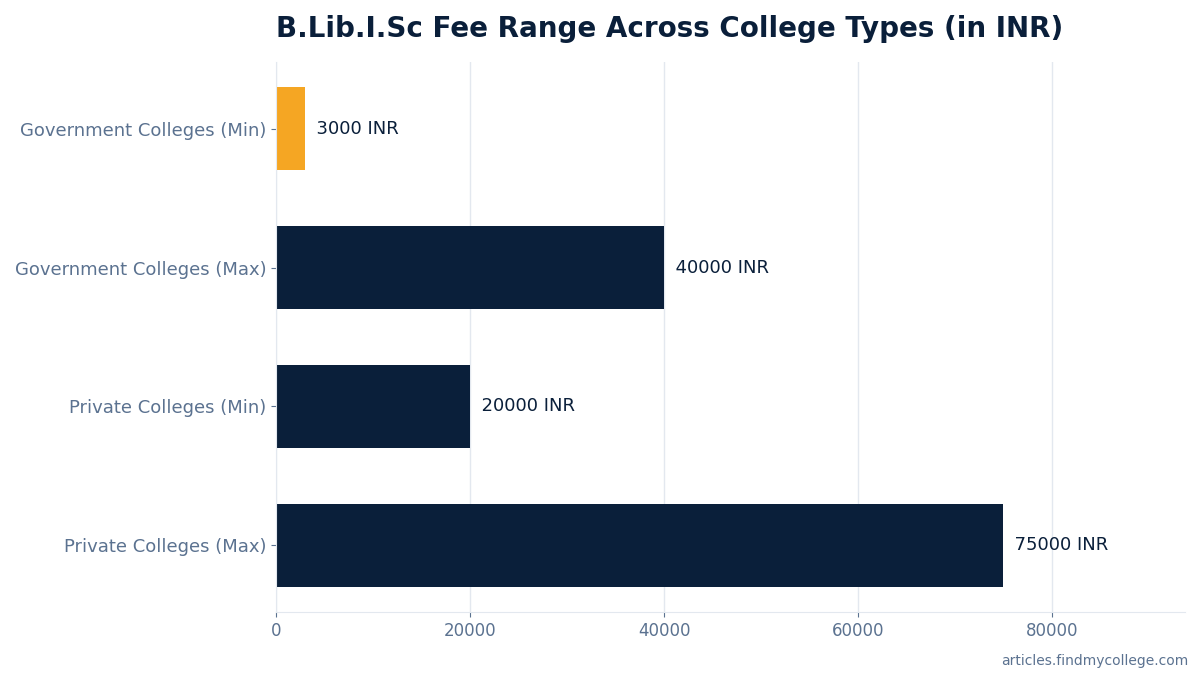
Bachelor of Library and Information Science (B.Lib.I.Sc or BLIS) is a 1-year graduate-entry professional degree program focused on library management, cataloguing, and digital information systems. Total course fees range from ₹3,000 to ₹75,000+ depending on the institution, with starting salaries ranging between ₹2.5 LPA and ₹4.5 LPA (₹15,000 to ₹40,000 per month).
Below you will find comprehensive information on B.Lib.I.Sc eligibility criteria, entrance examinations, semester-wise subjects, government and private college fees, top institutions, and career opportunities across India.
| Parameter | Details |
|---|---|
| Full Form | Bachelor of Library and Information Science (B.Lib.I.Sc / BLIS / B.Lib.Sc) |
| Course Duration | 1 Year (2 Semesters) |
| Academic Level | Graduate-Entry Professional Degree |
| Eligibility | Bachelor’s degree in any stream with 45%–55% aggregate marks |
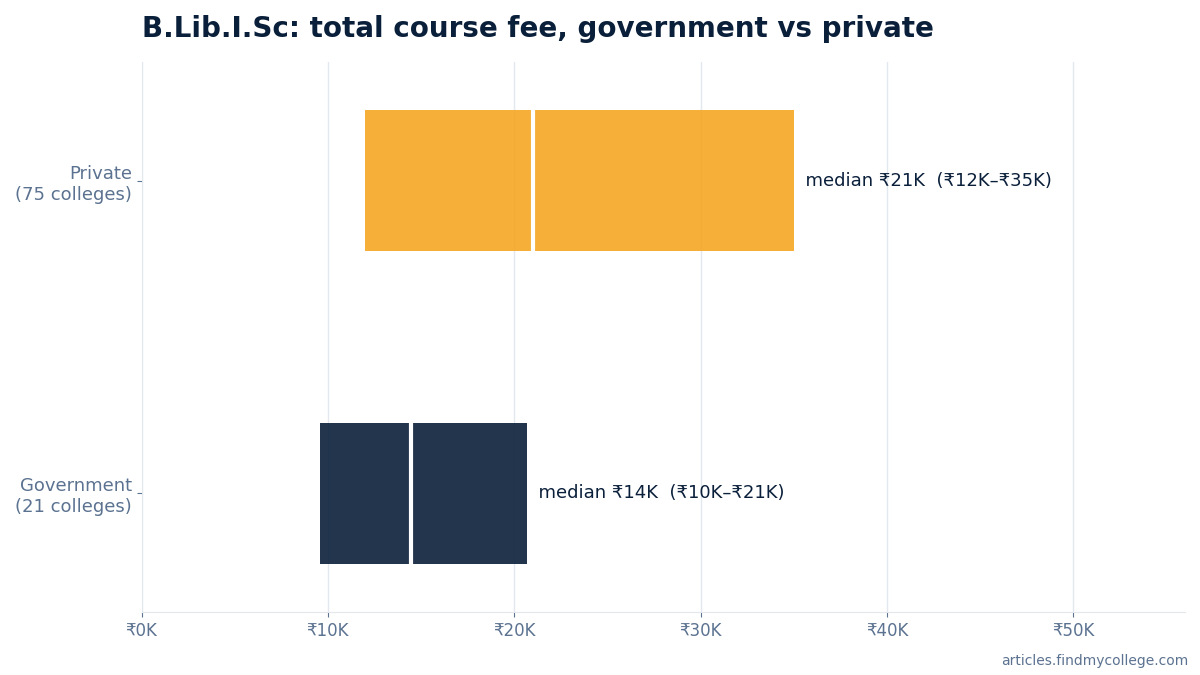
| Average Course Fees | ₹3,000 – ₹40,000 (Government) | ₹20,000 – ₹75,000+ (Private) |
| Average Starting Salary | ₹2.5 LPA – ₹4.5 LPA (₹15,000 – ₹40,000 per month) |
| Major Entrance Exams | CUET PG, AMU Admission Test, JUET, Patna University BLIS Test, WBSU Test |
What is B.Lib.I.Sc
Bachelor of Library and Information Science (B.Lib.I.Sc, BLIS, or B.Lib) is a professional 1-year graduate-entry course structured into two semesters. Designed for candidates aiming for a career as a librarian or information specialist, the degree library science curriculum equips students with foundational skills in document classification, cataloguing, information indexing, and library automation software.
The program serves as a bridge between traditional print resource management and modern digital information systems. Graduates gain practical training in managing physical collections, operating digital databases, delivering information retrieval services, and maintaining library software tools.
B.Lib.I.Sc Eligibility
- Candidates must hold a recognised bachelor’s degree in Arts, Science, Commerce, or any other discipline with 45% to 55% aggregate marks for standard eligibility.
- For IGNOU, eligibility requires a Bachelor’s degree with 50% marks (45% for SC, ST, OBC, and PH candidates), or a Bachelor’s degree with a 1-year Diploma in Library Science, or a Bachelor’s degree with 2 years of library work experience.
- Admission modes include CUET PG scores, university entrance tests such as AMU and JUET, graduation merit lists, and direct ODL eligibility routes.
While standard eligibility requires a bachelor’s degree with 45% to 55% aggregate marks, specific institutions offer relaxed criteria for reserved categories. Distance learning routes like IGNOU allow entry through a relevant library diploma or work experience combined with a degree.
B.Lib.I.Sc Admission Process
Admission modes for B.Lib.I.Sc depend on the university structure and program delivery format. Institutions offer entry through four standard routes:
- CUET PG Entrance Score: Used by participating central and state universities for postgraduate professional admissions.
- University Entrance Tests: Conducted by individual institutions including the AMU Entrance Test, JUET, Patna University BLIS Test, and WBSU Test.
- Graduation Merit: Selection based on aggregate marks obtained in the applicant’s undergraduate degree.
- ODL Direct Eligibility: Direct admission based on fulfilling minimum qualifying credentials for open and distance learning programs.
B.Lib.I.Sc Syllabus and Subjects
| Course Code | Course Title | Credits / Focus Area |
|---|---|---|
| BLI-221 | Library, Information and Society | 4 Credits / Core Context |
| BLI-222 | Information Sources and Services | Core Subject |
| BLI-223 | Organising and Managing Information | Classification & Cataloguing |
| BLI-224 | ICT Fundamentals | Computers & Network Tech |
| BLI-225 | Communication Skills | Workplace Communication |
| BLIE-226 | Management of Library and Information Centre | Management & Quality |
| BLIE-227 | Document Processing: Practice | Practical Library Routines |
| BLIE-228 | Information Products and Services | Information Products |
| BLIE-229 | ICT in Libraries | Automation Software Practice |
The core syllabus covers Library Classification, Cataloguing, ICT Fundamentals, Information Sources and Services, and Library Management. The academic curriculum combines theoretical learning with document processing practicals.
B.Lib.I.Sc Career Scope and Salary
Graduating with a degree in library science offers career opportunities in educational institutions, public libraries, corporate research units, and government departments. The average starting salary for B.Lib.I.Sc graduates ranges from INR 2.5 LPA to INR 4.5 LPA, which corresponds to INR 15,000 to INR 40,000 per month.
Primary career job roles include Librarian, Assistant Librarian, Information Analyst, Documentation Officer, and Cataloguer. Government research organisations recruiting librarians include ICAR, CSIR, DRDO, ICSSR, ICHR, ICMR, and ICFRE.
How to Apply for B.Lib.I.Sc Admission in 2026: Step by Step
- Check Academic Eligibility: Ensure you hold a recognised bachelor’s degree in Arts, Science, Commerce, or Social Science with 45% to 55% aggregate marks (50% for IGNOU/AMU).
- Select Admission Route & Entrance Exam: Determine whether your targeted university accepts CUET PG, university-level tests (AMU Test, JUET, Patna Univ BLIS Test, WBSU Test), graduation merit, or ODL direct eligibility.
- Submit Application Form: Register on the university or exam portal, fill in educational and personal details, upload documents, and pay application fees between February and August.
- Appear for Entrance Test (If Applicable): Sit for the entrance exam (e.g., CUET PG or AMU B.Lib.I.Sc Admission Test) during the prescribed examination window.
- Participate in Merit List / Counselling: Check the programme-specific merit list or register for university counselling based on entrance scores or graduation marks.
- Complete Document Verification & Fee Payment: Submit graduation marksheets, 10th/12th certificates, ID proof, and category certificates for verification, then pay total fees (INR 3,000 to INR 75,000+) to confirm admission.
| What to do | Where | Link |
|---|---|---|
| Compare colleges, fees and cutoffs | B.Lib.I.Sc colleges in India | findmycollege.com |
Candidates should verify eligibility criteria, entrance exam details, and fee structures on the official university website before applying.
FAQs
What does B.Lib.I.Sc stand for?
B.Lib.I.Sc stands for Bachelor of Library and Information Science. It is a 1-year professional graduate-entry degree program focused on managing library operations, cataloguing, and digital information systems.
B Lib course kitne saal ka hota hai?
B.Lib (B.Lib.I.Sc / BLIS) course graduation ke baad 1 saal (2 semesters) ka hota hai. Yeh graduate-entry professional degree course library management, cataloguing, aur information systems ki comprehensive training pradan karta hai.
What is the fee for the BLIS course at IGNOU?
The total course fee for the BLIS course at IGNOU is ₹7,600. Students should check IGNOU’s official portal for complete session fee details and payment schedules.
What is the eligibility for Librarian ka course (B.Lib.I.Sc)?
Candidates must complete a Bachelor’s degree in any discipline with 45% to 55% marks. IGNOU also permits candidates with a 1-year Library Science diploma or 2 years of relevant library work experience.
What is the average starting salary of B.Lib graduates in India?
Starting salaries range between ₹2.5 LPA and ₹4.5 LPA, which translates to approximately ₹15,000 to ₹40,000 per month depending on whether the job is in a school, college, corporate firm, or government agency.
Is CUET PG compulsory for B.Lib.I.Sc admission?
No. CUET PG is used by selected central and participating universities. Other institutions conduct their own entrance tests (such as AMU, JUET, Patna University, WBSU) or grant admission based on graduation merit.