Master of Chirurgiae (M.Ch.) Duration in India (2026)
Nishit Kumar is a senior EdTech industry leader with over a decade of experience in building and scaling education platforms, shaping their product, content, and growth strategy. At…
Latest update: Master of Chirurgiae 2026 admissions & dates updated. Read more ›
Welcome to the comprehensive guide on the duration of the Master of Chirurgiae (M.Ch.) program in India for the 2026 academic year. This page is designed for prospective students and parents seeking detailed information about this advanced surgical super-specialty degree. Understanding the program’s length is crucial for career planning, financial considerations, and personal commitments.
The M.Ch. is a highly specialized postgraduate medical degree pursued after an M.S. (Master of Surgery) or DNB (Diplomate of National Board) in a relevant surgical discipline. It signifies the highest level of surgical training in a particular sub-specialty. This guide will delve into the standard duration, factors influencing it, and what to expect during this rigorous academic journey.
What is the standard duration of the Master of Chirurgiae (M.Ch.) program in India?
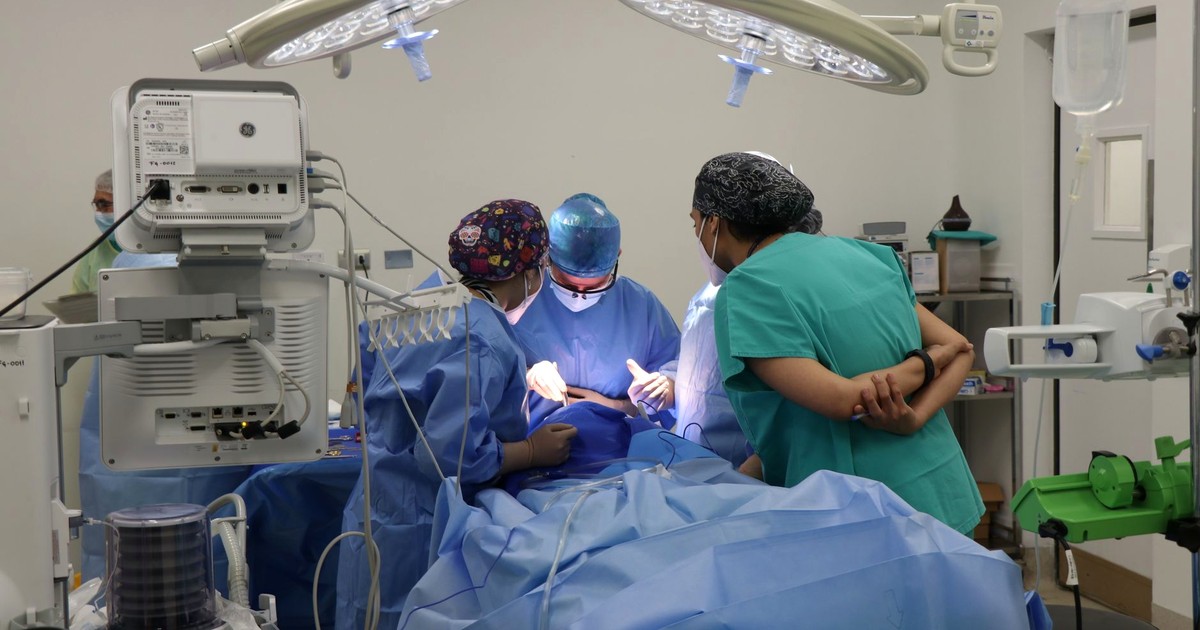
The standard duration of the Master of Chirurgiae (M.Ch.) program in India is three years. This is a full-time, intensive residency program that combines advanced theoretical knowledge with extensive practical surgical training in a chosen super-specialty.
The three-year duration is mandated by regulatory bodies like the National Medical Commission (NMC) for all M.Ch. specializations across government and private medical colleges. This period is dedicated to developing highly specialized surgical skills, critical decision-making abilities, and research acumen within a specific surgical field. Students are typically referred to as ‘residents’ or ‘senior residents’ during this period, actively participating in patient care, surgical procedures, academic conferences, and research activities.
Does the M.Ch. duration vary by specialization?
No, the M.Ch. duration does not vary by specialization; it remains a uniform three years across all recognized surgical super-specialties in India. While the content and focus of training differ significantly, the overall time commitment is consistent.
Whether you pursue M.Ch. in Neurosurgery, Cardiothoracic and Vascular Surgery (CTVS), Plastic Surgery, Urology, Pediatric Surgery, or any other recognized super-specialty, the program will span three academic years. This standardized duration ensures that all M.Ch. graduates receive a comprehensive and adequate period of training, regardless of their chosen field. The intensity and specific surgical caseload will, however, be unique to each specialization.
Common M.Ch. Specializations and Their 3-Year Duration
- M.Ch. (Cardiothoracic & Vascular Surgery – CTVS): 3 Years
- M.Ch. (Neurosurgery): 3 Years
- M.Ch. (Urology): 3 Years
- M.Ch. (Plastic Surgery): 3 Years
- M.Ch. (Pediatric Surgery): 3 Years
- M.Ch. (Surgical Gastroenterology): 3 Years
- M.Ch. (Endocrine Surgery): 3 Years
- M.Ch. (Vascular Surgery): 3 Years
- M.Ch. (Thoracic Surgery): 3 Years
What are the eligibility criteria for M.Ch. programs in 2026?
To be eligible for M.Ch. programs in 2026, candidates must possess a Master of Surgery (M.S.) or Diplomate of National Board (DNB) degree in a relevant surgical discipline from a recognized institution, along with a valid MBBS degree and permanent registration with the Medical Council of India (MCI) or State Medical Council.
Specific M.S./DNB feeder qualifications are required for each M.Ch. super-specialty. For instance, M.Ch. Neurosurgery typically requires M.S. General Surgery, while M.Ch. Urology also requires M.S. General Surgery. Some specializations might accept M.S. Orthopaedics or M.S. ENT as feeder qualifications for specific M.Ch. courses. Additionally, candidates must clear the NEET SS (National Eligibility cum Entrance Test for Super Specialty courses) examination, which is the primary entrance test for M.Ch. and DM admissions in India.
M.Ch. Eligibility Criteria (2026 Intake)
| Criterion | Details |
|---|---|
| Educational Qualification | MBBS degree from a recognized university. |
| Postgraduate Qualification | M.S. (Master of Surgery) or DNB (Diplomate of National Board) in a relevant surgical specialty (e.g., General Surgery, Orthopaedics, ENT). |
| Medical Registration | Permanent registration with the Medical Council of India (MCI) or a State Medical Council. |
| Entrance Exam | Qualify in NEET SS (National Eligibility cum Entrance Test for Super Specialty courses). |
| Internship | Completion of a compulsory rotating internship. |
| Age Limit | Generally, no upper age limit, but some institutions may have specific criteria. |
What is the admission process and key dates for M.Ch. 2026?
The admission process for M.Ch. programs in 2026 primarily involves appearing for and qualifying the NEET SS examination, followed by centralized counseling conducted by the Medical Counseling Committee (MCC) for All India Quota seats, and state-level counseling for state quota seats.
The NEET SS exam is typically held in September, with results declared in October. Counseling usually commences in November/December, with academic sessions starting in January of the following year. Candidates must register for NEET SS, apply for the exam, and then participate in the counseling rounds based on their rank and preference. Document verification and fee payment complete the admission process.
Tentative M.Ch. Admission Timeline (2026 Intake)
| Event | Tentative Month (2025-2026) |
|---|---|
| NEET SS Application Window | July – August 2025 |
| NEET SS Examination | September 2025 |
| NEET SS Result Declaration | October 2025 |
| MCC/State Counseling Registration | November – December 2025 |
| Counseling Rounds (All India & State) | December 2025 – January 2026 |
| Reporting to Allotted College | January 2026 |
| Academic Session Commencement | January/February 2026 |
How much does an M.Ch. program cost (fees) in India for 2026?
The cost of an M.Ch. program in India for 2026 varies significantly, ranging from very low (INR 10,000 – 1 Lakh per annum) in government institutions to very high (INR 15 Lakhs – 40 Lakhs per annum) in private medical colleges and deemed universities.
Government colleges offer highly subsidized fees due to public funding, making them the most sought-after options. Private and deemed universities, on the other hand, charge substantial fees to cover their operational costs, infrastructure, and faculty salaries. These fees often do not include hostel charges, examination fees, or other miscellaneous expenses. It’s crucial for prospective students to research the specific fee structure of their target institutions.
M.Ch. Annual Fee Ranges (2026 Tentative)
| Institution Type | Annual Fee Range (INR) |
|---|---|
| Government Medical Colleges | ₹10,000 – ₹1,00,000 |
| Private Medical Colleges | ₹15,00,000 – ₹30,00,000 |
| Deemed Universities | ₹20,00,000 – ₹40,00,000+ |
Is pursuing an M.Ch. degree worth it for career prospects and salary?
Yes, pursuing an M.Ch. degree is generally highly worth it for exceptional career prospects and significantly higher salary potential in the medical field. It positions graduates as super-specialist surgeons, leading to roles in advanced clinical practice, academia, and research.
M.Ch. graduates command some of the highest salaries in the medical profession due to their specialized skills and the critical nature of their work. They are in high demand in corporate hospitals, specialized clinics, and as faculty in medical colleges. The investment in time and money often yields substantial returns in terms of professional satisfaction, societal impact, and financial rewards.
Average Annual Salary Ranges for M.Ch. Graduates (Post-M.Ch.)
| Specialization | Average Annual Salary Range (INR) |
|---|---|
| Cardiothoracic & Vascular Surgeon | ₹25,00,000 – ₹80,00,000+ |
| Neurosurgeon | ₹30,00,000 – ₹1,00,00,000+ |
| Urologist | ₹20,00,000 – ₹60,00,000+ |
| Plastic Surgeon | ₹20,00,000 – ₹70,00,000+ |
| Pediatric Surgeon | ₹18,00,000 – ₹55,00,000+ |
| Surgical Gastroenterologist | ₹22,00,000 – ₹65,00,000+ |
Note: Salaries can vary widely based on experience, hospital type (government vs. private/corporate), city, and individual practice.
What is the difference between M.S. and M.Ch. in terms of duration and scope?
The primary difference between M.S. (Master of Surgery) and M.Ch. (Master of Chirurgiae) lies in their level of specialization and duration. M.S. is a broader postgraduate degree in general surgery (or other surgical fields like Orthopaedics, ENT) with a duration of three years, while M.Ch. is a super-specialty degree pursued after M.S., also with a duration of three years, focusing on a highly specific surgical sub-discipline.
M.S. provides a foundational and comprehensive training in general surgical principles and common procedures. M.Ch., on the other hand, builds upon this foundation, offering in-depth, advanced training and expertise in a very narrow and complex surgical area, such as cardiac surgery or neurosurgery. Essentially, M.S. is the prerequisite for M.Ch., making the total duration of surgical training for an M.Ch. specialist at least six years post-MBBS (3 years M.S. + 3 years M.Ch.).
Can the M.Ch. duration be extended or reduced under any circumstances?
The M.Ch. duration of three years is generally fixed and cannot be reduced. However, it can be extended under specific circumstances, primarily due to academic non-performance, failure in examinations, or prolonged leave/absences.
Students who fail their university examinations may be required to repeat a year or a portion of their training, thereby extending the overall duration. Similarly, extended medical leave, maternity leave, or other approved leaves beyond a certain threshold might necessitate an extension to ensure the completion of the required training hours and surgical caseload. Such extensions are typically governed by university and NMC regulations.
What is the typical weekly schedule or workload for an M.Ch. resident?
The typical weekly schedule for an M.Ch. resident is extremely demanding and rigorous, often exceeding 80-100 hours per week, encompassing long hospital shifts, surgical procedures, academic sessions, and on-call duties.
Residents are actively involved in patient rounds, pre-operative and post-operative care, assisting and performing surgeries, attending outpatient clinics, participating in departmental seminars, journal clubs, and grand rounds. They also have significant on-call responsibilities, which can involve working continuous 24-36 hour shifts. The workload is intense, designed to provide maximum exposure and hands-on experience in their chosen super-specialty within the three-year timeframe.
Frequently Asked Questions
Is there any M.Ch. program with a shorter duration than 3 years?
No, as per the regulations of the National Medical Commission (NMC), all recognized M.Ch. programs in India have a mandatory duration of three years. There are no M.Ch. programs with a shorter duration.
What happens if I fail an M.Ch. examination?
If you fail an M.Ch. examination, you will typically be given an opportunity to re-appear for the examination. Depending on university rules, this might involve repeating a semester or a full year, which would extend your overall M.Ch. program duration beyond the standard three years.
Can I pursue M.Ch. immediately after MBBS?
No, you cannot pursue M.Ch. immediately after MBBS. M.Ch. is a super-specialty degree that requires a postgraduate surgical degree (M.S. or DNB in a relevant surgical discipline) as a prerequisite. You must complete your MBBS, internship, and then an M.S./DNB before being eligible for M.Ch.
Are there any part-time M.Ch. programs available?
No, M.Ch. programs are exclusively full-time, intensive residency programs. The nature of surgical training requires continuous presence, hands-on experience, and active participation in patient care, making part-time options unfeasible and unrecognized by regulatory bodies.
What is the average age of an M.Ch. student?
Given the extensive educational pathway (MBBS + Internship + M.S./DNB + M.Ch.), the average age of an M.Ch. student typically ranges from 28 to 35 years, depending on when they complete their prior degrees and gain admission.
Do M.Ch. residents receive a stipend during their training?
Yes, M.Ch. residents in both government and most private medical colleges receive a monthly stipend. The amount varies significantly by state, institution type, and year of residency, but it is generally sufficient to cover living expenses, ranging from INR 60,000 to INR 1,20,000+ per month.