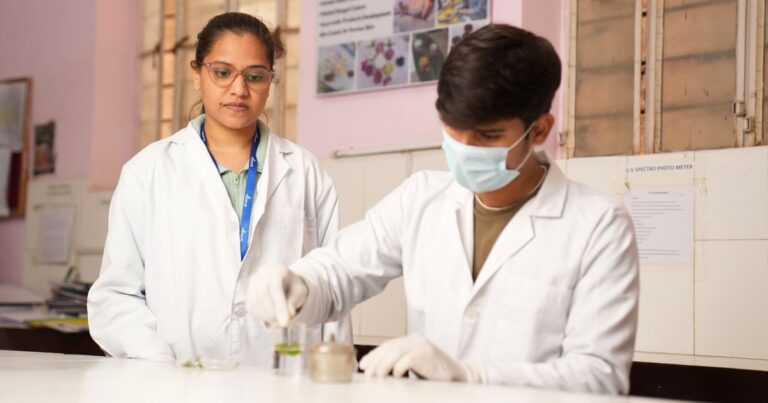

MD Pathology in India 2026: Course Overview & Admissions
Nishit Kumar is a senior EdTech industry leader with over a decade of experience in building and scaling education platforms, shaping their product, content, and growth strategy. At…
Latest update: Doctorate of Medicine in Pathology 2026 admissions & dates updated. Read more ›
Doctorate of Medicine (MD) in Pathology: India 2026 Overview
The Doctorate of Medicine (MD) in Pathology is a postgraduate medical specialization focusing on the study of diseases through the examination of organs, tissues, bodily fluids, and autopsies. This three-year program equips medical graduates with advanced diagnostic skills essential for various healthcare settings.
Course Structure and Curriculum
The MD Pathology curriculum in India for 2026 is designed to provide comprehensive training across various sub-specialties of pathology, including histopathology, cytopathology, hematology, clinical pathology, microbiology, and molecular pathology. Students engage in extensive laboratory work, diagnostic reporting, research, and teaching.
Key Areas of Study:
- General Pathology & Systemic Pathology
- Clinical Pathology & Lab Management
- Hematology & Blood Banking
- Cytopathology & Histopathology
- Immunopathology & Molecular Pathology
- Autopsy Pathology & Forensic Pathology
Eligibility Criteria for MD Pathology 2026
To be eligible for MD Pathology in India in 2026, candidates must possess an MBBS degree from a recognized medical college and complete their compulsory rotating internship. Additionally, aspirants must qualify in a national-level entrance examination, primarily NEET PG.
Detailed Eligibility Requirements:
- Educational Qualification: MBBS degree recognized by the Medical Council of India (MCI)/National Medical Commission (NMC).
- Internship: Completion of a 12-month compulsory rotating internship by the stipulated date (usually March 31st of the admission year).
- Entrance Exam: Qualification in NEET PG 2026 with the prescribed minimum percentile.
- Registration: Provisional or permanent registration with the State Medical Council or MCI/NMC.
Admission Process and Entrance Exams
Admission to MD Pathology programs in India for 2026 is primarily through the National Eligibility cum Entrance Test (NEET PG), followed by centralized counseling. Some institutions may conduct their own entrance examinations for specific seats, though this is becoming less common.
NEET PG 2026 Overview:
NEET PG is a single-window entrance examination for admission to MD/MS/PG Diploma courses across India. The exam typically covers subjects taught during the MBBS curriculum.
| Aspect | Details (Approx. 2026) |
|---|---|
| Application Period | October – November 2025 |
| Exam Date | January – February 2026 |
| Result Declaration | March 2026 |
| Counseling Rounds | April – June 2026 |
| Minimum Qualifying Percentile (General) | 50th percentile |
| Minimum Qualifying Percentile (SC/ST/OBC) | 40th percentile |
Course Duration and Fees
The MD Pathology program typically spans three academic years, and the course fees vary significantly based on the type of institution (government, private, deemed university) and location. Government colleges generally have lower fees compared to private institutions.
Approximate Fee Structure (Annual, 2026):
- Government Colleges: INR 10,000 – INR 1,50,000
- Private Colleges: INR 5,00,000 – INR 25,00,000
- Deemed Universities: INR 10,00,000 – INR 35,00,000
These figures are indicative and subject to change. Additional costs may include hostel fees, examination fees, and other miscellaneous charges.
Career Prospects and Scope of MD Pathology
An MD in Pathology opens up diverse and rewarding career opportunities in both clinical and academic settings. Pathologists are integral to disease diagnosis, treatment planning, and medical research.
Potential Career Paths:
- Consultant Pathologist: Working in hospitals, diagnostic labs, and research centers.
- Academics & Research: Teaching in medical colleges, pursuing research, and contributing to medical advancements.
- Lab Director/Manager: Overseeing operations in diagnostic laboratories.
- Forensic Pathologist: Specializing in legal and forensic investigations.
- Oncopathologist/Neuropathologist: Sub-specializing in specific areas of pathology.
- Medical Examiner: In governmental or public health roles.
Average Salary Ranges (Annual, India 2026):
Salaries for MD Pathologists can vary widely based on experience, location, type of employer, and sub-specialization. Fresh graduates might expect to earn between INR 6,00,000 to INR 12,00,000 per annum, while experienced professionals can command significantly higher packages, ranging from INR 15,00,000 to INR 40,00,000 or more.
Top Colleges for MD Pathology in India
Several esteemed medical institutions across India offer excellent MD Pathology programs, known for their robust infrastructure, experienced faculty, and strong clinical exposure. These colleges consistently rank high in national surveys.
Renowned Institutions (Indicative List):
- All India Institute of Medical Sciences (AIIMS), New Delhi
- Postgraduate Institute of Medical Education and Research (PGIMER), Chandigarh
- Jawaharlal Institute of Postgraduate Medical Education and Research (JIPMER), Puducherry
- Maulana Azad Medical College (MAMC), New Delhi
- Seth G.S. Medical College, Mumbai
- Christian Medical College (CMC), Vellore
- KGMU – King George’s Medical University, Lucknow
- Institute of Medical Sciences, Banaras Hindu University (IMS BHU), Varanasi
Frequently Asked Questions
Q: What is the duration of the MD Pathology course?
A: The MD Pathology course in India is typically a three-year postgraduate program.
Q: Is NEET PG compulsory for MD Pathology admission?
A: Yes, NEET PG is the primary and almost universally accepted entrance examination for admission to MD Pathology courses across India.
Q: What is the average fee for MD Pathology in private colleges?
A: The average annual fees for MD Pathology in private colleges in India can range from INR 5,00,000 to INR 25,00,000, varying by institution and location.
Q: What career options are available after MD Pathology?
A: After completing MD Pathology, graduates can work as consultant pathologists, lab directors, researchers, academics, or specialize further in areas like forensic pathology or oncopathology.
Q: Can I pursue a super-specialization after MD Pathology?
A: Yes, after MD Pathology, you can pursue super-specializations like DM in Onco-Pathology, Neuropathology, or other niche areas, often through further entrance exams and training.