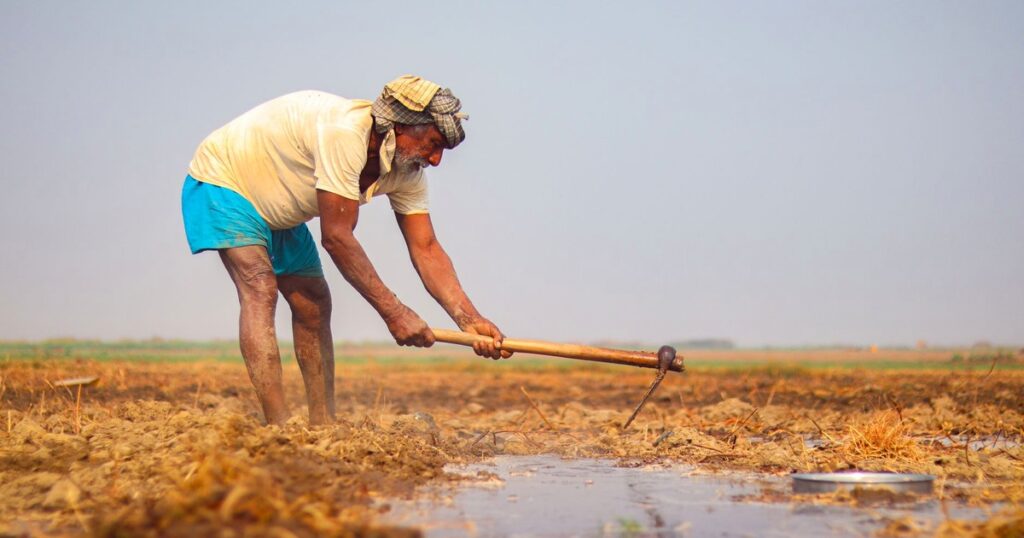
Master of Rural Development (MRD) Syllabus 2026 – India
Nishit Kumar is a senior EdTech industry leader with over a decade of experience in building and scaling education platforms, shaping their product, content, and growth strategy. At…
Latest update: Master of Rural Development 2026 admissions & dates updated. Read more ›
Welcome to the comprehensive guide for the Master of Rural Development (MRD) Syllabus 2026 in India. This page provides an in-depth look at the curriculum, admission process, eligibility criteria, career opportunities, and financial aspects of pursuing an MRD degree, designed for prospective students and their families.
What is the Master of Rural Development (MRD) Course?
The Master of Rural Development (MRD) is a postgraduate program focused on equipping students with the knowledge and skills necessary to address challenges and foster sustainable development in rural areas. It integrates various disciplines such as economics, sociology, management, and policy studies to create holistic development professionals.
This two-year, full-time program typically spans four semesters, combining theoretical frameworks with practical fieldwork, research projects, and internships. The core objective is to produce professionals capable of designing, implementing, and evaluating rural development programs and policies.
What is the Eligibility for Master of Rural Development (MRD)?
To be eligible for the Master of Rural Development (MRD) program, candidates generally need a bachelor’s degree in any discipline from a recognized university, with a minimum aggregate score. Specific percentage requirements can vary by institution, often ranging from 45% to 50%.
Some universities may prefer candidates with a background in social sciences, agriculture, or related fields, though it is not always mandatory. There is typically no upper age limit for applying to the MRD program. International students must meet equivalent academic qualifications and often demonstrate English language proficiency through tests like IELTS or TOEFL.
How Do I Get Admission to the Master of Rural Development (MRD) Program?
Admission to the Master of Rural Development (MRD) program typically involves an application process, an entrance examination, and often a personal interview or group discussion. The process usually commences in the spring for an autumn intake.
Here’s a general step-by-step guide:
- Research & Selection: Identify colleges offering MRD that align with your academic and career goals.
- Application: Complete the online or offline application form, submitting required documents such as academic transcripts, degree certificates, identity proof, and photographs.
- Entrance Exam: Appear for the university-specific entrance exam or national-level tests like CUET PG, TISSNET, or others, depending on the institution.
- Interview/Group Discussion: Shortlisted candidates are invited for a personal interview (PI) or group discussion (GD) to assess their communication skills, general awareness, and motivation.
- Merit List & Admission: A final merit list is prepared based on academic performance, entrance exam scores, and PI/GD performance. Selected candidates receive an admission offer and must complete the fee payment and document verification to secure their seat.
Key Admission Dates & Exams for MRD 2026 (Tentative)
| Exam Name | Application Period | Exam Date | Result Date |
|---|---|---|---|
| CUET PG 2026 | Dec 2025 – Jan 2026 | Mar 2026 | Apr 2026 |
| TISSNET 2026 | Oct 2025 – Jan 2026 | Feb 2026 | Mar 2026 |
| University Specific Exams | Varies (Jan – May 2026) | Varies (Apr – Jun 2026) | Varies (May – Jul 2026) |
What is the Master of Rural Development (MRD) Syllabus & Subjects?
The Master of Rural Development (MRD) syllabus is designed to provide a comprehensive understanding of rural dynamics, development theories, and practical intervention strategies. It covers a wide array of subjects across four semesters, often including fieldwork and a dissertation.
Typical MRD Semester-wise Syllabus (Illustrative)
| Semester 1 | Semester 2 | Semester 3 | Semester 4 |
|---|---|---|---|
| Introduction to Rural Development | Rural Livelihoods & Poverty Alleviation | Rural Entrepreneurship & Skill Development | Rural Development Policies & Planning |
| Rural Sociology & Anthropology | Rural Economics & Agricultural Development | Natural Resource Management | Project Planning, Monitoring & Evaluation |
| Development Theories & Practices | Rural Governance & Panchayati Raj | Gender & Development | Disaster Management & Climate Change |
| Research Methodology & Statistics | Rural Health & Education | Rural Marketing & Value Chains | Dissertation/Project Work |
| Communication Skills for Development | Microfinance & Financial Inclusion | Participatory Rural Appraisal (PRA) | Internship/Fieldwork |
Elective subjects may include topics like GIS & Remote Sensing for Rural Development, Corporate Social Responsibility (CSR), Conflict Resolution, and specific regional development studies.
How Much Does Master of Rural Development (MRD) Cost?
The cost of pursuing a Master of Rural Development (MRD) in India varies significantly based on the type of institution (government vs. private) and its reputation. Generally, government universities offer more affordable programs compared to private institutions.
MRD Fee Ranges in India (Annual)
| Institution Type | Average Annual Fees (INR) | Key Factors Influencing Fees |
|---|---|---|
| Government Universities/Institutes | ₹10,000 – ₹80,000 | Subsidies, state funding, university reputation |
| Private Universities/Institutes | ₹50,000 – ₹3,00,000+ | Infrastructure, faculty, placements, brand value |
These figures typically cover tuition fees, examination fees, and basic library access. Additional costs like hostel accommodation, mess charges, study materials, and fieldwork expenses are separate and should be factored into the overall budget.
Is Master of Rural Development (MRD) Worth It for Jobs?
Yes, a Master of Rural Development (MRD) is a highly valuable degree for those passionate about social impact and sustainable development, offering diverse and meaningful career opportunities. The demand for skilled professionals in rural development, especially in India, continues to grow due to government initiatives, NGO activities, and corporate social responsibility (CSR) mandates.
Graduates can find employment in various sectors, including:
- Government Sector: Rural Development Departments, Panchayati Raj Institutions, NITI Aayog, various ministries, and state-level development agencies.
- Non-Governmental Organizations (NGOs): National and international NGOs working on livelihoods, health, education, women empowerment, and environmental conservation in rural areas.
- Corporate Sector: CSR departments of large corporations, focusing on community development projects in their operational areas.
- Research & Academia: Research institutions, think tanks, and universities as researchers, project coordinators, or faculty.
- International Organizations: UN agencies (UNDP, UNICEF, FAO), World Bank, and other international development bodies.
- Social Entrepreneurship: Starting their own ventures focused on rural innovation and sustainable solutions.
Common Job Roles & Average Salary Ranges for MRD Graduates (Annual)
| Job Role | Average Annual Salary (INR) | Key Responsibilities |
|---|---|---|
| Rural Development Officer | ₹3,00,000 – ₹7,00,000 | Implementing government schemes, community mobilization |
| Project Coordinator/Manager | ₹3,50,000 – ₹8,00,000 | Planning, executing, and monitoring development projects |
| Livelihood Expert | ₹3,00,000 – ₹6,50,000 | Designing sustainable livelihood programs for rural communities |
| CSR Executive/Manager | ₹4,00,000 – ₹9,00,000 | Managing corporate social responsibility initiatives |
| Field Coordinator | ₹2,50,000 – ₹5,00,000 | On-ground implementation, data collection, community liaison |
| Research Associate | ₹3,00,000 – ₹6,00,000 | Conducting studies, data analysis, report writing |
Note: Salary ranges are indicative and can vary based on experience, organization, location, and specific skills.
What is the Difference Between MRD and MSW (Master of Social Work)?
While both Master of Rural Development (MRD) and Master of Social Work (MSW) are postgraduate degrees focused on social welfare and community upliftment, they have distinct primary focuses and methodologies. MRD specifically targets the holistic development of rural areas, whereas MSW has a broader scope, addressing social issues across both rural and urban settings.
MRD vs. MSW: A Comparison
| Feature | Master of Rural Development (MRD) | Master of Social Work (MSW) |
|---|---|---|
| Primary Focus | Sustainable development of rural communities, policies, and economies. | Addressing social problems, individual and community well-being, social justice. |
| Key Disciplines | Rural Economics, Sociology, Agriculture, Policy, Management, Livelihoods. | Psychology, Sociology, Counseling, Community Organization, Social Policy. |
| Target Area | Exclusively rural settings and issues. | Both urban and rural settings, individual, group, and community level. |
| Methodology | Project management, policy analysis, community mobilization for economic/social upliftment. | Casework, group work, community organization, counseling, advocacy. |
| Career Paths | Rural Development Officer, Project Manager (NGO/Govt), Livelihood Expert, CSR. | Social Worker, Counselor, Community Organizer, HR Manager, Child Protection Officer. |
Explore more on FindMyCollege
Related pages for Master of Rural Development aspirants on findmycollege.com:
Frequently Asked Questions
What are the top colleges for Master of Rural Development in India?
Some of the top colleges for MRD in India include Xavier Institute of Social Service (XISS) Ranchi, Tata Institute of Social Sciences (TISS) Mumbai (for related programs like Rural Development/Livelihoods), National Institute of Rural Development & Panchayati Raj (NIRDPR) Hyderabad, Indira Gandhi National Open University (IGNOU) for distance learning, and various state universities.
Can I pursue MRD through distance learning?
Yes, institutions like Indira Gandhi National Open University (IGNOU) offer a Master of Arts (MA) in Rural Development through distance learning, providing flexibility for working professionals or those unable to attend regular classes.
What skills are essential for a career in rural development?
Essential skills include strong communication and interpersonal abilities, problem-solving, analytical thinking, project management, community mobilization, cultural sensitivity, empathy, and a genuine passion for working with rural communities.
Are there scholarships available for MRD students?
Yes, many government schemes, university-specific scholarships, and NGO-funded grants are available for deserving MRD students, often based on merit or financial need. Students should check with individual institutions and government portals for specific opportunities.
What is the scope of research after MRD?
After completing an MRD, graduates can pursue M.Phil. or Ph.D. programs in Rural Development, Development Studies, Sociology, or related fields. Research opportunities exist in areas like poverty alleviation, sustainable agriculture, rural health, gender studies, and policy analysis.
Is fieldwork a mandatory part of the MRD program?
Yes, fieldwork, internships, and rural camps are almost always a mandatory and crucial component of the MRD program. They provide practical exposure, allow students to apply theoretical knowledge, and develop essential ground-level skills for rural development work.
What are the career prospects for international organizations after MRD?
Graduates with an MRD degree and relevant experience can find opportunities with international organizations such as the United Nations Development Programme (UNDP), UNICEF, Food and Agriculture Organization (FAO), World Bank, and various international NGOs, often in roles related to program management, policy analysis, or field coordination.
What is the typical class size for an MRD program?
Class sizes for MRD programs can vary significantly. In government universities, they might range from 30-60 students, while some private institutions or specialized programs might have smaller, more focused batches of 20-40 students to facilitate interactive learning and fieldwork.