M.Sc in Geography Syllabus 2026: Course Details & Careers
Nishit Kumar is a senior EdTech industry leader with over a decade of experience in building and scaling education platforms, shaping their product, content, and growth strategy. At…
Latest update: M.Sc in Geography 2026 admissions & dates updated. Read more ›
Welcome to the comprehensive guide for the M.Sc in Geography Syllabus 2026 in India. This page is designed for prospective students and parents seeking detailed information about this postgraduate Science stream course, covering everything from eligibility criteria and admission processes to course structure, specializations, career opportunities, and financial aspects. Geography, as a scientific discipline, offers a unique blend of physical, human, and environmental studies, making an M.Sc a highly relevant degree in today’s world.
What is M.Sc in Geography?
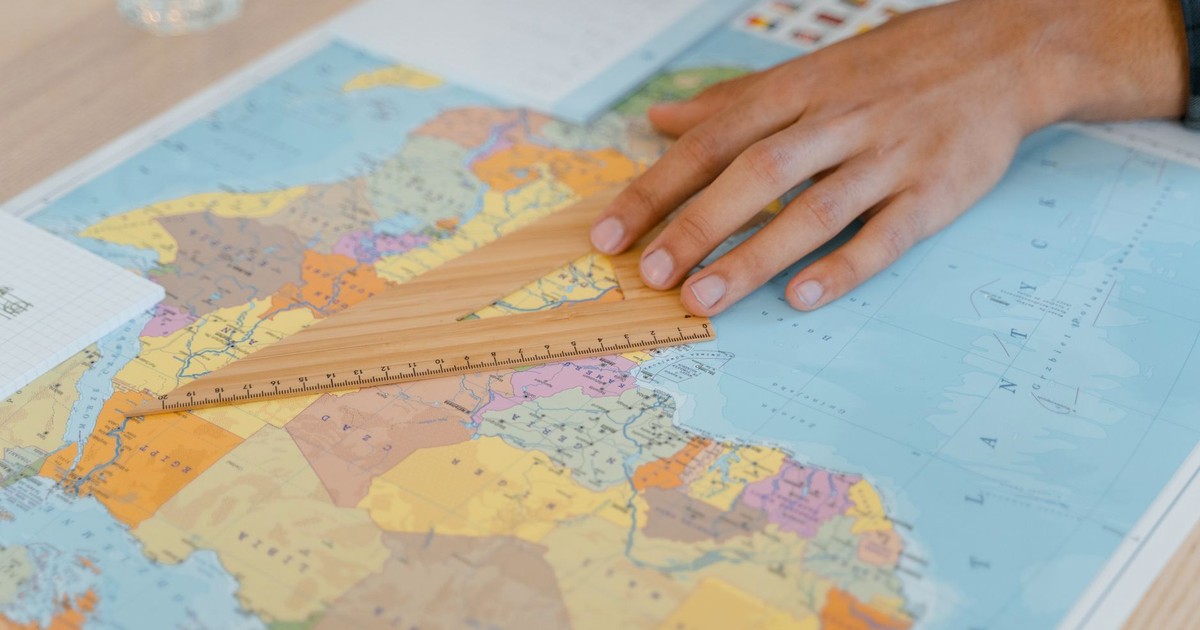
An M.Sc in Geography is a two-year postgraduate Master of Science degree program focused on advanced study in geographical sciences, emphasizing scientific methodologies, quantitative techniques, and spatial analysis. It delves deeper into both physical geography (geomorphology, climatology, oceanography, biogeography) and human geography (urban geography, population geography, economic geography, political geography), often with a strong component of Geographic Information Systems (GIS), Remote Sensing (RS), and Cartography.
What is the Eligibility for M.Sc in Geography?
To be eligible for an M.Sc in Geography, candidates typically need a Bachelor’s degree (B.Sc or B.A.) with Geography as a major or an allied subject from a recognized university, usually with a minimum aggregate score of 50-60%. Some universities may specifically require a B.Sc in Geography or a related science discipline, while others might accept B.A. Geography graduates provided they have a strong foundation in quantitative methods or have completed specific science-oriented geography papers at the undergraduate level.
- Academic Qualification: A Bachelor’s degree (B.Sc or B.A.) in Geography or an equivalent discipline.
- Minimum Marks: Generally 50-60% aggregate marks in the qualifying examination.
- Entrance Exams: Many top universities require candidates to clear a national or university-level entrance examination.
- Age Limit: No specific age limit is typically prescribed for M.Sc Geography programs.
How to Get Admission to M.Sc in Geography in 2026?
Admission to M.Sc in Geography programs in 2026 will primarily be based on either merit in the qualifying undergraduate degree or performance in university/national-level entrance examinations, followed by counselling or an interview round. The process usually involves application submission, appearing for exams, and then participating in the selection rounds.
- Research & Shortlist: Identify universities offering M.Sc in Geography and check their specific eligibility criteria and application deadlines.
- Application Submission: Complete the online or offline application form, attaching necessary documents and paying the application fee.
- Entrance Exam: Prepare for and appear in relevant entrance exams (e.g., CUET PG, university-specific tests).
- Merit List/Counselling: Based on exam scores or undergraduate marks, universities release merit lists. Shortlisted candidates are called for counselling or an interview.
- Document Verification & Fee Payment: Successful candidates complete document verification and pay the admission fee to secure their seat.
Key Entrance Exams for M.Sc Geography 2026
Several entrance exams are crucial for M.Sc Geography admissions. The Common University Entrance Test (CUET PG) is gaining prominence for central universities, while many state and private universities conduct their own tests.
| Exam Name | Conducting Body | Typical Application Period | Typical Exam Period | Pattern Highlights |
|---|---|---|---|---|
| CUET PG | NTA | Dec – Jan (previous year) | March – April | MCQ, General Aptitude + Domain Specific |
| DUET (for DU) | NTA (previously) | May – June | July | MCQ, Domain Specific |
| BHU PET (for BHU) | NTA (previously) | May – June | July | MCQ, Domain Specific |
| University Specific Exams | Respective Universities | Varies (April – June) | Varies (June – July) | MCQ, Domain Specific + General Knowledge |
M.Sc in Geography Syllabus 2026: Course Structure and Subjects
The M.Sc in Geography syllabus for 2026 is designed to provide advanced theoretical knowledge and practical skills in various geographical domains, with a strong emphasis on research methodologies and spatial technologies. The curriculum is typically spread across four semesters, covering core subjects, electives, practicals, and a dissertation.
Core Subjects
- Advanced Geomorphology
- Climatology and Oceanography
- Biogeography and Environmental Geography
- Advanced Human Geography (Population, Urban, Economic)
- Geographic Information Systems (GIS) and Remote Sensing (RS)
- Cartography and Thematic Mapping
- Quantitative Techniques in Geography
- Research Methodology and Field Techniques
Elective Specializations
Students can often choose electives based on their interests, leading to specialization in areas such as:
- GIS and Remote Sensing: Advanced spatial analysis, digital image processing, geodatabase management.
- Urban and Regional Planning: Urban systems, regional development, planning policies.
- Environmental Management: Disaster management, climate change, natural resource management.
- Hydrology and Water Resources: Fluvial geomorphology, water resource assessment.
- Disaster Management: Hazard assessment, risk mitigation, post-disaster recovery.
Semester-wise Subject Overview (Illustrative)
| Semester | Core Subjects | Practicals/Electives |
|---|---|---|
| Semester I | Advanced Geomorphology, Climatology, Research Methodology | Cartography & Thematic Mapping Practical, Elective I |
| Semester II | Advanced Human Geography, Biogeography, Quantitative Techniques | GIS & Remote Sensing Practical I, Elective II |
| Semester III | Environmental Geography, Regional Planning & Development | GIS & Remote Sensing Practical II, Field Work & Surveying, Elective III |
| Semester IV | Advanced Economic Geography, Disaster Management | Dissertation/Project Work, Viva Voce, Elective IV |
How much does M.Sc in Geography cost? (Fees & Expenses)
The cost of pursuing an M.Sc in Geography in India varies significantly between government and private institutions. Government universities generally have lower fees due to subsidies, while private colleges, offering potentially more specialized infrastructure, charge higher.
Typical Fee Ranges for M.Sc in Geography (2026 Estimates)
| Institution Type | Annual Fee Range (INR) | Total Course Fee Range (INR) |
|---|---|---|
| Government Universities | ₹5,000 – ₹30,000 | ₹10,000 – ₹60,000 |
| Private Colleges/Universities | ₹50,000 – ₹2,000,000 | ₹100,000 – ₹4,000,000 |
Additional expenses include hostel fees (₹30,000-₹1,00,000 per year), study materials, field trip costs, and personal expenses.
Is M.Sc in Geography worth it for jobs? (Career Prospects & Salary)
Yes, an M.Sc in Geography is highly worth it for jobs, especially with the growing demand for spatial data analysis, environmental management, and urban planning professionals. Graduates find opportunities in diverse sectors, including government, private industry, NGOs, and academia. The interdisciplinary nature of the degree equips students with analytical, research, and technical skills that are highly valued in the job market.
Career Opportunities After M.Sc in Geography
- GIS Analyst/Specialist: Working with spatial data, creating maps, and performing geographical analysis for various industries (urban planning, environmental, logistics).
- Remote Sensing Scientist: Analyzing satellite imagery and aerial photographs for land use, climate change, disaster monitoring.
- Urban and Regional Planner: Contributing to the development and management of cities and regions.
- Environmental Consultant: Advising on environmental impact assessments, sustainability, and resource management.
- Demographer/Population Analyst: Studying population trends, distribution, and dynamics.
- Cartographer: Designing and producing maps and charts.
- Disaster Management Specialist: Planning and implementing strategies for disaster preparedness and response.
- Researcher/Academician: Pursuing M.Phil/Ph.D and teaching in universities.
- Data Analyst: Leveraging spatial data skills in broader data science roles.
Average Salary After M.Sc in Geography (Entry to Mid-Level)
Salaries vary based on role, experience, sector (government vs. private), and location. Entry-level salaries typically range from ₹3 LPA to ₹6 LPA, with significant growth potential.
| Job Role | Average Entry-Level Salary (INR per annum) | Average Mid-Level Salary (INR per annum) |
|---|---|---|
| GIS Analyst | ₹3,00,000 – ₹5,00,000 | ₹6,00,000 – ₹10,00,000+ |
| Remote Sensing Scientist | ₹3,50,000 – ₹5,50,000 | ₹7,00,000 – ₹12,00,000+ |
| Urban Planner | ₹4,00,000 – ₹6,00,000 | ₹8,00,000 – ₹15,00,000+ |
| Environmental Consultant | ₹3,00,000 – ₹5,00,000 | ₹6,00,000 – ₹10,00,000+ |
| Cartographer | ₹2,50,000 – ₹4,50,000 | ₹5,00,000 – ₹8,00,000+ |
M.Sc in Geography vs. M.A. in Geography: Which is Better?
The choice between M.Sc and M.A. in Geography depends on a student’s undergraduate background and career aspirations. An M.Sc in Geography typically emphasizes scientific methodologies, quantitative techniques, GIS, Remote Sensing, and physical geography, making it ideal for those from a science background aiming for technical or research roles. An M.A. in Geography usually focuses more on human geography, social theory, qualitative methods, and regional studies, often preferred by students with a humanities or social science background interested in policy, development, or teaching.
Comparison Table: M.Sc vs. M.A. in Geography
| Feature | M.Sc in Geography | M.A. in Geography |
|---|---|---|
| Focus | Scientific, quantitative, physical geography, GIS/RS | Humanistic, qualitative, social geography, regional studies |
| Ideal Background | B.Sc Geography/Science degree | B.A. Geography/Humanities degree |
| Skills Developed | Spatial analysis, statistical modeling, programming (GIS), data interpretation | Critical thinking, policy analysis, ethnographic research, communication |
| Career Paths | GIS Analyst, RS Scientist, Environmental Consultant, Urban Planner | Urban Planner, Policy Analyst, Development Worker, Educator, Researcher |
| Methodology | Empirical, quantitative, laboratory/field-based | Interpretive, qualitative, theoretical, field-based |
Top Colleges for M.Sc in Geography in India
Several prestigious institutions across India offer excellent M.Sc in Geography programs. These colleges are known for their strong faculty, research facilities, and industry connections.
- Delhi University (Department of Geography)
- Jawaharlal Nehru University (JNU), New Delhi (Centre for the Study of Regional Development)
- Banaras Hindu University (BHU), Varanasi
- Aligarh Muslim University (AMU), Aligarh
- University of Calcutta, Kolkata
- University of Madras, Chennai
- Pune University, Pune
- University of Mysore, Mysore
- Jamia Millia Islamia, New Delhi
Explore more on FindMyCollege
Related pages for M.Sc in Geography aspirants on findmycollege.com:
Frequently Asked Questions
Can I pursue M.Sc in Geography after B.Tech?
While less common, some universities might allow B.Tech graduates, especially those from civil engineering, computer science, or environmental engineering, to pursue M.Sc in Geography if they demonstrate a strong interest and foundational knowledge in geography or related spatial sciences. It’s crucial to check specific university eligibility criteria.
Is M.Sc in Geography a good option for government jobs?
Yes, M.Sc in Geography opens doors to numerous government jobs in departments like ISRO, NRSC, Survey of India, Census of India, Ministry of Environment, Forest and Climate Change, urban development authorities, and state planning boards. Roles include GIS specialists, remote sensing scientists, urban planners, and research assistants.
What is the duration of the M.Sc in Geography course?
The M.Sc in Geography is typically a two-year postgraduate program, divided into four semesters.
Are there scholarships available for M.Sc in Geography students?
Yes, various scholarships are available, including government-funded schemes (e.g., UGC scholarships, state government scholarships for minorities/EWS), university-specific merit scholarships, and sometimes private organization grants. Students should inquire at their chosen university’s financial aid office.
What is the scope of M.Sc in Geography abroad?
The scope for M.Sc in Geography graduates abroad is excellent, particularly in countries with advanced spatial technology industries and strong environmental policies. Roles like GIS Analyst, Urban Planner, Environmental Scientist, and Data Scientist are in high demand in North America, Europe, and Australia. Further studies (Ph.D.) are also popular.
Do M.Sc Geography programs include field trips?
Yes, most M.Sc Geography programs include compulsory field trips and practical fieldwork components. These are crucial for hands-on experience in data collection, surveying, environmental assessment, and understanding geographical phenomena in real-world settings.
What is the difference between M.Sc Geography and M.Sc Geoinformatics?
M.Sc Geography provides a broader understanding of both physical and human geography with a strong component of GIS/RS. M.Sc Geoinformatics is a more specialized program, focusing almost exclusively on the technical aspects of Geographic Information Systems (GIS), Remote Sensing (RS), GPS, and spatial data management, often with a stronger computer science or engineering orientation.
Can I do a Ph.D. after M.Sc in Geography?
Absolutely. An M.Sc in Geography is a direct pathway to pursuing a Ph.D. in Geography or related interdisciplinary fields like Environmental Science, Urban Studies, Disaster Management, or Geoinformatics. Many graduates opt for research and academic careers after their M.Sc.