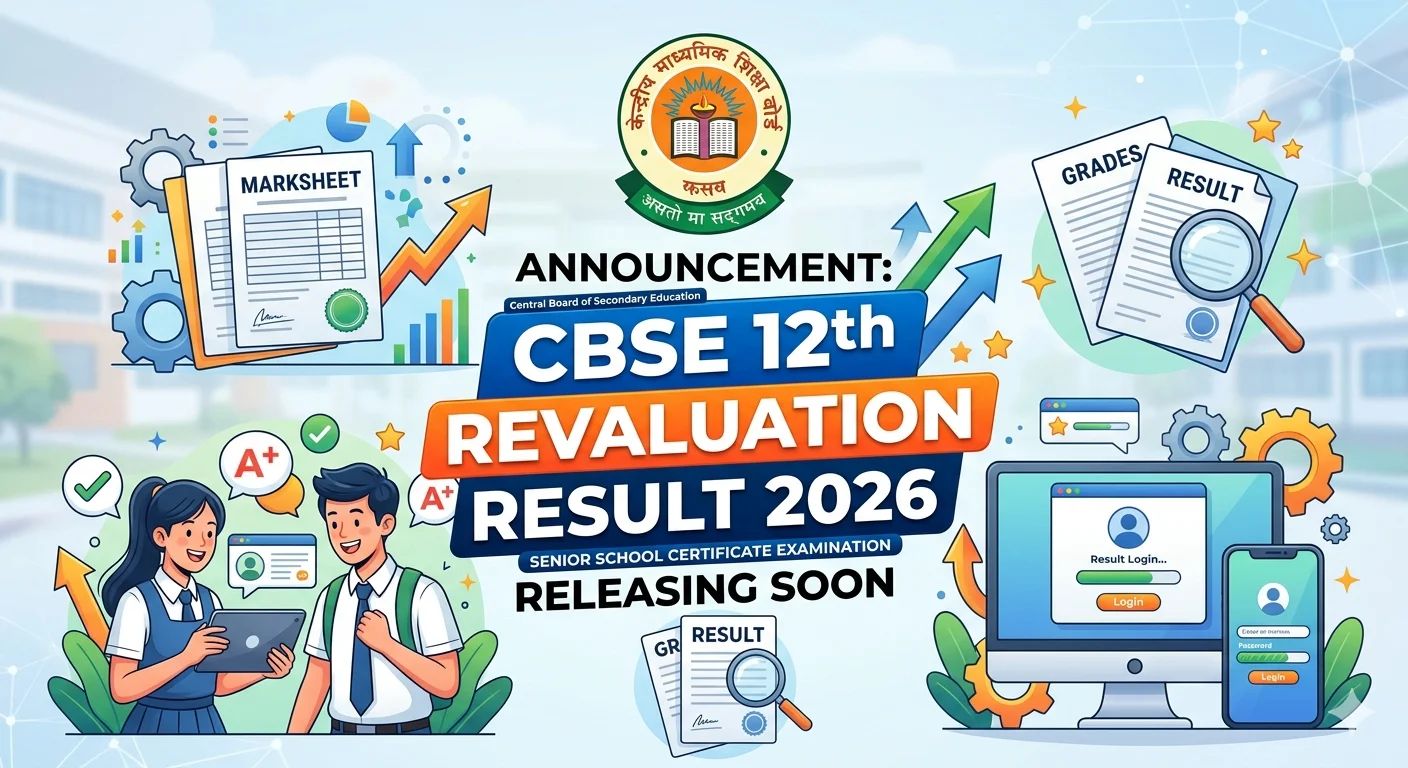
CBSE 12th Revaluation Result 2026 Releasing Soon; Check Details Here
The Central Board of Secondary Education (CBSE) is expected to announce the Class 12 revaluation result 2026 soon. Thousands of students who applied for verification of marks, photocopies of answer sheets, and re-evaluation of specific answers are now waiting for the revised results. According to recent updates, the revaluation process has largely been completed, and the board is likely to publish the updated scores in the coming days.
The announcement of the revaluation result is important for students seeking admission to colleges and universities. Many candidates are waiting for the revised marks before finalizing their admission choices. Once released, students will be able to check their updated results through the official CBSE portal using their login credentials.
CBSE 12th Revaluation Result 2026 Expected Soon
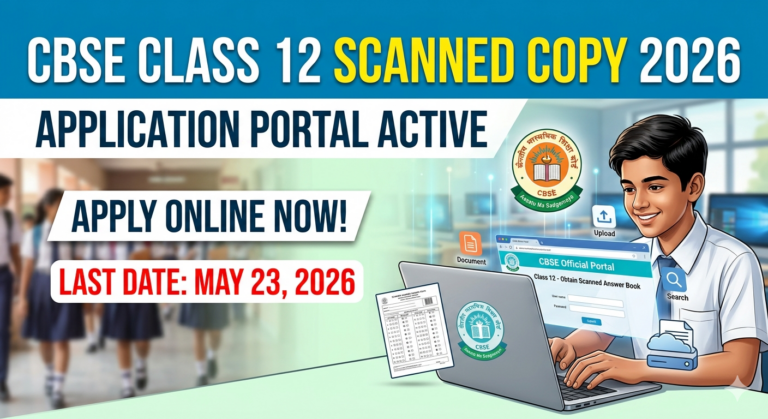
After the declaration of the CBSE Class 12 board results on May 13, 2026, the board opened the post-result facilities for students who were not satisfied with their marks. These facilities included obtaining photocopies of answer sheets, verification of marks, and re-evaluation of specific questions.
The revaluation window was opened in June, and students were allowed to submit requests online. The deadline was later extended to accommodate students facing technical issues on the portal. Following the completion of the application process, CBSE began reviewing the submitted requests.
Now, with the evaluation work nearing completion, the board is expected to release the revised marks shortly. While CBSE has not officially announced a fixed date, several reports suggest that the results may be declared soon.
Why Students Apply for Revaluation
Every year, many students apply for revaluation because they believe their marks do not reflect their actual performance in the examination. The revaluation process allows students to request a review of specific answers after obtaining copies of their evaluated answer sheets.
Students generally apply for revaluation in situations such as:
- Suspected totaling errors
- Unmarked answers
- Incorrect award of marks
- Large difference between expected and obtained marks
- Need for improved scores for higher education admissions
CBSE permits students to challenge the evaluation of selected answers after following the prescribed procedure. The board then conducts a fresh review before issuing the final outcome.
Large Number of Applications Received
This year, CBSE reportedly received a significant number of requests for verification and re-evaluation. Reports indicate that more than 70,000 applications were submitted during the post-result review process, reflecting the high level of student participation.
The large volume of applications has increased the workload for the board. However, CBSE has continued processing requests through its digital evaluation system and online review mechanism. The board has also strengthened its portal infrastructure to handle heavy traffic and ensure smooth processing.
People Also Read


How to Check CBSE 12th Revaluation Result 2026
Once the result is declared, students can check their revised marks online by following a few simple steps:
- Visit the official CBSE result portal.
- Open the Class 12 Revaluation Result 2026 link.
- Enter the required login credentials.
- Submit the details.
- The revised result will appear on the screen.
- Download and save the result for future reference.
Students are advised to keep their roll number, school number, and admit card details ready while checking the result.
What Happens After Revaluation?
The revised result issued after revaluation is considered final by CBSE. If there is any change in marks, the updated score will be reflected in the student’s record.
The outcome of revaluation can be:
- Increase in marks
- Decrease in marks
- No change in marks
Students should note that CBSE clearly states that marks may increase or decrease after the review process. Therefore, applicants must accept the final result issued by the board after re-evaluation.
Importance of Revaluation Results for Admissions
The CBSE Class 12 result plays a major role in undergraduate admissions across India. Many universities and colleges consider Class 12 marks while preparing merit lists and conducting admissions.
A change in marks after revaluation can help students:
- Improve their eligibility for admission
- Meet college cut-off requirements
- Increase scholarship opportunities
- Strengthen applications for professional courses
Because of these factors, students are eagerly waiting for the revised results before confirming their admission decisions. Reports suggest that delays in releasing the revised marks have created concerns among students seeking timely admissions.
CBSE’s Post-Result Review Process
CBSE follows a structured process for post-result activities. Students are required to apply in stages rather than directly seeking revaluation.
The process generally includes:
- Obtaining a photocopy of the evaluated answer sheet
- Verification of marks
- Re-evaluation of selected answers
This system allows students to carefully review their answer sheets before requesting a fresh assessment. The board introduced these measures to improve transparency and provide students with an opportunity to identify possible evaluation errors.
Students Advised to Monitor Official Updates
Although reports indicate that the revaluation result may be released soon, students should rely only on official announcements for confirmation. The board is expected to publish the result online once all reviews are completed.
Candidates are advised to:
- Check official CBSE updates regularly
- Keep login credentials ready
- Download revised scorecards immediately after release
- Verify all personal and academic details carefully
Any change in marks will be reflected in the revised result and associated records issued by the board.
Final Word
The CBSE 12th Revaluation Result 2026 is expected to be announced shortly, bringing relief to thousands of students waiting for revised scores. The revaluation process provides an important opportunity for students to address possible evaluation errors and secure fair assessment of their performance.
With admissions for higher education already underway, the upcoming result will play a crucial role for many candidates. Students should stay alert for official notifications and be prepared to check their updated marks as soon as the board releases the result. The revised score, once declared, will be treated as final and can significantly impact future academic opportunities.





Further reading
📰 More Education News
- KMAT 2026 session 2 registration begins: apply by October 31Sep 28, 2026 • Nishit Kumar
- NEET UG 2026 Round 3 registration begins in Tamil Nadu: apply by September 30Sep 28, 2026 • Nishit Kumar
- SSC Exam Calendar 2026-27 out: download CGL, MTS, CHSL, Steno, GD, JE dates PDFSep 28, 2026 • Nishit Kumar
- PM YASASVI Post Matric Scholarship: Apply by Nov 20, 2026Sep 28, 2026 • Nishit Kumar