Bachelor of Agriculture (Distance/Online) India 2026
Nishit Kumar is a senior EdTech industry leader with over a decade of experience in building and scaling education platforms, shaping their product, content, and growth strategy. At…
Latest update: Bachelor of Agriculture 2026 admissions & dates updated. Read more ›
The Bachelor of Agriculture (B.Sc. Agriculture) program, particularly in its Distance or Online learning format, is gaining significant traction in India for 2026. This comprehensive guide provides prospective students and parents with detailed information about pursuing a B.Sc. Agriculture degree through flexible learning modes, addressing common queries regarding eligibility, curriculum, career opportunities, and the overall value proposition.
What is Bachelor of Agriculture (Distance / Online)?
A Bachelor of Agriculture (B.Sc. Agriculture) Distance or Online program is an undergraduate degree designed for students to study agricultural sciences and practices remotely, without needing to attend regular on-campus classes. This format offers flexibility, allowing students to balance their studies with other commitments while gaining a comprehensive understanding of agricultural principles, crop production, soil science, agricultural economics, and related fields.
While traditional B.Sc. Agriculture is typically a hands-on, campus-based program, the distance/online variant adapts the curriculum for remote delivery. This often involves a blend of online lectures, digital study materials, virtual labs (where applicable), and sometimes mandatory practical sessions or workshops conducted at designated study centers or partner farms. The degree aims to equip graduates with the knowledge and skills necessary for various roles in the agricultural sector, even if their learning journey is non-traditional.
Is Bachelor of Agriculture (Distance / Online) recognized in India?
Yes, a Bachelor of Agriculture (Distance / Online) degree can be recognized in India, provided the university offering the program is approved by the University Grants Commission (UGC) and, specifically for agricultural education, by the Indian Council of Agricultural Research (ICAR) for its conventional programs, and the Distance Education Bureau (DEB) for its distance learning offerings. Students must verify the accreditation status of both the university and the specific distance learning program before enrollment to ensure the degree’s validity for higher education and employment.
What is the eligibility for Bachelor of Agriculture (Distance / Online)?
The general eligibility criteria for a Bachelor of Agriculture (Distance / Online) program typically require candidates to have completed their 10+2 (or equivalent) examination with Physics, Chemistry, and Biology (PCB) or Physics, Chemistry, and Mathematics (PCM) or Physics, Chemistry, Biology, and Agriculture as core subjects. A minimum aggregate score, usually ranging from 45% to 50%, is also often mandated.
Specific Eligibility Criteria:
- Educational Qualification: 10+2 or equivalent from a recognized board.
- Required Subjects: Physics, Chemistry, Biology (PCB) is most common, but some institutions may accept Physics, Chemistry, Mathematics (PCM) or those with Agriculture as a subject.
- Minimum Marks: Generally 45-50% aggregate in the qualifying examination. Some universities may have higher cut-offs.
- Age Limit: While not always strict for distance learning, some universities might have a minimum age requirement (e.g., 17 years).
- Entrance Exams: While less common for pure distance programs, some reputable universities might require candidates to appear for a university-specific entrance test or consider scores from national/state-level agricultural entrance exams (e.g., ICAR AIEEA, though primarily for regular programs, some may use it as a benchmark).
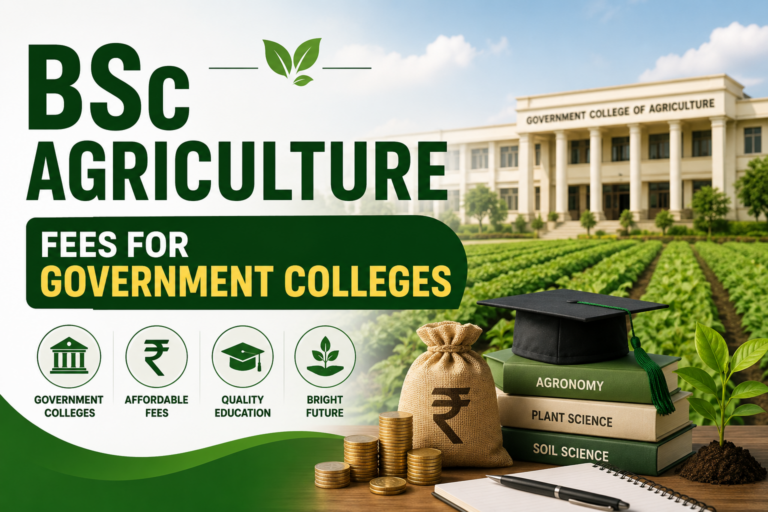
How much does Bachelor of Agriculture (Distance / Online) cost in India for 2026?
The cost of a Bachelor of Agriculture (Distance / Online) program in India for 2026 can vary significantly based on the institution’s reputation, accreditation, and whether it’s a government-funded or private university. Generally, distance learning programs are more affordable than their regular counterparts.
Here’s an estimated fee range:
| Institution Type | Estimated Annual Fee Range (INR) | Total Program Fee Range (INR, 4 years) |
|---|---|---|
| Government/State Universities | ₹10,000 – ₹30,000 | ₹40,000 – ₹1,20,000 |
| Private Universities/Institutions | ₹30,000 – ₹80,000 | ₹1,20,000 – ₹3,20,000 |
These fees typically cover tuition, study materials (digital), and examination fees. Additional costs might include practical session fees (if applicable), registration fees, and technology charges.
What is the syllabus and subjects for Bachelor of Agriculture (Distance / Online)?
The syllabus for a Bachelor of Agriculture (Distance / Online) program is designed to cover fundamental and advanced topics in agricultural science, mirroring the core curriculum of a regular B.Sc. Agriculture degree. The program typically spans 4 years (8 semesters).
Common Subjects and Areas of Study:
- Agronomy: Principles of crop production, field crops, weed management.
- Soil Science and Agricultural Chemistry: Soil fertility, plant nutrition, fertilizers, soil microbiology.
- Horticulture: Cultivation of fruits, vegetables, flowers, post-harvest technology.
- Plant Pathology: Plant diseases, pest management, integrated pest management (IPM).
- Agricultural Entomology: Insect pests, beneficial insects, pest control.
- Agricultural Economics: Farm management, agricultural marketing, rural development.
- Agricultural Engineering: Farm machinery, irrigation and drainage, post-harvest engineering.
- Genetics and Plant Breeding: Principles of heredity, crop improvement.
- Animal Husbandry and Dairying: Livestock management, dairy science.
- Extension Education: Dissemination of agricultural technologies to farmers.
- Biotechnology: Applications in agriculture.
- Statistics and Computer Applications: Data analysis, agricultural software.
- Environmental Science: Sustainable agriculture, climate change impact.
Practical components, while challenging in a distance format, are often addressed through virtual labs, case studies, project work, and sometimes mandatory contact programs or workshops at designated centers.
What are the career prospects after Bachelor of Agriculture (Distance / Online)?
Graduates of a Bachelor of Agriculture (Distance / Online) program have diverse career prospects in both the public and private sectors, as well as opportunities for entrepreneurship. The demand for agricultural professionals remains strong due to the sector’s vital role in the economy.
Key Career Roles and Average Salary Ranges (Annual, INR):
| Job Role | Description | Average Salary Range (INR) |
|---|---|---|
| Agricultural Officer | Government roles in agricultural departments, extension services. | ₹3,00,000 – ₹6,00,000 |
| Farm Manager | Overseeing operations on large farms, plantations. | ₹2,50,000 – ₹5,50,000 |
| Agronomist | Advising on crop production, soil management for companies/farmers. | ₹3,00,000 – ₹7,00,000 |
| Horticulturist | Specializing in fruit, vegetable, and ornamental plant cultivation. | ₹2,80,000 – ₹6,00,000 |
| Agricultural Sales/Marketing | Selling agricultural products, machinery, fertilizers, seeds. | ₹2,50,000 – ₹5,00,000 |
| Quality Control Officer | Ensuring quality standards in food processing and agricultural produce. | ₹2,70,000 – ₹5,50,000 |
| Research Assistant | Supporting agricultural research in institutions or private firms. | ₹2,00,000 – ₹4,00,000 |
| Entrepreneur | Starting own ventures in farming, agri-business, food processing. | Variable |
Salaries can vary based on experience, location, and the specific employer. Further studies, such as an M.Sc. Agriculture or an MBA in Agri-Business, can significantly enhance career progression and earning potential.
Which are the top universities for Bachelor of Agriculture (Distance / Online) in India?
While traditional B.Sc. Agriculture is predominantly offered by State Agricultural Universities (SAUs) and ICAR-accredited institutions, the number of universities offering a fully recognized B.Sc. Agriculture in a pure distance/online mode is limited, especially with ICAR’s emphasis on practical training. However, some universities offer related degrees or have components that can be pursued remotely.
For 2026, students should look for universities that are:
- UGC-DEB approved: Essential for any distance learning program.
- Reputable: Universities with a strong academic background, even if their distance agriculture program is newer.
- Offering relevant specializations: Some might offer B.Sc. in related fields like Rural Development, Agri-Business Management, or specific agricultural diplomas remotely.
Note: As of current regulations, ICAR does not accredit B.Sc. Agriculture degrees offered purely through distance mode due to the intensive practical requirements. Therefore, while some universities might offer a ‘B.Sc. Agriculture’ through distance, its recognition for certain government jobs or higher studies requiring ICAR accreditation might be an issue. It’s crucial to verify the specific program’s recognition and its implications for your career goals.
Students interested in a flexible learning path might consider:
- Indira Gandhi National Open University (IGNOU): While not offering a direct B.Sc. Agriculture in distance mode, IGNOU offers various diplomas and certificates in agriculture, rural development, and related fields that can serve as foundational knowledge or skill enhancement.
- State Open Universities: Some state open universities might offer degrees with agricultural components or related fields.
- Private Universities: A few private universities might offer B.Sc. Agriculture with blended learning models, but thorough due diligence on their accreditation and practical components is essential.
Always check the latest UGC-DEB list of approved institutions and programs for distance learning for 2026.
What are the pros and cons of Bachelor of Agriculture (Distance / Online)?
Pursuing a Bachelor of Agriculture through distance or online learning offers distinct advantages, particularly for working professionals or those with geographical constraints, but also comes with certain limitations compared to a traditional on-campus program.
Pros:
- Flexibility: Study at your own pace and schedule, making it ideal for working professionals or those with other commitments.
- Accessibility: Overcomes geographical barriers, allowing students from remote areas to access quality education.
- Cost-Effective: Generally lower tuition fees compared to regular programs, plus savings on accommodation and commuting.
- Self-Paced Learning: Allows students to delve deeper into topics of interest or spend more time on challenging subjects.
- Skill Enhancement: Ideal for individuals already in the agricultural sector looking to upgrade their qualifications.
Cons:
- Lack of Hands-on Practical Experience: This is the most significant drawback. Agriculture is highly practical, and virtual labs or limited contact programs cannot fully replicate field experience.
- Recognition Challenges: As mentioned, ICAR does not accredit distance B.Sc. Agriculture degrees, which can impact eligibility for certain government jobs or M.Sc. programs.
- Self-Discipline Required: Demands strong self-motivation and time management skills.
- Limited Peer Interaction: Reduced opportunities for networking with classmates and faculty.
- Technology Dependence: Requires reliable internet access and basic computer literacy.
- Perception: Some employers might still prefer candidates with traditional, ICAR-accredited degrees.
Explore more on FindMyCollege
Related pages for Bachelor of Agriculture aspirants on findmycollege.com:
Frequently Asked Questions
Is a distance B.Sc. Agriculture degree valid for government jobs?
The validity for government jobs depends on the specific job’s requirements and the recognizing authority. If the job explicitly requires an ICAR-accredited B.Sc. Agriculture degree, a distance learning degree (which is not ICAR-accredited) might not be accepted. However, for jobs that only require a UGC-recognized bachelor’s degree in agriculture or a related field, it may be valid. Always check the job notification carefully.
Can I pursue M.Sc. Agriculture after a distance B.Sc. Agriculture?
Admission to M.Sc. Agriculture programs, especially in ICAR-accredited universities, often requires an ICAR-accredited B.Sc. Agriculture degree. Therefore, pursuing an M.Sc. after a distance B.Sc. Agriculture might be challenging or require specific bridging courses or entrance exams, depending on the target university’s policies. Some private universities might be more flexible.
Are there any practical components in distance B.Sc. Agriculture?
While a fully online program minimizes physical attendance, many reputable distance learning institutions try to incorporate practical components through mandatory contact programs, workshops, virtual labs, field project assignments, or internships at local agricultural centers. The extent and nature of these practicals vary significantly by institution.
What is the admission process for distance B.Sc. Agriculture in 2026?
The admission process typically involves filling out an online application form on the university’s official website, submitting scanned copies of academic documents (10th and 12th mark sheets), and paying the application fee. Some universities might conduct a basic entrance test or an interview, while others admit based on 10+2 merit. Always refer to the specific university’s admission brochure for 2026 dates and procedures.
What are the alternatives if I can’t find a recognized distance B.Sc. Agriculture?
If a fully recognized distance B.Sc. Agriculture isn’t available or suitable, consider related distance learning diplomas or certificates in specific agricultural fields (e.g., horticulture, organic farming, agri-business management). Alternatively, explore blended learning programs that offer some flexibility while ensuring practical exposure, or consider a regular B.Sc. Agriculture if circumstances permit.
Is an online B.Sc. Agriculture degree equivalent to a regular one?
Academically, the curriculum aims to be equivalent. However, in terms of practical exposure and industry recognition, especially for roles requiring hands-on skills or ICAR accreditation, a regular B.Sc. Agriculture degree is generally perceived as having an edge due to its intensive practical and field training components. The equivalence largely depends on the specific employer or higher education institution’s requirements.
What technology is required for online B.Sc. Agriculture?
You will typically need a reliable computer (laptop or desktop), a stable internet connection, a webcam and microphone for online classes/interactions, and basic proficiency in using online learning platforms (e.g., Moodle, Google Classroom) and common software like MS Office. Some programs might require specific agricultural software or simulation tools.