Top Agriculture Courses 2026: Eligibility, Fees, Admissions & Careers
Abhijeet Chatterjee is a professional Content and Copy specialist with over five years of experience in crafting compelling content around the Edtech domain. His portfolio includes notable work…
Pursuing an Agriculture Course in 2026 opens doors to a dynamic and essential sector, offering rewarding careers in sustainable farming, agribusiness, and food innovation. With increasing global focus on food security and environmental sustainability, the demand for skilled agricultural professionals is on the rise. This guide provides a detailed overview of top courses, eligibility criteria, admission procedures, leading colleges, and promising career opportunities for your academic journey.
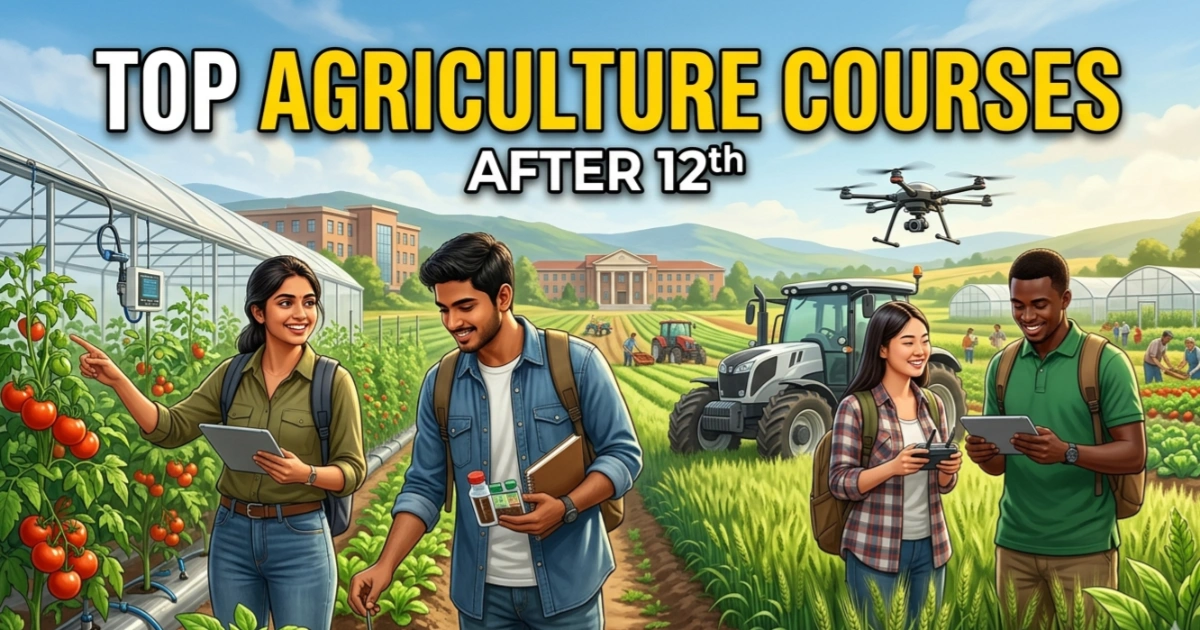
Top Agriculture Courses After 12th in India: 2026 Overview
For the academic year 2026, professional agriculture courses after Class 12 are increasingly popular in India, a nation where agriculture forms the economic backbone. These programs offer numerous prospects in agribusiness, research, technology, and eco-friendly farming, reflecting a modern, technology-driven industry with huge career potential.
| Course Name | Duration | Eligibility | Average Salary (INR) |
| B.Sc. Agriculture | 4 years | 12th with PCB/PCM | 3–6 LPA |
| B.Sc. Horticulture | 4 years | 12th with PCB/PCM | 2.5–5 LPA |
| B.Tech Agricultural Engineering | 4 years | 12th with PCM | 4–7 LPA |
| B.Sc. Forestry | 4 years | 12th with PCB | 3–5 LPA |
| B.Sc. Agronomy | 3 years | 12th with Science | 2.5–4.5 LPA |
These popular undergraduate agriculture courses offer diverse specialisations, typically requiring 12th-grade science backgrounds and providing competitive average salaries upon graduation.
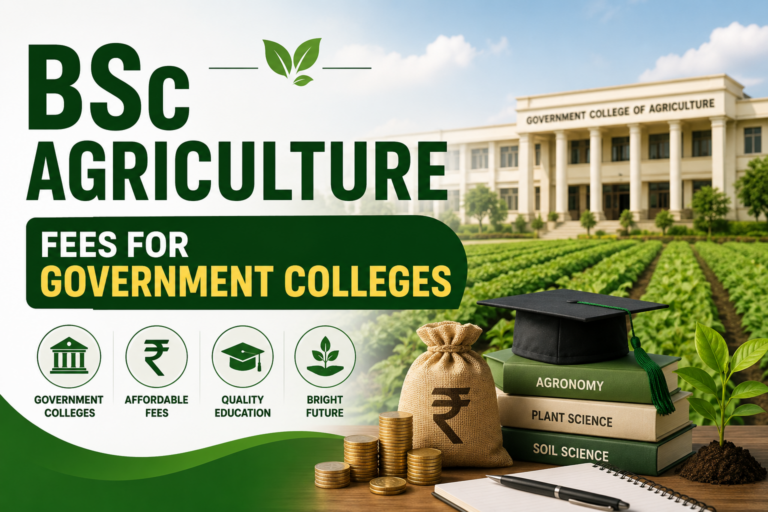
BSc Agriculture 2026: Course Details, Eligibility, Syllabus & Fees
The Bachelor of Science in Agriculture (BSc Agriculture) is an undergraduate Agriculture Course spanning four years, designed to equip students with comprehensive knowledge in agricultural sciences. Admissions for 2026-2027 are open, with eligibility typically requiring 10+2 qualifications.
| Particulars | Details |
| Course Name | Bachelor of Science in Agriculture (BSc Agriculture) |
| Course Level | Undergraduate |
| Course Duration | 4 Years (8 Semesters) |
| Eligibility | 10+2 with Physics, Chemistry, Biology/Mathematics from a recognised board |
| Minimum Marks Required | 50–55% aggregate (varies by university) |
| Admission Process | Merit-based or entrance exam |
| Course Type | Full-time |
| Average Fee (Per Year) | ₹60,000 – ₹1,20,000 (varies by institution) |
| Core Subjects | Agronomy, Horticulture, Soil Science, Agricultural Economics, Plant Breeding, Entomology, Plant Pathology |
| Training Components | Fieldwork, Lab Practicals, RAWE, Internships |
This overview highlights the fundamental aspects of the BSc Agriculture Course, detailing its structure, eligibility criteria, and the broad range of subjects and practical training involved.
Top Agriculture Colleges in Kolkata & Mumbai 2026: Fees & Placements
Kolkata boasts significantly more opportunities for an Agriculture Course, with 14 colleges offering programs, compared to Mumbai which has 2. This section highlights key details about top agriculture institutions in the region.
- Agriculture colleges: Kolkata has 14, Mumbai has 2.
- M.Sc (Agriculture) colleges in Kolkata (2026): 0.
- Brainware University, Kolkata: Top private university in West Bengal (Times of India, Zee 24 Ghanta, ABP).
- Brainware University Agriculture Programs: BSc (Hons) Agriculture, MSc Agriculture (Agronomy, Horticulture), MSc Soil Science.
- Brainware University Placements: BSc Agriculture students interned at Kalyani University.
- The Neotia University, Kolkata: B.Sc Agriculture Hons offered; total fees Rs.3,00,000.
While Kolkata offers numerous undergraduate agriculture programs, the absence of M.Sc (Agriculture) colleges for 2026 is notable. Additional institutional details are provided in the table below.
| Institution | Detail | Value |
| Visva-Bharati University (VBU) | Course Offered | B.Sc Agriculture Hons |
| Visva-Bharati University (VBU) | Ranking | #97 in India 2021 |
This table provides details on another notable institution offering an Agriculture Course and its ranking.
Agriculture Course Career Options 2026: Job Roles & Salary Prospects
Substantial recruitment opportunities await agriculture students and graduates across central and state government sectors in 2026. This section explores diverse career options and salary prospects for those pursuing an Agriculture Course, highlighting key roles and their earning potential in various industries.
| Role | Average Salary | Top Recruiters |
| Agricultural Officer | ₹6–10 LPA | NABARD, FCI, State Agriculture Departments |
| Agribusiness Manager | ₹7–12 LPA | ITC, Cargill, Amul, Mahyco |
| Agricultural Scientist / Researcher | ₹8–15 LPA | ICAR, IARI, DRDO, Private R&D Firms |
| Food Processing Manager | ₹6–10 LPA | Nestlé, Britannia, PepsiCo, Patanjali |
| Agriculture Loan Officer | ₹5–8 LPA | SBI, NABARD, Cooperative Banks |
| Plantation Manager | ₹7–11 LPA | Tata Coffee, Harrison Malayalam, Parry Agro |
| Agricultural Consultant | ₹6–12 LPA | Private Consultancies, NGOs, Agri-Startups |
This table illustrates the high-paying career paths available after a BSc Agriculture, with roles like Agricultural Scientist and Agribusiness Manager offering significant salary potential and opportunities with leading recruiters.
Short-Term & Certificate Agriculture Courses 2026: Organic Farming Focus
In 2026, there are 1,472 total online Agriculture Course options available, with 235 offering certificates. This section highlights various short-term and certificate programs, emphasizing organic farming for sustainable agricultural production.
- Total Online Courses (2026): 1,472 courses
- Courses with Certificate: 235 courses
- Courses with Free Certificate: 38 courses
- Featured Organic Farming Course (NPTEL): Organic Farming for Sustainable Agricultural Production
- NPTEL Course Duration: 20 hours (Self-Paced)
- NPTEL Course Cost: Free Video
Many short-term options are available, with 613 courses under 30 minutes and 164 courses exceeding 10 hours. Beyond these, several dedicated certificate programs focus on organic farming.
- IGNOU Programme Type: CERTIFICATE
- IGNOU Programme Duration: 6 Months
- IGNOU Programme Fee: Rs.4,800/- plus Rs.300/- registration
- Agriculture & Plantation Management Duration: Three Months
- Agriculture & Plantation Management Fee: ₹4,000 (50% concession offer)
- Agriculture & Plantation Management Content: Includes ‘Organic Farming & Sustainable Agriculture’ syllabus.
Both the IGNOU and Agriculture & Plantation Management certificate programs offer comprehensive content. The latter specifically covers organic farming principles, pest management, and climate-resilient practices, providing a robust Agriculture Course foundation.
| Course Code | Title of the Course | Credits |
| BAP 1 | Introduction to Organic Farming | 2 |
| BAPI 1 | Organic Production System | 6 |
| BAPI 2 | Inspection and Certification of Organic Produce | 4 |
| BAPI 3 | Economics and Marketing of Organic Produce | 4 |
| Total Credits | 16 |
This table details the structured curriculum of the IGNOU Certificate in Organic Farming, totalling 16 credits across key areas from introduction to marketing.
Frequently Asked Questions
What are the top agriculture courses after 12th in India for 2026?
BSc Agriculture is a top course after 12th in India for 2026. Explore the best 12 agriculture courses, including details on fees, eligibility, and career opportunities.
What are the career options, job roles, and salary prospects for Agriculture Course graduates in 2026?
Agriculture graduates in 2026 can expect diverse roles in government, private, and banking, with salaries from ₹3-12 LPA (Glassdoor). Banking is strong, with India’s rural credit demand exceeding ₹18 lakh crore by 2025.
What is Agriculture Course?
An Agriculture Course studies farming practices, crop production, livestock management, soil science, and agricultural technology. It equips students to improve productivity and address challenges, with details for 2026 admissions.
What are the eligibility requirements for Agriculture Course?
Eligibility for most Agriculture courses, like B.Sc. (Hons.) Agriculture, requires a 12th-grade science stream (Physics, Chemistry, Biology, or Math) with at least 50% marks. Some admissions also involve entrance exams.
How do I apply for Agriculture Course?
Apply after completing 10+2 in Physics, Chemistry, Biology with 50-55% marks. The admission process involves exploring and taking the agriculture entrance exams.