BDS Course in India 2026: Admission, Fees, Eligibility, Career Prospects & More
BDS is a 5-year UG degree costing Rs. 75,000 to Rs. 50 lakhs for the entire course. BDS admissions are based on NEET scores. Find eligibility, top colleges, job roles and more here.
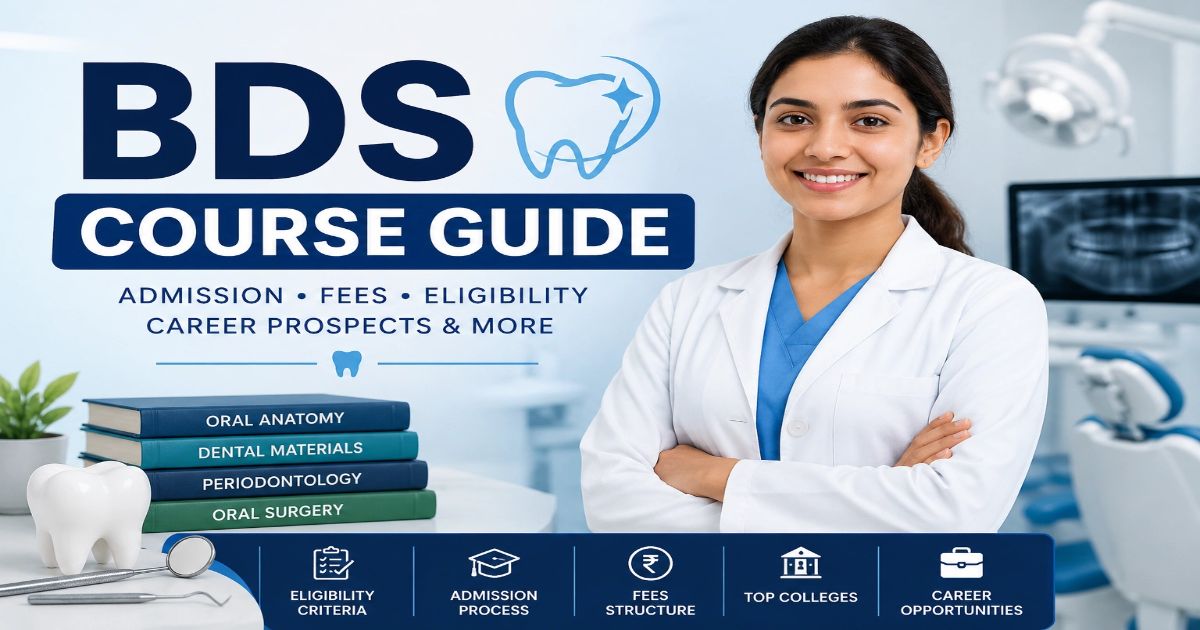
Embarking on a fulfilling career in oral healthcare starts with the Bachelor of Dental Surgery (BDS) degree, a premier undergraduate program for aspiring dentists. BDS is a 5-year UG degree combining 4 years of education and 1 year of internship. BDS fees in India typically range from Rs. 75,000 to Rs. 3 lakhs for government colleges and Rs. 10 lakhs to Rs. 50+ lakhs for private colleges. Students with a minimum 40-50% marks in PCB in 12th are eligible to apply for this course. Admissions into BDS are primarily based on NEET scores. For those aiming to secure a seat in 2026, this guide covers everything including eligibility, fees, admission, higher education options, top colleges, job roles and more.
BDS Course Overview 2026: Duration, Structure, and Curriculum Highlights
The Bachelor of Dental Surgery (BDS) program is an undergraduate course spanning five years, designed to equip students with comprehensive knowledge and skills in dentistry. This section outlines the program’s duration, structure, and key curriculum components for the 2026 intake.
| Field | Details |
| Course Full Form | Bachelor of Dental Surgery (BDS) |
| Course Level | Undergraduate (UG) |
| Total Duration | 5 years |
| Academic Phase Duration | 4 years |
| Internship Duration | 1 year |
| Internship Type | Mandatory, compulsory, paid rotating internship |
| Curriculum Focus | The BDS curriculum provides comprehensive theoretical knowledge, practical dental training, and clinical exposure across all major branches of dentistry. It does not offer official specialisations at the undergraduate level, ensuring a broad foundational understanding of dental science and patient care. |
| Key Areas of Study | Dental Anatomy, Physiology, Oral Anatomy, Dental Materials, General Dentistry Procedures, Periodontology, Orthodontics, Prosthodontics, Oral Pathology, Endodontics, Oral Surgery, Human Anatomy, Biochemistry, Microbiology, Pharmacology, General Medicine, General Surgery, Oral Medicine & Radiology, Pediatric & Preventive Dentistry, Public Health Dentistry, modern dental treatment techniques |
| Practical Training Highlights (Internship) | Hands-on clinical training in dental healthcare settings, direct patient interaction, supervised professional practice, dental diagnosis and treatment planning, tooth restoration procedures, root canal basics, oral surgery techniques, orthodontic procedures, pediatric dental care, community dental health programmes, dental radiography and imaging |
| 1st Year Subjects | General Human Anatomy, Physiology, Biochemistry, Dental Anatomy & Oral Histology, Dental Materials, Preclinical Prosthodontics and Crown & Bridge |
| 2nd Year Subjects | General Pathology, Microbiology, Pharmacology, Dental Materials, Pre-Clinical Prosthodontics, Pre-Clinical Conservative Dentistry |
| 3rd Year Subjects | General Medicine, General Surgery, Oral Pathology & Oral Microbiology, Conservative Dentistry & Endodontics, Prosthodontics and Crown & Bridge, Periodontology |
| 4th Year Subjects | Oral Medicine & Radiology, Oral and Maxillofacial Surgery, Prosthodontics, Conservative Dentistry & Endodontics, Periodontology, Orthodontics, Pediatric & Preventive Dentistry, Public Health Dentistry |
BDS Eligibility Criteria 2026
To pursue a Bachelor of Dental Surgery (BDS) degree, candidates must meet specific eligibility criteria, with the NEET-UG examination being a mandatory requirement. This section outlines the academic qualifications, age limits, and expected NEET scores necessary for admission to BDS programs.
| Criteria | Requirement |
| Age Limit | Minimum 17 years as on December 31 of the admission year. |
| Maximum Age | No upper age limit as per the latest NEET rules. |
| Qualification | Must have passed Class 12 or equivalent with Physics, Chemistry, Biology/Biotechnology, and English as core subjects. |
| Minimum Marks (General) | At least 50% in PCB (Physics, Chemistry, Biology). |
| Minimum Marks (SC/ST/OBC) | At least 40% in PCB subjects. |
| Minimum Marks (PwD – General) | At least 45% in PCB subjects. |
| NEET Qualification | Must qualify NEET-UG exam in the same year of admission. |
Category-wise NEET Cutoff for BDS Admissions
These expected NEET cutoff scores and qualifying percentiles are crucial for candidates aiming for BDS admission in government colleges, varying by category to ensure fair access.
| Category | NEET 2025 Cutoff (Expected) | Qualifying Percentile |
| General (UR) | 450+ | 50th Percentile |
| OBC/SC/ST | 400+ | 40th Percentile |
| PwD | 350+ | 45th Percentile |
BDS Admission Process in India: Step-by-Step Guide
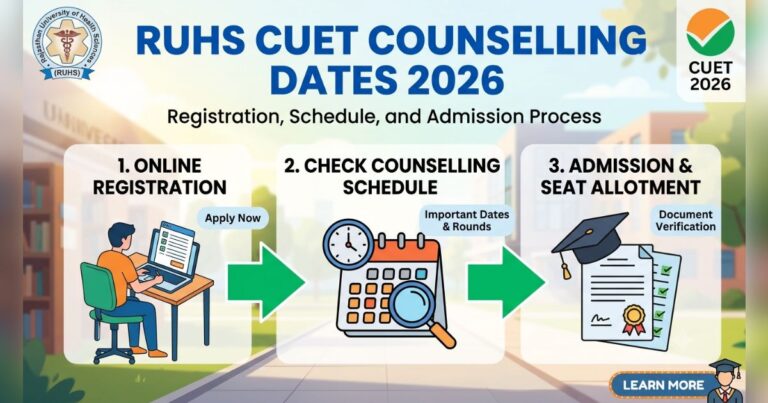
Securing admission for a Bachelor of Dental Surgery (BDS) in 2026 primarily requires qualifying the NEET-UG exam. This section details the complete application process, from the initial entrance exam to participating in various counselling rounds, ensuring a clear path to your preferred dental college.
Step 1: Check Eligibility
Candidates must have passed Class 12 with Physics, Chemistry, Biology/Biotechnology, and English from a recognised board and meet the eligibility conditions for NEET-UG.
Step 2: Appear for NEET-UG
Students must register for and appear in NEET-UG, as it is the compulsory entrance exam for BDS admission in India. Admission is not granted without a valid NEET score.
Step 3: Qualify NEET and Check Rank
After the result is declared, candidates must check whether they have qualified NEET and review their score and rank, which determine their admission chances.
Step 4: Register for Counselling
Qualified candidates must register for MCC counselling for All India Quota, deemed and central universities, and for state counselling for 85% state quota and many private college seats.
Step 5: Fill College Choices
During counselling, students must select and lock their preferred BDS colleges. Seat allotment is based on NEET rank, reservation, seat availability, and choices filled.
Step 6: Get Seat Allotment
The counselling authority releases the allotment result. If a BDS seat is allotted, the candidate must download the allotment letter and follow the next admission instructions.
Step 7: Report to the College and Confirm Admission
Candidates must report to the allotted dental college with the required documents, complete verification, and pay the admission fee to confirm their BDS seat.
BDS Admission Counselling Process
This table illustrates the diverse admission routes available for Bachelor of Dental Surgery and other medical courses, detailing the authorities, seat distribution, eligibility criteria, and timelines for each counselling type:
| Route | Authority | Seat Share | Who is Eligible | How it Works | Timeline |
| All-India Quota (AIQ) — MCC Counselling | Medical Counselling Committee (MCC), Government of India | 15% of seats in all government colleges + 100% of central institutes | Any Indian citizen with a qualifying NEET-UG score. No domicile required. EWS/SC/ST/OBC reservations apply per central rules. | MCC runs Round 1 → Round 2 → Round 3 → Stray Vacancy. Register on mcc.nic.in, fill choices, and lock. Allotment is published online and you report to the allotted college. | Round 1: ~August. Round 2: ~September. R3 + Stray: October–November. |
| State Counselling — 85% State Quota | State Directorate of Medical Education / state CET cell | 85% of seats in government colleges + state-quota seats in private colleges | Candidates with a valid domicile certificate of that state. Each state runs its own counselling with its own reservation rules. | Register with the state portal (e.g. CET Cell Maharashtra, KEA Karnataka, KNRUHS Telangana). Submit domicile + NEET scorecard. Fill choices in priority. Allotment + reporting. | Typically starts 2–3 weeks after MCC Round 1, runs through October–November. |
| MCC Deemed Counselling — Deemed-to-be Universities | Medical Counselling Committee (MCC), Government of India | All seats across 51 Deemed-to-be Universities (pan-India) | Any Indian citizen / OCI / NRI with a qualifying NEET-UG score. No domicile rule — open to all India. | Single MCC portal handles all Deemed universities. Register, fill choices across all Deemed colleges, allotment is rank-based across the whole pool. | Runs in parallel with MCC AIQ — Round 1 onwards from August. |
| Management Quota — Private College Direct Admission | Individual college, regulated by state Fee Regulating Authority (FRA) | Typically 10–15% of seats per private college (varies by state) | Candidates who qualified NEET-UG but didn’t get a seat via state or MCC counselling. Higher fee tier; FRA-approved. | Apply directly to the college (or through SG). The college verifies NEET score + documents + collects the FRA-approved management-quota fee, and issues an admission letter. | Opens after state counselling closes — typically October–December. |
| NRI Quota — For NRI / OCI / PIO Candidates | Individual college (Deemed or Private), per NMC NRI guidelines | Up to 15% of seats per college, NRI-only | NRIs / OCIs / PIOs with valid sponsor documentation, or candidates with a first-degree relative on overseas residence proof. | Sponsor passport + visa + relationship proof + NRI declaration. Fees are USD-denominated. Application is direct to the college’s admission cell. | Year-round; most seats locked in by October–December. |
BDS Fees in India: Government vs Private Colleges
BDS course fees in India vary sharply between government and private colleges. Government dental colleges are much more affordable, while private and deemed colleges can cost significantly more over the full 5-year duration.
| Fee Aspect | Government BDS Colleges | Private BDS Colleges |
| Average Annual Fee | ₹15,000 to ₹60,000 | ₹2 lakhs to ₹10 lakhs |
| Total 5-Year Course Cost | ₹75,000 to ₹3 lakhs | ₹10 lakhs to ₹50+ lakhs |
| Highest Fee Range | Usually remains within a few lakhs overall | Elite private/deemed colleges may cost ₹80 lakhs to ₹1 crore total |
| Affordability | Highly affordable for most students | Significantly more expensive, especially without scholarships or financial support |
Top Private Colleges for BDS Admissions
Pursuing a Bachelor of Dental Surgery (BDS) degree from a private college in India involves significant financial planning. The total cost for a 5-year Bachelor of Dental Surgery program in private institutions can range from ₹10 lakhs to over ₹50 lakhs, with elite institutions reaching up to ₹1 crore.
The total course fees for a Bachelor of Dental Surgery program at top private institutions vary widely, from ₹4.04 lakhs at Nair Hospital Dental College to ₹25–30 lakhs at Manipal College of Dental Sciences.
| College Name | Location | Total Course Fees |
| Manipal College of Dental Sciences | Mangaluru | ₹25–30 lakhs |
| NIMS Dental College | Jaipur | ₹7 lakhs |
| MM University | Ambala | ₹15 lakhs |
| Krishna Institute of Medical Sciences | Karad | ₹21.3 lakhs |
| Sharda University | Greater Noida | ₹14.6 lakhs |
| Nair Hospital Dental College | Mumbai | ₹4.04 lakhs |
Top Government Colleges for BDS Admission
India has several reputed government dental colleges that offer BDS at comparatively affordable fees. The table below lists some of the top government BDS colleges along with their state and approximate total course fee.
| College Name | State | Approx. Total BDS Course Fee |
| Maulana Azad Institute of Dental Sciences (MAIDS) | Delhi | ~₹1 lakh to ₹1.5 lakhs |
| Faculty of Dental Sciences, King George’s Medical University (KGMU) | Uttar Pradesh | ~₹1.5 lakhs to ₹2 lakhs |
| Faculty of Dental Sciences, Banaras Hindu University (BHU) | Uttar Pradesh | ~₹1 lakh |
| Dr. R. Ahmed Dental College and Hospital | West Bengal | ~₹1 lakh |
| Government Dental College & Hospital, Mumbai | Maharashtra | ~₹2 lakhs to ₹4.7 lakhs |
BDS Syllabus 2026: Core Subjects and Practical Training Modules
The Bachelor of Dental Surgery (BDS) program spans 5 years, comprising 4 years of academic study and a mandatory 1-year internship. Its syllabus is structured year-wise, progressively moving from basic sciences to advanced clinical subjects, ensuring comprehensive theoretical learning and practical skill development.
| Year | Subject Title | Subject Details |
| 1st Year | General Human Anatomy | Focus on body structure, especially the head and neck |
| 1st Year | General Physiology & Biochemistry | Covers body functions and chemical processes |
| 1st Year | Dental Anatomy & Histology | Study of teeth structure and development of teeth |
| 2nd Year | General Pathology & Microbiology | Study of diseases and microorganisms |
| 2nd Year | Dental Pharmacology | Understanding drugs and their effects |
| 2nd Year | Dental Materials | Study of materials used in dental procedures |
| 3rd Year | General Medicine | Understanding medical conditions and diagnosis |
| 3rd Year | General Surgery | Basic surgical concepts and treatments |
| 3rd Year | Oral Pathology | Study of oral diseases and abnormalities |
| 3rd Year | Prosthodontics | Focus on dentures and tooth replacement |
| 4th Year | Orthodontics | Study of teeth alignment and jaw structure |
| 4th Year | Periodontology | Study of gums and supporting tissues |
| 4th Year | Public Health Dentistry | Community dental health and awareness |
Higher Studies Options After BDS
After BDS, students can choose higher studies in specialised dentistry, public health, or healthcare management depending on their career goals. The top options are:
- MDS (Master of Dental Surgery): The most common option after BDS for specialisation in branches like Orthodontics, Oral Surgery, Prosthodontics, and Endodontics. Admission is generally through NEET-MDS.
- MPH (Master of Public Health): Suitable for students interested in public health, epidemiology, health programmes, and community healthcare rather than clinical dentistry.
- MBA in Healthcare / Hospital Management: A good option for BDS graduates who want to move into hospital administration, healthcare operations, and management roles.
BDS Career Opportunities and Salary Trends in India 2026
The Bachelor of Dental Surgery (BDS) offers stable and lucrative career opportunities in India, with average salaries ranging from INR 3 LPA to INR 9 LPA. While starting pay can be lower than MBBS, private practice allows for strong scaling with a patient base, significantly improving career scope.
Top Job Roles
| Career Path | Starting Salary | After 5 Years | After 10+ Years |
| Private Dental Clinic (Employed) | Rs 15,000 to Rs 30,000/month | Rs 30,000 to Rs 50,000/month | Rs 50,000 to Rs 80,000/month |
| Own Dental Clinic | Rs 20,000 to Rs 50,000/month | Rs 50,000 to Rs 1.5 Lakh/month | Rs 1 to Rs 5 Lakh/month |
| Government Dental Surgeon | Rs 40,000 to Rs 65,000/month | Rs 55,000 to Rs 80,000/month | Rs 75,000 to Rs 1.2 Lakh/month |
| MDS Specialist (Private) | Rs 50,000 to Rs 1 Lakh/month | Rs 1 to Rs 2 Lakh/month | Rs 2 to Rs 5 Lakh/month |
| Dental Chain (Clove, Sabka) | Rs 25,000 to Rs 45,000/month | Rs 40,000 to Rs 70,000/month | Rs 60,000 to Rs 1 Lakh/month |
| International (Gulf/UK) | Rs 80,000 to Rs 2 Lakh/month | Rs 1.5 to Rs 3 Lakh/month | Rs 2.5 to Rs 5 Lakh/month |
Experience Wise Salary
This comparison highlights the salary progression for Bachelor of Dental Surgery professionals, noting strong private growth potential despite limited government job opportunities.
| Aspect | BDS (Dentist) |
| Fresher Salary | ₹20,000–₹50,000 |
| Mid-Level (3-5 years) | ₹50,000–₹1 lakh+ |
| Experienced Potential | ₹1–2 lakhs+ (private practice) |
| Government Jobs | Limited, but stable |
| Private Growth | Strong via own clinic/chains |
| Overall Scope | Niche oral health, cosmetics |
MBBS vs BDS
Both BDS (Bachelor of Dental Surgery) and MBBS (Bachelor of Medicine and Bachelor of Surgery) are NEET-based undergraduate medical courses, but they differ in duration, focus, clinical training, and career scope. Here’s a quick comparison:
| Parameter | BDS | MBBS |
| Full Form | Bachelor of Dental Surgery | Bachelor of Medicine and Bachelor of Surgery |
| Course Focus | Dental and oral healthcare, diagnosis and treatment of teeth, gums, and oral diseases | General medicine, surgery, diagnosis and treatment of diseases affecting the whole body |
| Course Duration | 5 years (4 years academic study + 1 year compulsory internship) | 5.5 years (4.5 years academic study + 1 year compulsory rotating internship) |
| Internship | 1-year compulsory rotatory internship after BDS academic course | 1-year compulsory rotating medical internship after MBBS |
| Admission Process | Admission through NEET-UG, followed by counselling for BDS seats | Admission through NEET-UG, followed by counselling for MBBS seats |
| Regulatory Body | National Dental Commission / formerly Dental Council of India | National Medical Commission |
| Core Areas of Study | Dental anatomy, oral pathology, prosthodontics, orthodontics, periodontology, oral surgery, endodontics | Anatomy, physiology, biochemistry, pathology, pharmacology, medicine, surgery, obstetrics & gynaecology, paediatrics |
| Clinical Scope After Graduation | Practice as a dentist, open a dental clinic, work in hospitals, oral healthcare centres, academics, public health | Practice as a doctor after registration/internship norms, work in hospitals, clinics, emergency care, public health, specialisation pathways |
| Higher Study Options | MDS, MPH, MBA in Healthcare/Hospital Management, short-term dental specialisation courses | MD/MS, diploma courses, DNB, MPH, MBA in Hospital/Healthcare Management |
| Typical Career Path | Dentist, dental surgeon, orthodontic/implant practice after specialisation, academician, public health dentist | Doctor, physician/surgeon after PG specialisation, hospital clinician, medical officer, researcher, academician |
Frequently Asked Questions
How much BDS cost in private college?
BDS fees in private colleges usually range from ₹2 lakh to ₹10 lakh per year, with the total 5-year cost typically falling between ₹10 lakh and ₹50 lakh or more.
Which has a higher starting salary—MBBS or BDS?
MBBS generally offers a higher starting salary than BDS, especially in hospitals and government roles. BDS salaries may start lower, but private practice can become highly rewarding over time.
Are government jobs better for MBBS or BDS?
Government job opportunities are generally broader for MBBS graduates because they can work in public hospitals, primary health centres, and medical services, while BDS government openings are comparatively fewer.
What is Bachelor of Dental Surgery?
Bachelor of Dental Surgery (BDS) is a 5-year undergraduate dental course that trains students in oral healthcare, dental diagnosis, treatment procedures, and preventive dentistry through academic study and internship.
What are the eligibility requirements for Bachelor of Dental Surgery?
To pursue BDS, candidates must pass Class 12 with Physics, Chemistry, Biology/Biotechnology, and English, meet the minimum PCB marks criteria, and qualify NEET-UG in the admission year.
How do I apply for Bachelor of Dental Surgery?
To apply for BDS, students must appear for NEET-UG, qualify the exam, and then register for MCC and/or state counselling, fill college choices, and complete seat allotment formalities.
What are the top private colleges for BDS in India?
Some well-known private BDS colleges in India include Manipal College of Dental Sciences, NIMS Dental College, MM University, Krishna Institute of Medical Sciences, and Sharda University.
What are the top government colleges for BDS in India?
Top government BDS colleges in India include Maulana Azad Institute of Dental Sciences, KGMU, Banaras Hindu University, Dr. R. Ahmed Dental College, and Government Dental College & Hospital, Mumbai.