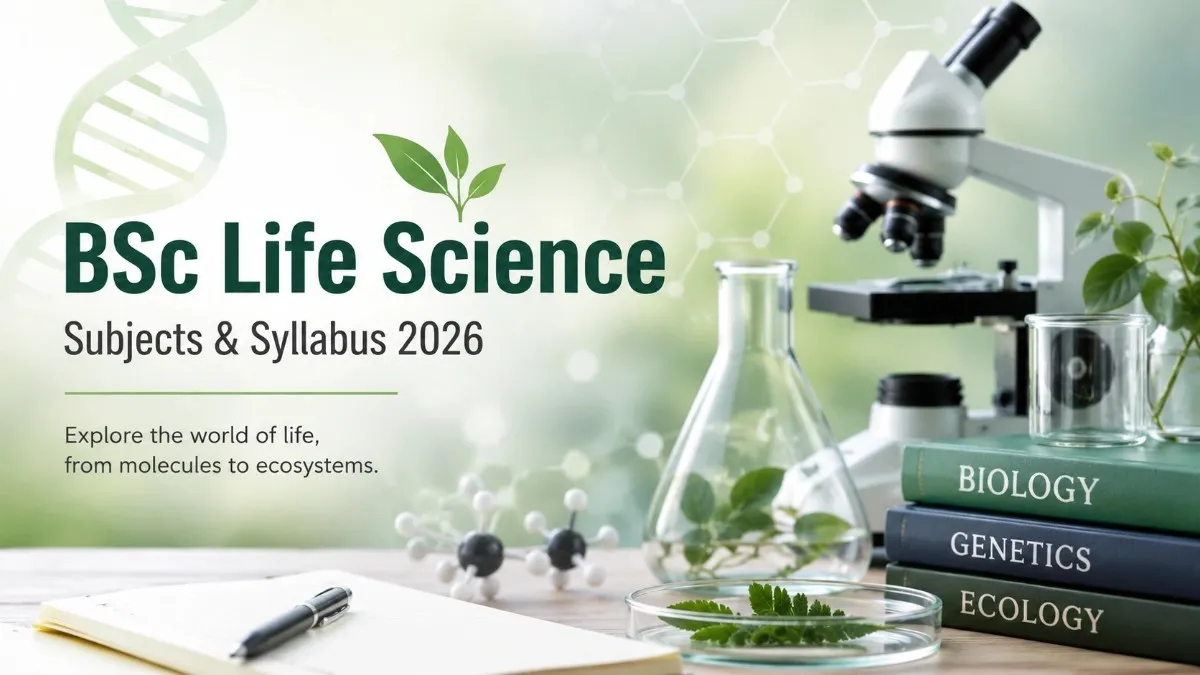
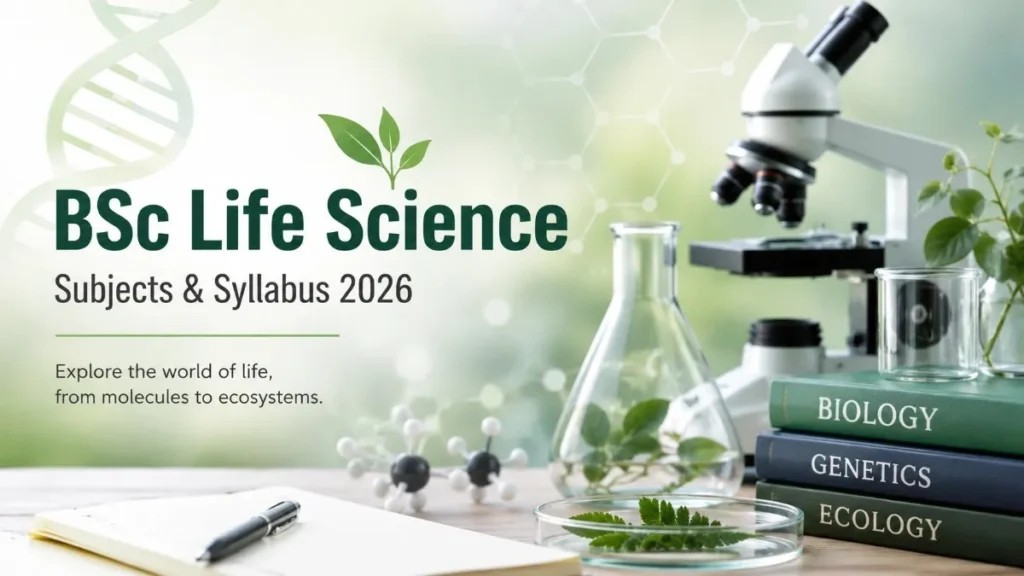
BSc Life Science Subjects 2026: Semester-Wise Syllabus & Core Subjects
Shreoshree Chakrabarty is an experienced content writer with over five years of professional expertise in creating engaging and impactful content across diverse formats. Over the course of her…
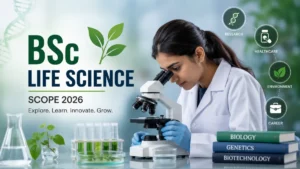
BSc Life Science is a multidisciplinary undergraduate programme that combines biological sciences, chemistry, biotechnology, genetics, and environmental studies to provide a comprehensive understanding of living systems. The course offers strong academic foundations, diverse career opportunities, and pathways to higher education in fields such as biotechnology, healthcare, research, environmental science, and life sciences.
BSc Life Science is a multidisciplinary undergraduate programme that explores the fundamental principles governing living organisms, their biological processes, and their interactions with the environment. Combining subjects such as Botany, Zoology, Microbiology, Biochemistry, Genetics, Environmental Science, and Chemistry, the course provides a comprehensive understanding of life at molecular, cellular, organismal, and ecosystem levels. Designed in accordance with the latest UGC and NEP guidelines, the curriculum emphasizes both theoretical knowledge and practical laboratory training. This article provides a detailed overview of BSc Life Science subjects, semester-wise syllabus, core disciplines, practical components, elective options, and university-specific curricula to help students understand the course structure and academic scope in 2026.
BSc Life Science Subjects 2026: Course Structure Overview
BSc Life Science courses are interdisciplinary undergraduate programmes that combine Biology, Chemistry, Environmental Science, Biotechnology, Genetics, Physiology, and other life science disciplines. These programmes are generally offered as 3-year degree courses comprising 6 semesters, while several universities under NEP 2020 also offer a 4-year Honours format with research and specialization opportunities.
The curriculum of BSc Life Science courses is designed to build a strong foundation in biological sciences during the initial semesters and gradually introduce advanced concepts such as molecular biology, biotechnology, immunology, genetics, ecology, environmental management, and bioinformatics, preparing students for careers in research, healthcare, biotechnology, pharmaceuticals, and higher education.
| Course Component | Coverage |
|---|---|
| Biological Sciences | Botany, Zoology, Microbiology |
| Chemical Sciences | Organic, Physical & Biochemistry |
| Environmental Sciences | Ecology, Conservation & Sustainability |
| Biotechnology | Genetic Engineering, Molecular Techniques |
| Computational Sciences | Bioinformatics & Biological Databases |
| Practical Training | Laboratory Experiments & Field Work |
Students gain both theoretical knowledge and practical laboratory skills, making the programme suitable for careers in research, healthcare, biotechnology, pharmaceuticals, environmental sciences, and higher education.
Semester-Wise BSc Life Science Subjects and Syllabus
The BSc Life Science syllabus progresses from foundational sciences to advanced biological applications. Early semesters focus on biodiversity, chemistry, and introductory biology, while later semesters cover genetics, biotechnology, immunology, ecology, and molecular biology.
| Semester | Major Subjects |
|---|---|
| Semester 1 | Introduction to Biology, Biodiversity, Fundamentals of Nutrition, Chemistry, Environmental Studies |
| Semester 2 | Plant Ecology and Taxonomy, Comparative Anatomy, Molecules of Life |
| Semester 3 | Plant Anatomy, Physiology, Biochemistry, Chemical Bonding |
| Semester 4 | Molecular Biology, Biodiversity of Plants, Bioinformatics |
| Semester 5 | Genetics and Genomics, Biochemistry, Immunology, Plant Physiology |
| Semester 6 | Applied Biology, Biotechnology, Animal Physiology, Ecology and Environmental Management |
Practical classes accompany most theory papers, helping students develop laboratory techniques, analytical skills, and scientific research aptitude.

Practical and Laboratory Subjects in BSc Life Science
Practical training is an integral component of the BSc Life Science curriculum. Most theory papers are accompanied by laboratory sessions that allow students to apply scientific concepts through experiments, specimen analysis, microscopy, biochemical testing, and field-based studies. These practical courses help develop analytical skills, laboratory techniques, data interpretation abilities, and scientific research aptitude.
| Practical Area | Skills Learned |
|---|---|
| Microbiology Practicals | Microbial culture, staining, identification |
| Botany Practicals | Plant anatomy, taxonomy, specimen study |
| Zoology Practicals | Animal physiology, anatomy, classification |
| Biochemistry Practicals | Enzyme assays, biomolecule analysis |
| Molecular Biology Labs | DNA isolation, PCR techniques, gel electrophoresis |
| Ecology Field Work | Biodiversity surveys and environmental assessment |
Hands-on laboratory exposure prepares students for higher studies, research projects, biotechnology laboratories, pharmaceutical industries, and healthcare-related careers.
Elective Subjects and Specializations in BSc Life Science
Many universities offer elective subjects during the later semesters, allowing students to specialize in specific areas of life sciences based on their academic interests and career goals. Electives provide advanced knowledge and practical exposure beyond the core curriculum.
| Specialization Area | Common Elective Subjects |
|---|---|
| Biotechnology | Genetic Engineering, Applied Biotechnology |
| Bioinformatics | Biological Databases, Computational Biology |
| Microbiology | Industrial Microbiology, Medical Microbiology |
| Environmental Science | Environmental Management, Conservation Biology |
| Immunology | Applied Immunology, Molecular Immunology |
| Genetics | Genomics, Human Genetics |
| Plant Sciences | Economic Botany, Plant Biotechnology |
| Animal Sciences | Animal Biotechnology, Reproductive Biology |
The availability of electives varies across universities and helps students build expertise in emerging scientific fields.
Delhi University BSc Life Science Subjects
The BSc Life Sciences programme at Delhi University follows the CBCS model and includes 12 core courses distributed equally across Botany, Zoology, and Chemistry.
Botany Core Papers
- Biodiversity (Microbes, Algae, Fungi & Plants)
- Plant Ecology and Taxonomy
- Plant Anatomy and Embryology
- Plant Physiology and Metabolism
Zoology Core Papers
- Animal Diversity
- Comparative Anatomy of Vertebrates
- Physiology and Biochemistry
- Genetics and Evolutionary Biology
Chemistry Core Papers
- Conceptual Organic Chemistry
- Molecules of Life
- Chemical Bonding
- Physical Chemistry for Biosciences
Students also choose Discipline-Specific Electives (DSEs) such as Biotechnology, Immunology, Bioinformatics, Animal Biotechnology, Green Chemistry, and Instrumental Analysis during later semesters.
BSc Life Science vs BSc (Hons) Life Science: Subject Comparison
While both programmes cover similar foundations, BSc (Hons) Life Science offers a broader curriculum, additional specialisation papers, research exposure, and higher credit requirements.
| Feature | BSc Life Science | BSc (Hons) Life Science |
|---|---|---|
| Duration | 3 Years | 4 Years (NEP Format) |
| Total Semesters | 6 | 8 |
| Credits | 120 | 160+ |
| Research Component | Limited | Extensive |
| Advanced Subjects | Basic Exposure | Specialized Courses |
| Project Work | Optional | Mandatory in Many Universities |
The Honours programme introduces advanced papers such as Cancer Biology, Medical Microbiology, Nano Biotechnology, Drug Discovery, Systems Biology, Genomics, Proteomics, and Research Methodology, providing stronger preparation for research-oriented careers and higher studies.
Skills Developed Through BSc Life Science Subjects
The BSc Life Science curriculum is designed not only to provide subject knowledge but also to develop scientific and professional competencies required in modern biological sciences. Through theory classes, practical sessions, projects, and fieldwork, students acquire a wide range of transferable skills.
Key Skills Developed
- Laboratory and experimental techniques
- Scientific observation and data analysis
- Research methodology and report writing
- Problem-solving and critical thinking
- Bioinformatics and computational skills
- Environmental assessment and field survey techniques
- Communication and scientific presentation skills
- Teamwork and project management abilities
These skills are highly valued in research institutes, biotechnology companies, healthcare organizations, environmental agencies, and academic institutions.
Career Scope After Studying BSc Life Science Subjects
The diverse curriculum of BSc Life Science opens career opportunities across biological sciences, healthcare, biotechnology, environmental management, agriculture, pharmaceuticals, and research sectors. Graduates may pursue employment immediately after graduation or continue with higher studies such as MSc, MBA, MTech Biotechnology, or professional research programs.
| Career Area | Popular Roles |
|---|---|
| Biotechnology | Biotechnologist, Research Associate |
| Healthcare | Clinical Research Coordinator, Lab Technician |
| Pharmaceuticals | Quality Control Analyst, Drug Safety Associate |
| Environmental Science | Environmental Consultant, Ecologist |
| Agriculture | Agricultural Scientist, Plant Research Assistant |
| Academia & Research | Research Assistant, Teaching Assistant |
| Bioinformatics | Bioinformatics Analyst, Data Associate |
| Government Sector | Scientific Assistant, Research Officer |
Many graduates also prepare for competitive examinations such as CSIR-NET, GATE Biotechnology, UPSC, State PCS, and various research fellowship programmes.
Frequently Asked Questions
What is BSc Life Science?
BSc Life Science is a 3-year undergraduate course involving the study of various life processes in plants, animals, and organisms. It is an interdisciplinary subject that incorporates concepts from zoology, chemistry, biotechnology, and botany, combining both practical and theoretical knowledge.
What are the core subjects included in the BSc Life Science syllabus for 2026?
The BSc Life Science syllabus for 2026 integrates core subjects such as Botany, Zoology, and Chemistry. This three-year program, divided into six semesters, also includes a range of Discipline Specific Electives (DSEs) and Skill Enhancement Courses (SECs) under the UGC’s framework.
When is JoSAA Counselling expected for BSc Life Science admissions in 2026?
JoSAA Counselling for BSc Life Science admissions is anticipated to take place in June 2026. Students should check official portals for specific dates and detailed information regarding the counselling process.
Is CUET UG relevant for BSc Life Science admissions in 2026?
Students registering for the CUET UG 2026 for BSc Life Science can check the list of required subjects. This indicates that CUET UG is a relevant examination for admissions to BSc Life Science programs.
What is the career scope after completing a BSc Life Science degree?
A BSc Life Science degree offers various career paths and industry opportunities in the life sciences sector. Graduates can explore diverse job roles and gain insights into potential salary expectations in India.
Which universities are mentioned as offering BSc Life Science programs?
Uttaranchal University offers a B.Sc. (Life Science CBZ) program. The sources also refer to leading institutions in India, including a mention of "Delh" (likely Delhi University).