B.Sc Allied Health Sciences Entrance Exams 2026: Your Guide
Nishit Kumar is a senior EdTech industry leader with over a decade of experience in building and scaling education platforms, shaping their product, content, and growth strategy. At…
Latest update: B.Sc in Allied Health Sciences 2026 admissions & dates updated. Read more ›
Embarking on a career in healthcare requires a strong foundation, and a B.Sc in Allied Health Sciences is an excellent starting point for Science stream students in India. This comprehensive guide covers everything you need to know about the entrance exams for B.Sc in Allied Health Sciences in 2026, from eligibility criteria and application processes to exam patterns, key dates, and career prospects.
What is B.Sc in Allied Health Sciences?
A B.Sc in Allied Health Sciences is an undergraduate degree program that focuses on various diagnostic, technical, and therapeutic healthcare professions distinct from nursing and medicine. It prepares students for roles that support medical professionals in diagnosing, evaluating, and treating diseases and disorders, playing a crucial role in patient care.
Popular Specializations within Allied Health Sciences
The field offers a wide array of specializations, allowing students to choose a path that aligns with their interests. Some popular options include:
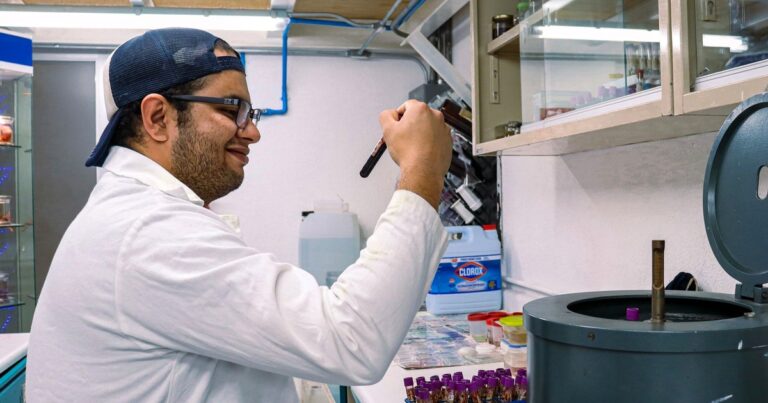
- Medical Laboratory Technology (MLT): Focuses on performing diagnostic tests on body fluids and tissues.
- Radiology & Imaging Technology: Deals with operating imaging equipment like X-ray, CT, and MRI machines.
- Operation Theatre Technology (OTT): Involves assisting surgeons and anesthesiologists in the operating room.
- Optometry: Specializes in eye care, including vision testing and prescribing corrective lenses.
- Renal Dialysis Technology: Focuses on operating dialysis machines for patients with kidney failure.
- Perfusion Technology: Involves operating heart-lung machines during cardiac surgeries.
- Respiratory Therapy: Deals with treating patients with cardiopulmonary disorders.
What is the eligibility for B.Sc in Allied Health Sciences entrance exams in 2026?
To be eligible for B.Sc in Allied Health Sciences entrance exams in 2026, candidates must have successfully completed their 10+2 (or equivalent) examination with Physics, Chemistry, and Biology (PCB) as compulsory subjects. Most institutions require a minimum aggregate score, typically ranging from 45% to 50% for general category candidates, with relaxations for reserved categories.
Age Limit and Other Criteria
- Age Limit: While there isn’t a universal upper age limit, some state-level exams or specific institutions might have a minimum age requirement, usually 17 years as of December 31st of the admission year.
- Domicile: For state-level entrance exams, a domicile certificate might be required to claim state quota seats.
- Medical Fitness: Candidates might need to pass a medical fitness examination upon admission.
People Also Read



Which entrance exams are required for B.Sc in Allied Health Sciences in India?
Admission to B.Sc in Allied Health Sciences programs in India is primarily through state-level or university-specific entrance examinations. While there isn’t a single national-level exam like NEET for MBBS, several prominent exams facilitate admissions.
Key Entrance Exams for B.Sc Allied Health Sciences 2026
- NEET (National Eligibility cum Entrance Test): While primarily for MBBS/BDS, some private colleges and deemed universities may consider NEET scores for B.Sc Allied Health Sciences admissions, especially for programs like Optometry or MLT, if they don’t conduct their own exam.
- CET (Common Entrance Test) – State Level: Many states conduct their own CETs for various paramedical and allied health courses. Examples include KCET (Karnataka), MHT CET (Maharashtra), UP CNET (Uttar Pradesh), and BCECE (Bihar).
- University-Specific Entrance Exams: Prestigious institutions like AIIMS, JIPMER, CMC Vellore, and various private universities conduct their own entrance tests for their Allied Health Sciences programs.
What is the exam pattern for B.Sc Allied Health Sciences entrance exams?
The exam pattern for B.Sc Allied Health Sciences entrance exams generally consists of multiple-choice questions (MCQs) covering Physics, Chemistry, and Biology (Botany & Zoology), mirroring the 10+2 Science syllabus. The duration typically ranges from 2 to 3 hours.
Typical Exam Pattern Breakdown
Most exams follow a similar structure:
- Subjects: Physics, Chemistry, Biology (Botany and Zoology)
- Question Type: Multiple Choice Questions (MCQs)
- Total Questions: Varies, usually between 100-200 questions.
- Marking Scheme: Generally +1 or +4 for correct answers, with negative marking (e.g., -0.25 or -1) in some exams.
- Language: English, and often regional languages for state-level exams.
B.Sc Allied Health Sciences Entrance Exam 2026: Key Details (Tentative)
| Exam Name | Conducting Body | Application Period (Tentative) | Exam Date (Tentative) | Subjects | Typical No. of Questions |
|---|---|---|---|---|---|
| AIIMS B.Sc Paramedical | AIIMS, New Delhi | March – April 2026 | June – July 2026 | Physics, Chemistry, Biology/Maths | 90 |
| JIPMER B.Sc Allied Health | JIPMER, Puducherry | March – April 2026 | June 2026 | Physics, Chemistry, Biology, English, Logical & Quantitative Reasoning | 100 |
| KCET (Paramedical) | KEA, Karnataka | Feb – April 2026 | May 2026 | Physics, Chemistry, Biology | 180 |
| MHT CET (PCB Group) | CET Cell, Maharashtra | March – April 2026 | May 2026 | Physics, Chemistry, Biology | 150 |
| CMC Vellore B.Sc AHS | CMC Vellore | Feb – March 2026 | May 2026 | Physics, Chemistry, Biology, General Ability | 120 |
Note: All dates are tentative for 2026 and subject to change. Candidates are advised to refer to official notifications.
How do I apply for B.Sc Allied Health Sciences entrance exams?
The application process for B.Sc Allied Health Sciences entrance exams is typically conducted online through the official websites of the respective conducting bodies. It involves registration, filling out the application form, uploading documents, and paying the application fee.
Step-by-Step Application Process
- Registration: Visit the official website and register with a valid email ID and mobile number to generate login credentials.
- Fill Application Form: Log in and accurately fill in personal details, academic qualifications, and contact information.
- Upload Documents: Upload scanned copies of photographs, signatures, and required academic certificates as per specifications.
- Pay Application Fee: Pay the non-refundable application fee online using debit card, credit card, or net banking. Fees typically range from INR 500 to INR 2000.
- Review and Submit: Carefully review all entered information before final submission. Print a copy of the submitted application form for future reference.
- Admit Card Download: Download the admit card from the official website once released, usually a few weeks before the exam.
How much does B.Sc in Allied Health Sciences cost (fees)?
The cost of pursuing a B.Sc in Allied Health Sciences varies significantly between government and private institutions. Government colleges generally have lower fees, ranging from INR 10,000 to INR 50,000 per annum, while private colleges can charge between INR 50,000 to INR 2,50,000 per annum or more.
Fee Structure Comparison (Annual, Tentative)
| Institution Type | Average Annual Fees (INR) | Additional Costs (Hostel, Books, etc.) |
|---|---|---|
| Government Colleges (e.g., AIIMS, JIPMER) | 10,000 – 50,000 | 15,000 – 40,000 |
| State University Colleges | 30,000 – 80,000 | 20,000 – 50,000 |
| Private Colleges/Deemed Universities | 50,000 – 2,50,000+ | 30,000 – 80,000+ |
Is B.Sc in Allied Health Sciences worth it for jobs and career prospects?
Yes, a B.Sc in Allied Health Sciences is highly worth it for jobs and offers excellent career prospects due to the increasing demand for skilled healthcare professionals. Graduates find employment in hospitals, diagnostic centers, research labs, clinics, and public health organizations, both in India and abroad.
Career Opportunities and Average Salary Ranges (Entry-Level)
The healthcare sector is robust, providing diverse roles for Allied Health graduates:
- Medical Laboratory Technologist: INR 2.5 – 4.5 LPA
- Radiology Technologist: INR 3.0 – 5.0 LPA
- Operation Theatre Technologist: INR 2.8 – 4.8 LPA
- Optometrist: INR 3.0 – 6.0 LPA
- Dialysis Technologist: INR 2.5 – 4.5 LPA
- Perfusionist: INR 3.5 – 7.0 LPA (can be higher with experience)
Salaries are indicative and vary based on institution, location, experience, and specialization.
How does B.Sc Allied Health Sciences compare to other medical courses like Nursing or Pharmacy?
B.Sc Allied Health Sciences offers a specialized, hands-on role in healthcare, distinct from the direct patient care focus of Nursing or the pharmaceutical focus of Pharmacy. While all are vital to healthcare, Allied Health professionals often work in diagnostic, technical, or rehabilitative capacities.
Course Comparison Matrix
| Feature | B.Sc Allied Health Sciences | B.Sc Nursing | B.Pharm |
|---|---|---|---|
| Primary Role | Diagnostic, technical, therapeutic support | Direct patient care, administration of meds | Drug development, dispensing, patient counseling |
| Key Skills | Technical proficiency, precision, analytical | Compassion, communication, critical thinking | Pharmaceutical knowledge, chemistry, regulatory |
| Work Environment | Labs, imaging centers, OTs, clinics | Hospitals, clinics, community health centers | Pharmacies, pharmaceutical companies, R&D |
| Entrance Exams | State CETs, University-specific, NEET (some) | State CETs, AIIMS Nursing, NEET (some) | State CETs, GPAT (for M.Pharm) |
| Duration | 3-4 years | 4 years | 4 years |
Explore more on FindMyCollege
Related pages for B.Sc in Allied Health Sciences aspirants on findmycollege.com:
Frequently Asked Questions
Can I pursue B.Sc Allied Health Sciences after completing 12th with PCB without NEET?
Yes, you can definitely pursue B.Sc Allied Health Sciences after 12th with PCB without NEET. Many state-level Common Entrance Tests (CETs) and university-specific entrance exams do not require NEET scores for admission to these programs. Only a few private or deemed universities might consider NEET scores, but it’s not a universal requirement.
Are there any government colleges for B.Sc Allied Health Sciences?
Yes, several prestigious government institutions offer B.Sc Allied Health Sciences programs, including AIIMS (various branches), JIPMER, CMC Vellore (though a private minority institution, it has a strong public service ethos and affordable fees), and various government medical colleges affiliated with state universities across India.
What is the syllabus for B.Sc Allied Health Sciences entrance exams?
The syllabus for B.Sc Allied Health Sciences entrance exams primarily covers the 10+2 level Physics, Chemistry, and Biology (Botany and Zoology) syllabi as prescribed by NCERT or state boards. Some exams may also include sections on English, General Knowledge, or Logical Reasoning.
Is mathematics compulsory for B.Sc Allied Health Sciences?
No, mathematics is generally not compulsory for most B.Sc Allied Health Sciences specializations, as the primary requirement is Physics, Chemistry, and Biology (PCB) in 10+2. However, for certain niche specializations like Medical Imaging Technology or Biomedical Engineering (if offered under AHS), having Mathematics might be an advantage or a requirement in some institutions.
What are the job prospects abroad after B.Sc Allied Health Sciences?
Job prospects abroad for B.Sc Allied Health Sciences graduates are excellent, especially in countries like the USA, UK, Canada, Australia, and Gulf nations. These countries often have a high demand for skilled medical technologists, radiographers, physiotherapists, and other allied health professionals. However, you may need to clear licensing exams or fulfill specific registration requirements in the destination country.
Can I do a Master’s degree after B.Sc Allied Health Sciences?
Yes, after completing a B.Sc in Allied Health Sciences, you can pursue a Master’s degree (M.Sc) in your chosen specialization (e.g., M.Sc in Medical Laboratory Technology, M.Sc in Radiology & Imaging Technology, M.Sc in Optometry). This further enhances your expertise, opens doors to teaching, research, and senior clinical roles, and can lead to higher salaries.