Can Virtual Classrooms Replace the College Experience?
Online education has changed the way students attend classes, learn new skills, and earn degrees. Today, students can join live lectures, talk to teachers online, submit assignments, and prepare for exams without visiting a college campus. For many students, this is a convenient way to continue their education while managing work, family responsibilities, or other commitments.
However, college is not just about attending lectures and passing exams. It is also about meeting new people, taking part in activities, working on group projects, building confidence, and learning how to handle different situations. These experiences often help students grow in ways that go beyond their textbooks.
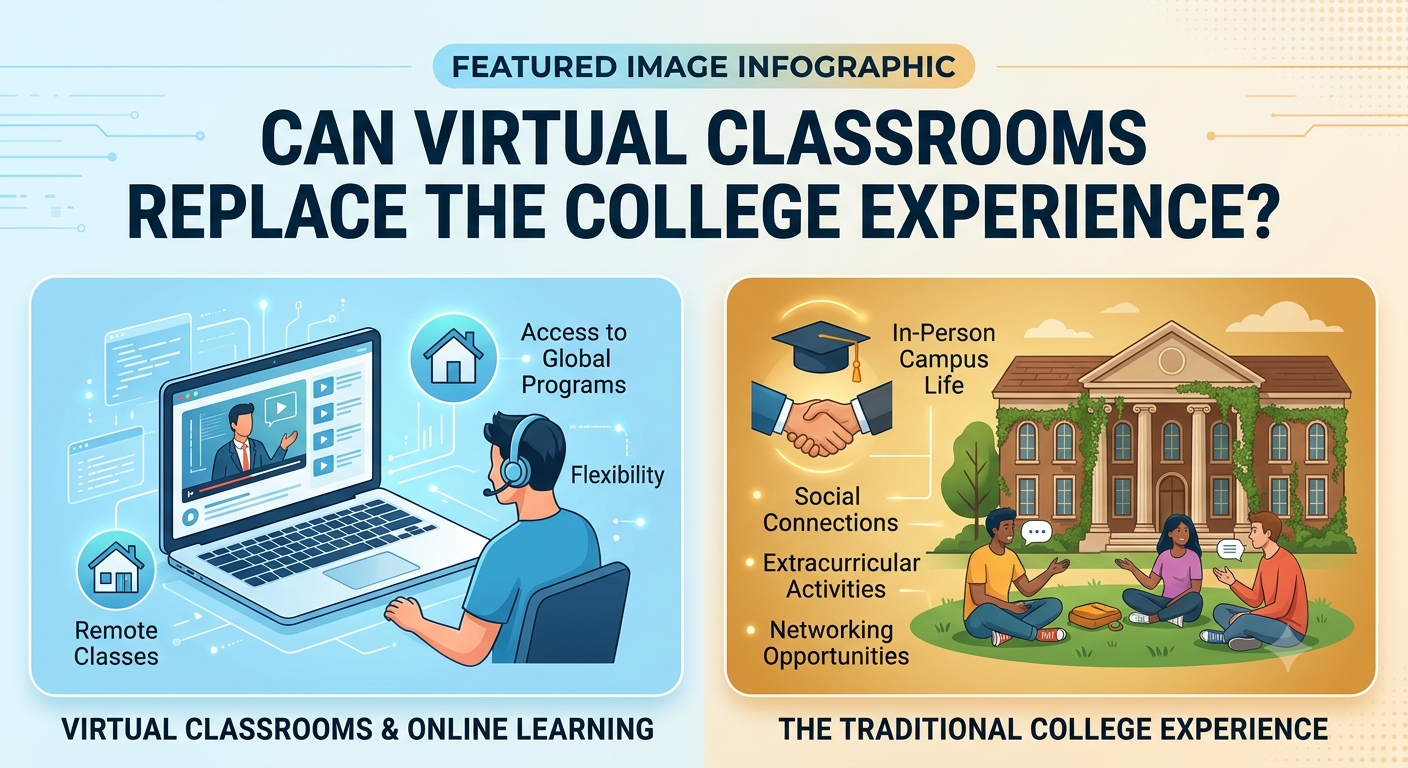
This raises an important question: can virtual classrooms offer the same experience as a traditional college? While online learning has several advantages, it may not be able to replace every part of campus life. The answer depends on what students expect from college and what they want to achieve through their education.
What Makes the Traditional College Experience Special?
For many students, college is the first place where they begin making important decisions independently. They manage their schedules, meet people from different backgrounds, participate in activities, and learn to balance academics with their personal lives.
Classroom learning is only one part of this experience. Students also learn through conversations with classmates, discussions with teachers, presentations, competitions, internships, and college events.
For example, a student participating in a group project may learn how to divide work, handle disagreements, and present ideas clearly. These skills can be difficult to develop through textbooks alone.
College campuses also give students opportunities to join clubs, attend seminars, participate in cultural events, and build friendships that may last for years.
Virtual classrooms can offer some of these activities through online meetings, discussion groups, and virtual events. However, the experience is different when students are not physically present with one another.
This does not mean online students cannot develop important skills or build meaningful relationships. It simply means they may need to make a more deliberate effort to find opportunities outside their regular classes.
Can Virtual Classrooms Provide the Same Quality of Education?
The quality of education depends on several factors, including the course structure, teaching methods, faculty, study material, and support available to students. The mode of learning is important, but it is not the only factor that determines how much a student learns.
Virtual classrooms can provide a strong learning experience when they are planned properly. Students can attend live lectures, ask questions, access recorded sessions, download study material, and take part in online discussions.
One major advantage is that students can revisit recorded lectures whenever they need to revise a difficult topic. In a traditional classroom, students usually have to rely on their notes or the teacher’s explanation during class.
Online learning can also make it easier for students to access courses offered by universities located in other cities. They do not always need to relocate or travel long distances to attend classes.
However, virtual classrooms also have limitations. Students may find it difficult to concentrate during long online lectures, especially when they are studying from home. Internet problems, background noise, and a lack of direct interaction can affect the learning experience.
Practical subjects may also require special arrangements. For example, students studying laboratory sciences, healthcare, engineering, or other hands-on fields may need access to physical labs, equipment, workshops, or supervised training.
Therefore, virtual classrooms can provide quality education, but the results depend on the subject, the university’s teaching methods, and the student’s level of participation.
Online Learning Offers More Flexibility Than Campus Life
One of the biggest reasons students choose virtual classrooms is flexibility. Traditional college schedules may require students to travel to campus, attend classes at fixed times, and spend several hours away from home.
Online learning can reduce many of these demands.
Students enrolled in online degree programmes may be able to attend live classes from home or watch recorded lectures later, depending on the course structure. This can be especially useful for working professionals, parents, students living far from universities, and those who need to manage other responsibilities.
For example, a working professional pursuing an online MBA can study after office hours instead of leaving their job to attend college. Similarly, a student living in a small town may be able to access a programme offered by a university in another part of the country without moving away from home.
This flexibility can make higher education more accessible to people who might otherwise struggle to attend a traditional college.
However, flexibility does not mean that online learning requires less effort. Students still need to complete assignments, prepare for exams, attend required sessions, and meet deadlines.
In fact, students studying online often need strong time-management skills because there may be fewer daily reminders to keep them on track.
Traditional college provides a more fixed routine, while virtual learning gives students greater control over their schedules. Neither approach is automatically better. The right choice depends on how a student learns and manages their time.
Can Students Build Friendships and Social Skills Online?
Friendships are an important part of college life. Students meet classmates during lectures, sit together during breaks, work on assignments, and spend time at campus events. These everyday interactions can help them feel connected to their college community.
Virtual classrooms offer different ways to interact. Students can communicate through discussion forums, messaging groups, video calls, online study sessions, and group assignments.
These activities can help students get to know their classmates and learn how to work with others. However, online interactions may not always feel as natural as face-to-face conversations.
For instance, a student may find it easy to send a message in a class group but feel less comfortable starting a conversation with a new classmate during a video lecture. Informal conversations before and after class may also be less common in virtual settings.
Students can overcome some of these challenges by joining online study groups, participating in university clubs, attending virtual events, and staying in touch with classmates outside scheduled lectures.
They can also look for local professional groups, workshops, meetups, and networking events related to their field.
Still, students who value daily social interaction may find traditional college more satisfying. A campus naturally creates opportunities to meet people, while online students often need to create those opportunities themselves.
What About Campus Activities, Sports, and Cultural Events?
College life includes many activities that take place outside the classroom. Cultural festivals, sports competitions, debates, student clubs, annual functions, and college trips give students a break from academic work while helping them explore their interests.
These activities can also teach useful skills. Organising an event, managing a student club, or participating in a debate can improve communication, teamwork, leadership, and decision-making.
Virtual universities can organise online competitions, webinars, cultural programmes, guest lectures, and student networking events. Students can also participate in online communities related to their hobbies or professional interests.
However, these options cannot fully recreate every part of campus life.
Playing on a college sports team, performing on stage in front of classmates, or helping organise a large college festival involves direct interaction and shared experiences. A virtual event may offer a similar opportunity to participate, but the atmosphere is different.
This is an important consideration for students choosing between online and traditional education.
If a student wants a flexible degree while focusing on work or personal goals, campus activities may not be a major priority. But someone who is entering college for the first time and wants to experience student life may prefer an on-campus programme.
Students should consider these expectations before deciding which learning format suits them.
Do Virtual Classrooms Prepare Students for Jobs as Well as Colleges Do?
A college degree can help students qualify for certain jobs, but employers also look for practical knowledge, communication skills, teamwork, problem-solving ability, and relevant experience.
Both online and traditional education can help students develop these skills. The difference often lies in the opportunities available and how actively students use them.
In a traditional college, students may get opportunities to participate in placement drives, attend company presentations, work on campus projects, join student organisations, and interact with visiting professionals.
Online programmes can offer career support through virtual placement sessions, resume workshops, mock interviews, industry webinars, and online networking opportunities. Some programmes also include internships, live projects, and career counselling.
For working professionals, an online degree can be particularly useful because they can continue gaining work experience while studying.
However, students should not assume that every online university offers the same level of career support. Placement assistance, employer connections, internship opportunities, and career services can vary significantly between institutions and programmes.
Before enrolling, students should check whether the university offers career counselling, practical projects, internship support, and access to placement opportunities. They should also understand whether placement assistance is available to all students and whether specific eligibility conditions apply.
Students pursuing online degrees should make an effort to build their professional profiles. Completing relevant projects, learning industry tools, attending networking events, and gaining work experience can help them become better prepared for the job market.
Ultimately, employers are likely to consider a combination of qualifications, skills, experience, and performance rather than the classroom format alone. The importance of each factor will depend on the employer, role, and industry.
Who Should Choose Virtual Classrooms Instead of Traditional College?
Virtual classrooms are not the right choice for everyone, but they can work very well for students whose needs match the format.
An online programme may be a good option for the following groups.
- Working professionals: People who want to earn a degree without leaving their jobs can benefit from flexible schedules and remote access to classes.
- Students living far from colleges: Students who cannot relocate because of financial, family, or personal reasons may find online education more accessible.
- People managing family responsibilities: Students who need to balance education with childcare or other responsibilities may appreciate the ability to study from home.
- Students looking for career advancement: Professionals who want to improve their qualifications or develop new skills may find online programmes easier to fit into their existing routines.
- Self-motivated learners: Students who can manage deadlines, study independently, and stay focused without constant supervision may adapt well to virtual learning.
On the other hand, traditional college may be a better fit for students who prefer direct interaction with teachers, regular classroom discussions, hands-on learning, and daily contact with classmates.
It may also be more suitable for programmes that require extensive laboratory work, clinical practice, specialised equipment, or in-person training.
Students should also consider their home environment. Someone who shares a small space with family members or has frequent interruptions may find it difficult to attend online classes regularly.
The best choice is not necessarily the one with the most flexibility. It is the one that allows a student to learn effectively and meet their academic and career goals.
Can a Hybrid Learning Model Offer the Best of Both Worlds?
Instead of choosing entirely between online and traditional education, students may benefit from a combination of both.
Hybrid learning, also called blended learning, combines online teaching with some form of in-person instruction or campus participation. The exact format varies by institution and course.
For example, students might attend lectures online, complete assignments through a learning platform, and visit campus for laboratory sessions, workshops, examinations, or group activities.
This approach can offer several advantages.
Students can use online resources for revision and independent study while getting direct guidance during face-to-face sessions. They may also have opportunities to meet classmates, take part in practical activities, and interact with faculty in person.
Hybrid learning can be particularly useful for subjects that involve both theoretical knowledge and practical work. It can also help students who want some flexibility without giving up all campus interaction.
However, the quality of a hybrid programme depends on how well its online and offline components work together. Students should check the actual attendance requirements, campus visit schedule, examination format, and practical training arrangements before enrolling.
It is also important to understand the programme’s official recognition and approval status. In India, students should verify that the university and the specific online or distance programme meet the applicable requirements of the relevant regulatory authorities, including the University Grants Commission where applicable.
A programme should not be chosen simply because it advertises itself as flexible or offers a mix of online and offline learning. Students need to understand what they will actually receive.
What Should Students Consider Before Choosing Online or Offline Education?
Choosing between virtual classrooms and traditional college requires more thought than comparing fees or class schedules.
Students should first consider their reasons for pursuing a degree. Someone who wants to advance in an existing career may have different priorities from a school student who wants to experience college life for the first time.
Here are some important questions to ask before making a decision.
What is the main goal of the degree?
If the goal is career advancement, a flexible online programme may be suitable. If the goal includes campus networking, extracurricular activities, and a full-time student experience, traditional college may be a better fit.
Does the subject require practical training?
Students should check whether their course requires laboratory work, workshops, clinical training, internships, or other activities that cannot be completed entirely online.
How much time can be given to studying?
Students with full-time jobs or family responsibilities may benefit from flexible learning. However, they should still be able to devote enough time to lectures, assignments, and exam preparation.
Will the student be comfortable learning independently?
Online education requires students to keep track of deadlines and complete a large part of their learning without direct supervision. Those who struggle with self-discipline may need a programme with regular live classes and stronger academic support.
What support does the university provide?
Students should look at faculty access, doubt-clearing sessions, academic counselling, technical support, career services, and opportunities to interact with other learners.
Is the degree recognised and suitable for the intended career?
Students should verify the institution’s status, the programme’s applicable approvals, and any additional qualifications required for their intended profession.
Answering these questions can help students select a learning format that matches their circumstances instead of choosing one simply because it is popular.