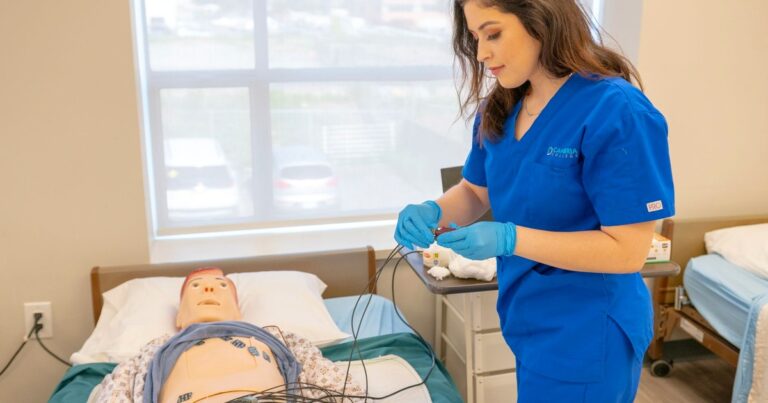
Diploma in Nursing (Distance/Online) India 2026 – Medical Stream
Nishit Kumar is a senior EdTech industry leader with over a decade of experience in building and scaling education platforms, shaping their product, content, and growth strategy. At…
Latest update: Diploma in Nursing 2026 admissions & dates updated. Read more ›
Considering a career in healthcare but need flexibility? The Diploma in Nursing (Distance / Online) in India for 2026 offers a viable pathway for aspiring medical professionals. This comprehensive guide covers everything you need to know about pursuing this diploma through flexible learning modes, specifically tailored for the medical stream.
What is a Diploma in Nursing (Distance / Online) and How Does it Work?
A Diploma in Nursing (Distance / Online) is a professional certification course designed to equip students with fundamental nursing skills and knowledge through flexible learning methodologies, without requiring daily physical attendance at a college campus. It typically involves a blend of self-study materials, online lectures, virtual labs, and mandatory practical training (clinical postings) at affiliated hospitals or healthcare facilities.
Unlike traditional full-time programs, distance learning allows students to study at their own pace, making it ideal for working professionals, those with family commitments, or individuals in remote areas. The curriculum is structured to cover core nursing subjects, patient care, medical ethics, and basic medical procedures, culminating in a diploma recognized by relevant nursing councils upon successful completion.
Is a Distance / Online Diploma in Nursing Recognized in India for 2026?
Yes, a Distance / Online Diploma in Nursing can be recognized in India for 2026, provided the program and the awarding institution are approved by the Indian Nursing Council (INC) and/or relevant State Nursing Councils. It is crucial for prospective students to verify the accreditation status of any institution offering such a program to ensure its validity for employment and further education.
While the theoretical components can be delivered online, the INC mandates a significant portion of practical training and clinical experience, which cannot be fully replicated virtually. Therefore, legitimate distance programs will always include compulsory, supervised clinical postings at approved hospitals. Without this practical component, the diploma will not be recognized for professional practice.
What is the Eligibility for Diploma in Nursing (Distance / Online) in India for 2026?
The general eligibility criteria for a Diploma in Nursing (Distance / Online) in India for 2026 typically require candidates to have completed their 10+2 examination with Science subjects (Physics, Chemistry, Biology), though some institutions might accept students from other streams with specific bridge courses. A minimum aggregate percentage, usually around 40-50%, is also common.
Eligibility Edge-Cases and Specific Requirements:
- Age Limit: Generally, candidates must be at least 17 years old by December 31st of the admission year. There is usually no upper age limit for distance programs, making them accessible to mature students.
- Academic Background: While PCB is preferred, some programs might consider candidates with 10+2 in Arts or Commerce, provided they complete a recognized ANM (Auxiliary Nurse Midwifery) course or a similar bridge program.
- Medical Fitness: All applicants must be medically fit, as certified by a registered medical practitioner.
- Prior Experience: For some advanced or specialized diploma programs, prior healthcare experience or an ANM certificate might be a prerequisite.
How Much Does a Diploma in Nursing (Distance / Online) Cost in India for 2026?
The cost of a Diploma in Nursing (Distance / Online) in India for 2026 can vary significantly based on the institution’s type (government vs. private), its reputation, and the program’s specific structure. Generally, fees range from INR 20,000 to INR 1,50,000 per year.
Fee Structure Breakdown:
The total fee usually includes tuition, study materials, examination fees, and charges for practical training/clinical postings. Some institutions might have separate charges for registration or technology access.
| Institution Type | Annual Fee Range (INR) | Key Inclusions |
|---|---|---|
| Government/Public Institutions | 20,000 – 60,000 | Tuition, basic study materials, exam fees, subsidized clinical training. |
| Private Institutions | 60,000 – 1,50,000 | Tuition, comprehensive study kits, online platform access, exam fees, clinical training. |
What is the Admission Process and Key Dates for 2026?
The admission process for a Diploma in Nursing (Distance / Online) in India for 2026 typically involves an application, merit-based selection or an entrance exam, and document verification. Key dates are usually spread across the first half of the year.
Step-by-Step Admission Process:
- Application Form: Obtain and fill out the application form, usually available online on the institution’s website.
- Document Submission: Submit required documents, including academic transcripts (10th, 12th mark sheets), age proof, identity proof, medical fitness certificate, and passport-sized photographs.
- Entrance Exam (if applicable): Some reputable institutions might conduct their own entrance exams to assess basic aptitude in science and general knowledge.
- Merit List/Interview: Selection is often based on 10+2 marks (merit-based) or performance in the entrance exam. Some institutions may also conduct a personal interview.
- Fee Payment & Enrollment: Upon selection, pay the first installment of fees to confirm admission.
- Clinical Posting Allotment: Details regarding mandatory clinical postings will be provided, including affiliated hospitals and schedules.
Tentative Admission Dates for 2026:
| Activity | Tentative Dates (2026) |
|---|---|
| Application Window Opens | March – April |
| Application Deadline | May – June |
| Entrance Exam (if applicable) | June |
| Merit List/Interview | July |
| Admission & Fee Payment | July – August |
| Session Commencement | August – September |
What is the Syllabus and Course Structure for a Distance / Online Diploma in Nursing?
The syllabus for a Distance / Online Diploma in Nursing is designed to cover foundational nursing principles, medical-surgical nursing, child health nursing, mental health nursing, and community health nursing. The course structure typically spans 2 to 3 years, divided into semesters or annual modules.
Typical Subjects Covered:
- Anatomy & Physiology
- Microbiology
- Pharmacology
- Fundamentals of Nursing
- Medical-Surgical Nursing (Adult & Geriatric)
- Child Health Nursing
- Mental Health Nursing
- Community Health Nursing
- Nutrition
- First Aid & Emergency Care
- Professional Trends & Adjustment
- Nursing Administration & Ward Management
Practical training and clinical rotations are an integral part of each year’s curriculum, often requiring students to complete a specified number of hours in various hospital departments.
Is a Distance / Online Diploma in Nursing Worth It for Jobs in India?
Yes, a recognized Distance / Online Diploma in Nursing can be worth it for jobs in India, especially for entry-level nursing positions, provided the diploma is from an INC-approved institution and includes mandatory practical training. It opens doors to roles such as Staff Nurse, Community Health Worker, and Home Care Nurse.
While a B.Sc. Nursing degree is often preferred for higher-level positions and faster career progression, a diploma provides a solid foundation and allows individuals to enter the workforce sooner. Many diploma holders choose to pursue post-basic B.Sc. Nursing or other advanced courses later to enhance their career prospects.
What are the Career Prospects and Salary Expectations After a Distance / Online Diploma in Nursing?
Graduates of a recognized Distance / Online Diploma in Nursing program can find employment in various healthcare settings, including private and government hospitals, clinics, nursing homes, community health centers, and home healthcare agencies. The demand for skilled nurses remains consistently high in India.
Common Job Roles:
- Staff Nurse: Providing direct patient care, administering medications, monitoring vital signs.
- Community Health Nurse: Working in rural or urban communities, focusing on preventive care, health education, and basic treatment.
- Home Care Nurse: Providing nursing care to patients in their homes.
- Clinic Nurse: Assisting doctors in private clinics, managing patient records, and performing basic procedures.
Salary Expectations (Entry-Level, Annual):
| Job Role | Average Salary Range (INR) | Key Responsibilities |
|---|---|---|
| Staff Nurse (Private Hospital) | 1,80,000 – 3,00,000 | Patient care, medication administration, record keeping. |
| Staff Nurse (Government Hospital) | 2,40,000 – 4,00,000 | Similar to private, often with better benefits and job security. |
| Community Health Nurse | 1,50,000 – 2,50,000 | Health education, basic medical aid, vaccination drives. |
| Home Care Nurse | 1,80,000 – 3,00,000 | Personalized care, wound dressing, medication management at home. |
Salaries can increase significantly with experience, specialization, and further education (e.g., B.Sc. Nursing, M.Sc. Nursing).
What are the Pros and Cons of a Distance / Online Diploma in Nursing?
A Distance / Online Diploma in Nursing offers significant advantages in terms of flexibility and accessibility but also comes with certain challenges compared to traditional full-time programs.
Pros:
- Flexibility: Study at your own pace and schedule, ideal for working individuals or those with other commitments.
- Accessibility: Overcomes geographical barriers, allowing students from remote areas to pursue nursing education.
- Cost-Effective: Often has lower tuition fees compared to on-campus programs, and saves on commuting and living expenses.
- Self-Paced Learning: Caters to different learning styles and allows for deeper understanding of complex topics.
- Work-Life Balance: Easier to manage personal and professional responsibilities alongside studies.
Cons:
- Self-Discipline Required: Demands high levels of motivation and time management skills.
- Limited Direct Interaction: Less face-to-face interaction with instructors and peers, which might impact collaborative learning.
- Practical Training Logistics: Arranging and completing mandatory clinical postings can sometimes be challenging, especially for students in areas with limited affiliated hospitals.
- Perception: While recognized, some employers might still prefer candidates from traditional full-time programs, especially for highly competitive roles.
- Technology Dependence: Requires reliable internet access and basic computer literacy.
Explore more on FindMyCollege
Related pages for Diploma in Nursing aspirants on findmycollege.com:
Frequently Asked Questions
Can I pursue a Diploma in Nursing (Distance / Online) after 10th standard?
No, generally, a Diploma in Nursing (Distance / Online) requires completion of the 10+2 examination. For 10th pass students, ANM (Auxiliary Nurse Midwifery) is an option, which can then serve as a stepping stone to a GNM (General Nursing and Midwifery) or Diploma in Nursing program.
Are there any entrance exams for Distance / Online Diploma in Nursing?
While many institutions offer admission based on 10+2 merit, some reputable colleges or universities may conduct their own entrance exams to assess basic aptitude in science, English, and general knowledge. Always check the specific requirements of your chosen institution.
How long does a Distance / Online Diploma in Nursing take to complete?
A Diploma in Nursing (Distance / Online) typically takes 2 to 3 years to complete, including both theoretical coursework and mandatory practical clinical training. The exact duration can vary slightly by institution and program structure.
Can I work while studying for a Distance / Online Diploma in Nursing?
Yes, one of the primary advantages of a Distance / Online Diploma in Nursing is the flexibility it offers, making it suitable for individuals who wish to work simultaneously. However, you must ensure you can dedicate sufficient time to studies and attend mandatory clinical postings.
What is the difference between GNM and a Diploma in Nursing (Distance / Online)?
GNM (General Nursing and Midwifery) is a specific diploma program that traditionally focuses on general nursing and midwifery. While a Distance / Online Diploma in Nursing might cover similar content, the key difference lies in the mode of delivery (flexible/remote vs. traditional on-campus) and the specific accreditation of the program. Both aim to produce competent nurses.
Are there any age restrictions for Distance / Online Diploma in Nursing?
While a minimum age of 17 years by December 31st of the admission year is common, most distance/online programs do not have an upper age limit, making them accessible to mature students and those looking for a career change.
What kind of practical training is involved in a Distance / Online Diploma in Nursing?
Practical training, known as clinical postings, is a mandatory and significant component. Students are required to complete a specified number of hours in affiliated hospitals or healthcare settings, gaining hands-on experience in various departments like medical-surgical, pediatrics, obstetrics, and community health under supervision.
Can I pursue higher education after completing a Distance / Online Diploma in Nursing?
Yes, after completing a recognized Diploma in Nursing, you are eligible to pursue higher education, such as a Post-Basic B.Sc. Nursing degree, which is specifically designed for diploma holders to upgrade their qualifications to a graduate level. This can open doors to advanced roles and further studies like M.Sc. Nursing.