Scope of Aeronautical Engineering in India: Jobs, Salary, Top Recruiters & Future
Aeronautical Engineers enjoy lucrative career prospects due to rapid aviation growth in India. Top job roles include Aircraft Engineer, Aircraft Maintenance Engineer, Aerospace Designer and others with starting salaries from Rs. 6-8 LPA.
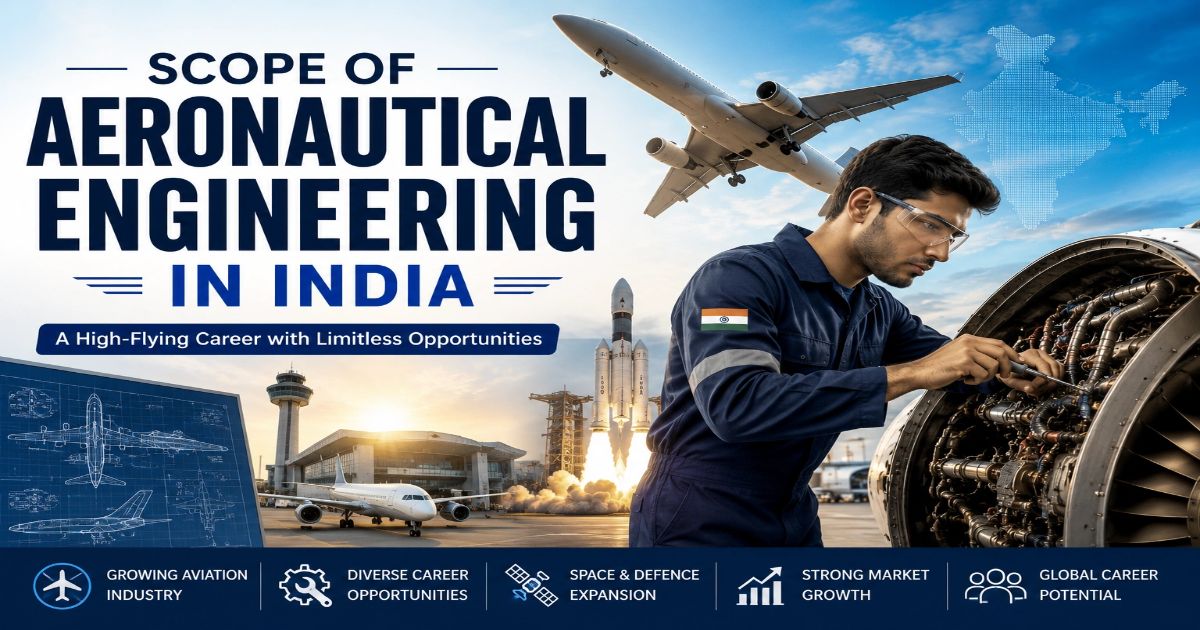
Aeronautical engineers in India can expect an average starting salary of ₹6-8 LPA by 2026, driven by a projected aviation market size of USD 40.81 billion by 2033. This field offers robust prospects, with a 12.21% CAGR in aviation (2025-2035) and significant fleet expansion. Top job roles for Aeronautical Engineers in India include Aircraft Engineer, Aircraft Maintenance Engineer, Aerospace Designer, Propulsion Engineer and others. Companies like ISRO, DRDO, Air India, HAL and others serve as major recruiters in the Indian Aeronautical Engineering sector. Indian civil aviation market is projected to reach USD 70 billion by 2030, making aeronautical engineering a highly lucrative career path. Explore its top job roles, salaries, future trends and more here.
Career Prospects in Aeronautical Engineering by 2026
Aeronautical engineering is a promising career with strong growth prospects, making it an excellent choice for future professionals. This section explores the robust career scope and future outlook for the field by 2026, highlighting key demand drivers and technological trends shaping it.
| Category | Details |
|---|---|
| Market Size | Aviation: ~USD 16-18B (est.); Aerospace & Defense: USD 30.72B |
| Projected Market Size | Aviation: USD 40.81B by 2033; Aerospace: USD 61B by 2035 |
| CAGR (2025–2035) | Aviation: 12.21%; Aerospace & Defense: 7.10% |
| Industry Growth Estimates | 7-12% CAGR in aviation/MRO; Space from USD 7B (2019) to USD 50B (2024) |
| Key Growth Drivers | Fleet expansion (600+ aircraft), airport infrastructure (200+ new), ISRO/DRDO missions, Make in India, defense indigenization |
| Urbanization Impact | Rising air travel demand from urban middle class; 3rd largest domestic market |
| Technological Trends | Drones/UAVs, sustainable aviation, AI in avionics, hypersonics, additive manufacturing, electric propulsion. |
| Government Support | UDAN scheme, Atmanirbhar Bharat, Skill India for aerospace training, Aero India expos |
Top Job Roles with Salaries for Aeronautical Engineers in India
India’s civil aviation market, the 3rd largest globally, is projected to reach USD 70 billion by 2030, indicating robust demand for aeronautical engineers. This section explores key job opportunities, average salaries, and top recruiters, helping to answer if this is a good career choice.
| Job Profile | Average Salary (INR) | Scope | Top Recruiters |
|---|---|---|---|
| Aircraft Engineer | 6-10 Lakhs | High demand in both government and private sectors | ISRO, DRDO, Boeing, Airbus, HAL |
| Aircraft Maintenance Engineer | 5-8 Lakhs | Growing with more commercial airlines | Air India, SpiceJet, IndiGo |
| Aerospace Designer | 7-12 Lakhs | Rapid growth in UAV and space sectors | TATA Aerospace, General Electric, Mahindra Aerospace |
| Aircraft Performance Engineer | 8-12 Lakhs | High in defense and commercial aviation | ADA, ADE, SpiceJet, Boeing |
| Propulsion Engineer | 6-10 Lakhs | Essential in both defense and civil aviation sectors | HAL, ISRO, General Electric, Pratt & Whitney |
| Structural Engineer | 7-11 Lakhs | Steady demand in aerospace manufacturing | Boeing, Airbus, Hindustan Aeronautics Limited |
| Avionics Engineer | 7-11 Lakhs | Expanding in aerospace systems | Airbus, Boeing, Mahindra Aerospace, HAL |
| Aerospace Researcher | 10-15 Lakhs | High, with focus on R&D in space and UAVs | ISRO, DRDO, NAL, TATA Aerospace |
| Drone Technician | 5-7 Lakhs | Fast-growing field with defense and commercial use | QuEST Global, TATA Aerospace |
| Flight Systems Engineer | 8-12 Lakhs | Demand driven by advancements in flight technology | Air India, GoAir, SpiceJet |
The diverse roles and competitive salaries highlighted in the table affirm that is aeronautical engineering a good career, with significant opportunities across various specialized fields and top-tier recruiters in India.
People Also Read




Salary Trends & Earning Potential in Aeronautical Engineering
Aeronautical engineering offers significant earning potential in India, with an average salary of ₹10.8 Lakhs per year. Senior roles can exceed ₹30,00,000 annually, making it a potentially rewarding career. Top 10% earners can achieve over ₹18 Lakhs per year, demonstrating strong growth prospects.
| Experience Level | Estimated Salary |
|---|---|
| Junior Aeronautical Engineer (0–1 Year) | ₹20,000 – ₹32,000 per month |
| Freshers (Average Across India) | ₹3.5 LPA – ₹6 LPA |
| Fresh Graduates from Premier Institutes | ₹35,000 – ₹58,000 per month |
| Fresh Graduates from Other Engineering Colleges | ₹25,000 – ₹40,000 per month |
| Aeronautical Engineer (1–3 Years Experience) | ₹4 LPA – ₹6 LPA |
| Mid-Level Professionals (3–7 Years Experience) | ₹12 LPA – ₹14 LPA |
| Experienced Aeronautical Engineers | ₹50,000 – ₹2 Lakhs+ per month |
| Senior Aerospace Professionals | ₹15 LPA+ |
| Typical Industry Salary Range (0–12 Years Experience) | ₹9.6 LPA – ₹11.9 LPA |
| Overall Average Salary (1–10 Years Experience) | ₹10.8 LPA average (₹2.2 LPA – ₹20 LPA range) |
Aeronautical vs. Aerospace Engineering: A Comparison
Aeronautical Engineering is often compared with Aerospace Engineering due to the similarities of the two domains. Here is a side-by-side comparison of the career prospects of these courses:
| Parameter | Aeronautical Engineering | Aerospace Engineering |
|---|---|---|
| Core Focus | Aircraft within Earth’s atmosphere | Aircraft + spacecraft, satellites, rockets |
| Typical Job Roles | Aircraft Engineer, AME, Avionics Engineer, Flight Test Engineer | Aerospace Engineer, Space Systems Engineer, Propulsion Engineer, Satellite Engineer |
| Top Recruiters | HAL, Air India, IndiGo, Boeing, Airbus | ISRO, DRDO, HAL, Boeing, Airbus, Tata Advanced Systems |
| Starting Salary | ₹4–6 LPA | ₹5–8 LPA |
| Mid-Career Salary | ₹8–15 LPA | ₹10–20 LPA |
| Senior-Level Salary | ₹15–25 LPA+ | ₹25–50 LPA+ |
| Industry Demand Outlook | Strong in airlines, MRO, defense aviation | Strong in aviation, defense, space, UAVs |
| Best Suited For | Students interested in aircraft design, testing and maintenance | Students interested in aviation + space technologies |
| Career Flexibility | Focused mainly on aircraft careers | Broader scope across aviation and space |
Key Skills & Industry Trends for Aeronautical Engineers
By 2026, technological innovations will significantly impact aeronautical engineering, requiring engineers to adapt to emerging technologies. The field is expanding due to sustainable aviation and advanced aircraft systems, making it a dynamic career path. Take a look at the core and additional skills needed below:
| Skill Category | Skill |
| Core Skills | Aerodynamics |
| Avionics | |
| Propulsion systems | |
| Flight mechanics | |
| Problem-solving skills | |
| Data analysis | |
| Strong mathematics and physics foundation | |
| Additional Skills | CAD proficiency |
| CFD software knowledge | |
| Aircraft structural analysis | |
| Control systems knowledge | |
| Materials and composites knowledge | |
| Safety analysis | |
| Sustainable aviation technologies awareness | |
| Attention to detail and analytical thinking |
Preparing for the Future: Trends to Watch Out
Aeronautical engineering in India is being shaped by cleaner propulsion systems, smarter aircraft technologies, and growing demand in aviation, defence, and UAV segments. These trends indicate strong long-term relevance and expanding career opportunities in the field.
| Trend | Impact on Aeronautical Engineering |
|---|---|
| Fuel-efficient aviation | Focus on lower emissions and better aircraft performance |
| Electric & hybrid propulsion | Growing scope in sustainable aircraft power systems |
| Drones and UAVs | Expanding opportunities in defence, logistics and surveillance |
| AI in avionics | Smarter flight systems, predictive maintenance and automation |
| Autonomous aircraft | Increased use of self-operating and digitally controlled systems |
| Additive manufacturing | Faster prototyping and lightweight aircraft components |
| Advanced composite materials | Stronger, lighter and more efficient aircraft structures |
| Supersonic & hypersonic flight | Innovation in propulsion, aerodynamics and high-speed travel |
| Digital flight systems | Rising demand for avionics and embedded systems expertise |
| Rising air traffic & defence demand | More jobs across airlines, MRO, manufacturing and defence aviation |
Frequently Asked Questions
What is the projected job market like for Aeronautical Engineers in India by 2026?
The job market for Aeronautical Engineers in India is expected to see steady growth by 2026, driven by expansion in domestic aviation, defense modernization, and the ‘Make in India’ initiative in aerospace manufacturing. Opportunities will likely be concentrated in MRO (Maintenance, Repair, and Overhaul), R&D, and manufacturing sectors.
What kind of starting salary can an Aeronautical Engineering graduate expect in India in 2026?
A fresh Aeronautical Engineering graduate in India can expect a starting salary ranging from ₹4.5 LPA to ₹8 LPA in 2026, depending on the recruiting company, the specific role, and the candidate’s skills and academic performance.
Which are some of the top recruiters for Aeronautical Engineers in India?
Leading recruiters for Aeronautical Engineers in India include public sector giants like HAL, DRDO, and ISRO, along with private airlines such as IndiGo and Air India, and MRO companies like Air Works and GMR Aero Technic. International aerospace firms with Indian operations also offer significant opportunities.
What are the future prospects and growth areas for Aeronautical Engineering careers in India beyond traditional roles?
Beyond traditional roles, future prospects for Aeronautical Engineers in India include emerging areas like drone technology, urban air mobility (UAM), space tourism, and advanced materials research. Specialization in AI/ML for aerospace, avionics, and sustainable aviation fuels will also be highly valued.
Is pursuing a Master’s degree (M.Tech) in Aeronautical Engineering beneficial for career advancement in India?
Yes, pursuing an M.Tech in Aeronautical Engineering can significantly enhance career advancement, particularly for roles in research and development, specialized design, and academia. It often leads to higher starting salaries and faster progression into leadership or expert positions within the industry.