Master of Chirurgiae in Plastic Surgery (M.Ch.) Syllabus 2026
Nishit Kumar is a senior EdTech industry leader with over a decade of experience in building and scaling education platforms, shaping their product, content, and growth strategy. At…
Latest update: Master of Chirurgiae in Plastic Surgery 2026 admissions & dates updated. Read more ›
Welcome to the comprehensive guide for the Master of Chirurgiae (M.Ch.) in Plastic Surgery Syllabus for 2026 in India. This page is designed to answer all your questions regarding this highly specialized medical postgraduate course, providing aspiring plastic surgeons with a clear roadmap for their academic and professional journey.
What is the Master of Chirurgiae (M.Ch.) in Plastic Surgery?
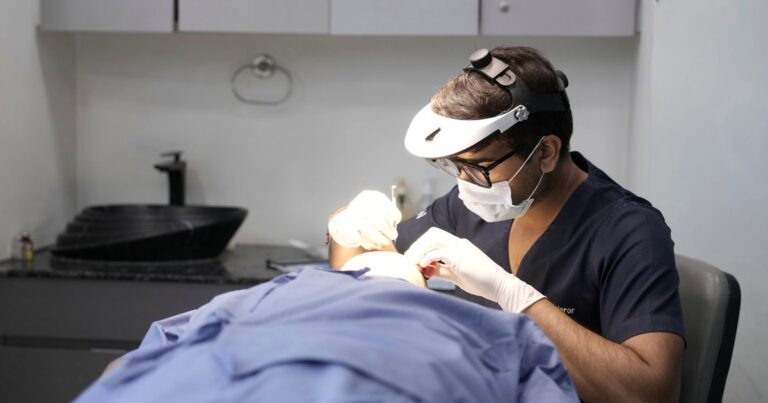
The Master of Chirurgiae (M.Ch.) in Plastic Surgery is a super-specialty postgraduate medical degree in India, focusing on the restoration, reconstruction, or improvement of the human body. It is a highly advanced surgical discipline that requires extensive training beyond a general surgical residency.
This three-year full-time course delves into various aspects of plastic and reconstructive surgery, including congenital anomalies, trauma, burns, cancer reconstruction, aesthetic surgery, and microsurgery. The curriculum is designed to equip surgeons with the theoretical knowledge, practical skills, and ethical understanding necessary to perform complex reconstructive and aesthetic procedures.
What is the eligibility for Master of Chirurgiae in Plastic Surgery?
To be eligible for the M.Ch. in Plastic Surgery, candidates must possess a Master of Surgery (MS) in General Surgery or an equivalent recognized qualification from a university or institution recognized by the National Medical Commission (NMC) of India. Additionally, candidates must have successfully completed their MBBS degree and internship.
Specific eligibility criteria often include:
- MBBS Degree: A Bachelor of Medicine, Bachelor of Surgery (MBBS) degree from an NMC-recognized institution.
- Internship: Completion of a compulsory rotating internship.
- MS General Surgery: A Master of Surgery (MS) degree in General Surgery from an NMC-recognized institution.
- NMC/State Medical Council Registration: Valid permanent registration with the NMC or any State Medical Council.
- Entrance Exam: Qualification in a national-level entrance examination such as NEET SS (National Eligibility cum Entrance Test for Super Specialty courses). Some institutions may conduct their own entrance exams, though NEET SS is the primary gateway.
There are typically no age limits for M.Ch. courses, but candidates must meet all academic and registration requirements.
How much does Master of Chirurgiae in Plastic Surgery cost?
The cost of pursuing an M.Ch. in Plastic Surgery in India varies significantly depending on the type of institution (government vs. private) and its reputation. Generally, government colleges have much lower fees compared to private universities.
Here’s an estimated fee range for the M.Ch. Plastic Surgery course:
| Institution Type | Annual Fee Range (INR) |
|---|---|
| Government Colleges | ₹15,000 – ₹1,50,000 |
| Private Colleges/Universities | ₹5,00,000 – ₹25,00,000+ |
These fees typically cover tuition, library access, and basic lab facilities. Additional expenses may include hostel fees, examination fees, study materials, and personal living costs. Some private institutions may also have a ‘development fee’ or ‘security deposit’ which is often refundable.
What is the M.Ch. Plastic Surgery Syllabus and Course Structure?
The M.Ch. Plastic Surgery syllabus is meticulously designed to provide comprehensive training over three years, combining theoretical knowledge with extensive practical and clinical experience. The course is structured into six semesters, with a strong emphasis on hands-on surgical training, research, and academic presentations.
Core Subjects and Specializations
The curriculum covers a broad spectrum of plastic surgery sub-specialties:
- General Principles of Plastic Surgery: Wound healing, tissue transfer, flap physiology, biomaterials.
- Congenital Anomalies: Cleft lip and palate, craniofacial anomalies, hand anomalies, hypospadias.
- Trauma: Maxillofacial trauma, hand trauma, lower limb reconstruction, burn management.
- Burns: Acute burn care, reconstructive surgery for burn sequelae.
- Cancer Reconstruction: Head and neck reconstruction, breast reconstruction, trunk and extremity reconstruction.
- Microsurgery: Principles and techniques, free tissue transfer.
- Aesthetic Surgery: Rhinoplasty, facelift, breast augmentation/reduction, liposuction, abdominoplasty.
- Hand Surgery: Nerve injuries, tendon injuries, replantation, congenital hand deformities.
- Peripheral Nerve Surgery: Nerve repair, nerve grafting, nerve transfers.
- Research Methodology & Biostatistics: Essential for thesis work and evidence-based practice.
- Ethics & Medico-legal Aspects: Professional conduct and legal considerations in plastic surgery.
Semester-wise Breakdown (Illustrative)
While specific breakdowns may vary slightly between institutions, the general progression is as follows:
| Semester | Key Focus Areas | Practical/Clinical Training |
|---|---|---|
| Semester 1 & 2 (Year 1) | Basic principles, wound healing, flaps, general reconstructive techniques, congenital anomalies (clefts, hand), burn management. | Assisting in major cases, independent minor procedures, ward rounds, OPD clinics, emergency duties. |
| Semester 3 & 4 (Year 2) | Trauma reconstruction (maxillofacial, hand, lower limb), microsurgery principles, breast reconstruction, aesthetic surgery basics, peripheral nerve surgery. | Performing moderate complexity procedures, microsurgery lab training, presenting cases, journal clubs, beginning thesis work. |
| Semester 5 & 6 (Year 3) | Advanced aesthetic surgery, complex cancer reconstruction, advanced microsurgery, research completion, thesis submission, preparation for final exams. | Performing complex reconstructive and aesthetic procedures independently, teaching junior residents, leadership roles in surgical teams. |
Throughout the course, residents are expected to participate in academic activities such as seminars, journal clubs, grand rounds, and conferences. A compulsory thesis or dissertation based on original research is a critical component of the M.Ch. program.
Is Master of Chirurgiae in Plastic Surgery worth it for jobs?
Yes, pursuing an M.Ch. in Plastic Surgery is highly worth it for job prospects, as it opens doors to a specialized and in-demand medical field with excellent career growth and earning potential. Plastic surgeons are among the highest-paid medical specialists due to the complexity and specialized nature of their work.
Career Prospects and Roles
Graduates can find employment in various settings:
- Consultant Plastic Surgeon: In government hospitals, private hospitals, and corporate healthcare chains.
- Aesthetic Surgeon: Specializing in cosmetic procedures in private clinics or aesthetic centers.
- Reconstructive Surgeon: Focusing on trauma, burns, cancer, and congenital defect reconstruction.
- Academician/Researcher: In medical colleges and research institutions, combining clinical practice with teaching and research.
- Private Practice: Establishing their own clinics, which can be highly lucrative.
- Super-specialized Roles: Further specializing in areas like craniofacial surgery, hand surgery, or microsurgery.
Salary Expectations
Salaries for M.Ch. Plastic Surgery graduates are among the highest in the medical field, reflecting the extensive training and specialized skills required. Initial salaries can be substantial, with significant growth potential with experience and reputation.
| Role | Experience Level | Average Annual Salary Range (INR) |
|---|---|---|
| Junior Consultant/Registrar | 0-3 years | ₹10,00,000 – ₹25,00,000 |
| Consultant Plastic Surgeon | 3-8 years | ₹25,00,000 – ₹60,00,000 |
| Senior Consultant/Private Practice | 8+ years | ₹60,00,000 – ₹2,00,00,000+ |
These figures are indicative and can vary based on location (metro vs. tier-2 cities), hospital brand, patient volume, and the surgeon’s specific expertise and reputation.
What are the top colleges for M.Ch. Plastic Surgery in India?
India boasts several prestigious institutions offering M.Ch. in Plastic Surgery, renowned for their excellent faculty, infrastructure, and clinical exposure. Admission to these colleges is highly competitive, primarily through NEET SS.
Some of the top colleges include (but are not limited to):
- All India Institute of Medical Sciences (AIIMS), New Delhi
- Postgraduate Institute of Medical Education and Research (PGIMER), Chandigarh
- King George’s Medical University (KGMU), Lucknow
- Seth G.S. Medical College and KEM Hospital, Mumbai
- Maulana Azad Medical College (MAMC), New Delhi
- Christian Medical College (CMC), Vellore
- Institute of Medical Sciences, Banaras Hindu University (IMS-BHU), Varanasi
- Jawaharlal Institute of Postgraduate Medical Education and Research (JIPMER), Puducherry
- Grant Medical College and Sir J.J. Group of Hospitals, Mumbai
- Armed Forces Medical College (AFMC), Pune
How does M.Ch. Plastic Surgery compare to other super-specialties?
M.Ch. Plastic Surgery stands out as a unique super-specialty due to its broad scope, encompassing both reconstructive and aesthetic aspects, and its requirement for exceptional surgical dexterity and artistic vision. Unlike other super-specialties that might focus on a specific organ system (e.g., M.Ch. Urology, M.Ch. Neurosurgery), plastic surgery often involves working across multiple body parts and systems.
Here’s a brief comparison:
- M.Ch. Neurosurgery: Focuses on the brain, spinal cord, and peripheral nerves. Highly demanding, technically intricate, but generally less involved with aesthetic outcomes.
- M.Ch. Cardiothoracic Surgery: Deals with heart and lung conditions. Requires immense precision and stamina, often involving life-saving procedures.
- M.Ch. Urology: Specializes in the urinary tract and male reproductive organs. Involves both open and minimally invasive techniques.
- M.Ch. Surgical Oncology: Focuses on surgical removal of tumors. Often involves reconstructive principles, but the primary goal is cancer eradication.
Plastic surgery often collaborates with these specialties, particularly in cancer reconstruction (with surgical oncology) or trauma (with neurosurgery/orthopedics), showcasing its versatile and integrative nature.
What are the admission process and key dates for 2026?
The primary admission gateway for M.Ch. Plastic Surgery in India is the NEET SS (National Eligibility cum Entrance Test for Super Specialty courses). The admission process typically involves the following steps:
- NEET SS Application: Candidates apply online for NEET SS, usually between July and September of the preceding year (e.g., July-September 2025 for 2026 admissions).
- NEET SS Exam: The examination is generally conducted in September or October.
- NEET SS Result: Results are declared a few weeks after the exam.
- Counselling: Qualified candidates participate in centralized counseling conducted by the Medical Counselling Committee (MCC) for All India Quota seats, and by respective state authorities for state quota seats. This usually takes place between November and January.
- Seat Allotment & Reporting: Based on rank and preferences, seats are allotted, and candidates report to their respective colleges for document verification and admission.
Tentative NEET SS 2026 Dates (Illustrative)
| Event | Tentative Month (2025/2026) |
|---|---|
| NEET SS 2026 Application Start | July/August 2025 |
| NEET SS 2026 Application End | August/September 2025 |
| NEET SS 2026 Exam Date | September/October 2025 |
| NEET SS 2026 Result Declaration | October/November 2025 |
| NEET SS 2026 Counselling (Round 1) | November/December 2025 |
| NEET SS 2026 Counselling (Round 2 & Mop-up) | December 2025 – January 2026 |
| Academic Session Commencement | January/February 2026 |
Candidates are strongly advised to regularly check the official websites of the National Board of Examinations in Medical Sciences (NBEMS) and MCC for the most accurate and up-to-date information regarding NEET SS 2026.
Explore more on FindMyCollege
Related pages for Master of Chirurgiae in Plastic Surgery aspirants on findmycollege.com:
Frequently Asked Questions
What is the duration of the M.Ch. Plastic Surgery course?
The M.Ch. in Plastic Surgery is a full-time, three-year super-specialty postgraduate program after completing MS General Surgery.
Is NEET SS compulsory for M.Ch. Plastic Surgery admission?
Yes, NEET SS is the primary and mandatory entrance examination for admission to M.Ch. Plastic Surgery courses across most medical colleges and universities in India, including All India Quota and State Quota seats.
Can I pursue M.Ch. Plastic Surgery after MBBS directly?
No, you cannot pursue M.Ch. Plastic Surgery directly after MBBS. You must first complete an MS (Master of Surgery) in General Surgery, which is a three-year postgraduate degree, before being eligible for M.Ch. Plastic Surgery.
What is the difference between M.Ch. and DNB in Plastic Surgery?
Both M.Ch. (Master of Chirurgiae) and DNB (Diplomate of National Board) are recognized super-specialty qualifications in Plastic Surgery. M.Ch. is awarded by universities, while DNB is awarded by the National Board of Examinations (NBE). Both are considered equivalent for practice and academic purposes, though the training structure and examination patterns may differ slightly.
Are there any sub-specializations within Plastic Surgery after M.Ch.?
Yes, after M.Ch. Plastic Surgery, many surgeons pursue further fellowships or specialized training in areas like Craniofacial Surgery, Hand Surgery, Microsurgery, Aesthetic Surgery, or Burn Reconstruction to gain deeper expertise in a specific niche.
What kind of research is expected during M.Ch. Plastic Surgery?
During M.Ch. Plastic Surgery, residents are required to undertake a research project culminating in a thesis or dissertation. This typically involves clinical research, case series, or studies on surgical techniques, outcomes, or innovations relevant to plastic surgery, contributing to evidence-based practice.