Online University Admission: 7 Mistakes Students Should Avoid
Online education has made it easier for students to earn a degree without attending regular college classes. Whether you have just completed Class 12, want to pursue a postgraduate degree or are a working professional planning to study further, an online university can offer the flexibility you need.
However, choosing an online programme is not as simple as filling out an application form and paying the admission fee. Students also need to check the university’s recognition, course structure, eligibility criteria, examination pattern and career support.
Many students overlook these details because they are attracted by low fees, flexible classes or placement advertisements. These decisions may seem convenient at first, but they can lead to problems later.
Before applying, it is worth understanding the common mistakes students make during online university admission and how to avoid them.
1. Check University Recognition Before Applying
One of the first things students should check before applying to an online university is whether the institution is authorised to offer their chosen programme.
In India, the University Grants Commission (UGC) regulates higher education, and its Distance Education Bureau (DEB) provides information about recognised and entitled institutions offering online and distance learning programmes.
A university offering regular classroom courses does not automatically mean that every programme it advertises is available through a recognised online mode. Students must check the status of their specific course for the relevant academic session.
For example, a student planning to pursue an online MBA may find an attractive programme on a university’s website. However, before paying the admission fee, they should verify whether the university is entitled to offer that MBA through online learning for the intended session.
Before applying, make sure you:
- Check the university’s recognition status through official sources.
- Verify the specific online programme for the relevant academic session.
- Confirm that the degree meets the requirements for your intended career or further studies.
- Check any additional requirements that may apply to regulated professional courses.
Students should not rely only on advertisements, social media promotions or promises made by admission counsellors.
Why it matters: A recognised qualification can help you pursue further studies and eligible employment opportunities. Checking recognition before admission can prevent avoidable academic and career difficulties.
2. Choose a Course That Matches Your Career Goals
Choosing a course simply because it is popular is another mistake students should avoid. A degree may be in demand, but that does not mean it is the right choice for everyone.
Before selecting a programme, think about what you want to do after graduation. Do you want to enter the job market, improve your current career prospects, change industries or continue with higher education?
Your answers can help you shortlist suitable courses.
For example, a student interested in business management may consider an online MBA, while someone who wants to build a career in computer applications may explore a BCA or MCA, depending on their existing qualifications and eligibility.
Similarly, students interested in accounting, finance or commerce should examine the subjects offered in B.Com or M.Com programmes before making a decision.
Here are a few things to consider:
- Course syllabus: Check the subjects taught in each semester and the skills you will develop.
- Specialisations: If the course offers different specialisations, compare their subjects and career relevance.
- Practical learning: Look for projects, assignments, case studies and practical activities where applicable.
- Future opportunities: Check whether the programme meets the eligibility requirements for your intended jobs or further studies.
You can also look at job descriptions for the roles you want to pursue. This will help you understand which qualifications and skills employers commonly seek.
Why it matters: The right course should support your long-term plans, not just offer an easy admission process or an attractive fee.
3. Look Beyond Fees When Comparing Online Universities
Affordable fees are one of the biggest reasons students choose online education. However, selecting a university only because it offers the lowest fee can be a costly mistake.
Different universities may offer the same degree but provide different learning resources, academic support and assessment methods. Therefore, it is important to compare the overall value of a programme rather than its advertised price alone.
For example, one university may include digital study materials, live classes and examination fees in its programme fee. Another may charge separately for some services. Unless you compare the complete cost, you may not get an accurate picture of your expenses.
Consider these details before making a decision.
| Fee component | What to check |
|---|---|
| Tuition fee | Total cost of the complete programme |
| Semester or annual fee | Available payment schedule |
| Examination fee | Whether it is included in the published fee |
| Registration charges | Any additional admission-related payment |
| Study materials | Whether learning resources are included |
| Other charges | Applicable administrative or practical fees |
| Payment options | Available instalments, scholarships or concessions |
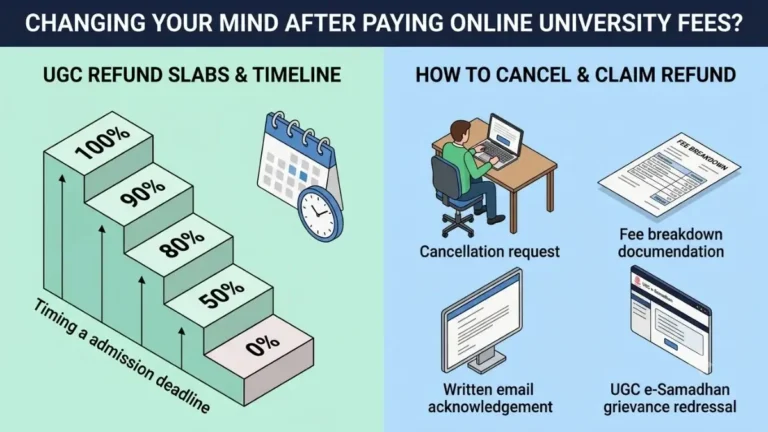
Students should also read the refund policy carefully before paying. Check the conditions under which fees may be refunded if you decide not to continue or your admission is cancelled.
Keep copies of payment receipts and the official fee structure for future reference.
Why it matters: The cheapest programme may not offer the support you need, while a higher-priced course may include additional services. Compare the total cost, course quality and available support before deciding.
4. Understand the Eligibility Criteria Before Applying
Another common mistake is filling out the admission form without checking the eligibility criteria.
Every programme has its own requirements, and these can vary between universities. An applicant who meets the requirements of one institution may not automatically qualify for the same course at another.
For instance, students interested in an online MCA should check whether the university requires mathematics at a particular level, a specific undergraduate qualification or additional coursework. Requirements can differ depending on the institution and programme.
Before starting your application, check the following:
- Minimum educational qualification.
- Required subjects and minimum marks, if applicable.
- Accepted undergraduate degrees for postgraduate courses.
- Work experience requirements, where applicable.
- Entrance examinations or other selection conditions, if required.
- Documents needed to complete the application.
It is also important to enter accurate information in the application form. Details such as your name, date of birth and academic qualifications should match your official documents.
Keep your marksheets, certificates, identity documents and photographs ready in the format specified by the university. If any document is missing or incorrect, contact the admission office to understand the proper procedure.
Students should also check the application deadline and allow enough time to submit all the required documents.
Why it matters: Checking eligibility in advance can help you avoid application errors, delays and unnecessary expenses.
5. Don’t Underestimate the Time Needed for Online Study
Online courses offer flexibility, but that does not mean students can complete them without regular effort.
Many students enrol in an online programme because they want to study alongside a job or other responsibilities. However, they may assume that recorded lectures can be watched whenever they have free time, without planning a regular study routine.
This approach can make it difficult to keep up with assignments, examinations and course material.
Consider a working professional who enrols in an online MBA. After spending the day at the office, the student may have limited time for studies. If lectures are repeatedly postponed, assignments can pile up and exam preparation may become stressful.
A simple weekly schedule can help students manage their time.
| Day | Suggested study plan |
|---|---|
| Monday to Friday | Spend 30–60 minutes studying on available days |
| Saturday | Watch lectures, complete readings and review notes |
| Sunday | Revise topics and work on assignments or projects |
This is only an example. The actual study time required depends on the programme, course difficulty and university schedule.
Before taking admission, check whether live classes are compulsory, how often assignments are due and when examinations are conducted. Think about your work schedule, family responsibilities and other commitments before choosing a programme.
Why it matters: Online learning requires self-discipline. A realistic study routine can help you balance education with your daily responsibilities and avoid last-minute pressure.
6. Check the Exam Pattern and Student Support Services
Students often focus on the course fee and admission process but forget to check how classes, examinations and academic support work.
Online programmes may include recorded lectures, live classes, digital study material, assignments, projects and term-end examinations. The exact format depends on the university and the course.
It is important to understand these arrangements before enrolling.
For example, a student who works full-time may prefer recorded lectures that can be accessed after office hours. However, if the programme also includes compulsory live sessions at fixed times, the student will need to plan accordingly.
Before applying, check:
- Whether classes are live, recorded or a combination of both.
- Whether attendance or participation requirements apply.
- How assignments and internal assessments are conducted.
- Whether examinations are held online or at designated centres.
- Whether practical sessions, projects or internships are required.
- How students can contact faculty members to resolve doubts.
- Whether technical assistance is available if the learning platform stops working.
You should also check how the university provides study materials and whether recorded sessions remain available for revision.
Students with limited internet access should consider the platform’s technical requirements before enrolling.
Do not assume that every online programme follows the same examination rules. Read the official programme guidelines to understand what will be expected throughout the academic year.
Why it matters: Knowing the examination pattern and available support services helps you decide whether the programme fits your schedule, learning style and technical needs.
7. Look Beyond Placement Claims and Salary Packages
Placement advertisements can influence students when they are comparing online universities. Claims about high salaries, well-known companies and career opportunities may make a programme appear especially attractive.
However, students should understand the difference between placement assistance and guaranteed employment.
A university may offer resume-building sessions, interview preparation, career counselling and access to job opportunities. These services can be useful, but they do not necessarily mean every student will receive a job offer after completing the course.
Before relying on placement claims, check the details behind them.
Look for information about:
- Career support available specifically to online learners.
- Whether placement services are included in the programme fee.
- Published placement data for the relevant course, where available.
- The difference between average, median and highest salary figures.
- Whether the reported outcomes relate to online students or include other student groups.
- The types of jobs and industries in which graduates find opportunities.
For example, a university may advertise a high salary package achieved by one graduate. That figure does not necessarily represent what most students can expect to earn after completing the same degree.
It is also worth checking whether the programme helps students develop practical skills through projects, case studies or industry-related assignments.
Your career outcomes will depend on several factors, including your qualifications, previous experience, practical skills, interview performance and the opportunities available in your chosen field.
Why it matters: Career support can be valuable, but placement advertisements should not be the only reason for choosing a university. Look for clear information and realistic outcomes before making a decision.
Online University Admission Checklist: What to Check Before Applying
Before submitting your application, take a few minutes to review the important details. This can help you identify missing information and make a more informed decision.
| Checklist | What to verify |
|---|---|
| University recognition | Official recognition and programme status for the relevant session |
| Course selection | Syllabus, specialisation and career relevance |
| Eligibility | Academic qualifications and subject requirements |
| Total fees | Tuition, examination charges and other applicable costs |
| Documents | Correct and complete application documents |
| Study schedule | Live classes, recorded lectures and weekly workload |
| Examinations | Assessment methods and examination arrangements |
| Student support | Faculty access and technical assistance |
| Career services | Placement assistance and available outcome data |
| Admission process | Deadlines, refund policy and required registration steps |
For programmes covered by the UGC-DEB admission process, students should also check the current requirement for a DEB-ID and follow the applicable steps through the official portal.
Always rely on the latest official university and regulatory information, as admission rules and programme availability can change between academic sessions.
Final Thoughts: Make an Informed Decision Before Enrolling
Online university admission can be a useful option for students who want to continue their education while managing work, family responsibilities or other commitments. However, choosing the right programme requires more than comparing fees and filling out an application form.
Before enrolling, verify the university’s recognition, understand the course syllabus, check eligibility requirements and compare the complete cost. It is equally important to understand the examination pattern, available student support and realistic career opportunities.
Remember that the best online university is not necessarily the one with the biggest advertisements or the lowest fees. It is the one that offers a suitable, recognised programme and fits your academic goals, budget and learning needs.
A little research before admission can help you avoid common mistakes and begin your online learning journey with greater confidence.