P.B.B.Sc. Nursing Comparisons India 2026: Your Guide
Nishit Kumar is a senior EdTech industry leader with over a decade of experience in building and scaling education platforms, shaping their product, content, and growth strategy. At…
Latest update: P.B.Bachelor of Science in Nursing 2026 admissions & dates updated. Read more ›
Welcome to the comprehensive guide for students and parents exploring P.B.Bachelor of Science in Nursing (P.B.B.Sc. Nursing) Comparisons in India for the 2026 academic year. This page aims to address all your specific doubts, comparisons, eligibility edge-cases, financial considerations, and outcome questions related to this crucial postgraduate nursing program.
What is P.B.B.Sc. Nursing and Who is it For?
P.B.B.Sc. Nursing is a two-year postgraduate degree program designed for registered nurses (R.N.) and registered midwives (R.M.) who have completed a General Nursing and Midwifery (GNM) diploma. It allows GNM holders to upgrade their qualifications to a bachelor’s degree, enhancing their theoretical knowledge, clinical skills, and career prospects in the evolving healthcare landscape.
This program is ideal for GNM graduates seeking to:
- Obtain a university-level degree for better career advancement.
- Deepen their understanding of advanced nursing concepts, research, and leadership.
- Meet the increasing demand for graduate-level nurses in specialized roles.
- Pursue higher education like M.Sc. Nursing or Ph.D. in Nursing.
What is the Eligibility for P.B.B.Sc. Nursing in India for 2026?
The primary eligibility criterion for P.B.B.Sc. Nursing is a GNM diploma, along with registration as an R.N. and R.M. with any State Nursing Registration Council. Specific colleges may have additional requirements, but these are the foundational criteria.
Detailed Eligibility Criteria:
- Educational Qualification: Candidates must have passed the General Nursing and Midwifery (GNM) program.
- Registration: Must be a Registered Nurse (R.N.) and Registered Midwife (R.M.) with a State Nurses Registration Council. For male nurses, those who have not undergone midwifery training must have a certificate in any nursing program of 6-9 months duration prescribed by the Indian Nursing Council (INC) in lieu of midwifery.
- Work Experience: While not universally mandatory, some institutions may prefer or require a minimum of 1-2 years of work experience post-GNM registration.
- Medical Fitness: Candidates must be medically fit.
- Age Limit: Generally, there is no upper age limit, but some institutions might specify one.
People Also Read



How Does P.B.B.Sc. Nursing Compare to GNM and B.Sc. Nursing?
P.B.B.Sc. Nursing serves as a bridge for GNM diploma holders to achieve a B.Sc. Nursing degree, differing in duration, entry requirements, and curriculum focus from both GNM and direct-entry B.Sc. Nursing. It builds upon the practical foundation of GNM with advanced theoretical knowledge.
Comparison Matrix: GNM vs. P.B.B.Sc. Nursing vs. B.Sc. Nursing
| Feature | GNM (General Nursing and Midwifery) | P.B.B.Sc. Nursing (Post Basic B.Sc. Nursing) | B.Sc. Nursing (Basic B.Sc. Nursing) |
|---|---|---|---|
| Duration | 3 years (plus 6 months internship) | 2 years | 4 years |
| Entry Qualification | 10+2 (Science preferred) | GNM Diploma + R.N./R.M. Registration | 10+2 (Science with Physics, Chemistry, Biology) |
| Focus | Practical, bedside nursing, midwifery | Advanced theory, research, management, builds on GNM | Comprehensive foundational and advanced nursing |
| Degree/Diploma | Diploma | Bachelor’s Degree | Bachelor’s Degree |
| Career Progression | Staff Nurse, limited managerial roles | Staff Nurse, Nurse Educator, Supervisor, Manager, pursue M.Sc. | Staff Nurse, Nurse Educator, Supervisor, Manager, pursue M.Sc. |
| Internship | Mandatory 6 months | Integrated into curriculum (clinical postings) | Integrated into curriculum (clinical postings) |
How Much Does P.B.B.Sc. Nursing Cost in India (2026 Fee Ranges)?
The cost of P.B.B.Sc. Nursing varies significantly between government and private institutions, ranging from approximately INR 20,000 to INR 1,50,000 per year. Government colleges are generally more affordable, while private colleges, especially those with advanced facilities, tend to be at the higher end.
Annual Fee Ranges (Approximate for 2026):
- Government Colleges: INR 20,000 – INR 70,000 per year
- Private Colleges: INR 70,000 – INR 1,50,000 per year
Additional costs may include hostel fees, examination fees, uniform, books, and clinical posting expenses. Scholarships and educational loans are often available to help manage these costs.
Is P.B.B.Sc. Nursing Worth It for Job Prospects and Salary Outcomes?
Yes, P.B.B.Sc. Nursing significantly enhances job prospects and potential salary outcomes for GNM graduates, opening doors to higher positions, specialized roles, and further academic pursuits. A bachelor’s degree is increasingly becoming a standard requirement for many advanced nursing roles.
Career and Salary Outcomes Post-P.B.B.Sc. Nursing:
Graduates can work in various settings including government and private hospitals, clinics, community health centers, educational institutions, and even abroad. The degree provides a strong foundation for specialization and leadership roles.
| Job Role | Average Annual Salary Range (INR) | Key Responsibilities |
|---|---|---|
| Staff Nurse | 3,00,000 – 6,00,000 | Direct patient care, medication administration, record keeping |
| Nurse Educator/Clinical Instructor | 3,50,000 – 7,00,000 | Teaching nursing students, clinical supervision |
| Ward Sister/Nurse Supervisor | 4,00,000 – 8,00,000 | Managing nursing staff, ward administration, patient flow |
| Community Health Nurse | 3,00,000 – 6,00,000 | Health education, disease prevention, home visits |
| Specialty Nurse (e.g., ICU, OT, Pediatric) | 4,50,000 – 9,00,000+ | Specialized care in critical units, advanced procedures |
Note: Salaries are approximate and can vary based on experience, institution, location, and specific specialization.
What are the Admission Process and Key Dates for P.B.B.Sc. Nursing 2026?
The admission process for P.B.B.Sc. Nursing typically involves an application, an entrance examination (for many institutions), and counseling. Key dates vary by university and state, but generally, applications open in early to mid-2026.
General Admission Process:
- Application Form: Available online or offline from college websites, usually from April to June 2026.
- Entrance Exam: Many state-level and university-specific entrance exams are conducted, typically in June or July 2026. Some colleges admit based on GNM marks.
- Merit List/Results: Published after the entrance exam, usually in July or August 2026.
- Counseling/Interview: Shortlisted candidates attend counseling for seat allocation, often in August or September 2026.
- Admission & Enrollment: Final admission and commencement of classes usually in September or October 2026.
Prospective students should regularly check the official websites of their preferred colleges and state nursing admission authorities for precise 2026 dates.
Can I Pursue P.B.B.Sc. Nursing Through Distance Learning or Online Mode?
Yes, P.B.B.Sc. Nursing can be pursued through distance learning or online modes from recognized universities, offering flexibility for working professionals. However, practical components still require hands-on clinical experience.
Institutions like IGNOU (Indira Gandhi National Open University) are prominent providers of distance P.B.B.Sc. Nursing programs. These programs typically involve:
- Self-study materials and online resources.
- Contact classes or workshops (often optional or blended).
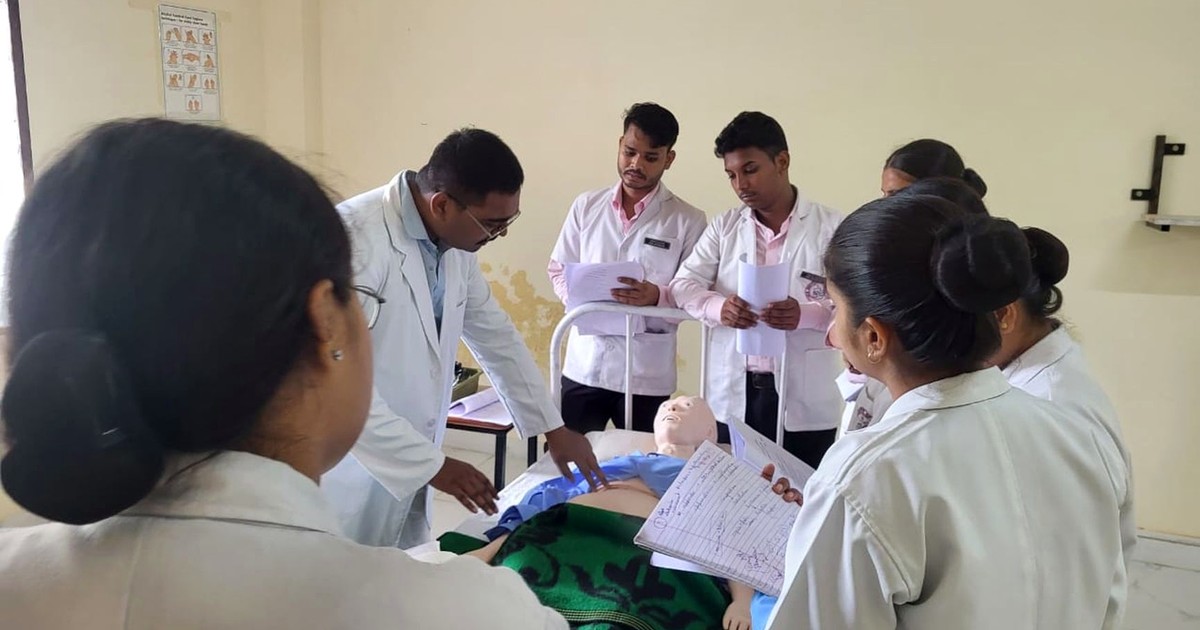
- Mandatory practical training/clinical postings at approved hospitals.
- Examinations conducted at designated centers.
It’s crucial to ensure that any distance learning program is recognized by the Indian Nursing Council (INC) to ensure the validity of the degree for registration and employment.
What are the Advantages and Disadvantages of P.B.B.Sc. Nursing?
P.B.B.Sc. Nursing offers significant advantages in career progression and knowledge enhancement for GNM holders, but it also involves time commitment and financial investment.
Advantages:
- Degree Upgradation: Converts a diploma into a bachelor’s degree, aligning with global nursing standards.
- Enhanced Career Opportunities: Opens doors to higher positions, specialized roles, and administrative/managerial roles.
- Higher Earning Potential: Generally leads to better salaries compared to GNM-only roles.
- Foundation for Higher Studies: Qualifies graduates for M.Sc. Nursing, Ph.D., and other advanced programs.
- Improved Knowledge & Skills: Deepens theoretical understanding, critical thinking, and research skills.
- Professional Recognition: Increases professional credibility and respect within the healthcare community.
Disadvantages:
- Time Commitment: Requires two years of dedicated study, which can be challenging for working nurses.
- Financial Investment: Involves tuition fees, study materials, and living expenses.
- Work-Life Balance: Juggling studies with work (if applicable) can be demanding.
- Clinical Requirements: Even in distance mode, practical clinical hours are mandatory.
Explore more on FindMyCollege
Related pages for P.B.Bachelor of Science in Nursing aspirants on findmycollege.com:
Frequently Asked Questions
Can male nurses pursue P.B.B.Sc. Nursing?
Yes, male nurses can pursue P.B.B.Sc. Nursing. If they have not undergone midwifery training, they must possess a certificate in any nursing program of 6-9 months duration prescribed by the Indian Nursing Council (INC) in lieu of midwifery.
Are there any age limits for P.B.B.Sc. Nursing admission?
Generally, there is no upper age limit for P.B.B.Sc. Nursing admission as per INC guidelines. However, some specific institutions or state entrance exams might have their own age criteria, so it’s advisable to check with the respective college or examination authority.
What is the syllabus for P.B.B.Sc. Nursing?
The P.B.B.Sc. Nursing syllabus typically includes subjects like Nursing Foundation, Nutrition & Dietetics, Biochemistry & Biophysics, Psychology, Microbiology, Medical-Surgical Nursing, Child Health Nursing, Mental Health Nursing, Midwifery and Gynecological Nursing, Community Health Nursing, Nursing Research & Statistics, Management of Nursing Services and Education.
Do I need to clear an entrance exam for P.B.B.Sc. Nursing?
Many reputable government and private institutions conduct their own entrance exams or participate in state-level common entrance tests for P.B.B.Sc. Nursing admissions. However, some private colleges may offer direct admission based on GNM marks and an interview. Always verify the admission process for your target colleges.
Can I work while studying P.B.B.Sc. Nursing?
Many students, especially those pursuing distance learning or part-time programs, do work while studying P.B.B.Sc. Nursing. However, the intensity of the curriculum and mandatory clinical postings require significant time commitment, so balancing work and studies can be challenging. Full-time regular programs are generally difficult to combine with full-time work.
What are the top colleges for P.B.B.Sc. Nursing in India?
Some of the top colleges for P.B.B.Sc. Nursing in India include AIIMS (various locations), Christian Medical College (CMC) Vellore, Post Graduate Institute of Medical Education and Research (PGIMER) Chandigarh, Armed Forces Medical College (AFMC) Pune, Manipal Academy of Higher Education (MAHE), and various state government nursing colleges. Rankings and preferences can vary.