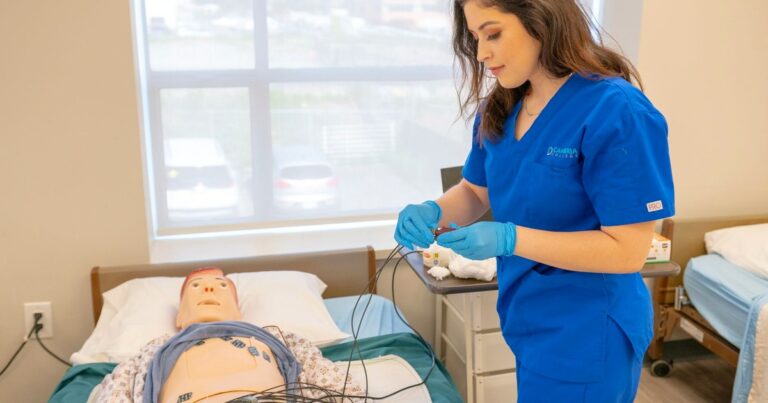
Bachelor in Radiotherapy Technology (BRTT) Syllabus 2026
Nishit Kumar is a senior EdTech industry leader with over a decade of experience in building and scaling education platforms, shaping their product, content, and growth strategy. At…
Latest update: Bachelor in Radiotherapy Technology 2026 admissions & dates updated. Read more ›
Welcome to the comprehensive guide for the Bachelor in Radiotherapy Technology (BRTT) Syllabus 2026 in India. This page is designed to provide prospective students and parents with a detailed understanding of the course, its structure, career opportunities, and all essential information needed to make an informed decision about pursuing this vital healthcare profession.
What is Bachelor in Radiotherapy Technology (BRTT)?
The Bachelor in Radiotherapy Technology (BRTT) is an undergraduate program focused on training students to become skilled radiotherapy technologists. These professionals play a crucial role in the oncology team, operating sophisticated radiation therapy equipment to administer precise radiation doses to cancer patients as prescribed by radiation oncologists.
The program combines theoretical knowledge with extensive practical training, covering subjects like human anatomy, physiology, radiobiology, radiation physics, dosimetry, treatment planning, and patient care. Graduates are equipped to work in hospitals, cancer centers, and research institutions, contributing significantly to cancer treatment and management.
What is the Eligibility for Bachelor in Radiotherapy Technology (BRTT)?
To be eligible for the Bachelor in Radiotherapy Technology (BRTT) program, candidates typically need to have completed their 10+2 (or equivalent) examination with a strong science background. The primary subjects required are Physics, Chemistry, and Biology (PCB) or sometimes Physics, Chemistry, and Mathematics (PCM), with a minimum aggregate score.
- Academic Qualification: 10+2 or equivalent examination from a recognized board.
- Required Subjects: Physics, Chemistry, and Biology (PCB) are generally mandatory. Some institutions might accept PCM.
- Minimum Marks: An aggregate of 45-50% in the qualifying examination is usually required, though this can vary by institution. Reserved categories may have a slight relaxation in percentage.
- Age Limit: Most colleges require candidates to be at least 17 years old by December 31st of the admission year. There is generally no upper age limit.
- Entrance Exams: Many prominent colleges and universities conduct their own entrance examinations. Some may also consider state-level common entrance tests.
What is the Syllabus for Bachelor in Radiotherapy Technology (BRTT)?
The BRTT syllabus is meticulously designed to provide a comprehensive understanding of radiation therapy principles and practices over a typical duration of 3 to 4 years, often including an internship period. It covers foundational sciences, specialized radiotherapy techniques, and clinical applications.
The curriculum is structured across semesters, gradually progressing from basic scientific principles to advanced clinical procedures. Key areas include radiation physics, radiobiology, dosimetry, treatment planning, radiation safety, patient care, and operation of various radiotherapy machines.
BRTT Semester-wise Syllabus Overview (Illustrative)
| Semester | Core Subjects | Practical/Clinical Focus |
|---|---|---|
| Year 1 (Sem 1 & 2) | Human Anatomy & Physiology, General Physics, Basic Chemistry, Computer Fundamentals, English & Communication Skills, Radiation Physics-I | Anatomy Lab, Basic Physics Lab, Hospital Orientation, Introduction to Radiotherapy Department |
| Year 2 (Sem 3 & 4) | Pathology & Microbiology, Radiobiology, Radiation Physics-II, Dosimetry-I, Radiotherapy Equipment-I, Pharmacology | Dosimetry Lab, Equipment Handling (Simulators), Patient Positioning, Basic Treatment Planning Systems |
| Year 3 (Sem 5 & 6) | Clinical Oncology, Radiotherapy Techniques-I (Teletherapy), Dosimetry-II, Radiation Safety & Protection, Medical Ethics & Law, Quality Assurance in Radiotherapy | Clinical Rotations (Teletherapy), Advanced Treatment Planning, Brachytherapy Introduction, Emergency Procedures |
| Year 4 (Internship/Advanced) | Radiotherapy Techniques-II (Brachytherapy, IMRT, SBRT), Image Guided Radiotherapy (IGRT), Research Methodology & Biostatistics, Advanced Patient Care | Extensive Clinical Internship, Project Work/Dissertation, Advanced Equipment Operation, Specialized Techniques Application |
Note: The exact syllabus and subject names may vary slightly between different universities and colleges.
How Much Does Bachelor in Radiotherapy Technology (BRTT) Cost?
The cost of pursuing a Bachelor in Radiotherapy Technology (BRTT) in India varies significantly based on the type of institution (government vs. private), its reputation, and location. Generally, government colleges offer more affordable tuition fees compared to private institutions.
Tuition fees typically range from INR 30,000 to INR 2,00,000 per year for government colleges and INR 1,00,000 to INR 5,00,000 per year for private colleges. This estimate usually covers tuition and basic university charges but may not include hostel fees, examination fees, or other miscellaneous expenses.
BRTT Fee Structure (Annual Range – 2026 Estimates)
| Institution Type | Annual Tuition Fee Range (INR) | Additional Costs (Approx. Annual, INR) |
|---|---|---|
| Government Colleges/Universities | 30,000 – 2,00,000 | 10,000 – 50,000 (Hostel, Exam, Misc.) |
| Private Colleges/Universities | 1,00,000 – 5,00,000 | 30,000 – 1,50,000 (Hostel, Exam, Lab, Misc.) |
Scholarships and educational loans are often available to help students manage the financial burden. Prospective students are advised to check the specific fee structure of their chosen institutions.
Is Bachelor in Radiotherapy Technology (BRTT) Worth It for Jobs?
Yes, pursuing a Bachelor in Radiotherapy Technology (BRTT) is generally considered a highly rewarding career choice with excellent job prospects in India and abroad. The increasing incidence of cancer and advancements in radiation therapy technology ensure a steady demand for qualified radiotherapy technologists.
Graduates find employment in various healthcare settings, including government and private hospitals, specialized cancer treatment centers, diagnostic imaging centers, and even in academic or research institutions. The role is critical in cancer care, offering both professional satisfaction and competitive remuneration.
Career Prospects and Average Salary for BRTT Graduates
| Job Role | Description | Average Annual Salary (INR) |
|---|---|---|
| Radiotherapy Technologist | Operates radiation therapy equipment, positions patients, and administers prescribed radiation doses. | 2.5 – 6.0 Lakhs |
| Dosimetrist (after experience/PG) | Plans radiation treatment, calculates dosages, and ensures accurate delivery. | 4.0 – 9.0 Lakhs |
| Clinical Instructor | Trains new technologists and oversees practical sessions in academic settings. | 3.0 – 7.0 Lakhs |
| Application Specialist | Works with medical equipment companies to demonstrate and support radiotherapy machines. | 4.0 – 10.0 Lakhs |
| Radiation Safety Officer | Ensures compliance with radiation safety regulations and protocols. | 3.5 – 8.0 Lakhs |
Salaries can vary based on experience, institution, location, and additional qualifications.
What is the Admission Process for BRTT in 2026?
The admission process for Bachelor in Radiotherapy Technology (BRTT) in 2026 typically involves applying to colleges, appearing for entrance examinations (if applicable), and participating in counseling or interviews. The process usually begins after the 10+2 board examination results are declared.
- Application Form: Fill out the online or offline application form for your desired colleges/universities. This usually opens between March and May.
- Entrance Exam: Many institutions conduct their own entrance exams (e.g., AIIMS Paramedical, JIPMER Paramedical, state-level CETs). These tests typically assess Physics, Chemistry, Biology/Mathematics, and General Knowledge. Exams are usually held between May and July.
- Merit List: Based on 10+2 scores and/or entrance exam performance, a merit list is prepared.
- Counseling/Interview: Shortlisted candidates are called for counseling sessions where they choose their specialization and college based on their rank. Some colleges might also conduct a personal interview.
- Document Verification & Fee Payment: Upon selection, candidates must verify their documents and pay the admission fees to secure their seat.
It is crucial to regularly check the official websites of specific colleges for precise dates and application procedures for the 2026 academic year.
Which are the Top Colleges for BRTT in India?
India boasts several reputable institutions offering quality Bachelor in Radiotherapy Technology programs. These colleges are known for their strong academic curriculum, advanced infrastructure, and excellent clinical exposure.
- All India Institute of Medical Sciences (AIIMS), Delhi
- Postgraduate Institute of Medical Education and Research (PGIMER), Chandigarh
- Jawaharlal Institute of Postgraduate Medical Education and Research (JIPMER), Puducherry
- Christian Medical College (CMC), Vellore
- Manipal Academy of Higher Education (MAHE), Manipal
- SRM Institute of Science and Technology, Chennai
- Amrita Vishwa Vidyapeetham, Kochi
- King George’s Medical University (KGMU), Lucknow
- Armed Forces Medical College (AFMC), Pune (for certain paramedical courses)
Prospective students should research individual college offerings, faculty, infrastructure, and clinical affiliations before making a choice.
What is the Difference Between BRTT and B.Sc. Radiology?
While both BRTT and B.Sc. Radiology are paramedical courses related to medical imaging and therapy, they focus on distinct areas within the field. The key difference lies in their primary function and the type of radiation they utilize for patient care.
- Bachelor in Radiotherapy Technology (BRTT): This program specifically trains students to administer therapeutic radiation (high-energy radiation) to treat cancer. Radiotherapy technologists work directly with radiation oncologists in cancer treatment.
- B.Sc. Radiology (or B.Sc. Radiography & Imaging Technology): This program focuses on diagnostic imaging, training students to operate equipment like X-ray, CT scans, MRI, and ultrasound to produce images for disease diagnosis. Radiographers work with radiologists to help diagnose medical conditions.
Both fields are crucial in healthcare, but BRTT is geared towards treatment, while B.Sc. Radiology is geared towards diagnosis.
Explore more on FindMyCollege
Related pages for Bachelor in Radiotherapy Technology aspirants on findmycollege.com:
Frequently Asked Questions
Is BRTT a difficult course?
BRTT is a challenging but manageable course. It requires a strong foundation in science, particularly Physics and Biology, and a dedication to understanding complex medical and technical concepts. With consistent effort and practical application, students can excel.
Can I pursue higher studies after BRTT?
Yes, after completing BRTT, you can pursue various postgraduate programs such as M.Sc. in Radiotherapy Technology, M.Sc. in Medical Physics, or even an MBA in Hospital Administration. These advanced degrees can lead to specialized roles, research positions, or managerial roles.
What is the scope of BRTT abroad?
The scope for BRTT graduates abroad is excellent, particularly in countries like the USA, UK, Canada, Australia, and the Middle East, which often face a shortage of skilled radiotherapy technologists. However, you may need to clear licensing exams and meet specific country-wise requirements.
Are there any entrance exams for BRTT?
Yes, many reputed institutions and universities conduct their own entrance exams for BRTT admission. Examples include AIIMS Paramedical Entrance Exam, JIPMER Paramedical Entrance Exam, and various state-level Common Entrance Tests (CETs). Some private colleges may offer direct admission based on 10+2 merit.
What is the average starting salary for a BRTT graduate in India?
The average starting salary for a BRTT graduate in India typically ranges from INR 2.5 to 4.0 Lakhs per annum. This can vary based on the employing institution (government vs. private), city, and the individual’s skills and performance during the course.
Is BRTT a good career for females?
Absolutely, BRTT is an excellent career choice for females. The profession demands precision, empathy, and strong technical skills, all of which are well-suited for women. Many women thrive in this field, contributing significantly to cancer care.
What are the essential skills for a successful Radiotherapy Technologist?
Essential skills include strong technical aptitude, attention to detail, excellent communication and interpersonal skills (for patient interaction), empathy, critical thinking, and the ability to work effectively as part of a healthcare team. A commitment to continuous learning is also crucial.
What is the duration of the BRTT course?
The duration of the Bachelor in Radiotherapy Technology (BRTT) course is typically 3 to 4 years, depending on the university and whether an internship period is integrated into the curriculum. Some programs are 3 years of academic study followed by a 6-12 month compulsory internship.