
B.Sc in Medical Entrance Exams 2026: Dates, Eligibility, Fees
Nishit Kumar is a senior EdTech industry leader with over a decade of experience in building and scaling education platforms, shaping their product, content, and growth strategy. At…
Latest update: B.Sc in Medical 2026 admissions & dates updated. Read more ›
Embarking on a career in medical and allied health sciences often begins with a B.Sc in Medical degree. This undergraduate program, typically lasting three years, serves as a foundational stepping stone for various roles in healthcare, research, and diagnostics. For aspiring students in India eyeing admission in 2026, understanding the entrance exams is paramount. This comprehensive guide will walk you through everything you need to know about B.Sc in Medical entrance exams, eligibility criteria, application processes, fee structures, and future prospects.
What are the key B.Sc in Medical Entrance Exams in India for 2026?
Admission to B.Sc in Medical programs in India for 2026 is primarily based on performance in various state-level and university-specific entrance examinations, alongside merit in 10+2 examinations. While there isn’t a single national-level entrance exam exclusively for all B.Sc Medical courses, several prominent tests facilitate entry into top institutions.
Some of the key entrance exams include:
- NEET (National Eligibility cum Entrance Test): While primarily for MBBS/BDS, some colleges consider NEET scores for B.Sc Nursing and other allied medical courses.
- AIIMS B.Sc Entrance Exam: Conducted by AIIMS for admission to its B.Sc (Hons.) Nursing and other B.Sc Paramedical courses.
- JIPMER B.Sc Entrance Exam: For B.Sc Nursing and Allied Health Science courses at JIPMER Puducherry and Karaikal.
- CET (Common Entrance Test): Various states conduct their own CETs for admission to B.Sc Nursing, B.Sc Paramedical, and other B.Sc Medical courses. Examples include KCET (Karnataka), MHT CET (Maharashtra), UP CNET (Uttar Pradesh).
- University-Specific Entrance Exams: Many private and deemed universities conduct their own entrance tests for B.Sc Medical programs.
What is the eligibility for B.Sc in Medical Entrance Exams in 2026?
The general eligibility criteria for B.Sc in Medical entrance exams in 2026 require candidates to have successfully completed their 10+2 (or equivalent) examination with a strong background in science subjects. Specific requirements can vary by institution and course.
Common eligibility criteria include:
- Educational Qualification: Candidates must have passed 10+2 or an equivalent examination from a recognized board.
- Required Subjects: Physics, Chemistry, and Biology (PCB) are mandatory subjects at the 10+2 level. Some courses might also consider candidates with Physics, Chemistry, and Mathematics (PCM) if the B.Sc Medical specialization is more technology or instrumentation-focused.
- Minimum Marks: A minimum aggregate percentage, typically ranging from 45% to 50% in PCB subjects, is often required. This percentage can be higher for top-tier institutions and may have relaxations for reserved categories as per government norms.
- Age Limit: Most entrance exams have a minimum age limit of 17 years as of December 31st of the admission year. There is generally no upper age limit for B.Sc Medical courses, though some specific programs might have one.
- Nationality: Applicants must be Indian citizens. Overseas Citizens of India (OCI), Persons of Indian Origin (PIO), and foreign nationals may have separate admission channels or specific eligibility requirements.
Are there any eligibility edge-cases for B.Sc in Medical?
Yes, certain situations might require clarification. For instance, students who have pursued vocational courses in healthcare at the 10+2 level might be eligible for specific allied health B.Sc programs, but generally, a pure science background (PCB) is preferred. Students awaiting their 10+2 results are often allowed to apply provisionally but must produce their passing certificate at the time of admission. Always check the specific prospectus of the college or exam body for precise details.
What is the application process for B.Sc in Medical Entrance Exams 2026?
The application process for B.Sc in Medical entrance exams in 2026 is typically conducted online, involving registration, form filling, document upload, and fee payment. It’s crucial to follow the steps meticulously to avoid rejection.
- Online Registration: Visit the official website of the respective entrance exam or university and register using a valid email ID and mobile number.
- Fill Application Form: Complete the application form with personal details, academic qualifications, and contact information.
- Upload Documents: Upload scanned copies of photographs, signatures, 10th and 12th mark sheets, and category certificates (if applicable) as per specified dimensions and formats.
- Pay Application Fee: Pay the non-refundable application fee online through debit card, credit card, or net banking. Fees typically range from INR 500 to INR 2000, with concessions for reserved categories.
- Review and Submit: Carefully review all entered information before final submission. Print a copy of the submitted application form and payment receipt for future reference.
- Admit Card Download: Admit cards are usually released a few weeks before the exam date on the official website. Download and print it, as it’s mandatory for entry to the examination hall.
When are the B.Sc in Medical Entrance Exam Dates for 2026?
B.Sc in Medical entrance exam dates for 2026 are usually announced well in advance by the respective conducting bodies. While exact dates are subject to change, they generally follow a similar pattern each year. It is vital to keep an eye on official notifications.
Here’s a tentative schedule for major B.Sc Medical entrance exams in 2026:
| Entrance Exam | Application Period (Tentative) | Exam Date (Tentative) | Result Declaration (Tentative) |
|---|---|---|---|
| NEET (for allied courses) | Feb – Mar 2026 | May 2026 | Jun 2026 |
| AIIMS B.Sc (Hons.) Nursing | Mar – Apr 2026 | Jun 2026 | Jul 2026 |
| JIPMER B.Sc | Apr – May 2026 | Jul 2026 | Aug 2026 |
| KCET (B.Sc Nursing/Paramedical) | Feb – Apr 2026 | May 2026 | Jun 2026 |
| MHT CET (B.Sc Nursing/Paramedical) | Mar – Apr 2026 | May 2026 | Jun 2026 |
| UP CNET (B.Sc Nursing/Paramedical) | Apr – May 2026 | Jun 2026 | Jul 2026 |
Note: These dates are tentative and based on previous years’ trends. Candidates must refer to the official websites for the most accurate and updated information for 2026.
What is the exam pattern and syllabus for B.Sc in Medical Entrance Exams?
The exam pattern for B.Sc in Medical entrance exams typically involves multiple-choice questions (MCQs) covering Physics, Chemistry, and Biology (Botany & Zoology). The syllabus is generally aligned with the 10+2 curriculum of CBSE, NCERT, and state boards.
Common Exam Pattern Elements:
- Mode of Exam: Mostly online (Computer Based Test – CBT) for university-specific exams, while some state CETs might still be offline (OMR based).
- Question Type: Objective type, Multiple Choice Questions (MCQs).
- Subjects Covered: Physics, Chemistry, Biology (Botany & Zoology). Some exams might include English or General Knowledge.
- Marking Scheme: Generally +1 or +4 for correct answers. Negative marking may or may not be present; check specific exam rules.
- Duration: Typically 90 minutes to 3 hours, depending on the number of questions.
Typical Syllabus:
- Physics: Mechanics, Thermodynamics, Electromagnetism, Optics, Modern Physics.
- Chemistry: Physical Chemistry (Atomic Structure, Chemical Bonding, States of Matter), Inorganic Chemistry (Periodic Table, p-block, d-block elements), Organic Chemistry (Hydrocarbons, Alcohols, Aldehydes, Biomolecules).
- Biology: Diversity of Living Organisms, Structural Organization in Plants and Animals, Cell Structure and Function, Plant Physiology, Human Physiology, Reproduction, Genetics and Evolution, Biology and Human Welfare, Biotechnology, Ecology and Environment.
How much does B.Sc in Medical cost (fees) in India?
The cost of pursuing a B.Sc in Medical program in India varies significantly based on the type of institution (government vs. private) and the specific specialization. Government colleges are considerably more affordable than private ones.
Here’s an estimated fee range per annum:
| Type of Institution | Annual Fee Range (INR) | Key Factors Influencing Fees |
|---|---|---|
| Government Colleges/Universities | INR 10,000 – INR 60,000 | State funding, course demand, specific specialization (e.g., Nursing vs. Optometry) |
| Private Colleges/Deemed Universities | INR 50,000 – INR 3,00,000+ | Infrastructure, faculty reputation, accreditation, placement records, location |
Additional costs include hostel fees (INR 30,000 – INR 1,00,000 per year), examination fees, study materials, and personal expenses. Scholarships and educational loans are available to help manage these costs.
Is B.Sc in Medical worth it for jobs and career outcomes?
Yes, a B.Sc in Medical is a highly valuable degree, offering diverse and stable career opportunities in the rapidly expanding healthcare sector. It serves as an excellent foundation for both immediate employment and further specialization.
Graduates can find roles in hospitals, clinics, diagnostic labs, research institutions, pharmaceutical companies, and public health organizations. The demand for skilled allied health professionals is consistently high.
Career Prospects and Salary Ranges:
| Job Role | Average Annual Salary (INR) – Entry Level | Average Annual Salary (INR) – Experienced | Key Responsibilities |
|---|---|---|---|
| Staff Nurse | 2.5 – 4.5 Lakhs | 5 – 10 Lakhs+ | Patient care, medication administration, assisting doctors |
| Medical Lab Technologist | 2 – 4 Lakhs | 4 – 8 Lakhs+ | Performing diagnostic tests, analyzing samples |
| Radiology Technologist | 2.5 – 4.5 Lakhs | 5 – 9 Lakhs+ | Operating imaging equipment (X-ray, MRI, CT scan) |
| Optometrist | 3 – 5 Lakhs | 6 – 12 Lakhs+ | Eye examinations, prescribing corrective lenses |
| Physiotherapist Assistant | 2 – 3.5 Lakhs | 4 – 7 Lakhs+ | Assisting patients with rehabilitation exercises |
| Nutritionist/Dietitian | 2.5 – 4.5 Lakhs | 5 – 9 Lakhs+ | Developing meal plans, advising on healthy eating |
Salaries are indicative and can vary based on institution, location, experience, and specific skills.
What are the specializations available in B.Sc in Medical?
B.Sc in Medical offers a wide array of specializations, allowing students to focus on specific areas of healthcare. These specializations lead to distinct career paths within the medical field.
Popular specializations include:
- B.Sc (Hons.) Nursing: Focuses on patient care, health promotion, and disease prevention.
- B.Sc Medical Laboratory Technology (MLT): Deals with diagnostic testing, analysis of body fluids, and microbiology.
- B.Sc Radiology and Imaging Technology: Involves operating imaging equipment like X-ray, CT scan, MRI, and ultrasound.
- B.Sc Optometry: Focuses on eye care, vision correction, and ocular health.
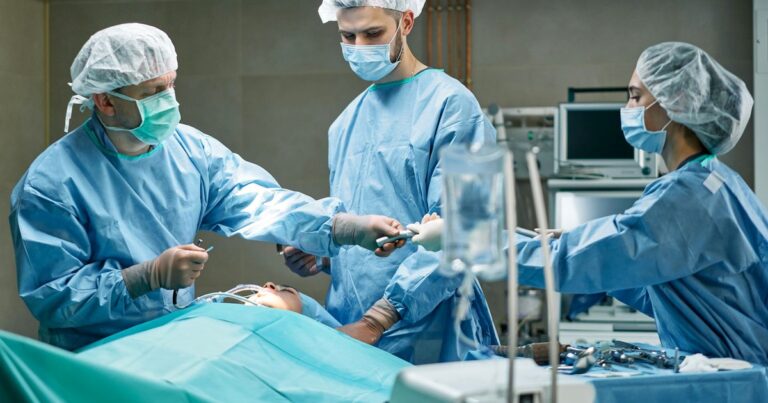
- B.Sc Operation Theatre Technology (OTT): Training in assisting surgeons and managing the operating theatre environment.
- B.Sc Renal Dialysis Technology: Specializes in operating dialysis machines and assisting patients with kidney failure.
- B.Sc Anesthesia Technology: Focuses on assisting anesthesiologists during surgical procedures.
- B.Sc Cardiovascular Technology: Deals with diagnostic and therapeutic procedures related to the heart and blood vessels.
- B.Sc Nutrition and Dietetics: Focuses on food science, human nutrition, and dietary management.
B.Sc in Medical vs. Other Medical Courses: Which is better?
Comparing B.Sc in Medical with other medical courses depends entirely on career aspirations, academic strengths, and time commitment. Each path offers unique advantages.
- B.Sc in Medical vs. MBBS/BDS: MBBS (Bachelor of Medicine, Bachelor of Surgery) and BDS (Bachelor of Dental Surgery) are professional degrees for becoming a doctor or dentist, requiring NEET and a much longer, more rigorous academic journey. B.Sc Medical courses are shorter, more specialized, and lead to allied health roles, which are crucial support functions in healthcare.
- B.Sc in Medical vs. Pharmacy (B.Pharm): B.Pharm focuses on drug discovery, manufacturing, and dispensing. While both are in healthcare, B.Sc Medical is more patient-facing or diagnostic-focused, whereas B.Pharm is product-focused.
- B.Sc in Medical vs. Paramedical Diplomas: Paramedical diplomas are shorter-duration courses (1-2 years) offering entry-level technical roles. B.Sc Medical degrees provide a more comprehensive theoretical foundation, better career progression, and higher earning potential.
Choosing a B.Sc in Medical is ideal for students who want to enter the healthcare field relatively quickly, specialize in a specific allied health domain, and contribute directly to patient care without the extensive commitment required for an MBBS or BDS degree.
Explore more on FindMyCollege
Related pages for B.Sc in Medical aspirants on findmycollege.com:
Frequently Asked Questions
Can I pursue B.Sc in Medical after 12th with PCM?
Generally, most B.Sc in Medical specializations, especially those directly involved in patient care or diagnostics, require Physics, Chemistry, and Biology (PCB) in 10+2. However, some niche B.Sc Medical technology courses might accept PCM students, but it’s less common. Always check the specific course eligibility.
Are there any direct admissions for B.Sc in Medical without entrance exams?
While some private colleges might offer direct admission based on 10+2 merit, especially for less competitive specializations, most reputable institutions and all government colleges require an entrance exam. Relying solely on direct admission might limit your options to lower-tier colleges.
What is the difference between B.Sc Nursing and other B.Sc Medical courses?
B.Sc Nursing is a specific B.Sc Medical specialization focused on direct patient care, nursing theory, and clinical practice. Other B.Sc Medical courses like MLT, Radiology, Optometry, etc., focus on diagnostic, technical, or therapeutic support roles within the healthcare system, rather than direct nursing care.
Can I apply for multiple B.Sc Medical entrance exams?
Yes, you can apply for multiple B.Sc Medical entrance exams as long as you meet the eligibility criteria for each and the exam dates do not clash. This strategy increases your chances of securing admission to a good college and course.
What is the minimum age limit for B.Sc in Medical entrance exams?
The minimum age limit for most B.Sc in Medical entrance exams is 17 years as of December 31st of the admission year. There is generally no upper age limit, but it’s always wise to confirm with the specific exam’s information bulletin.
Are B.Sc Medical degrees recognized internationally?
Many B.Sc Medical degrees from reputable Indian institutions are recognized internationally, especially for further studies or specific job roles. However, you might need to clear licensing exams or meet specific country-wise requirements to practice abroad.
What are the best coaching institutes for B.Sc Medical entrance exams?
For entrance exams like NEET (if applicable for allied courses) or state CETs, coaching institutes like Aakash, Allen, Resonance, and FIITJEE are popular. For AIIMS/JIPMER B.Sc specific exams, specialized coaching or self-study with focus on 10+2 PCB syllabus is recommended.
What documents are required for B.Sc Medical admission after clearing the entrance exam?
Typically, you will need your 10th and 12th mark sheets and passing certificates, entrance exam admit card and scorecard, transfer certificate, migration certificate, character certificate, caste certificate (if applicable), domicile certificate, passport-size photographs, and a valid ID proof.