B.Sc Occupational Therapy Entrance Exams India 2026
Nishit Kumar is a senior EdTech industry leader with over a decade of experience in building and scaling education platforms, shaping their product, content, and growth strategy. At…
Latest update: B.Sc in Occupational Therapy 2026 admissions & dates updated. Read more ›
Embarking on a career in occupational therapy in India requires navigating a structured entrance exam process. This comprehensive guide provides prospective students and parents with all the essential information regarding B.Sc in Occupational Therapy entrance exams for the 2026 academic year, covering eligibility, exam patterns, key dates, and career prospects.
What is B.Sc in Occupational Therapy and Why is it Important?
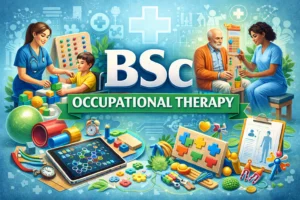
B.Sc in Occupational Therapy (BOT) is an undergraduate medical stream course focused on helping individuals with physical, mental, or developmental conditions to achieve independence in all aspects of their lives. Occupational therapists work with people of all ages to overcome barriers that prevent them from participating in meaningful activities, or ‘occupations’, such as self-care, work, education, and leisure.
The importance of occupational therapy is growing significantly in India due to an aging population, increasing awareness of mental health, and a rise in chronic diseases and disabilities. This field offers a rewarding career path for those passionate about improving quality of life and promoting functional independence.
What are the Eligibility Criteria for B.Sc in Occupational Therapy Entrance Exams in India?
To be eligible for B.Sc in Occupational Therapy entrance exams in India, candidates must typically have completed their 10+2 (or equivalent) examination with Physics, Chemistry, and Biology (PCB) as compulsory subjects. Most institutions also require a minimum aggregate percentage in these subjects, usually ranging from 45% to 50%. Some colleges may also consider English as a mandatory subject.
Age criteria generally stipulate a minimum age of 17 years as of December 31st of the admission year, with no upper age limit in most cases. Reserved category candidates (SC/ST/OBC) often receive relaxations in the minimum percentage requirement as per government norms.
Which are the Top Entrance Exams for B.Sc in Occupational Therapy in India?
Admission to B.Sc in Occupational Therapy programs in India is primarily through state-level common entrance tests or university-specific entrance exams. While there isn’t a single national-level exam exclusively for BOT, many medical entrance exams include BOT as an option for admission.
- NEET (National Eligibility cum Entrance Test): Although primarily for MBBS/BDS, some private and deemed universities consider NEET scores for allied health science courses like BOT.
- CET (Common Entrance Test) – State-level: Many states conduct their own CETs for admission to various health science courses, including BOT. Examples include KCET (Karnataka), MHT CET (Maharashtra), UP CNET (Uttar Pradesh), etc.
- AIIMS Paramedical Entrance Exam: All India Institute of Medical Sciences (AIIMS) conducts its own entrance exam for various paramedical courses, which may include BOT at some AIIMS campuses.
- University-Specific Entrance Exams: Several prominent universities and institutions conduct their own entrance tests. Examples include CMC Vellore, SRM University, Manipal University, etc.
People Also Read



What is the Exam Pattern for B.Sc in Occupational Therapy Entrance Exams?
The exam pattern for B.Sc in Occupational Therapy entrance exams generally follows a similar structure to other medical entrance tests, focusing on the 10+2 PCB syllabus. The exams are typically Multiple Choice Question (MCQ) based and conducted in offline (OMR-based) or online (CBT) mode.
Typical Exam Pattern Components:
- Subjects: Physics, Chemistry, Biology (Botany and Zoology)
- Number of Questions: Varies, usually between 100-200 questions.
- Marking Scheme: Generally +1 or +4 for correct answers, with negative marking (e.g., -0.25 or -1) in some exams for incorrect answers.
- Duration: Typically 2 to 3 hours.
- Language: English, and often regional languages for state-level exams.
Example Exam Pattern (Illustrative):
| Subject | No. of Questions | Marks per Question | Total Marks |
|---|---|---|---|
| Physics | 50 | 1 | 50 |
| Chemistry | 50 | 1 | 50 |
| Biology (Botany) | 50 | 1 | 50 |
| Biology (Zoology) | 50 | 1 | 50 |
| Total | 200 | 200 |
Note: This is an illustrative pattern; actual patterns vary by exam. Always refer to the official brochure for specific details.
What are the Key Dates for B.Sc in Occupational Therapy Entrance Exams in 2026?
The application and examination dates for B.Sc in Occupational Therapy entrance exams in 2026 will largely follow the patterns of previous years, with most exams occurring between April and July. It is crucial to regularly check the official websites of the respective examination bodies and universities for precise and updated schedules.
Tentative 2026 Entrance Exam Schedule:
| Exam Name (Type) | Application Period (Tentative) | Exam Date (Tentative) | Result Date (Tentative) |
|---|---|---|---|
| NEET (National) | Feb – March 2026 | May 2026 (1st week) | June 2026 |
| MHT CET (Maharashtra) | March – April 2026 | May 2026 (2nd-3rd week) | June 2026 |
| KCET (Karnataka) | Feb – March 2026 | April 2026 (last week) | May 2026 |
| AIIMS Paramedical | March – April 2026 | June 2026 | July 2026 |
| CMC Vellore Entrance | Feb – March 2026 | May 2026 | June 2026 |
Disclaimer: These dates are highly tentative based on previous years’ trends. Students must refer to official notifications for accurate 2026 dates.
How Much Does B.Sc in Occupational Therapy Cost in India (Fee Structure)?
The cost of pursuing a B.Sc in Occupational Therapy in India varies significantly between government and private institutions. Government colleges generally have much lower fees due to subsidies, while private colleges, especially deemed universities, charge higher tuition.
B.Sc in Occupational Therapy Fee Range (Per Annum):
- Government Colleges: ₹15,000 – ₹60,000 per year
- Private Colleges/Deemed Universities: ₹80,000 – ₹3,00,000+ per year
These figures typically cover tuition fees and basic university charges. Additional costs for hostel accommodation, mess fees, study materials, and examination fees will be separate. Scholarships are available from various government schemes and private organizations for meritorious and economically disadvantaged students.
Is B.Sc in Occupational Therapy Worth It for Jobs and Career Prospects?
Yes, B.Sc in Occupational Therapy is a highly valuable degree with excellent job prospects and a growing demand in India and globally. The profession addresses a critical need for rehabilitation and functional independence, making graduates essential in various healthcare settings.
Career Opportunities and Roles:
- Hospitals: Working in general hospitals, specialty hospitals (neurology, orthopedics, pediatrics), and rehabilitation centers.
- Private Clinics: Establishing or working in private occupational therapy clinics.
- Schools: Assisting children with developmental delays or learning disabilities.
- Community Health Centers: Providing services in rural and urban community settings.
- Geriatric Care Centers: Working with the elderly to maintain independence.
- Mental Health Facilities: Supporting individuals with mental health conditions.
- Industrial Settings: Ergonomic assessments and injury prevention.
- Academia & Research: Teaching and conducting research after postgraduate studies.
Typical Job Roles:
- Occupational Therapist
- Rehabilitation Therapist
- Clinical Instructor
- Ergonomic Consultant
- Special Educator
Salary Expectations for B.Sc in Occupational Therapy Graduates:
Salaries for B.Sc in Occupational Therapy graduates vary based on experience, location (metro vs. non-metro), type of employer (government vs. private), and specialization. The profession generally offers competitive salaries that increase significantly with experience and advanced qualifications.
| Experience Level | Average Annual Salary Range (INR) |
|---|---|
| Fresh Graduate (0-2 years) | ₹2,50,000 – ₹4,50,000 |
| Mid-Career (3-7 years) | ₹4,50,000 – ₹8,00,000 |
| Experienced (8+ years) | ₹8,00,000 – ₹15,00,000+ |
Note: These are average ranges and can vary widely. Government jobs often offer stable pay scales and benefits.
How to Prepare Effectively for B.Sc in Occupational Therapy Entrance Exams?
Effective preparation is key to success in B.Sc in Occupational Therapy entrance exams. A structured approach focusing on the core subjects of Physics, Chemistry, and Biology (PCB) from the 11th and 12th-grade syllabus is essential.
Preparation Strategy:
- Understand the Syllabus: Thoroughly review the official syllabus for each target exam.
- Strong Foundation in PCB: Focus on NCERT textbooks for Physics, Chemistry, and Biology. These form the base for most entrance exams.
- Practice Previous Year Papers: Solve as many previous year’s question papers as possible to understand the exam pattern, question types, and time management.
- Mock Tests: Regularly take full-length mock tests to simulate exam conditions and identify weak areas.
- Time Management: Develop a study schedule and allocate sufficient time to each subject based on its weightage and your proficiency.
- Revision: Consistent revision of concepts and formulas is crucial for retention.
- Stay Updated: Keep track of any changes in exam patterns or dates by regularly checking official websites.
What are the Specializations and Higher Studies Options after B.Sc in Occupational Therapy?
After completing a B.Sc in Occupational Therapy, graduates have several options for higher studies and specialization, which can significantly enhance their career prospects and earning potential.
Higher Education Options:
- Master of Occupational Therapy (MOT): This is the most common postgraduate degree, allowing for specialization in areas like Neurological Rehabilitation, Pediatric Occupational Therapy, Mental Health, Orthopedic Rehabilitation, Community-Based Rehabilitation, etc.
- Master of Public Health (MPH): For those interested in public health policy and community-level interventions.
- Ph.D. in Occupational Therapy: For careers in research, academia, and advanced clinical practice.
- Postgraduate Diploma Courses: In specific areas like Ergonomics, Disability Rehabilitation, etc.
Specializing allows therapists to develop expertise in a niche area, making them highly sought after in specific clinical settings.
Explore more on FindMyCollege
Related pages for B.Sc in Occupational Therapy aspirants on findmycollege.com:
Frequently Asked Questions
Is NEET compulsory for B.Sc in Occupational Therapy?
NEET is not universally compulsory for B.Sc in Occupational Therapy. While some private and deemed universities may accept NEET scores for allied health courses, many state-level and university-specific entrance exams are also available for admission to BOT programs.
What is the duration of the B.Sc in Occupational Therapy course?
The B.Sc in Occupational Therapy (BOT) course is typically a 4-year undergraduate program, which includes a mandatory internship period (usually 6 months) as part of the curriculum.
Are there any direct admissions for B.Sc in Occupational Therapy without an entrance exam?
Direct admissions without an entrance exam are rare for reputable B.Sc in Occupational Therapy programs in India. Most colleges, especially government and well-regarded private ones, require candidates to clear an entrance test to ensure a standardized selection process.
What subjects are covered in the B.Sc in Occupational Therapy curriculum?
The B.Sc in Occupational Therapy curriculum covers subjects such as Anatomy, Physiology, Psychology, Sociology, Kinesiology, Biomechanics, Occupational Therapy Foundations, Therapeutic Techniques, Rehabilitation Sciences, and various clinical specializations.
Can I pursue B.Sc in Occupational Therapy after 12th with PCB and without Maths?
Yes, B.Sc in Occupational Therapy is typically open to students who have completed their 10+2 with Physics, Chemistry, and Biology (PCB) as core subjects. Mathematics is generally not a mandatory subject for eligibility.
What is the difference between Physiotherapy and Occupational Therapy?
Physiotherapy primarily focuses on improving physical movement, strength, and reducing pain through exercises, massage, and physical modalities. Occupational Therapy, on the other hand, focuses on enabling individuals to perform daily activities and ‘occupations’ by adapting tasks, environments, or using assistive devices, addressing physical, cognitive, and psychosocial aspects to promote independence.
Which are some top colleges for B.Sc in Occupational Therapy in India?
Some top colleges for B.Sc in Occupational Therapy in India include Christian Medical College (CMC) Vellore, All India Institute of Physical Medicine and Rehabilitation (AIIPMR) Mumbai, Seth G.S. Medical College & KEM Hospital Mumbai, Manipal Academy of Higher Education (MAHE), and SRM Institute of Science and Technology Chennai, among others.