B.Sc in Radiology Eligibility 2026 – India Guide
Nishit Kumar is a senior EdTech industry leader with over a decade of experience in building and scaling education platforms, shaping their product, content, and growth strategy. At…
Latest update: B.Sc in Radiology 2026 admissions & dates updated. Read more ›
Welcome to the definitive guide for B.Sc in Radiology eligibility in India for the 2026 academic year. This page provides a comprehensive overview of all requirements, processes, and considerations for aspiring students and their parents.
What is B.Sc in Radiology?
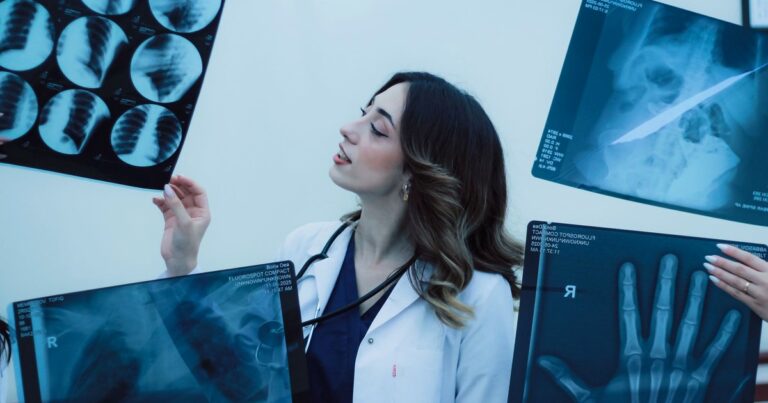
B.Sc in Radiology, or Bachelor of Science in Radiology and Imaging Technology, is an undergraduate medical stream course that focuses on the principles and techniques of medical imaging. This includes understanding the operation of equipment like X-ray machines, CT scanners, MRI machines, and ultrasound devices, as well as the interpretation of the images produced to aid in diagnosis and treatment.
Why Choose B.Sc in Radiology?
Choosing B.Sc in Radiology offers a promising career in the healthcare sector, providing essential diagnostic support to doctors. It’s a field with high demand, continuous technological advancements, and the opportunity to work in diverse clinical settings. Graduates play a crucial role in patient care by providing accurate imaging services.
What is the Eligibility for B.Sc in Radiology in India (2026)?
The primary eligibility criteria for B.Sc in Radiology in India for 2026 require candidates to have completed their 10+2 (or equivalent) examination with Physics, Chemistry, and Biology (PCB) as compulsory subjects, typically with a minimum aggregate score of 45-50%.
Academic Qualification Requirements
To be eligible for B.Sc in Radiology, candidates must have successfully passed their 12th standard (or equivalent) from a recognized board. The core subjects are almost universally Physics, Chemistry, and Biology (PCB). Some institutions may also consider candidates with Physics, Chemistry, and Mathematics (PCM) if they have a strong interest in the technical aspects, but PCB is the standard. The minimum percentage required usually ranges from 45% to 50% in aggregate, though top universities and colleges might demand higher percentages, sometimes up to 60%.
Age Limit for B.Sc in Radiology
Most colleges and universities in India stipulate a minimum age limit for B.Sc in Radiology admissions. Candidates must typically be at least 17 years old as of December 31st of the admission year (2026). There is generally no upper age limit specified by most institutions, though some private colleges might have their own internal policies.
Domicile and Nationality Requirements
For admission to government colleges and state-funded universities, candidates often need to meet specific domicile requirements, proving residency in that particular state. For private institutions, domicile requirements are less stringent, and admission is often open to candidates from across India. Indian nationality is a standard requirement, though some institutions may offer a limited number of seats for NRI/PIO/Foreign National candidates, subject to specific regulations and higher fee structures.
Are Entrance Exams Required for B.Sc in Radiology Admission?
Yes, many reputable universities and colleges require candidates to clear an entrance examination for B.Sc in Radiology admission, while others offer admission based on merit from 12th-grade scores. State-level and university-specific entrance exams are common.
Common Entrance Exams for B.Sc in Radiology (2026)
While there isn’t a single national entrance exam like NEET for MBBS, several state-level and university-specific entrance exams are conducted for paramedical courses, including B.Sc in Radiology. Some prominent examples include:
- NEET (National Eligibility cum Entrance Test): While primarily for MBBS/BDS, some states and private universities may consider NEET scores for paramedical admissions, or conduct their own paramedical entrance exams based on a similar syllabus.
- AIIMS Paramedical Entrance Exam: For admission to AIIMS institutions.
- IPU CET (Indraprastha University Common Entrance Test): For colleges affiliated with Guru Gobind Singh Indraprastha University.
- Various State Paramedical Entrance Exams: Many states conduct their own common entrance tests for paramedical courses.
- University-Specific Exams: Many private and deemed universities conduct their own entrance tests.
Entrance Exam Syllabus and Pattern
The syllabus for B.Sc in Radiology entrance exams typically covers topics from Physics, Chemistry, and Biology (Botany & Zoology) at the 10+2 level. The exam pattern usually consists of multiple-choice questions (MCQs). Here’s a general overview:
| Subject | Typical Weightage | Key Topics |
|---|---|---|
| Physics | 25-30% | Mechanics, Optics, Electricity & Magnetism, Modern Physics |
| Chemistry | 25-30% | Physical, Inorganic, Organic Chemistry (11th & 12th Syllabus) |
| Biology | 40-50% | Human Physiology, Genetics, Ecology, Plant Physiology, Cell Biology |
| General Knowledge/English (Optional) | 0-10% | Basic GK, English Grammar, Comprehension (rarely included) |
Important Dates for B.Sc in Radiology Admissions (2026 Tentative)
Admission timelines vary by institution and entrance exam. Here are typical tentative dates:
- Application Period: March – May 2026
- Entrance Exams: May – July 2026
- Results & Counseling: July – August 2026
- Admission & Session Start: August – September 2026
How Much Does B.Sc in Radiology Cost in India?
The cost of pursuing B.Sc in Radiology in India varies significantly based on the type of institution (government vs. private) and its reputation. Fees can range from INR 30,000 to INR 3,00,000 per annum.
Fee Structure: Government vs. Private Colleges
| Institution Type | Annual Fee Range (INR) | Additional Costs (Approx.) |
|---|---|---|
| Government Colleges | 30,000 – 1,00,000 | Hostel (10k-30k/year), Exam Fees, Uniform |
| Private Colleges/Universities | 1,00,000 – 3,00,000+ | Hostel (30k-80k/year), Lab Fees, Books, Uniform |
These figures are indicative and can change. Scholarships are often available for meritorious students or those from economically weaker sections.
Is B.Sc in Radiology Worth It for Jobs and Career?
Yes, B.Sc in Radiology is a highly valuable degree for career prospects in the healthcare industry. Graduates are in constant demand in hospitals, diagnostic centers, and research facilities, with good starting salaries and growth potential.
Career Prospects and Salary Outcomes
After completing B.Sc in Radiology, graduates can work as Radiology Technicians, X-ray Technicians, MRI Technicians, CT Scan Technicians, or Ultrasound Technicians. With further specialization and experience, roles like Chief Radiographer or Application Specialist are also possible.
| Job Role | Average Starting Salary (INR/annum) | Average Mid-Career Salary (INR/annum) |
|---|---|---|
| Radiology Technician | 2,00,000 – 3,50,000 | 4,00,000 – 7,00,000 |
| MRI/CT Scan Technician | 2,50,000 – 4,00,000 | 5,00,000 – 9,00,000 |
| Ultrasound Technician | 2,80,000 – 4,50,000 | 6,00,000 – 10,00,000+ |
Salaries can vary based on location (metro vs. non-metro), type of employer (private hospital vs. government), and individual skill set.
Further Education Options
Graduates can pursue higher education such as an M.Sc in Radiology and Imaging Technology, a Post Graduate Diploma (PGD) in specialized areas, or even an MBA in Hospital Administration to move into management roles.
How to Apply for B.Sc in Radiology (Step-by-Step)
Applying for B.Sc in Radiology involves several steps, from researching colleges to appearing for entrance exams and counseling.
- Research Colleges: Identify colleges offering B.Sc in Radiology and check their specific eligibility criteria and admission process.
- Check Entrance Exams: Determine if an entrance exam is required and register for it within the stipulated deadlines.
- Fill Application Forms: Complete the online or offline application forms for colleges and entrance exams, ensuring all details are accurate.
- Prepare for Exams: Study the 10+2 PCB syllabus thoroughly for entrance examinations.
- Appear for Exams/Interviews: Attend the entrance exam and any subsequent interview rounds if required.
- Participate in Counseling: If selected, participate in the counseling process where seats are allocated based on rank and preferences.
- Document Verification & Admission: Submit all required documents for verification and pay the admission fees to secure your seat.
What are the Top Colleges for B.Sc in Radiology in India?
Some of the top institutions offering B.Sc in Radiology or similar courses include:
- All India Institute of Medical Sciences (AIIMS), Delhi
- Postgraduate Institute of Medical Education and Research (PGIMER), Chandigarh
- Christian Medical College (CMC), Vellore
- Manipal Academy of Higher Education (MAHE), Manipal
- Jamia Hamdard University, Delhi
- Guru Gobind Singh Indraprastha University (GGSIPU), Delhi (through affiliated colleges)
- SRM Institute of Science and Technology, Chennai
Explore more on FindMyCollege
Related pages for B.Sc in Radiology aspirants on findmycollege.com:
Frequently Asked Questions
Is Maths compulsory for B.Sc in Radiology?
No, Mathematics is generally not compulsory. The primary requirement is Physics, Chemistry, and Biology (PCB) in 10+2. Some institutions might accept PCM, but PCB is the standard and preferred combination.
Can I pursue B.Sc in Radiology after 10th?
No, B.Sc in Radiology is an undergraduate degree course that requires completion of 10+2 (12th standard) with a science stream (PCB) as a prerequisite. You cannot pursue it directly after 10th grade.
What is the duration of the B.Sc in Radiology course?
The B.Sc in Radiology course typically has a duration of 3 years of academic study, often followed by a 6-month to 1-year compulsory internship, making the total program length 3.5 to 4 years.
Are there any distance learning options for B.Sc in Radiology?
B.Sc in Radiology is primarily a practical, hands-on course requiring extensive lab work and clinical training. Therefore, it is generally not offered through distance learning modes. Full-time, regular attendance is usually mandatory.
What is the difference between B.Sc Radiology and Diploma in Radiology?
A B.Sc in Radiology is a 3-year undergraduate degree providing a comprehensive understanding and advanced skills, leading to higher career growth and further education options. A Diploma in Radiology (DMRT) is typically a 2-year program, more focused on practical skills for entry-level technician roles, with limited scope for advanced studies without a bridge course.
Is NEET required for B.Sc in Radiology?
NEET is primarily for MBBS/BDS admissions. While some institutions or states might consider NEET scores for paramedical courses, it is not universally mandatory for B.Sc in Radiology. Many colleges conduct their own entrance exams or admit based on 12th-grade merit.
What skills are important for a Radiology Technician?
Key skills include strong technical aptitude, attention to detail, good communication skills, empathy towards patients, ability to work under pressure, and a solid understanding of human anatomy and physiology.
Can I work abroad after B.Sc in Radiology from India?
Yes, with a B.Sc in Radiology from a recognized Indian institution, you can pursue opportunities abroad. However, you may need to clear specific licensing exams or fulfill additional qualification requirements of the respective country (e.g., ARRT in the USA, HCPC in the UK).