B.Sc Cardiac Technology Course: Eligibility, Syllabus and Scope
Nishit Kumar is a senior EdTech industry leader with over a decade of experience in building and scaling education platforms, shaping their product, content, and growth strategy. At…
B.Sc Cardiac Technology (also referred to as B.Sc Cardiovascular Technology or B.Sc Cardiac Care Technology) is a 3 to 4-year undergraduate paramedical degree program that trains students in cardiac diagnostics, catheterization lab support, and non-invasive heart monitoring.
This complete guide covers everything prospective students need to know about the B.Sc Cardiac Technology course, including eligibility requirements, admission steps, semester syllabus, fees, top government and private colleges, and job opportunities across India.
| Parameter | Details |
|---|---|
| Course Duration | 3 to 4 Years (including 6-12 months mandatory hospital internship) |
| Eligibility Criteria | 10+2 in Science stream with Physics, Chemistry, and Biology/Mathematics (minimum 45%-50% aggregate marks) |
| NEET Requirement | Not mandatory for most colleges and universities |
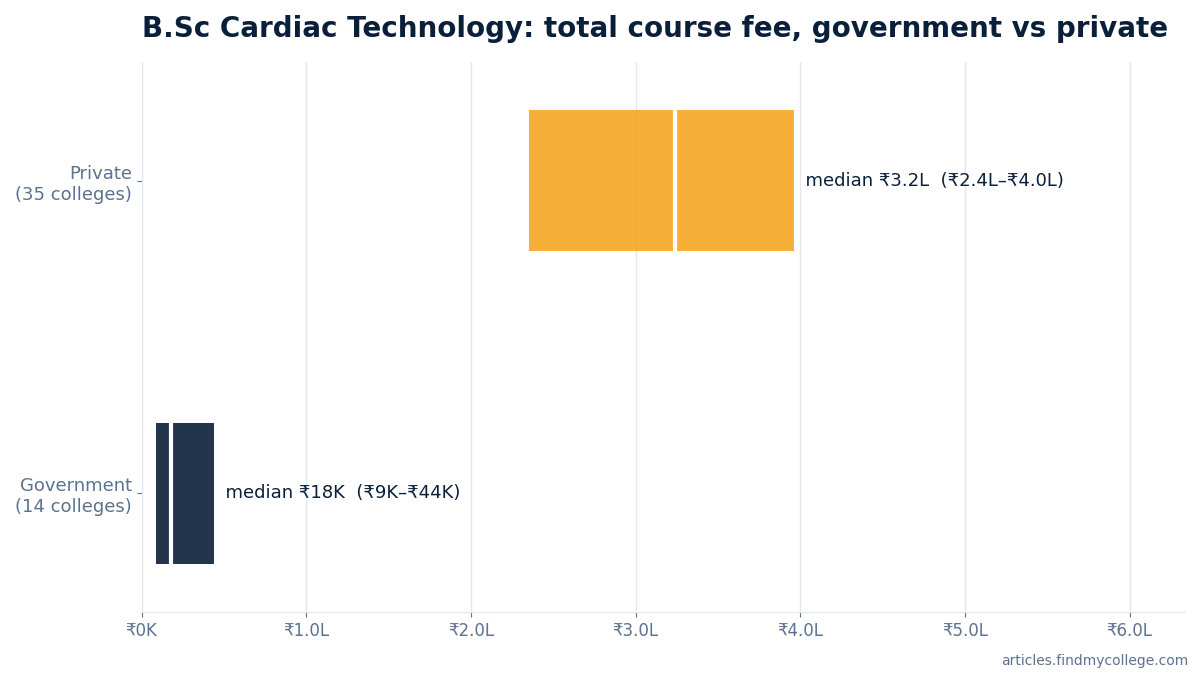
| Government College Annual Fee | ₹1,000 to ₹60,000 per year |
| Private College Annual Fee | ₹80,000 to ₹4,50,000 per year |
| Regulatory Framework Alignment | National Commission for Allied and Healthcare Professions (NCAHP) Act 2021 |
What is B.Sc Cardiac Technology
B.Sc Cardiac Technology is an undergraduate paramedical degree program spanning 3 to 4 years, including a mandatory 6 to 12-month hospital clinical internship. Curricula across top universities are structured in alignment with the National Commission for Allied and Healthcare Professions (NCAHP) Act 2021 framework.
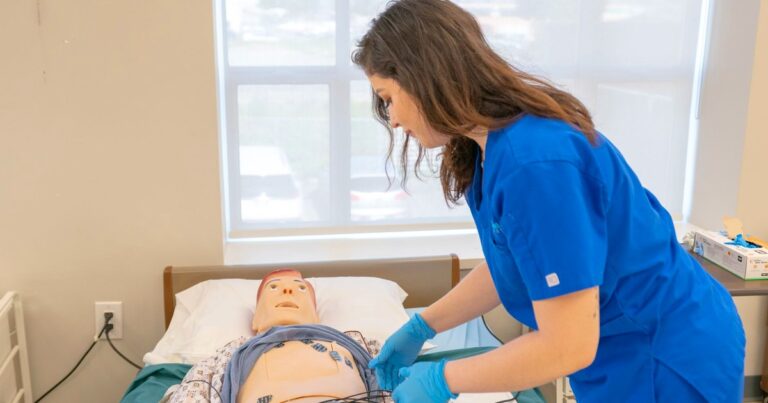
The course trains students to operate diagnostic equipment such as ECG, echocardiograms, and stress testing machines, and assist cardiologists during cardiac catheterisation procedures. Cath lab exposure during the mandatory internship is considered the primary hiring criterion by leading multi-speciality hospital interview panels.
B.Sc Cardiac Technology Eligibility
| Criterion | Requirement Details | Relaxation / Special Rules |
|---|---|---|
| Educational Qualification | Passed 10+2 / Higher Secondary from a recognized board | Science stream required |
| Mandatory Subjects | Physics, Chemistry, and Biology (PCB) | Some universities also accept Mathematics (PCMB / PCM) |
| Admission Basis | Class 12 merit score or entrance test performance | NEET score is optional / not required for major institutions |
| Entrance Examination | CUET UG, AIIMS Paramedical, AEEL, or IUET | Institute-specific or university tests are accepted |
Admissions to B.Sc Cardiac Technology do not require NEET at major institutions, relying on Class 12 merit or entrance exams like CUET UG and AIIMS Paramedical. Candidates must complete 10+2 with PCB or PCM, securing 45% to 50% aggregate marks.
B.Sc Cardiac Technology Syllabus and Subjects
The course combines fundamental medical sciences during the initial semesters with advanced clinical cardiovascular diagnostic training in later phases.
First-year coursework focuses on Human Anatomy, Human Physiology, Biochemistry, Pathology, Microbiology, and Computer Applications in Healthcare. Second-year curriculum covers Electrocardiography (ECG), Echocardiography, Cardiovascular Pharmacology, Applied Pathology, and Biomedical Instrumentation. Third and fourth-year core subjects cover Cardiac Catheterisation Lab Technology, Electrophysiology Studies, Pacemaker Technology, Advanced Haemodynamic Monitoring, and Resuscitation.
| Year / Phase | Core Theory Subjects | Practical & Clinical Rotations |
|---|---|---|
| Year 1 (Semesters 1-2) | Human Anatomy, Human Physiology, Biochemistry, Pathology, Microbiology, English Communication, Computer Basics | Anatomy & Physiology Labs, Basic Biochemistry Practicals, Nursing & First Aid |
| Year 2 (Semesters 3-4) | Electrocardiography (ECG), Echocardiography (2D/M-Mode/Doppler), Cardiovascular Pharmacology, Medical Instrumentation, Biostatistics | ECG Interpretation, Stress Testing, Holter Monitoring, Applied Pathology Labs |
| Year 3 (Semesters 5-6) | Cardiac Catheterisation Lab Technology, Electrophysiology Studies, Pacemaker & ICD Technology, Advanced Echocardiography, Paediatric Cardiology | Cath Lab Assisting, Advanced Echo Practicals, Haemodynamic Monitoring, Hospital Clinical Rotations |
| Year 4 / Internship | Healthcare Quality & Accreditation, Hospital Management, Research Dissertation / Capstone Project | Supervised 6–12 Month Clinical Internship in Hospital Cath Labs, CCUs, and Echo Units |
| College | City | Ownership | Total course fee |
|---|---|---|---|
| Madras Medical College | Chennai | Government | ₹9,000 |
| Thanjavur Medical College | Thanjavur | Government | ₹9,000 |
| Govt. Mohan Kumaramangalam Medical College | Salem | Government | ₹9,000 |
| Tirunelveli Medical College | Tirunelveli | Government | ₹9,000 |
| Government Villupuram Medical College and Hospital | Villupuram | Government | ₹9,000 |
| Government Thiruvarur Medical College | Thiruvarur | Government | ₹9,000 |
| Jawaharlal Institute of Post Graduate Medical Education and Research | Pondicherry | Government | ₹17,280 |
| Kurnool Medical College | Kurnool | Government | ₹18,000 |
| Government Chengalpattu Medical College | Kanchipuram | Government | ₹21,600 |
| Shimoga Institute of Medical Sciences | Shimoga | Government | ₹25,500 |
Top B.Sc Cardiac Technology Colleges
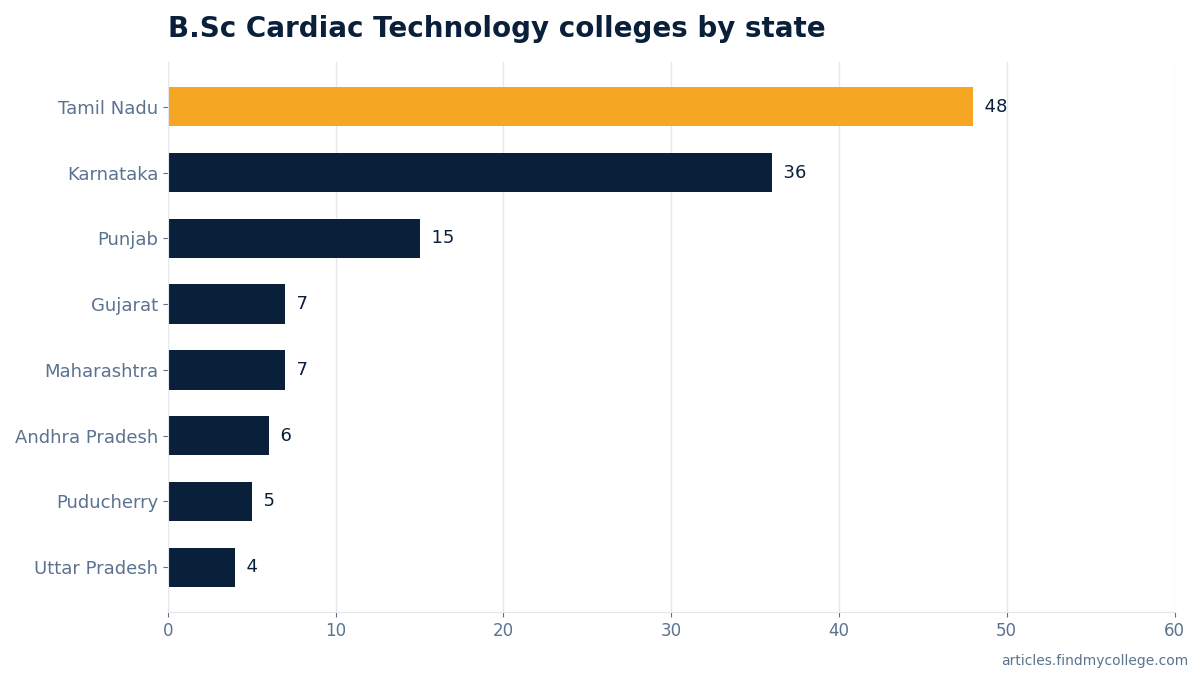
At least 152 colleges offer B.Sc Cardiac Technology in India, including at least 18 government institutions and 45 private institutions. State distribution includes at least Tamil Nadu with 48 colleges, Karnataka with 36, Punjab with 15, Gujarat with 7, Maharashtra with 7, and Andhra Pradesh with 6.
Students can choose from premier government institutions, top NIRF-ranked universities, and private medical colleges equipped with affiliated multi-speciality hospitals.
| College | City | Ownership | Total course fee | NIRF rank |
|---|---|---|---|---|
| SRM Institute of Technology | Kanchipuram | Private | ₹5.35 lakh | 11 (Overall, 2025) |
| JSS Academy of Higher Education & Research | Mysore | — | ₹11.20 lakh | 21 (Overall, 2025) |
| Symbiosis International University Pune | Pune | University | ₹7.16 lakh | 24 (Overall, 2025) |
| Jawaharlal Institute of Post Graduate Medical Education and Research | Pondicherry | Government | ₹17,280 | 43 (Overall, 2025) |
| Datta Meghe Institute of Medical Sciences | Wardha | — | ₹3.21 lakh | 49 (Overall, 2025) |
| Jain University | Bangalore | — | ₹5.70 lakh | 62 (Overall, 2025) |
| Mahatma Gandhi Medical College and Research Institute | Pondicherry | — | ₹6.00 lakh | 68 (Overall, 2024) |
| Sri Balaji Vidyapeeth University | Pondicherry | — | ₹6.00 lakh | 72 (Overall, 2019) |
| Bharath University Bharath Institute of Higher Education and Research | Chennai | — | ₹4.50 lakh | 76 (Overall, 2025) |
| Dr. M.G.R. Educational and Research Institute | Chennai | — | ₹2.75 lakh | 92 (Overall, 2023) |
| College | City | Ownership | Total course fee |
|---|---|---|---|
| Christian Medical College Vellore | Vellore | Private | ₹1.40 lakh |
| Dayanand Medical College and Hospital | Ludhiana | Private | ₹1.70 lakh |
| Christian Medical College Ludhiana | Ludhiana | Private | ₹1.30 lakh |
| Jagannath Gupta Institute of Medical Sciences and Hospital | Kolkata | Private | ₹3.07 lakh |
| Sapthagiri College of Engineering | Bangalore | Private | ₹7.00 lakh |
| Sree Abirami Institutions | Coimbatore | Private | ₹4.00 lakh |
| Vydehi Institute of Medical Sciences and Research Centre | Bangalore | Private | ₹4.00 lakh |
| Godavari Institute of Engineering and Technology Rajahmundry | East Godavari | Private | ₹3.96 lakh |
| East Point College of Engineering and Technology | Bangalore | Private | ₹3.44 lakh |
| Jawaharlal Nehru Medical College | Belagavi | Private | ₹3.60 lakh |
| City | Colleges | Fee range | Well-known options |
|---|---|---|---|
| Bangalore | 22 | ₹40,810 – ₹10.80 lakh | Jain University, Presidency University Bangalore |
| Coimbatore | 13 | ₹2.60 lakh – ₹4.80 lakh | PSG Institute of Medical Sciences and Research, Sree Abirami Institutions |
| Chennai | 12 | ₹9,000 – ₹6.00 lakh | Madras Medical College, Vels Institute of Science, Technology & Advanced Studies |
| Pondicherry | 4 | ₹17,280 – ₹6.00 lakh | Jawaharlal Institute of Post Graduate Medical Education and Research, Mahatma Gandhi Medical College and Research Institute |
| Salem | 4 | ₹9,000 – ₹5.11 lakh | Vinayaka Mission’s Research Foundation VMRF, Govt. Mohan Kumaramangalam Medical College |
| Vadodara | 4 | ₹1.92 lakh – ₹3.06 lakh | Parul University, Sumandeep Vidyapeeth |
| Mohali | 4 | ₹1.51 lakh – ₹2.51 lakh | Universal Group of Institutions, Saraswati Group of Colleges |
| Kanchipuram | 3 | ₹21,600 – ₹5.35 lakh | Government Chengalpattu Medical College, Sri Chandrasekharendra Saraswathi Viswa Mahavidyalaya |
B.Sc Cardiac Technology Career Scope and Salary
- Major Employers: AIIMS, Apollo Hospitals, Fortis Healthcare, Max Healthcare, Narayana Health, Manipal Hospitals, and Medanta.
- Placement Package: Median average placement package of 2.1 LPA across 8 reporting colleges.
Graduates can secure entry-level healthcare roles or advance their careers through higher education options like master’s degrees and clinical diplomas. Leading national hospital chains actively recruit cardiac technologists for their diagnostic and clinical units.
How to Apply for B.Sc Cardiac Technology Admission in 2026: Step by Step
- Verify Eligibility Criteria: Ensure completion of 10+2 with Physics, Chemistry, and Biology/Mathematics securing minimum 45%-50% aggregate marks from a recognized board.
- Register for Entrance Exams: Apply for relevant national or university entrance tests such as CUET UG, AIIMS Paramedical Entrance Exam, AEEL (Amrita), or ACET (ADYPU) if required by target colleges.
- Submit Online Applications: Fill application forms on university official portals, uploading 10th & 12th marksheets, category certificate, and photograph, paying application fees.
- Participate in Merit List or Counselling: Attend state-level paramedical counselling or university merit screening based on entrance scores or Class 12 marks.
- Submit Mandatory Documents: Produce original Class 10/12 marksheets, transfer certificate, migration certificate, Aadhaar card, medical fitness certificate, and category proof for verification.
- Confirm Admission and Pay Fees: Accept the seat offer and pay the prescribed first-semester tuition fee directly to the university portal to lock seat allocation.
| What to do | Where | Link |
|---|---|---|
| Compare colleges, fees and cutoffs | B.Sc Cardiac Technology colleges in India | findmycollege.com |
FAQs
Do I need NEET to get into B.Sc cardiology?
No, NEET is not mandatory for admission to B.Sc Cardiac Technology at most Indian universities. Admissions are conducted based on Class 12 merit or entrance tests like CUET UG, AIIMS Paramedical, and institute-level exams.
Is cardiology MD or DM?
B.Sc Cardiac Technology, on the other hand, is an allied healthcare technology degree training technologists to assist cardiologists.
What is the average salary for a cardiac technician in India?
Roles in Cath Labs and Echocardiography typically command higher entry-level pay packages.
How long does it take to become a cardiac technologist?
It takes 3 to 4 years to become a qualified cardiac technologist through a B.Sc in Cardiac Technology course, which includes classroom training and a mandatory 6 to 12-month clinical hospital internship.
What are the top cardiac technology colleges in India?
Top colleges offering B.Sc Cardiac Technology include AIIMS New Delhi, JIPMER Puducherry, CMC Vellore, Manipal Academy of Higher Education (MAHE), Madras Medical College, ADYPU Pune, and Sharda University.
Is Cardiovascular Technology a good career?
Yes, Cardiovascular Technology is a high-demand paramedical career. Technologists play a crucial clinical role in Cath Labs, ICUs, and diagnostic units, with job opportunities across top multi-speciality hospital networks.