
Diploma in Physiotherapy Salary in India 2026 – Comprehensive Guide
Nishit Kumar is a senior EdTech industry leader with over a decade of experience in building and scaling education platforms, shaping their product, content, and growth strategy. At…
Latest update: Diploma in Physiotherapy 2026 admissions & dates updated. Read more ›
For students and parents considering a career in healthcare, understanding the potential earnings and career trajectory is crucial. The Diploma in Physiotherapy (DPT) is a popular choice, offering a direct entry into the allied health sector. This comprehensive guide details the salary expectations, career opportunities, and other vital information for Diploma in Physiotherapy graduates in India for the year 2026.
What is the average starting salary for a Diploma in Physiotherapy graduate in India in 2026?
The average starting salary for a Diploma in Physiotherapy graduate in India in 2026 typically ranges from ₹1.8 LPA to ₹3.0 LPA. This figure can vary significantly based on the type of employer, city, and the individual’s practical skills and internship experience.
Fresh graduates often begin their careers in roles such as Junior Physiotherapist, Physiotherapy Assistant, or Therapy Aide. While the initial remuneration might seem modest compared to degree holders, the DPT offers a faster entry into the workforce and significant growth potential with experience and further specialization.
How does salary for Diploma in Physiotherapy vary with experience?
Salary for Diploma in Physiotherapy professionals in India shows a substantial increase with accumulating experience. As physiotherapists gain more practical knowledge, refine their skills, and take on greater responsibilities, their earning potential rises significantly.
- Entry-Level (0-2 years): ₹1.8 LPA – ₹3.0 LPA
- Mid-Level (2-5 years): ₹3.0 LPA – ₹5.5 LPA
- Experienced (5-10 years): ₹5.5 LPA – ₹8.0 LPA
- Senior/Specialized (10+ years): ₹8.0 LPA – ₹12.0+ LPA
Experienced professionals often move into supervisory roles, establish their own clinics, or specialize in niche areas like sports physiotherapy, neurological rehabilitation, or geriatric care, which command higher salaries.
What are the top job roles and their salaries for Diploma in Physiotherapy graduates?
Diploma in Physiotherapy graduates can pursue various roles within hospitals, clinics, rehabilitation centers, and sports organizations. The salary for each role depends on the specific responsibilities, employer, and location.
Table: Expected Salaries for Key DPT Job Roles (India, 2026)
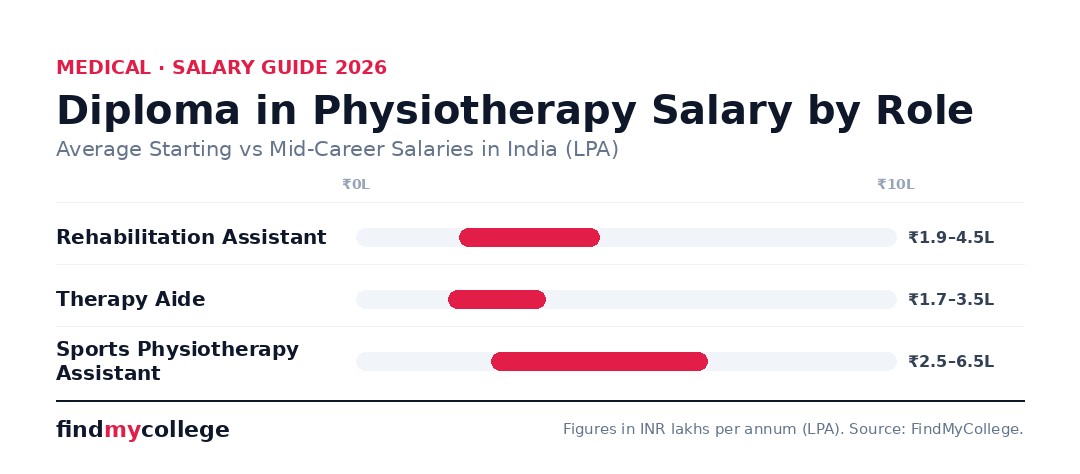
| Job Role | Average Starting Salary (LPA) | Average Mid-Career Salary (LPA) |
|---|---|---|
| Physiotherapy Assistant | ₹1.8 – ₹2.5 | ₹2.5 – ₹4.0 |
| Junior Physiotherapist | ₹2.0 – ₹3.0 | ₹3.0 – ₹5.0 |
| Rehabilitation Assistant | ₹1.9 – ₹2.7 | ₹2.8 – ₹4.5 |
| Therapy Aide | ₹1.7 – ₹2.3 | ₹2.2 – ₹3.5 |
| Home Care Physiotherapist | ₹2.2 – ₹3.5 | ₹3.5 – ₹6.0 |
| Sports Physiotherapy Assistant | ₹2.5 – ₹3.8 | ₹3.8 – ₹6.5 |
Which cities in India offer the highest salaries for Diploma in Physiotherapy?
Salaries for Diploma in Physiotherapy professionals tend to be higher in metropolitan and Tier-1 cities due to a greater demand for healthcare services, higher cost of living, and the presence of advanced medical facilities and private clinics.
- Mumbai: ₹2.5 LPA – ₹4.5 LPA (Starting)
- Delhi/NCR: ₹2.3 LPA – ₹4.2 LPA (Starting)
- Bengaluru: ₹2.2 LPA – ₹4.0 LPA (Starting)
- Chennai: ₹2.0 LPA – ₹3.8 LPA (Starting)
- Hyderabad: ₹2.0 LPA – ₹3.7 LPA (Starting)
- Pune: ₹1.9 LPA – ₹3.5 LPA (Starting)
Tier-2 cities like Ahmedabad, Jaipur, and Lucknow also offer decent opportunities, though salaries might be slightly lower than the major metros.
How does a Diploma in Physiotherapy salary compare to a Bachelor of Physiotherapy (BPT) salary?
A Bachelor of Physiotherapy (BPT) generally commands a higher starting salary and offers broader career advancement opportunities compared to a Diploma in Physiotherapy (DPT). This is primarily due to the BPT being a four-and-a-half-year undergraduate degree, providing a more in-depth theoretical and practical education.
Table: DPT vs. BPT Salary Comparison (India, 2026)
| Parameter | Diploma in Physiotherapy (DPT) | Bachelor of Physiotherapy (BPT) |
|---|---|---|
| Course Duration | 2-3 years | 4.5 years (incl. internship) |
| Starting Salary (LPA) | ₹1.8 – ₹3.0 | ₹2.5 – ₹4.5 |
| Mid-Career Salary (LPA) | ₹3.0 – ₹5.5 | ₹4.5 – ₹8.0 |
| Career Progression | Assistant roles, limited independent practice initially | Independent practice, specialized roles, higher management |
| Further Education Path | Lateral entry to BPT, specialized diplomas | Master’s (MPT), PhD |
While DPT offers a quicker entry, BPT provides a stronger foundation for long-term career growth and higher earning potential, especially for those aspiring to lead departments or establish advanced clinics.
Is Diploma in Physiotherapy worth it for jobs and salary in 2026?
Yes, a Diploma in Physiotherapy (DPT) is definitely worth it for securing jobs and earning a respectable salary in 2026, especially for students seeking a vocational, skill-based career with a shorter study duration. The demand for allied healthcare professionals, including physiotherapists, continues to grow in India due to an aging population, increasing awareness of physical rehabilitation, and a rise in lifestyle diseases and sports injuries.
While the starting salaries might be lower than a BPT, the DPT provides a solid foundation for entry-level roles. Graduates can gain valuable experience, and many opt for lateral entry into BPT programs or pursue specialized certifications to enhance their career prospects and earning potential. The return on investment (ROI) is often quicker due to lower course fees and shorter study periods.
What are the career prospects after completing a Diploma in Physiotherapy?
After completing a Diploma in Physiotherapy, graduates have a wide array of career prospects across various healthcare settings. The practical skills acquired during the diploma make them valuable assets in rehabilitation and patient care.
- Hospitals: Work in general wards, ICUs, orthopedics, neurology, and pediatrics departments.
- Private Clinics: Assist senior physiotherapists or work in independent physiotherapy clinics.
- Rehabilitation Centers: Focus on patients recovering from injuries, surgeries, or neurological conditions.
- Sports Academies/Teams: Assist athletes with injury prevention and rehabilitation.
- Fitness Centers/Gyms: Provide guidance on exercise and injury management.
- Home Healthcare: Offer personalized physiotherapy services to patients in their homes.
- Geriatric Care Centers: Specialise in rehabilitation for the elderly.
- NGOs: Work with communities on health and disability programs.
Many DPT graduates also choose to pursue further education, such as a Bachelor of Physiotherapy (BPT) through lateral entry, to enhance their qualifications and open doors to more advanced roles and higher salaries.
Who are the top recruiters for Diploma in Physiotherapy graduates in India?
Top recruiters for Diploma in Physiotherapy graduates in India include a mix of large hospital chains, specialized rehabilitation centers, and private clinics. These organizations actively seek skilled DPT professionals to support their physiotherapy departments.
- Major Hospital Chains: Apollo Hospitals, Fortis Healthcare, Max Healthcare, Manipal Hospitals, Aster DM Healthcare.
- Rehabilitation Centers: Indian Spinal Injuries Centre, VIMHANS, various state-run rehabilitation facilities.
- Specialized Clinics: Orthopedic clinics, neurological rehabilitation centers, sports injury clinics.
- Home Healthcare Providers: Portea Medical, HealthCare at Home, various local agencies.
- Government Sector: Government hospitals, primary health centers, ESI hospitals (through competitive exams).
Additionally, many DPT graduates find employment with individual practitioners who run their own physiotherapy clinics, offering a more hands-on and direct patient care experience.
Explore more on FindMyCollege
Related pages for Diploma in Physiotherapy aspirants on findmycollege.com:
Frequently Asked Questions
What is the eligibility criteria for Diploma in Physiotherapy?
The general eligibility criteria for a Diploma in Physiotherapy (DPT) in India is typically 10+2 (or equivalent) with Physics, Chemistry, and Biology as compulsory subjects. Some institutions may also accept candidates from a vocational stream with relevant subjects. Minimum percentage requirements usually range from 45% to 50%.
What is the duration of the Diploma in Physiotherapy course?
The Diploma in Physiotherapy (DPT) course duration in India is generally 2 to 3 years, depending on the institution and curriculum structure. This includes both theoretical learning and practical training/internship components.
Can I pursue higher education after Diploma in Physiotherapy?
Yes, after completing a Diploma in Physiotherapy, you can pursue higher education. Many institutions offer lateral entry into the second or third year of a Bachelor of Physiotherapy (BPT) program. You can also opt for various specialized certificate courses or advanced diplomas in specific areas of physiotherapy.
Are there government jobs available for Diploma in Physiotherapy graduates?
Yes, government jobs are available for Diploma in Physiotherapy graduates. They can apply for positions in government hospitals, primary health centers, ESI hospitals, and other public health institutions. These positions are usually filled through competitive examinations conducted by state or central government recruitment bodies.
What are the key skills required for a successful career in physiotherapy?
Key skills for a successful physiotherapy career include strong communication and interpersonal skills, empathy, patience, problem-solving abilities, manual dexterity, physical stamina, and a solid understanding of human anatomy and physiology. Continuous learning and adaptability are also crucial.
What is the fee structure for Diploma in Physiotherapy in India?
The fee structure for Diploma in Physiotherapy in India varies significantly. For government colleges, it can range from ₹10,000 to ₹50,000 per annum. Private colleges typically charge between ₹50,000 to ₹1,50,000 per annum, depending on the institution’s reputation, facilities, and location.
Does a Diploma in Physiotherapy allow me to open my own clinic?
While a Diploma in Physiotherapy provides foundational knowledge, in most Indian states, a Bachelor of Physiotherapy (BPT) degree is generally required to register with a state physiotherapy council and legally practice independently or open your own clinic. DPT graduates typically work under the supervision of a qualified BPT/MPT.
What are the common entrance exams for Diploma in Physiotherapy?
Many institutions admit students to Diploma in Physiotherapy programs based on merit in their 10+2 examinations. However, some colleges or state boards may conduct their own entrance exams. It’s advisable to check the specific admission requirements of your target institutions for 2026.