Doctorate of Medicine in Radiology Syllabus 2026 – India
Nishit Kumar is a senior EdTech industry leader with over a decade of experience in building and scaling education platforms, shaping their product, content, and growth strategy. At…
Latest update: Doctorate of Medicine in Radiology 2026 admissions & dates updated. Read more ›
Welcome to the comprehensive guide for the Doctorate of Medicine (MD) in Radiology Syllabus for the academic year 2026 in India. This page is designed to provide prospective students and their parents with in-depth information about the course structure, eligibility criteria, admission process, career opportunities, and financial aspects of pursuing an MD in Radiology.
What is the Doctorate of Medicine (MD) in Radiology?
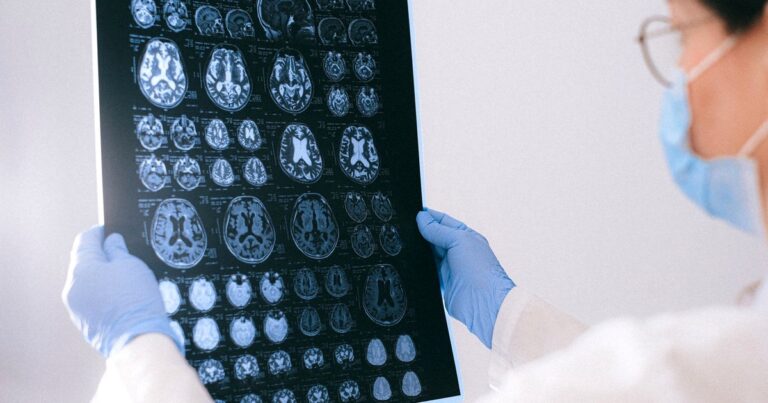
The Doctorate of Medicine (MD) in Radiology is a three-year postgraduate medical degree focusing on the diagnosis and treatment of diseases using medical imaging techniques such as X-rays, ultrasound, CT scans, MRI, and nuclear medicine. This specialization equips doctors with the expertise to interpret diagnostic images and perform image-guided procedures, playing a crucial role in modern healthcare.
What is the eligibility for Doctorate of Medicine in Radiology?
To be eligible for an MD in Radiology, candidates must possess an MBBS degree from a university recognized by the Medical Council of India (MCI) or the National Medical Commission (NMC), and have completed a compulsory rotating internship of one year. Additionally, candidates must qualify in a national-level entrance examination, typically NEET PG.
- Educational Qualification: MBBS degree from an MCI/NMC recognized institution.
- Internship: Completion of a mandatory one-year rotating internship.
- Entrance Exam: Must qualify in NEET PG (National Eligibility cum Entrance Test for Postgraduate) or equivalent state-level examinations where applicable.
- Registration: Provisional or permanent registration with MCI/NMC or State Medical Council.
- Minimum Marks: Generally, a minimum aggregate of 50% in MBBS is required, though this can vary by institution and category.
What is the Doctorate of Medicine in Radiology Syllabus and Course Structure?
The MD Radiology syllabus is meticulously designed to provide a strong foundation in physics, anatomy, and pathology related to imaging, followed by extensive practical training in various imaging modalities and interventional procedures. The three-year program is typically divided into six semesters, combining theoretical knowledge with hands-on clinical experience.
Year 1: Foundations and Basic Imaging
The first year focuses on fundamental principles, basic imaging techniques, and understanding the physics behind various modalities. Students are introduced to patient safety protocols and ethical considerations.
- Physics of Radiology: X-ray production, radiation protection, ultrasound principles, CT/MRI physics.
- Anatomy & Physiology: Cross-sectional anatomy relevant to imaging.
- Pathology: General pathology and systemic pathology as seen on imaging.
- Basic Imaging Modalities: Conventional radiography, basic ultrasound, fluoroscopy.
- Contrast Media: Types, indications, contraindications, and reactions.
Year 2: Advanced Imaging and Systemic Radiology
The second year delves into advanced imaging techniques and systemic radiology, covering specific organ systems in detail. Students gain more experience in interpreting complex cases.
- Neuro-radiology: Brain, spine, head & neck imaging.
- Musculoskeletal Radiology: Joint, bone, soft tissue imaging.
- Cardiovascular Radiology: Cardiac CT/MRI, angiography.
- Gastrointestinal & Genitourinary Radiology: Abdominal imaging, pelvic imaging.
- Pediatric Radiology: Imaging in children, congenital anomalies.
- Interventional Radiology (Introduction): Basic procedures and principles.
Year 3: Specializations, Research, and Clinical Practice
The final year focuses on sub-specialties, advanced interventional procedures, research methodology, and preparation for independent practice. Students undertake a thesis or dissertation project.
- Breast Imaging: Mammography, breast ultrasound, MRI.
- Nuclear Medicine: PET-CT, SPECT, radionuclide imaging.
- Advanced Interventional Radiology: Vascular, non-vascular interventions.
- Emergency Radiology: Trauma imaging, acute conditions.
- Thesis/Dissertation: Research project and presentation.
- Ethics and Medico-legal Aspects: Professional conduct and legal responsibilities.
Here’s a sample breakdown of subjects by semester:
| Semester | Core Subjects | Practical/Clinical Focus |
|---|---|---|
| Semester 1 | Radiological Physics, General Radiology, Anatomy for Radiologists | X-ray interpretation, Basic Ultrasound scans, Radiation safety |
| Semester 2 | Systemic Radiology (Chest, Abdomen), Contrast Media | Fluoroscopy procedures, CT scan basics, Emergency Radiology rotations |
| Semester 3 | Neuro-radiology, Musculoskeletal Radiology, Pediatric Radiology | MRI principles, Advanced Ultrasound, Case discussions |
| Semester 4 | Cardiovascular Radiology, Genitourinary Radiology, Breast Imaging | Cardiac CT/MRI interpretation, Biopsy guidance, Mammography |
| Semester 5 | Nuclear Medicine, Interventional Radiology (Advanced), Thesis Work | PET-CT interpretation, Angiography assistance, Research methodology |
| Semester 6 | Emergency Radiology, Medico-legal Aspects, Thesis Submission & Defense | Independent reporting, Advanced interventional procedures, Viva Voce |
How much does Doctorate of Medicine in Radiology cost?
The cost of pursuing an MD in Radiology in India varies significantly based on the type of institution (government vs. private) and its reputation, ranging from a few lakhs to over a crore for the entire course. Government colleges generally have much lower fees compared to private medical colleges and deemed universities.
| Institution Type | Annual Fee Range (INR) | Total Course Fee (Approx. 3 Years) (INR) |
|---|---|---|
| Government Medical Colleges | ₹10,000 – ₹2,00,000 | ₹30,000 – ₹6,00,000 |
| Private Medical Colleges | ₹10,00,000 – ₹35,00,000 | ₹30,00,000 – ₹1,05,00,000 |
| Deemed Universities | ₹15,00,000 – ₹40,00,000+ | ₹45,00,000 – ₹1,20,00,000+ |
These figures are approximate for the 2026 academic year and do not include hostel fees, examination fees, or other miscellaneous charges.
What are the admission process and key dates for MD Radiology 2026?
The admission process for MD Radiology in 2026 primarily involves qualifying the NEET PG examination, followed by centralized counseling conducted by the Medical Counselling Committee (MCC) for All India Quota seats and state counseling authorities for state quota seats. Key dates are usually released by the National Board of Examinations (NBE) and MCC.
| Event | Tentative Dates (2026) | Details |
|---|---|---|
| NEET PG 2026 Application Start | October – November 2025 | Online application submission |
| NEET PG 2026 Application End | December 2025 | Last date for application submission |
| NEET PG 2026 Exam Date | March 2026 | Computer-based test (CBT) |
| NEET PG 2026 Result Declaration | April 2026 | Scorecard release |
| MCC NEET PG Counseling (Round 1) | May – June 2026 | Registration, choice filling, seat allotment |
| MCC NEET PG Counseling (Round 2) | June – July 2026 | Registration, choice filling, seat allotment |
| MCC NEET PG Counseling (Mop-up Round) | July – August 2026 | For vacant seats after Round 2 |
| State Quota Counseling | May – August 2026 | Conducted by respective state authorities |
| Academic Session Commencement | August – September 2026 | Start of classes |
It is crucial for candidates to regularly check the official websites of NBE and MCC for the most accurate and updated information regarding dates and procedures.
Is Doctorate of Medicine in Radiology worth it for jobs?
Yes, an MD in Radiology is highly worth it for job prospects, offering excellent career opportunities, high demand, and competitive salaries across various healthcare settings. Radiologists are indispensable in modern medicine, making it one of the most sought-after medical specializations.
Career Prospects and Salary Outcomes
Graduates with an MD in Radiology can find employment in government hospitals, private hospitals, diagnostic centers, research institutions, and even establish their own diagnostic clinics. The demand for skilled radiologists continues to grow due to advancements in imaging technology and an increasing patient load.
| Job Role | Average Annual Salary Range (INR) | Description |
|---|---|---|
| Consultant Radiologist | ₹12,00,000 – ₹40,00,000+ | Interprets diagnostic images, performs image-guided procedures. |
| Interventional Radiologist | ₹18,00,000 – ₹60,00,000+ | Specializes in minimally invasive, image-guided procedures. |
| Diagnostic Radiologist | ₹10,00,000 – ₹35,00,000 | Focuses purely on interpreting diagnostic images. |
| Academic Radiologist | ₹8,00,000 – ₹25,00,000 | Involves teaching, research, and clinical practice in medical colleges. |
| Teleradiologist | ₹15,00,000 – ₹50,00,000+ | Interprets images remotely, often for international clients or during off-hours. |
Salaries can vary based on experience, location (metro cities generally offer higher pay), type of employer, and sub-specialization.
Doctorate of Medicine in Radiology vs. Diploma in Radiology: Which is better?
An MD in Radiology is a comprehensive three-year postgraduate degree offering in-depth knowledge and extensive practical training, leading to full specialization and higher career prospects, whereas a Diploma in Radiology (DMRD) is a two-year course providing foundational knowledge, often suitable for general diagnostic roles or as a stepping stone. The MD is generally considered superior for long-term career growth and advanced practice.
| Feature | MD in Radiology | Diploma in Radiology (DMRD) |
|---|---|---|
| Duration | 3 Years | 2 Years |
| Depth of Study | Comprehensive, in-depth, covers all sub-specialties | Foundational, focuses on basic diagnostic imaging |
| Practical Training | Extensive, includes advanced procedures & interventions | Moderate, primarily focuses on basic interpretations |
| Career Prospects | Consultant, Interventional Radiologist, Academician, Higher Earning Potential | Junior Radiologist, General Diagnostic roles, Limited Interventional Scope |
| Research Component | Mandatory Thesis/Dissertation | Optional or less emphasized |
| Eligibility for DM/MCh | Eligible for further super-specialization (e.g., DM Neuroradiology) | Generally not eligible directly, may require MD first |
What are the top colleges for MD Radiology in India?
India boasts several prestigious institutions offering MD in Radiology, known for their excellent faculty, infrastructure, and clinical exposure. Some of the top colleges include:
- All India Institute of Medical Sciences (AIIMS), New Delhi
- Postgraduate Institute of Medical Education and Research (PGIMER), Chandigarh
- Jawaharlal Institute of Postgraduate Medical Education and Research (JIPMER), Puducherry
- Maulana Azad Medical College (MAMC), New Delhi
- Seth G.S. Medical College, Mumbai
- Christian Medical College (CMC), Vellore
- King George’s Medical University (KGMU), Lucknow
- Armed Forces Medical College (AFMC), Pune
- Institute of Medical Sciences, Banaras Hindu University (IMS-BHU), Varanasi
- Grant Medical College, Mumbai
Admission to these institutions is highly competitive and primarily based on NEET PG ranks.
Explore more on FindMyCollege
Related pages for Doctorate of Medicine in Radiology aspirants on findmycollege.com:
Frequently Asked Questions
What is the exam pattern for NEET PG for MD Radiology admissions?
NEET PG is a computer-based test (CBT) consisting of 200 multiple-choice questions (MCQs) from the MBBS curriculum. The exam duration is 3 hours and 30 minutes, with a marking scheme of +4 for correct answers and -1 for incorrect answers.
Are there any sub-specializations after MD Radiology?
Yes, after completing MD Radiology, one can pursue super-specialization courses like DM (Doctorate of Medicine) in Neuroradiology, Interventional Radiology, Pediatric Radiology, or Cardiac Radiology, typically lasting 2-3 years.
What skills are essential for a successful Radiologist?
Key skills include strong analytical and diagnostic abilities, attention to detail, excellent spatial reasoning, knowledge of physics and anatomy, good communication skills (for interacting with referring physicians and patients), and continuous learning to keep up with technological advancements.
Can I practice abroad after MD Radiology from India?
Yes, an MD in Radiology from India is recognized in many countries. However, you may need to clear specific licensing exams (e.g., USMLE for USA, PLAB for UK, AMC for Australia) and fulfill other country-specific requirements to practice abroad.
What is the difference between a Radiologist and a Radiographer/Radiology Technician?
A Radiologist is a medical doctor who interprets medical images, diagnoses diseases, and performs image-guided procedures. A Radiographer or Radiology Technician is a healthcare professional trained to operate imaging equipment and acquire the images, but they do not interpret them or make diagnoses.
What is the future scope of Radiology in India?
The future scope of Radiology in India is excellent, driven by technological advancements (AI in imaging, advanced modalities), increasing healthcare infrastructure, and a growing demand for accurate diagnostics. Teleradiology and interventional radiology are particularly booming fields.
Is there an age limit for MD Radiology?
No, there is generally no upper age limit for pursuing an MD in Radiology in India, provided all other eligibility criteria, especially the NEET PG qualification, are met.