Doctorate of Medicine in Radiology (MD Radiology) India 2026 Overview
Nishit Kumar is a senior EdTech industry leader with over a decade of experience in building and scaling education platforms, shaping their product, content, and growth strategy. At…
Latest update: Doctorate of Medicine in Radiology 2026 admissions & dates updated. Read more ›
Welcome to the comprehensive overview of the Doctorate of Medicine (MD) in Radiology program in India for the academic year 2026. This page is designed to provide prospective students and their parents with a detailed understanding of this highly specialized medical postgraduate course, covering everything from eligibility criteria and admission processes to career prospects and financial considerations. Radiology is a cornerstone of modern medicine, utilizing advanced imaging techniques to diagnose and treat diseases, making it a challenging yet immensely rewarding field.
What is a Doctorate of Medicine (MD) in Radiology?
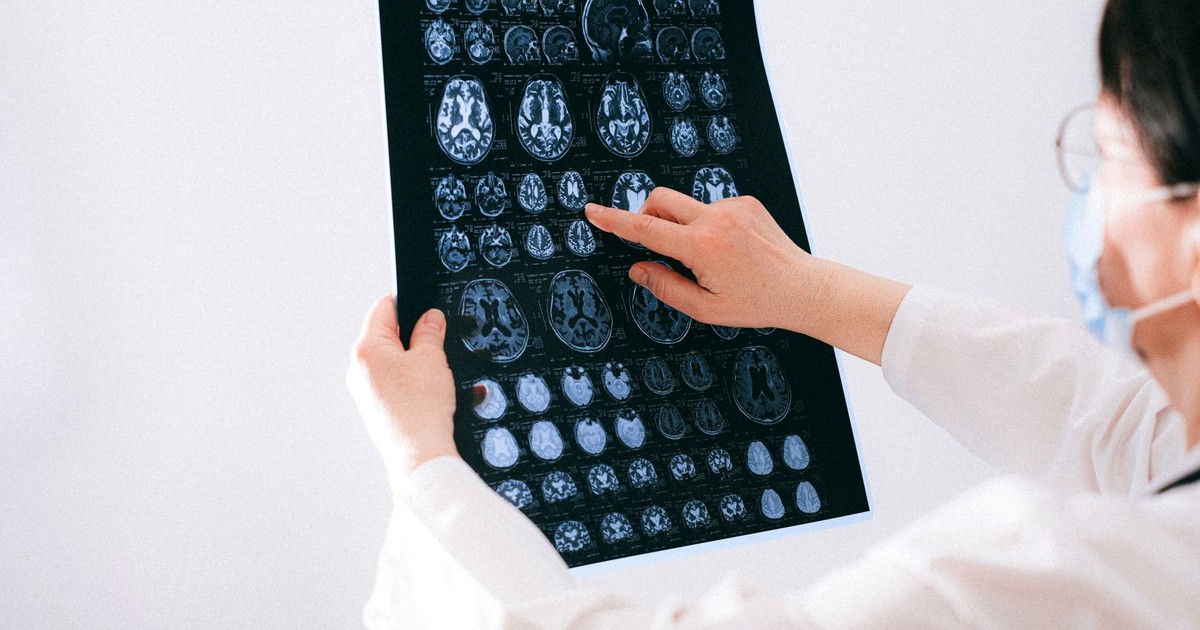
A Doctorate of Medicine (MD) in Radiology is a three-year postgraduate medical degree focusing on the use of medical imaging techniques to diagnose and treat diseases. This specialization trains physicians to interpret various imaging modalities such as X-rays, Ultrasound, CT scans, MRI, PET scans, and interventional radiology procedures.
The program involves extensive theoretical knowledge, practical training, and research, preparing graduates to become expert radiologists capable of making critical diagnostic decisions and performing image-guided interventions. It’s a highly sought-after specialization due to its pivotal role in patient care and the continuous advancements in medical technology.
What is the eligibility for Doctorate of Medicine in Radiology in 2026?
To be eligible for an MD in Radiology in India for 2026, candidates must possess an MBBS degree from a university recognized by the Medical Council of India (MCI) or the National Medical Commission (NMC), and have completed a compulsory rotating internship of one year.
Additionally, candidates must qualify in a national-level entrance examination, primarily the NEET PG (National Eligibility cum Entrance Test for Postgraduate), by securing the minimum qualifying percentile. Some institutions might have specific age limits or domicile requirements, though these are less common for postgraduate medical degrees.
How do I get admission to MD Radiology in 2026? The Admission Process Explained.
Admission to MD Radiology programs in India for 2026 is primarily through the NEET PG examination, followed by centralized counseling processes at both the All India and State levels.
- NEET PG Examination: Candidates must register for and appear in the NEET PG exam, typically held in March. A valid score and percentile are mandatory.
- Counseling Registration: Post NEET PG results, qualified candidates must register for counseling conducted by the Medical Counseling Committee (MCC) for All India Quota (AIQ) seats (50% of government seats and all deemed/central university seats) and by respective State Counseling Authorities for State Quota seats (remaining 50% of government seats and private college seats within the state).
- Choice Filling and Locking: During counseling rounds, candidates fill their preferred colleges and specializations based on their NEET PG rank.
- Seat Allotment: Seats are allotted based on rank, choices filled, and availability.
- Document Verification & Admission: Allotted candidates must report to the assigned college with original documents for verification and complete the admission formalities.
Key Dates for MD Radiology Admission 2026 (Tentative)
| Event | Tentative Dates (2026) |
|---|---|
| NEET PG Application Start | November – December 2025 |
| NEET PG Application End | January 2026 |
| NEET PG Exam Date | March 2026 |
| NEET PG Result Declaration | April 2026 |
| MCC AIQ Counseling Round 1 | May 2026 |
| State Quota Counseling Round 1 | May – June 2026 |
| Academic Session Commencement | August – September 2026 |
How much does a Doctorate of Medicine in Radiology cost in India?
The cost of an MD in Radiology in India varies significantly based on the type of institution (government vs. private/deemed university) and the specific college, ranging from very affordable to quite expensive.
Government colleges generally have the lowest fees, often subsidized, while private and deemed universities charge substantially higher tuition. There are also additional costs like hostel fees, examination fees, and miscellaneous charges.
MD Radiology Fee Structure 2026 (Annual Range)
| Institution Type | Annual Tuition Fee Range (INR) |
|---|---|
| Government Medical Colleges | INR 50,000 – INR 3,00,000 |
| Private Medical Colleges | INR 8,00,000 – INR 30,00,000+ |
| Deemed Universities | INR 15,00,000 – INR 40,00,000+ |
Note: These are approximate annual ranges for 2026 and can vary. Some private colleges and deemed universities may have bond clauses or higher admission fees.
What is the syllabus for MD Radiology?
The MD Radiology syllabus is comprehensive, covering fundamental physics of imaging, various imaging modalities, clinical applications, and interventional procedures. The three-year program is structured to provide a strong foundation in diagnostic and interventional radiology.
Core Subjects and Areas of Study
- Year 1:
- Basic Physics of Radiology & Radiation Safety
- Radiological Anatomy & Physiology
- General Radiology (X-ray, Fluoroscopy)
- Ultrasound Principles & Applications
- Contrast Media & Adverse Reactions
- Year 2:
- Computed Tomography (CT) Principles & Clinical Applications
- Magnetic Resonance Imaging (MRI) Principles & Clinical Applications
- Nuclear Medicine Basics
- Musculoskeletal Radiology
- Neuro-Radiology
- Year 3:
- Cardiothoracic Radiology
- Gastrointestinal & Genitourinary Radiology
- Pediatric Radiology
- Breast Imaging
- Interventional Radiology (Diagnostic & Therapeutic)
- Recent Advances in Radiology & Research Methodology
The curriculum also includes regular case discussions, seminars, journal clubs, and mandatory research work culminating in a thesis submission.
Is Doctorate of Medicine in Radiology worth it for jobs and career prospects?
Yes, a Doctorate of Medicine in Radiology is highly worth it, offering excellent job prospects, high earning potential, and a critical role in healthcare. Radiologists are in constant demand across hospitals, diagnostic centers, and research institutions, both in India and internationally.
The field is continuously evolving with technological advancements, ensuring a dynamic and intellectually stimulating career. Graduates can pursue various sub-specializations, further enhancing their career trajectory.
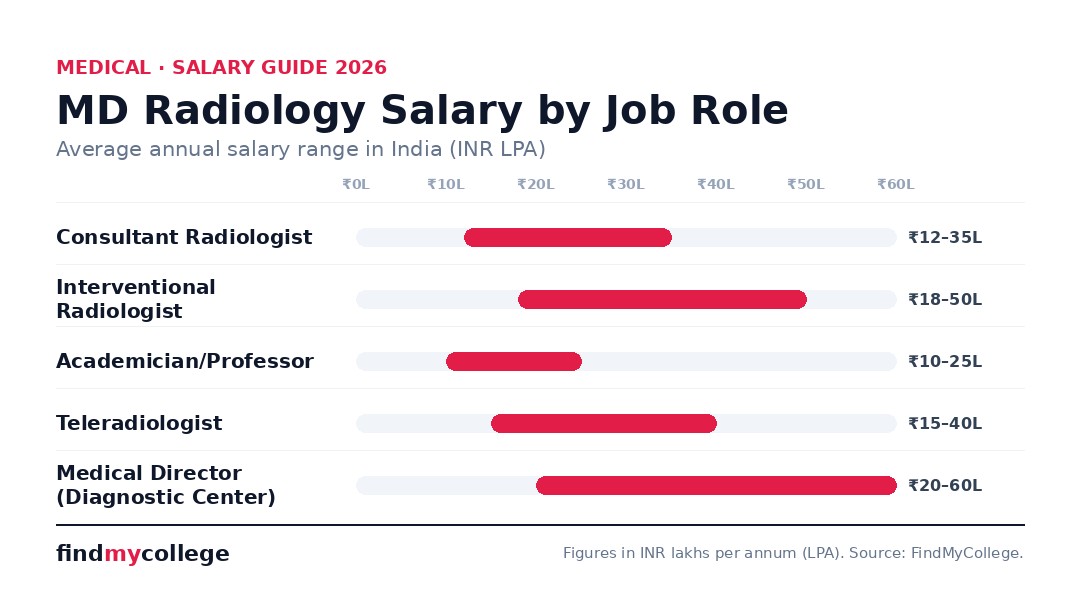
Career Paths & Average Salary Ranges (Post-MD Radiology)
| Job Role | Average Annual Salary Range (INR) | Description |
|---|---|---|
| Consultant Radiologist | INR 12,00,000 – INR 35,00,000+ | Diagnosing diseases using imaging techniques in hospitals/diagnostic centers. |
| Interventional Radiologist | INR 18,00,000 – INR 50,00,000+ | Performing minimally invasive, image-guided procedures. |
| Academician/Professor | INR 10,00,000 – INR 25,00,000 | Teaching and research in medical colleges. |
| Teleradiologist | INR 15,00,000 – INR 40,00,000+ | Interpreting images remotely for various healthcare providers. |
| Medical Director (Diagnostic Center) | INR 20,00,000 – INR 60,00,000+ | Overseeing operations and quality in diagnostic facilities. |
Note: Salaries are highly dependent on experience, location (metro vs. non-metro), institution type, and sub-specialization.
MD Radiology vs. DMRD: Which is better?
MD Radiology is a full-fledged postgraduate degree (3 years) offering comprehensive training and higher recognition, while DMRD (Diploma in Medical Radio-Diagnosis) is a diploma course (2 years) with a more focused, often less in-depth curriculum.
MD Radiology is generally considered superior and is the preferred qualification for specialist positions and academic roles. While DMRD can be a stepping stone or suitable for those seeking quicker entry into basic diagnostic roles, MD Radiology provides a broader skill set, deeper knowledge, and better long-term career prospects and earning potential.
What are the top colleges for MD Radiology in India?
India boasts several prestigious institutions offering excellent MD Radiology programs, known for their advanced infrastructure, experienced faculty, and high patient load for practical exposure. Some of the top colleges include:
- All India Institute of Medical Sciences (AIIMS), New Delhi
- Postgraduate Institute of Medical Education and Research (PGIMER), Chandigarh
- Jawaharlal Institute of Postgraduate Medical Education and Research (JIPMER), Puducherry
- Maulana Azad Medical College (MAMC), New Delhi
- Seth GS Medical College and KEM Hospital, Mumbai
- Christian Medical College (CMC), Vellore
- King George’s Medical University (KGMU), Lucknow
- Institute of Medical Sciences, Banaras Hindu University (IMS-BHU), Varanasi
- Armed Forces Medical College (AFMC), Pune
- Grant Medical College, Mumbai
Selection to these colleges is highly competitive, primarily based on NEET PG ranks.
Frequently Asked Questions