
M.Sc Radiology vs Medical Imaging: 2026 Course Comparison
Nishit Kumar is a senior EdTech industry leader with over a decade of experience in building and scaling education platforms, shaping their product, content, and growth strategy. At…
Latest update: M.Sc in Radiology 2026 admissions & dates updated. Read more ›
M.Sc in Radiology vs M.Sc in Medical Imaging Technology vs M.Sc in Nuclear Medicine Technology: Quick Comparison (2026)
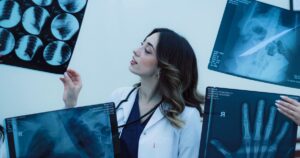
For science graduates in India aspiring to a career in medical imaging, the M.Sc in Radiology is a popular choice. However, it’s crucial to compare it against closely related and often confused programs like M.Sc in Medical Imaging Technology and M.Sc in Nuclear Medicine Technology to make an informed decision for 2026 admissions. While all three involve advanced imaging, their core focus, methodologies, and career trajectories differ significantly.
| Course | Duration | Eligibility | Avg Fees (INR) | Top Careers | Avg Starting Salary (INR) | Best For |
|---|---|---|---|---|---|---|
| M.Sc in Radiology | 2 Years | B.Sc in Radiography/Medical Imaging/Physics/Chemistry/Biology with 50-60% | ₹50,000 – ₹3,00,000 | Radiology Technologist, Imaging Scientist, Application Specialist, Research Assistant | ₹3,00,000 – ₹6,00,000 | Students keen on diagnostic imaging interpretation, advanced techniques, and research in general radiography, CT, MRI. |
| M.Sc in Medical Imaging Technology | 2 Years | B.Sc in Radiography/Medical Imaging/Physics/Chemistry/Biology with 50-60% | ₹60,000 – ₹3,50,000 | Medical Imaging Technologist, CT/MRI Specialist, Ultrasound Technologist, PACS Administrator | ₹3,20,000 – ₹6,50,000 | Students focused on the operational and technical aspects of a wide range of imaging modalities and patient care. |
| M.Sc in Nuclear Medicine Technology | 2 Years | B.Sc in Physics/Chemistry/Biology/Radiography/Nuclear Medicine with 50-60% | ₹70,000 – ₹4,00,000 | Nuclear Medicine Technologist, PET/SPECT Technologist, Radiopharmacist Assistant, Radiation Safety Officer | ₹3,50,000 – ₹7,00,000 | Students interested in using radioactive materials for diagnostic and therapeutic purposes, and molecular imaging. |
M.Sc in Radiology vs M.Sc in Medical Imaging Technology
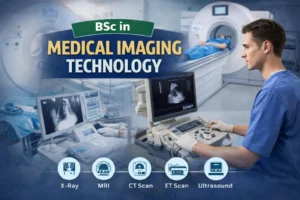
While both degrees deal with medical imaging, M.Sc in Radiology often has a stronger emphasis on the theoretical understanding of imaging physics, image interpretation principles, and research methodologies across various modalities like X-ray, CT, and MRI. M.Sc in Medical Imaging Technology, on the other hand, typically focuses more on the practical, operational, and technical aspects of running and maintaining imaging equipment, patient positioning, and image acquisition protocols for a broader range of technologies including ultrasound. The former leans more towards the ‘science behind’ and ‘analysis of’ images, while the latter is more about ‘how to perform’ and ‘manage’ imaging procedures. M.Sc in Radiology suits those interested in advanced diagnostic analysis and research, while M.Sc in Medical Imaging Technology is ideal for those who prefer hands-on technical operation and patient interaction within the imaging department.
M.Sc in Radiology vs M.Sc in Nuclear Medicine Technology
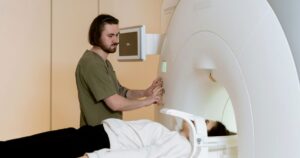
The M.Sc in Radiology primarily focuses on structural and anatomical imaging using external energy sources (X-rays, magnetic fields, sound waves), providing detailed pictures of the body’s internal structures. In contrast, M.Sc in Nuclear Medicine Technology specializes in functional imaging, where radioactive tracers are introduced into the body to visualize physiological processes at the molecular level, often used for early disease detection and therapy monitoring. The core subjects, equipment used (e.g., PET, SPECT scanners vs. CT, MRI scanners), and safety protocols (radiation safety for internal sources) are distinctly different. M.Sc in Radiology is for those interested in broad diagnostic imaging, whereas M.Sc in Nuclear Medicine Technology is for students passionate about molecular imaging, radiopharmaceuticals, and the unique challenges of working with radioactive isotopes.
People Also Read


Which one should you choose?
Choosing the right M.Sc program depends on your specific interests and career aspirations:
- Choose M.Sc in Radiology if: You are fascinated by the physics of imaging, want to delve deep into image interpretation, contribute to diagnostic accuracy, and potentially pursue research or academic roles in general diagnostic imaging.
- Choose M.Sc in Medical Imaging Technology if: You prefer a hands-on role in operating a wide array of imaging equipment, ensuring high-quality image acquisition, managing imaging departments, and directly interacting with patients across various modalities.
- Choose M.Sc in Nuclear Medicine Technology if: You are interested in the cutting-edge field of molecular imaging, working with radioactive materials for both diagnosis and therapy, and understanding physiological processes at a cellular level.
Explore more on FindMyCollege
Related pages for M.Sc in Radiology aspirants on findmycollege.com:
Frequently Asked Questions