
CAT 2026: Experts share strategies to manage exam stress with sleep, mock tests
In short
- The CAT 2026 examination is set for 29 November 2026, with IIM Indore conducting the computer-based test.
- Admit cards for CAT 2026 are scheduled for release on 4 November 2026, and results are expected in December 2026.
- Aspirants are advised to take 30-40 mock tests and dedicate 3-6 hours daily for preparation, focusing on revision in the final month.
- Stress management techniques include meditation, adequate sleep of 6-7 hours nightly, and physical activity.
- The CAT exam evaluates Verbal Ability, Data Interpretation and Logical Reasoning, and Quantitative Aptitude over 120 minutes.
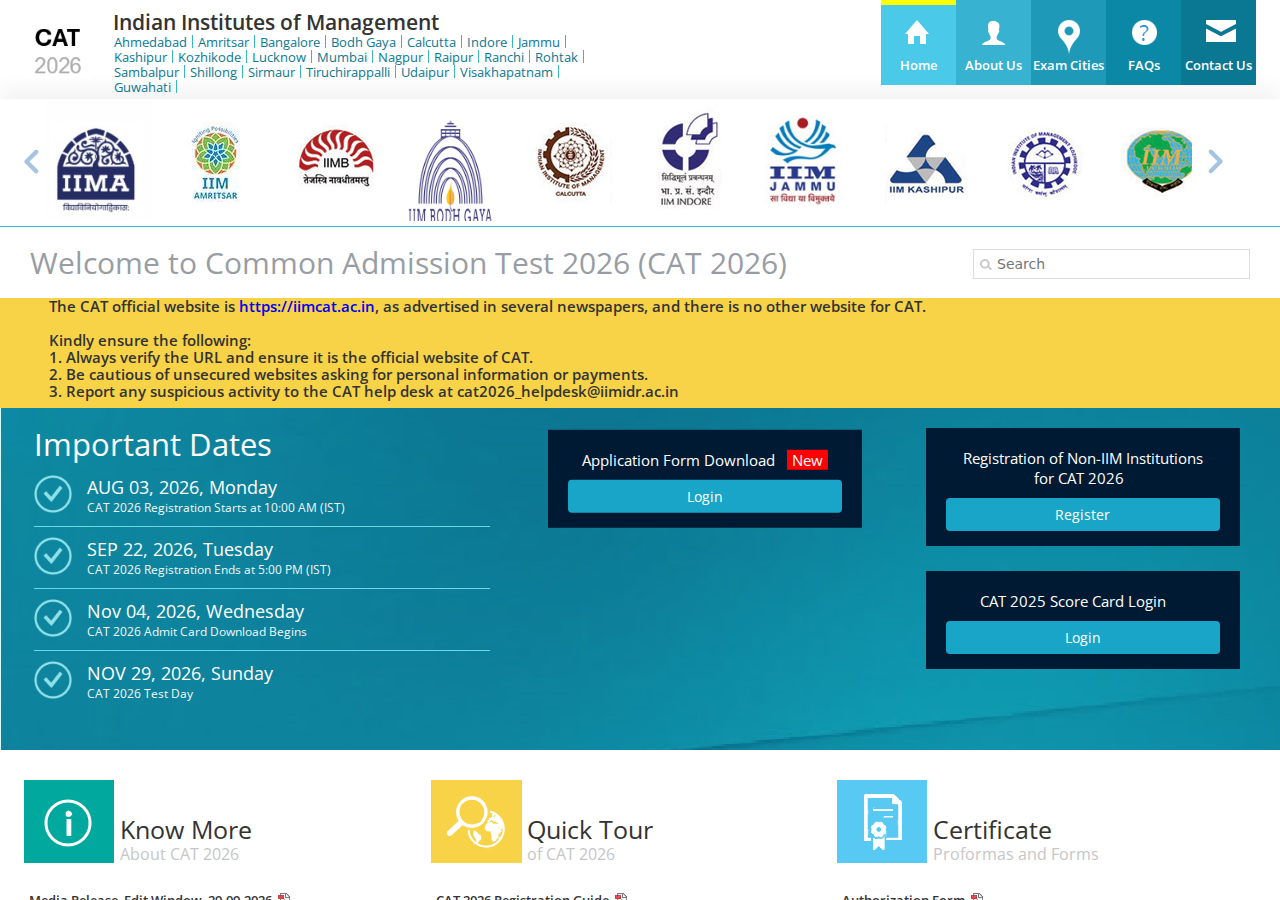
With the Common Admission Test (CAT) 2026 examination less than five weeks away, the Indian Institutes of Management (IIMs) have provided detailed preparation strategies and tips for managing exam-related stress. The national-level computer-based entrance examination, conducted by IIM Indore this year, is scheduled for 29 November 2026.
Lakhs of aspirants across India compete annually for admission to top B-schools, including the IIMs. The examination evaluates logical thinking, problem-solving abilities, reading comprehension, numerical aptitude, and the capacity to manage time and perform under pressure. Amidst intense competition, managing preparation and stress effectively is crucial for candidates.
CAT 2026 Examination Structure and Key Dates
The CAT 2026 examination will feature a total duration of 120 minutes, with 40 minutes allocated for each of the three sections: Verbal Ability and Reading Comprehension (VARC), Data Interpretation and Logical Reasoning (DILR), and Quantitative Aptitude (QA). The recent CAT exam structure used 68 questions in total, with a marking scheme of +3 for a correct answer and -1 for an incorrect Multiple Choice Question (MCQ).
Registration for CAT 2026 commenced on 3 August 2026 and concluded on 22 September 2026. Application corrections were supported between 5–6 October 2026. Admit cards are announced for 4 November 2026, and results are anticipated in December 2026. Candidates generally require a bachelor’s degree with at least 50% marks or equivalent CGPA for eligibility.
| Event | CAT 2026 Date | Official Status |
|---|---|---|
| Official Status Notification | July 2026 | Released |
| Registration opens | 3 August 2026 | Confirmed |
| Registration deadline | 22 September 2026 | Closed |
| Application correction | 5–6 October 2026 | Closed |
| Admit card | 4 November 2026 | Announced |
| CAT examination | 29 November 2026 | Confirmed |
| Result | December 2026 | Exact date to be confirmed |
| Section | Questions | Time Limit | Maximum Marks |
|---|---|---|---|
| VARC | 24 | 40 minutes | 72 |
| DILR | 22 | 40 minutes | 66 |
| QA | 22 | 40 minutes | 66 |
| Total | 68 | 120 minutes | 204 |
Preparation Strategies and Mock Test Importance
Experts recommend an ideal preparation time of 6–12 months for the CAT exam, with a daily study commitment of 3–6 hours. Aspirants should aim to complete at least 30-40 mock tests before the examination to familiarise themselves with the exam pattern and time management. In the final month leading up to the exam, the focus should shift to revision and avoiding new topics.
A balanced study routine includes 4-5 hours of daily study, incorporating breaks every 60-90 minutes. Many aspirants experience gaps in their syllabus coverage, particularly in DILR, but mock-driven improvement within 6-8 weeks is common. The quality of study is a lot highlighted as more important than the sheer quantity of hours.
| Phase | Dates | Main Focus | Key Milestone |
|---|---|---|---|
| Phase 1: Diagnose and Repair | 1-14 Oct | Diagnostic mock, fix fixable topics, daily RC and DILR sets | Error log created, weak topics decided |
| Phase 2: Build Mock Rhythm | 15-31 Oct | 2 mocks per week, sectional tests, deep analysis | Accuracy rising, section strategy set |
| Phase 3: Peak Practice | 1-15 Nov | 2-3 mocks per week, strict analysis, targeted revision | Stable score range across mocks |
| Phase 4: Sharpen and Taper | 16-25 Nov | Lighter mocks, revision of formulas and error log | Confidence and routine locked in |
| Phase 5: Calm Countdown | 26-28 Nov | Light revision, logistics, sleep | Rested mind, checklist ready |
| Exam Day | 29 Nov | Execute your strategy | Trust your preparation |
Managing Exam Stress and Psychological Demands
The final 30 days before the CAT exam are psychologically demanding, with many aspirants experiencing panic and burnout. Experts advise incorporating meditation, mindful breathing, adequate sleep, and relaxing activities to manage exam stress. A consistent sleep schedule of 6-7 hours nightly is recommended, along with physical activity such as short walks or light exercise to reduce mental stress.
It is common for aspirants to feel behind in preparation due to comparing their progress with others. Anxiety can distort perception, making a friend’s high mock score seem like a personal failure. However, the CAT exam is relative, meaning a hard paper lowers everyone’s scores, and candidates compete against the difficulty of the paper and the pool, not just individual scores. Toppers’ stories often lack context, such as years of reading habits or strong academic backgrounds.
| Period | Main focus | What to avoid |
|---|---|---|
| Days 30-22 | Two mocks, error-log repair, sectional tests | Starting untouched topics |
| Days 21-14 | Past CAT papers and weak-section drills | Comparing raw mock scores daily |
| Days 13-7 | Strategy lock-in and light revision | Changing attempt order suddenly |
| Final 6 days | Sleep, formulas, marked RC errors, admit card checks | Full-length mock overload |
Next Steps for Aspirants
Aspirants are advised to check the official CAT website, iimcat.ac.in, for admit card instructions, test-day rules, reporting time, and the official mock interface as soon as the admit card is available. You can’t ignore to print the admit card and verify photo ID requirements. Visiting or mapping the test centre route in advance is also recommended. For at least three days before the exam, candidates should align their sleep schedule with the actual exam slot to ensure a rested mind on test day.
Further reading

📰 More Education News
- NIA recruitment 2026 notification out for 168 deputation posts: apply by 20 DecemberOct 25, 2026 • Nishit Kumar
- KSLU semester results: Apply for revaluation within 15 days of Oct 19, 2026Oct 25, 2026 • Nishit Kumar
- OSSSC recruitment 2026: apply for 7,268 uniformed services posts by 12 NovemberOct 25, 2026 • Nishit Kumar
- KSET 2026 revised answer keys released for 28 subjects, 24 grace marks across 10 subjectsOct 25, 2026 • Nishit Kumar