JEE Advanced 2026: Register by April 23; Aim for top 120 rank for IIT Delhi CSE
In short
- Registration for the JEE Advanced 2026 examination is scheduled to commence on April 23, 2026.
- The JEE Advanced 2026 exam will be conducted on May 17, 2026, for eligible candidates.
- Candidates aiming for IIT Delhi's B.Tech CSE program are advised to target a rank within the top 120 in the JEE Advanced All India Rank list.
- Securing a position within the top 120 ranks typically requires obtaining at least 250-290 marks out of 360 in the JEE Advanced examination.
- Final admission offers to IIT Delhi's B.Tech programs, including CSE, are processed through JoSAA counselling.
Candidates aspiring for admission to the Indian Institute of Technology Delhi‘s Computer Science and Engineering (CSE) program in the 2026 academic year will need to secure a top rank in the JEE Advanced 2026 examination. The JEE Advanced 2026 exam is scheduled for May 17, 2026, with registration opening on April 23, 2026.
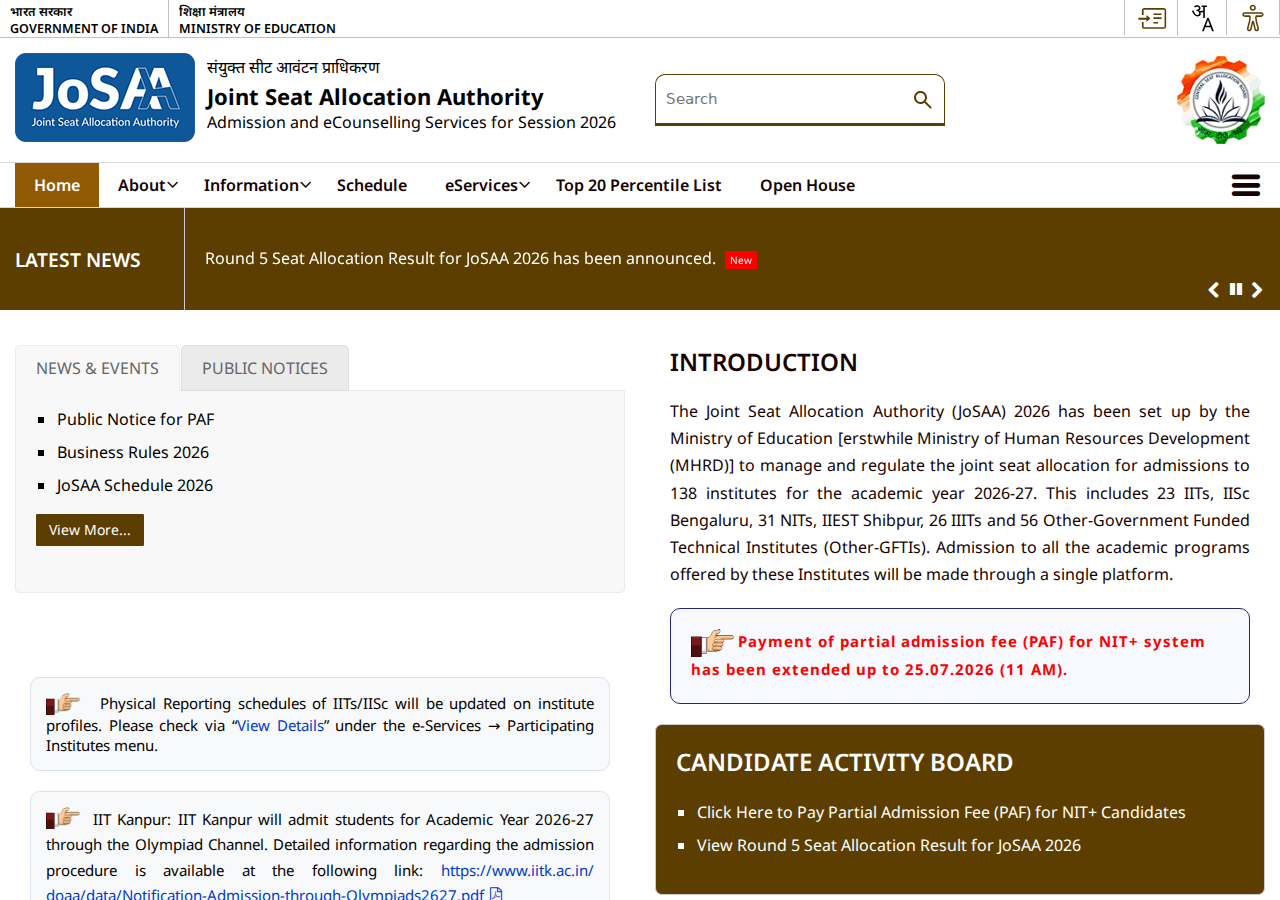
Admission to all B.Tech programs at IIT Delhi, a premier institution consistently ranked among India’s top engineering institutions, is exclusively based on JEE Advanced 2026 ranks. This follows qualification in JEE Main and ranking among the top 2.5 lakh candidates to be eligible for JEE Advanced.
JEE Advanced 2026 Eligibility and Key Dates
To be eligible for JEE Advanced 2026, candidates must for starters qualify in JEE Main and rank among the top 2.5 lakh aspirants. The registration window for JEE Advanced 2026 will open on April 23, 2026, and the examination itself is slated for May 17, 2026. Final admission offers are made through the Joint Seat Allocation Authority (JoSAA) counselling process, accessible via josaa.nic.in.
The JEE Advanced examination is a critical step for entry into IIT Delhi, which offers 15 flagship specializations, including Computer Science, Electrical, and Mathematics & Computing. The official JEE Advanced 2026 marks vs. rank relationship will be published after the exam, with aspirants currently relying on predictive models based on 2024–25 JoSAA rank-score data.
IIT Delhi CSE Cutoff and Required Marks
The Computer Science and Engineering (CSE) branch at IIT Delhi is consistently the most preferred course among top JEE Advanced rank holders, leading to intense competition. To secure admission to IIT Delhi CSE, candidates generally need to be within the top 120 qualified candidates in the JEE Advanced All India Rank (AIR) list. This typically translates to securing at least 250–290 marks out of 360, unless the 2026 paper is unusually difficult.
The IIT Delhi CSE cutoff for 2025 was 125, and the 2026 cutoff is projected to remain the most competitive seat in the entire JoSAA system. For general category, gender-neutral seats, an expected score of 280+ marks is needed to achieve an approximate CRL rank of 140 or below. The previous years’ trends for IIT Delhi CSE cutoff ranks show consistent competition, as detailed below:
| Year | Cutoff Rank (Round 1) | Cutoff Rank (Round 2) | Cutoff Rank (Round 3) | Cutoff Rank (Round 4) | Cutoff Rank (Round 5) | Cutoff Rank (Round 6) |
|---|---|---|---|---|---|---|
| 2023 | 115 | 118 | 118 | 118 | 118 | 118 |
| 2022 | 102 | 102 | 102 | 102 | 102 | 102 |
| 2021 | 99 | 100 | 100 | 100 | 100 | 100 |
| 2020 | 104 | 105 | 105 | 105 | 105 | 105 |
| 2019 | 93 | 93 | 93 | 93 | 93 | 93 |
| 2018 | 100 | 100 | 100 | 100 | 100 | 100 |
| 2017 | 103 | 104 | 104 | 104 | 104 | 104 |
| 2016 | 111 | 115 | 115 | 115 | 115 | 115 |
The difficulty of the JEE Advanced paper significantly impacts cutoff ranks. In challenging years like 2016 and 2022, a top-200 rank was achievable with 190–210 marks. Conversely, moderate papers in 2023–2024 required 255–270 marks for a top-500 rank. A 5-mark swing in the 200–240 mark zone can shift a rank by 500–800 positions, while every 10-mark improvement in the 220–280 range typically translates to a 700–1,200 rank jump.
Category-Wise Cutoffs and Seat Matrix
IIT Delhi offers approximately 880–920 undergraduate seats across all programs, with 99 seats allocated for Computer Science and Engineering. Under IIT’s female supernumerary scheme, an additional 14% of seats are available above the regular intake. The female supernumerary CSE seat at IIT Delhi can close anywhere between rank 380–520. For SC and ST candidates, entry into lower-preference branches can be secured with scores as low as 70–90 marks, though core engineering branches like Electrical or Mechanical require higher marks.
The expected safe scores for CSE admission vary by category. For OBC-NCL candidates, a safe score of 235+ marks is projected for an approximate OBC rank of 300 or below. EWS candidates may target 225+ marks for an EWS rank of 350 or below. SC candidates are advised to aim for 130+ marks for an SC rank of 350 or below, and ST candidates 110+ marks for an ST rank of 250 or below.
| Category | Cutoff Ranks |
|---|---|
| General | 118 |
| EWS | 34 |
| OBC | 105 |
| SC | 49 |
| ST | 24 |
| PwD | 9 |
| Branch | Seats (Gender Neutral+Female) |
|---|---|
| Biotechnology and Biochemical Engineering | 60 |
| Chemical Engineering | 75 |
| Civil Engineering | 110 |
| Computer Science and Engineering | 99 |
| Electrical Engineering | 110 |
| Electrical Engineering (Power and Automation) | 54 |
| Engineering Physics | 63 |
| Mathematics and Computing | 89 |
| Mechanical Engineering | 85 |
| Production and Industrial Engineering | 83 |
| Engineering and Computational Mechanics | 40 |
| Materials Engineering | 40 |
| Energy Engineering | 40 |
Fee Structure and Concessions
The estimated total fee for the B.Tech program at IIT Delhi for the academic year 2026–2026 is approximately INR 8.63 lakh. The tuition fee alone accounts for INR 8 Lakhs for General and OBC category students. However, SC/ST/PwD students are exempt from paying tuition fees. EWS and OBC-NCL candidates may also receive partial tuition fee waivers as per government norms. Additionally, fee concessions may be provided to students with a family income below INR 1 lakh or INR 5 lakh per annum under specific conditions.
For securing admission, the seat acceptance fee is INR 35,000 for General/OBC candidates and INR 15,000 for SC/ST/PwD candidates.
Steps for IIT Delhi B.Tech CSE Admission
Admission to all B.Tech programs at IIT Delhi, including Computer Science and Engineering (CSE), is exclusively based on ranks secured in the JEE Advanced 2026 examination. To be eligible for JEE Advanced 2026, candidates must first qualify in JEE Main and rank among the top 2.5 lakh aspirants. The registration window for JEE Advanced 2026 is scheduled to open on April 23, 2026, with the examination itself slated for May 17, 2026.
Following the JEE Advanced examination, final admission offers for IIT Delhi’s B.Tech programs are made through the Joint Seat Allocation Authority (JoSAA) counselling process, which is accessible via josaa.nic.in. The official JEE Advanced 2026 marks versus rank relationship will be published after the exam, with aspirants currently relying on predictive models based on 2024–25 JoSAA rank-score data. IIT Delhi offers 15 flagship specializations, including Computer Science, Electrical, and Mathematics & Computing.
- Appear for JEE Main 2026 and rank among the top 2.5 lakh to be eligible for JEE Advanced.
- Clear the JEE Advanced 2026 exam by meeting or exceeding the required cutoff score.
- Register for JoSAA Counselling 2026 at josaa.nic.in.
- Fill in IIT Delhi and preferred branches, particularly Computer Science and Engineering, in the choice filling section.
- Confirm admission by accepting the allotted seat, submitting the seat acceptance fee, and completing document verification.
Further reading

📰 More Education News
- CAT 2026 vs GMAT Focus edition: key differences for management aspirantsOct 12, 2026 • Nishit Kumar
- AP Intermediate English question paper 2026: theory exams conclude March 24Oct 12, 2026 • Nishit Kumar
- CBSE Board Exams 2027 date sheet expected in October; 45 lakh students await scheduleOct 12, 2026 • Nishit Kumar
- IIT JAM 2027 application form submission checklist released; apply by October 19Oct 12, 2026 • Nishit Kumar