NIFT 2027 entrance exam: sketching and coloring questions in CAT carry highest weightage
In short
- B.Des and M.Des applicants for NIFT 2027 must attempt the Creative Ability Test (CAT), which includes sketching and coloring questions.
- The NIFT CAT paper, an offline pen-and-paper test, typically carries the highest individual weightage in the B.Des merit list at 50% and 40% for M.Des.
- NIFT 2027 registration is tentatively scheduled for December 2026, with Stage 1 of the entrance exam expected in February 2027.
- The CAT exam is 3 hours long and usually contains around 3 drawing questions, often paired with a short written explanation.
B.Des and M.Des applicants preparing for the NIFT 2027 entrance exam will encounter sketching and coloring questions as a significant component of the Creative Ability Test (CAT). This section is designed to assess a candidate’s ability, creativity, observation, composition, and storytelling skills, according to information from the National Testing Agency (NTA).
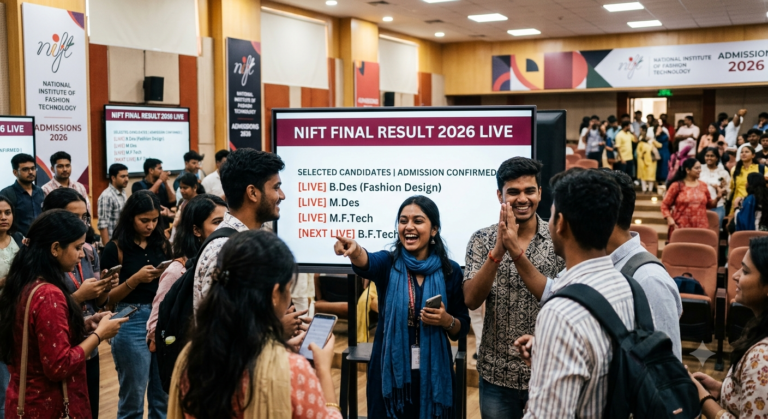
The NIFT CAT paper typically carries the highest individual weightage in the B.Des merit list at 50% and 40% for M.Des, making proficiency in these areas crucial for aspirants. NIFT 2027 registration is tentatively set for December 2026, with Stage 1 of the entrance exam expected around February 2027.
Role of Sketching and Coloring in Design Entrance Exams
Sketching and coloring questions are a common question type across various design entrance exams, including NIFT, NID, CEED, and UCEED. This section evaluates creative thinking, knowledge of proportion and perspective, the ability to express emotions and ideas, and understanding of color theory and composition. Topics for these questions can range from daily life observation scenes and storyboarding to product design and scene transformation.
For NIFT, these drawing questions are part of the Creative Ability Test (CAT), an offline, pen-and-paper test administered in Stage 1 of the entrance exam. The NIFT CAT specifically tests idea generation, observation, visualization, composition, and the creative use of color. B.Des and M.Des applicants are required to attempt the CAT, while B.FTech and MFM applicants appear for the General Ability Test (GAT) only.
NIFT CAT Structure and Weightage for 2027
The NIFT CAT paper is a 3-hour exam that usually contains approximately three drawing questions, often requiring a short written explanation for at least one. These questions are creative briefs rather than multiple-choice objective questions, with the three drawing questions typically totaling 100 marks. The drawing questions in NIFT may involve object transformation, scene creation, storyboarding, perspective drawing, or designing a product with a specific purpose.
NIFT’s entrance exam has two stages: Stage 1 comprises the GAT (a computer-based aptitude test) and the CAT. Only candidates who clear both the CAT and GAT are eligible to proceed to Stage 2, which involves a Situation Test (making a 3D model) for B.Des applicants and a Personal Interview for M.Des applicants.
| Component | B.Des Weightage | M.Des Weightage |
|---|---|---|
| CAT (Drawing) | 50% | 40% |
| GAT | 30% | 30% |
| Situation Test / PI | 20% (Situation Test) | 30% (Personal Interview) |
As the table indicates, the CAT drawing paper holds significant weightage in the overall result for both B.Des and M.Des programs. The CAT and GAT papers are conducted on the same day.
Skills Assessed and Preparation for Design Exams
Design entrance exams, including NIFT, assess a broad range of skills beyond mere artistic ability. While sketching matters, creativity, observation, visualization, problem-solving, and the effective communication of ideas are equally or more important. For instance, NID preparation traditionally emphasizes observation, visualization, creativity, and problem-solving. UCEED, but then, may require analytical thinking on top of visual and creative abilities, including logical reasoning, spatial understanding, and problem-solving.
Basic sketching skills can be improved with regular practice to enhance drawing speed, improve proportions, understand perspective, draw human figures, visualize objects, create compositions, and effectively show actions and emotions. Aspirants are advised to practice sketching daily, including various objects and public scenes, and to solve past-year CAT questions under timed conditions. Developing observation skills, learning the principles of composition, and understanding the A-B-C of geometrical shapes are also recommended steps for preparation.
| Program | CAT (Drawing)? | GAT? | Stage 2 |
|---|---|---|---|
| B.Des (Bachelor of Design) | ✅ Yes | ✅ Yes | Situation Test |
| M.Des (Master of Design) | ✅ Yes | ✅ Yes | Personal Interview |
| B.FTech (Bachelor of Fashion Technology) | ❌ No | ✅ Yes | – |
| M.FTech (Master of Fashion Technology) | ❌ No | ✅ Yes | Personal Interview |
| MFM (Master of Fashion Management) | ❌ No | ✅ Yes | Personal Interview |
Candidates should verify the current weightage for NIFT 2027 on nift.ac.in or the NTA NIFTEE portal before finalizing their strategy. Regular feedback from mentors or online design communities and exploring different mediums like pencil, pen, color pencils, and markers can also aid in preparation.
Further reading

📰 More Education News
- TNPSC Group 1 answer key 2026 expected shortly, check download steps and objection detailSep 28, 2026 • Nishit Kumar
- Canara Bank apprentice recruitment 2026: apply for 3,500 posts by October 17Sep 28, 2026 • Nishit Kumar
- MH BSc Nursing CAP Round 2 allotment out: physical joining by 29 SeptemberSep 28, 2026 • Nishit Kumar
- JEE Main 2027 admit card download: common issues and solutions for aspirantsSep 28, 2026 • Nishit Kumar