B.Sc after Courses in 2026: Full List, Eligibility, Fees, Scope & Salary
For B.Sc. graduates in India by 2026, entry-level salaries can range from ₹3,00,000 to ₹6,00,000 annually, particularly in high-demand fields like Data Analytics or Biotechnology. Securing these roles often requires a 3-year degree with strong foundational skills in relevant specializations. Understanding the specific eligibility and fee structures for advanced courses is crucial for maximizing career potential.
Top Job-Oriented Programs for B.Sc. Graduates 2026
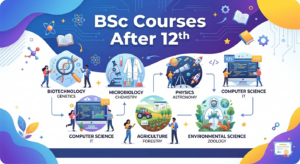
A B.Sc. offers more career choices than ever before, with companies in pharma, biotech, data analytics, healthcare, and fintech actively hiring science graduates. This section explores popular B.Sc. specializations and the diverse career options available, highlighting promising paths for immediate employment.
| Specialization | Duration | Career Scope |
|---|---|---|
| Physics | 3 years | Research Scientist, Lab Technician, Data Analyst, Teaching; Career options after BSC Physics are also promising in space science and technology sectors. |
| Chemistry | 3 years | Lab Analyst, Quality Control Officer, Pharmaceutical Research. After BSC chemistry career options include work in industries like pharma, food tech, and environmental science. |
| Computer Science | 3 years | Software Developer, AI Specialist. Career options after BSC computer science are growing in IT, cybersecurity, and AI fields. |
| Biology/Biotechnology | 3 years | Research Associate, Biotech Analyst, Environmental Scientist, Lab Technician. |
| Mathematics/Statistics | 3 years | Data Analyst, Statistician, Actuarial Scientist, Operations Research Analyst. |
| Environmental Science | 3 years | Environmental Consultant, Sustainability Analyst, Researcher. |
This table illustrates the broad range of career opportunities available across various B.Sc. specializations, from traditional scientific roles to emerging fields like data analytics and AI.
Pursuing an M.Sc. After Your B.Sc.: Options and Requirements 2026
An M.Sc. is the most common path for B.Sc. graduates seeking deeper subject knowledge and long-term academic or research careers. This postgraduate degree, typically lasting two years, deepens expertise for roles like research scientist or in government institutes, offering a clear pathway to PhD and higher positions.
| Course | Duration | Avg. Salary (LPA) | Key Career Paths | Some Specializations/Focus |
|---|---|---|---|---|
| M.Sc (Master of Science) | 2 years | ₹3–6 LPA | Research Scientist, Academic roles, Government research institutes (DRDO, CSIR, ICMR), Pathway to PhD | Computer Science, Physics, Chemistry, Environmental Sciences, Mathematics |
| M.Sc Environmental Sciences | 2 years | ₹3–7 LPA | Environmental Consultant, Policy Analyst, Roles in NGOs, government agencies, consultancy | Ecology, Toxicology, Climate Science |
| M.Sc (Physics/Chemistry/Biology Specialization) | 2 years | ₹3–6 LPA | Lab Head, Analytical Chemist, Foundation for specialized roles (e.g., spectroscopist, crystallographer), Pathway to higher studies (MPhil, PhD) | Advanced theoretical and experimental skills in Physics, Chemistry, Biology |
The table highlights various M.Sc. specializations, their durations, and salary expectations, demonstrating the diverse career opportunities available for students pursuing these bsc after courses. It underscores the program’s suitability for deep specialization and academic pursuits.
Professional Certifications for Science Graduates: Data Science, MBA & More
Choosing the right postgraduate or certification program is crucial to unlock lucrative opportunities and achieve career goals. This guide explores high-demand options, including MBA, MCA, M.Sc, and various professional certifications tailored to different fields.
An MBA is a highly versatile option for B.Sc. graduates seeking to develop essential business skills and leadership qualities.
- Overview: A lucrative, versatile option for essential business skills, strategic thinking, leadership, and networking.
- Course Duration: 1-2 years (full-time or part-time options available).
- Eligibility Criteria: Bachelor’s degree (B.Sc. or any stream) with minimum percentage.
- Fees: A few lakhs to upwards of 15 lakhs, depending on B-school.
MBA programs offer diverse specializations and lead to various management roles.
| Type/Specialization | Job Opportunities |
|---|---|
| MBA in Marketing, Business Analytics, FinTech, Operations & Supply Chain Management, Finance, Digital Marketing & Transformation, Retail Management & Marketing, International Business, Human Resource Management, Financial Markets | Management Consultant, Marketing Manager, Product Manager, Business Development Manager, Project Manager |
These specializations and job roles highlight the broad career paths available with an MBA degree.
For B.Sc. graduates with a passion for technology, the Master of Computer Application (MCA) offers advanced skills for a thriving IT career.
- Overview: Excellent move for tech enthusiasts, providing advanced skills and industry exposure for an IT career.
- Course Duration: 2-3 years.
- Eligibility Criteria: Degree in Mathematics, Computer Science, Statistics, or Electronics (Class 12th requirement).
- Fees: Rs.20,000 to 3 Lakhs for the entire program.
- Job Opportunities: Software Developer, System Analyst, Database Administrator, Web Developer, Data Analyst, Network Administrator.
A Master of Science (M.Sc) provides specialized knowledge within scientific fields, opening doors to careers in academia, industry, and research.
- Overview: Specialized knowledge and professional possibilities in science, preparing for academia, industry, research, entrepreneurship.
- Course Duration: 2 years (full-time) in India, though some programs may vary.
- Eligibility Criteria: A B.Sc. degree in a relevant scientific field is mandatory.
- Fees: Rs.10,000 to Rs.5 Lakhs for the entire program.
- Job Opportunities: Research Scientist, Data Analyst, Biotechnologist, Environmental Consultant, Science Educator.
- Top Specializations: Online MSc In Mathematics, Data Science, AI and ML, Business Analytics, Statistics.
The Bachelor of Education (B.Ed) is an excellent choice for B.Sc. graduates passionate about teaching and shaping future generations.
- Overview: Ideal for those passionate about teaching, providing essential skills, effective methods, and practical experience.
- Course Duration: 2 years full-time, with part-time or distance learning options.
- Eligibility Criteria: Bachelor’s degree from recognized university, minimum aggregate, qualifying entrance exam score.
- Fees: May vary by institute, location, and format, ranging from affordable to moderate.
- Job Opportunities: Primary School Teacher, Secondary School Teacher, Special Education Teacher, Vocational Training Instructor, Educational Administrator.
Data Science stands out as a top bsc after courses option in today’s data-driven world, offering competitive salaries and continuous learning.
- Overview: A standout choice in our data-driven era, offering many career opportunities, competitive salaries, and continuous learning.
- Course Duration: M.Sc. in Data Science lasts 1-2 years; certificate courses are shorter.
- Eligibility Criteria: Degree in any discipline (Math, Physics, Stats, CS, etc.). Some require additional courses.
- Fees: Varies by institution, but the earning potential makes it a worthwhile investment.
- Job Opportunities: Data Analyst, Machine Learning Engineer, Business Analyst.
Machine Learning programs offer exciting opportunities to solve complex problems and develop new ideas using cutting-edge technology.
- Overview: A top choice offering exciting job opportunities, good salaries, and chances to solve problems.
- Course Duration: ML programs can vary but last 1-2 years depending on institute and format.
- Job Opportunities: Deep Learning Engineer, Data Scientist, Machine Learning Engineer, Computer Vision Engineer.
Law is a dynamic and bold career path for B.Sc. students with strong communication skills and a desire to contribute to society.
- Overview: A dynamic field and a bold choice for science students with strong communication skills and a desire to contribute.
- Job Opportunities: Independent law practice, advocate, control office.
For creative B.Sc. graduates, Animation and Multimedia offers a pathway to visual storytelling and design in a high-demand industry.
- Overview: Perfect for those passionate about visual storytelling, design, and creativity, with rising demand.
- Job Opportunities: 2D/3D Animator, Graphic Designer, UI/UX Designer, Video Editor, Multimedia Developer.
Digital Marketing is ideal for individuals aiming to excel in online marketing and advertising, a crucial skill for modern businesses.
- Overview: Designed for individuals who want to excel in online marketing and advertising.
- Job Opportunities: Digital Marketing Manager, Search Engine Optimisation (SEO) Specialist, Content Marketing Manager, Social Media Manager, PPC (Pay-Per-Click) Specialist.
An M.Sc in Nutrition and Dietetics is an excellent choice for B.Sc. graduates interested in promoting health and well-being.
- Overview: An excellent choice for those interested in promoting health and well-being through dietary choices.
- Job Opportunities: Clinical Dietitian, Sports Nutritionist, Community Nutritionist, Food Product Developer, Nutrition Consultant.
Beyond traditional degrees, several professional certifications offer specialized skills for rapid career advancement.
- Other Professional Certifications: AI, Biotechnology, Cybersecurity, Executive Diploma in Machine Learning and AI, Professional Certificate Program in Cloud Computing and DevOps, AI-Driven Full-Stack Development Bootcamp.
People Also Read

Selecting the Ideal Path Post-B.Sc. for Your Career Goals 2026
Choosing the right educational or professional path after your B.Sc. in 2026 depends on several key factors, including your personal interests, desired work environment, and how quickly you aim to start working. This section outlines a structured approach to help B.Sc. graduates make informed decisions about their future.
- Step 1: Identify interests and desired work environment, understanding strengths for bsc after courses.
- Step 2: Consider your desired timeline for starting work after your B.Sc. degree.
- Step 3: Explore career paths: higher studies, teaching/research, analytics/tech, or government exams.
- Step 4: Evaluate specific course options like M.Sc., MCA, MBA, or B.Ed. against your career goals.
Frequently Asked Questions
What are the most in-demand B.Sc specializations expected to offer high salaries in India by 2026?
By 2026, B.Sc specializations in Data Science, Artificial Intelligence, Cybersecurity, and Biotechnology are projected to offer the highest salaries, with entry-level packages ranging from INR 4.5 LPA to INR 8 LPA depending on the institution and specific role.
Can I pursue a B.Sc after completing a Diploma in Engineering, and what are the common pathways?
Yes, many universities offer lateral entry into the second year of B.Sc programs for Diploma holders, particularly in fields like Computer Science, IT, and Electronics. This allows for a quicker completion of the degree.
What are the typical fees for a B.Sc program in India in 2026, considering both government and private institutions?
In 2026, annual fees for B.Sc programs in government colleges are expected to range from INR 15,000 to INR 60,000, while private institutions may charge between INR 70,000 and INR 2.5 Lakhs per annum.
Beyond traditional science roles, what unconventional career paths can a B.Sc graduate explore in India by 2026?
B.Sc graduates in 2026 can explore unconventional roles such as scientific journalism, technical writing, patent analysis, and even entrepreneurship in science-based startups, leveraging their analytical and research skills.
How crucial is practical experience and internships for B.Sc graduates to enhance their employability and salary prospects in 2026?
Practical experience and internships are extremely crucial; they significantly boost employability and can lead to 15-25% higher starting salaries. Many employers prioritize candidates with hands-on project work and industry exposure.
Related Reading
{“@context”: “https://schema.org”, “@type”: “FAQPage”, “mainEntity”: [{“@type”: “Question”, “name”: “What are the most in-demand B.Sc specializations expected to offer high salaries in India by 2026?”, “acceptedAnswer”: {“@type”: “Answer”, “text”: “By 2026, B.Sc specializations in Data Science, Artificial Intelligence, Cybersecurity, and Biotechnology are projected to offer the highest salaries, with entry-level packages ranging from INR 4.5 LPA to INR 8 LPA depending on the institution and specific role.”}}, {“@type”: “Question”, “name”: “Can I pursue a B.Sc after completing a Diploma in Engineering, and what are the common pathways?”, “acceptedAnswer”: {“@type”: “Answer”, “text”: “Yes, many universities offer lateral entry into the second year of B.Sc programs for Diploma holders, particularly in fields like Computer Science, IT, and Electronics. This allows for a quicker completion of the degree.”}}, {“@type”: “Question”, “name”: “What are the typical fees for a B.Sc program in India in 2026, considering both government and private institutions?”, “acceptedAnswer”: {“@type”: “Answer”, “text”: “In 2026, annual fees for B.Sc programs in government colleges are expected to range from INR 15,000 to INR 60,000, while private institutions may charge between INR 70,000 and INR 2.5 Lakhs per annum.”}}, {“@type”: “Question”, “name”: “Beyond traditional science roles, what unconventional career paths can a B.Sc graduate explore in India by 2026?”, “acceptedAnswer”: {“@type”: “Answer”, “text”: “B.Sc graduates in 2026 can explore unconventional roles such as scientific journalism, technical writing, patent analysis, and even entrepreneurship in science-based startups, leveraging their analytical and research skills.”}}, {“@type”: “Question”, “name”: “How crucial is practical experience and internships for B.Sc graduates to enhance their employability and salary prospects in 2026?”, “acceptedAnswer”: {“@type”: “Answer”, “text”: “Practical experience and internships are extremely crucial; they significantly boost employability and can lead to 15-25% higher starting salaries. Many employers prioritize candidates with hands-on project work and industry exposure.”}}]}
When are B.Sc. admissions open for the 2026 academic session?
B.Sc. applications are open for the 2026 academic session, with some applications open until June 29, 2026. Admissions are currently open in multiple universities for the Bachelor of Science course.
Which universities are offering B.Sc. admissions for the 2026 session?
Multiple universities are offering B.Sc. admissions for the 2026 session, including Maharishi Dayanand University, Chaudhary Devi Lal University, Jadavpur University, Sai University, and UPES.
What key skills does a B.Sc. course help students develop?
A B.Sc. course helps students develop essential skills such as critical thinking, problem-solving, and technical skills. These are crucial for academic and professional growth.