Courses after B.Sc CS in 2026: Full List, Eligibility, Fees, Scope & Salary
For BSc CS graduates in India, pursuing a PG Certificate in Agentic AI & Machine Learning can lead to salaries up to ₹38 LPA by 2026, with the program typically lasting 11 months. This specialized training is crucial for securing high-demand roles like AI and machine learning engineer.
Top PG and Certification Programs for Computer Science Graduates
For BSc CS graduates, pursuing postgraduate (PG) and certification programs is crucial for career advancement, especially given the projected 11.5 million data roles by 2026. This section details various top courses, their durations, and potential career paths to guide your decision-making.
| Course | Duration | Avg. Salary (LPA) | Key Career Paths |
|---|---|---|---|
| MCA (Computer Applications) | 2 yrs | 4–10 | Software Engineer, Systems Analyst |
| PG Diploma (Data Science) | 1–2 yrs | 8–20 | Data Analyst, Data Scientist |
| Digital Marketing Certification | 3–6 mon | 3–4.5 | SEO Specialist, Social Media Manager |
| PG Certificate in Agentic AI & Machine Learning | 11 mon | Upto ₹38 LPA for AI professionals in India | AI and machine learning engineer, and similar roles |
| PMP Certification | 3–5 days | 12.5 (4.2–28) | Project Manager, Program Manager |
The table illustrates a diverse range of postgraduate and certification courses after BSc CS, from comprehensive Master’s degrees like MCA to specialized certifications. These options offer varied durations and significant salary potential, particularly in high-demand fields like Data Science and AI.
High-Demand Specializations: AI, Data Science, Cybersecurity
AI, Data Science, and Cybersecurity are trending, high-paying, and impressive specializations for computer science graduates, offering excellent scope and high salaries in India. Many pursue various programs, including short-term options and master’s degrees, to enter these high-demand fields.
| Parameter | AI / ML | Data Science | Cybersecurity |
|---|---|---|---|
| Core Focus | Intelligent systems & automation | Data analysis & business insights | Digital protection & threat response |
| Maths Intensity | Very High | High | Moderate |
| Primary Programming Languages | Python, C++, Julia | Python, R, SQL | Python, Bash, C |
| Key Tools & Frameworks | TensorFlow, PyTorch, Keras | Spark, Tableau, Pandas, Power BI | Kali Linux, Metasploit, Wireshark, Splunk |
| Industries Hiring | Healthcare, Finance, Automotive, Tech | All industries (most versatile) | Defense, BFSI, Government, Tech |
| Fresher Salary Range (India) | ₹8 – 14 LPA | ₹7 – 12 LPA | ₹6 – 11 LPA |
| Global Demand | Highest | Very High | High (but lowest supply) |
| Government / Defense Career Paths | Limited | Limited | CERT-In, NIC, DRDO, Defense |
| Top Global Employers | Google, OpenAI, Microsoft, Meta, NVIDIA | Amazon, McKinsey, Walmart, Accenture | Palo Alto Networks, CrowdStrike, Deloitte |
| Best Higher Studies Options | M.Tech. AI, MS CS, PhD | M.Tech. DS, MBA Analytics, MS Statistics | M.Tech. InfoSec, Forensics, CISSP track |
This table highlights the distinct characteristics, technical requirements, and career paths for AI/ML, Data Science, and Cybersecurity, showcasing their diverse opportunities and strong demand across various sectors.
MCA vs PGDCA: Detailed Overview
This section covers MCA vs PGDCA: Detailed Overview with the key figures and details from the latest verified sources.
People Also Read

M.Sc. Programs for Computer Science Graduates: Specializations & Colleges
After completing a BSc in Computer Science, students have diverse M.Sc. programs available to further their education. These postgraduate options offer specialized knowledge in various computing fields, with M.Sc. Computer Science being the most common choice for advanced studies.
| Course | Duration | Course Fees (INR) | Salary Scale (INR LPA) |
|---|---|---|---|
| M.Sc. Computer Science | 2 years | 30,000 – 350,000 | 6.6 – 9 |
| M.Sc. Biochemistry | 2 years | 5,000 – 400,000 | 2 – 3.8 |
| Masters of Computer Applications (MCA) | 2 years | 200,000 – 500,000 | 4 – 7 |
| MBA in Information Technology | 2 years | 1,500,000 – 2,300,000 | 10 – 12 |
This table highlights key details for popular M.Sc. and related postgraduate courses, showing variations in fees and potential salary scales across different specializations.
Several M.Sc. courses after bsc cs are available, including M.Sc. Computer Science, M.Sc. IT (Information Technology), M.Sc. Computer Networking, M.Sc. Cloud Computing, M.Sc. in Data Science, M.Sc. Biochemistry, and M.Sc. Computer Technology.
- Robotics
- Graphics
- Computing Systems
- Human-Centered Computing
- Artificial Intelligence
- Machine Learning
These are some of the diverse specializations available within an M.Sc. Computer Science program, allowing students to tailor their expertise.
| Specialization |
|---|
| Modeling and Simulations |
| Social Computing |
| Cybersecurity |
| Software Engineering |
| Data Science |
| Information Systems |
M.Sc. Computer Science is the most common M.Sc. degree after BSc Computer Science, offered in regular program time or distance learning formats, covering advanced computer science topics.
- M.Sc. IT Focus: Data structures, OOPs, networking, software development, data manipulation.
- M.Sc. Networking Content: Information processing, algorithms, system modelling, programming, security systems.
- M.Sc. Cloud Computing: Designing and engineering systems for big data in distributed environments.
- M.Sc. Biochemistry Scope: Work in CRO, healthcare, diagnostics, and hospitals.
- M.Sc. Computer Technology: Strategies for tech challenges, programming, software development, networking skills.
- MCA Enrollment: Requires math background, often a test and interview.
The Master of Computer Applications (MCA) program focuses on practical software development, computational theory, in-depth algorithm study, network management, databases, and web design.
| M.Sc. Course | Colleges |
|---|---|
| M.Sc. Computer Science | Apex University Jaipur, JECRC University Jaipur, Swami Vivekananda Group of Institutions – Kolkata, Kongunadu Arts and Science College (Coimbatore), BIHER Chennai, PP Savani University Surat, St Xavier’s College Kolkata, Christ University Bangalore, Banaras Hindu University, University of Burdwan, Delhi University |
| M.Sc. IT (Information Technology) | Rathinam Group of Institutions, Indus University (Ahmedabad), BIHER Chennai, ICASR Gurgaon, Assam Down Town University, Sandip University |
| M.Sc. Computer Networking | Amity University Mumbai, Amity University Jaipur, IACM Delhi |
| M.Sc. Biochemistry | Jamia Millia Islamia University, Punjab Agricultural University, AMU Uttar Pradesh, LPU Punjab, Annamalai University Tamil Nadu, Banaras Hindu University |
| M.Sc. Computer Technology | Arihant Group of Institutes Pune, JECRC University Jaipur, Sanjay Rungta Group of Institutions Bhilai, Lovely Professional University Phagwara, Shyam University Dausa |
| Masters of Computer Applications (MCA) | Amity University Noida, Christ University Bangalore, Chandigarh University, Jaipur National University, JIS College of Engineering |
| MBA in Information Technology | SCIT Pune, IIM Calcutta, IIM Kozhikode, IIM Lucknow |
Numerous institutions across India offer specialized M.Sc. and related courses, providing a wide range of options for students pursuing postgraduate studies in computer science and allied fields.
Choosing the Best Program for Your Career Goals
Choosing the best program requires careful consideration of personal strengths, industry demand, and practical experience. Aligning your educational path with evolving market needs and your career aspirations is paramount for long-term success.
- Align with Strengths: Evaluate preference for research (M.Sc/PhD) or industry roles (MCA/MBA/Data Science).
- Research Placements: Scrutinize placement rates and alumni outcomes beyond just curriculum details.
- Bridge Skill Gaps: Supplement degrees with hands-on projects and portfolio work for data roles.
- Leverage Internships: Short-term stints during certification courses significantly boost employability.
- Network Early: Join professional bodies (PMI, AICTE forums, alumni groups) to find opportunities.
- Align with Demand: Crucial to align choice with industry demand for specialized skills.
These strategies help tailor your educational journey. It is also essential to conduct thorough research from reliable sources to make an informed decision about your chosen path.
| Recommendation | Details |
|---|---|
| Conduct In-depth Research | Choose the best course after BSc by doing proper and in-depth research from reliable sources. |
This table emphasizes the foundational importance of diligent research in selecting the most suitable course after BSc CS.
Career Opportunities & Salary Benchmarks for Computer Science Graduates
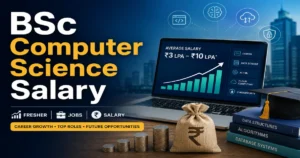
After completing their studies, graduates can pursue diverse career paths with significant salary potential. This section outlines top job roles and their average salary ranges, offering insights into the financial prospects available in the tech industry.
| Job Roles | Average Salary Range [lakhs per annum] |
|---|---|
| Information Systems Manager | ₹3.2 LPA to ₹38 LPA |
| Mobile App Developer | ₹3.7 LPA to ₹15.2 LPA |
| Enterprise Architect | ₹20.4 LPA to ₹75 LPA |
| IT Security Specialist | ₹5.8 LPA to ₹29 LPA |
| Data Analyst | ₹4.8 LPA to ₹15 LPA |
| Web Administrator | ₹3 LPA to ₹10 LPA |
| Database Administrator | ₹4.8 LPA to ₹24 LPA |
| Software Engineer | ₹2.8 LPA to ₹16 LPA |
| Machine Learning Engineer | ₹3 LPA to ₹22 LPA |
| Business Analyst | ₹3 LPA to ₹17 LPA |
| IT Consultant | ₹2.5 LPA to ₹20 LPA |
| Web Designer | ₹6 LPA to ₹12 LPA |
The table highlights a wide spectrum of job roles available, with Enterprise Architect offering the highest average salary range, demonstrating the diverse and lucrative opportunities in the field.
Frequently Asked Questions
What are the most in-demand specializations for M.Sc CS graduates in India by 2026?
By 2026, specializations like Artificial Intelligence & Machine Learning, Data Science, Cybersecurity, and Cloud Computing are expected to be highly in-demand, driven by industry growth and digital transformation.
Is pursuing an MCA still a viable option after B.Sc CS, or should I prioritize M.Sc CS?
Both MCA and M.Sc CS are viable; MCA often focuses more on application development and software management, while M.Sc CS typically delves deeper into theoretical computer science and research. Your choice should align with your career goals, as both offer strong career prospects.
What kind of salary can a fresher expect after completing a relevant Master's degree post-B.Sc CS in 2026?
A fresher with a Master’s degree in a specialized field can expect an average starting salary ranging from ₹5 LPA to ₹12 LPA, depending on the specialization, university reputation, and location.
Are there good postgraduate diploma or certification options after B.Sc CS that offer quicker entry into the job market?
Yes, postgraduate diplomas in niche areas like AI/ML, Data Analytics, or Cybersecurity, often offered by private institutions or universities, can provide quicker job market entry, typically lasting 6-12 months.
How important is practical experience or internships during my Master's program for better job opportunities in 2026?
Practical experience and internships are critically important; they significantly enhance employability by providing real-world skills, industry exposure, and networking opportunities, often leading directly to job offers.
Related Reading
What are some of the top courses to pursue after B.Sc Computer Science in 2026?
After B.Sc Computer Science, students can explore Master's degrees like MCA and M.Sc., along with professional courses in Data Science, AI, and Cybersecurity. Short-term courses are also available to boost a tech career and offer strong career growth opportunities.
What are the future career opportunities after completing B.Sc Computer Science in India?
Graduates can explore diverse career paths in software development, AI, cybersecurity, and data science, among others. These fields offer top job roles, high industry demand, and strong career growth opportunities with competitive salary packages in India.
Can I pursue Artificial Intelligence (AI) courses after completing B.Sc Computer Science?
Yes, you can pursue AI after B.Sc Computer Science, as it is recognized as a relevant career path and a potential short-term course option. This can help boost your tech career and explore the future scope in India.
Which Master's degree is considered best after B.Sc Computer Science?
Popular Master's degrees after B.Sc Computer Science include MCA and M.Sc. Additionally, an MBA is also listed among the top options for career growth and professional development.
When do applications for Computer Science courses typically open?
Applications for Computer Science courses can be open until specific dates, with some applications for Computer Science programs noted to be open till June 30, 2026. Students should check official sources for exact timelines and admission details.
Where can I find official admission details for B.Sc Computer Science courses?
You can find official admission details, including course fees and subjects, on the official sites of the exam or institute. The counselling body of the respective exam or institute is also a reliable source for such information.