B.Sc {Lateral} in Anesthesia Entrance Exams 2026 – India
Nishit Kumar is a senior EdTech industry leader with over a decade of experience in building and scaling education platforms, shaping their product, content, and growth strategy. At…
Latest update: B.Sc {Lateral} in Anesthesia 2026 admissions & dates updated. Read more ›
Navigating the entrance exams for a B.Sc {Lateral} in Anesthesia in India for 2026 requires a clear understanding of eligibility, exam patterns, and key dates. This comprehensive guide provides prospective students and their parents with all the essential information to successfully apply for this specialized medical stream.
What is B.Sc {Lateral} in Anesthesia and Why Choose It?
The B.Sc {Lateral} in Anesthesia is an undergraduate degree program designed for candidates who have already completed a diploma in Anesthesia Technology or a related field. This lateral entry allows students to directly join the second or third year of the B.Sc Anesthesia program, significantly reducing the overall study duration and accelerating their entry into the professional workforce.
Choosing this lateral entry pathway is beneficial for diploma holders seeking to upgrade their qualifications, enhance their career prospects, and gain a deeper theoretical and practical understanding of anesthesiology. It opens doors to higher-paying roles, advanced responsibilities, and opportunities for further specialization or postgraduate studies.
What is the Eligibility for B.Sc {Lateral} in Anesthesia Entrance Exams?
To be eligible for B.Sc {Lateral} in Anesthesia Entrance Exams, candidates must typically hold a Diploma in Anesthesia Technology (DAT) or an equivalent diploma in a related paramedical field from a recognized institution. Specific criteria may vary by college, but generally include a minimum aggregate score in the diploma program and sometimes in 10+2 science subjects.
General Eligibility Criteria:
- Educational Qualification: Completion of a 2 or 3-year Diploma in Anesthesia Technology (DAT), Diploma in Operation Theatre Technology (DOTT), or a similar paramedical diploma from a recognized board or university.
- Minimum Marks: A minimum aggregate of 50-60% in the diploma program is usually required (45-50% for reserved categories).
- 10+2 Qualification: Some institutions may also require candidates to have completed 10+2 with Physics, Chemistry, and Biology (PCB) as compulsory subjects, with a minimum aggregate percentage (e.g., 45-50%).
- Age Limit: Generally, there is no upper age limit for lateral entry programs, but some institutions might specify one.
- Domicile: State-specific entrance exams may require domicile certificates.
Which Entrance Exams are Required for B.Sc {Lateral} in Anesthesia in 2026?
Admission to B.Sc {Lateral} in Anesthesia programs in 2026 is primarily through either state-level common entrance tests or university/college-specific entrance exams. There isn’t a single national-level exam specifically for this lateral entry course, unlike MBBS.
Key Entrance Exams (Examples):
- AIIMS Paramedical Entrance Exam: For admission to AIIMS institutions (though direct lateral entry for Anesthesia B.Sc might be limited, some paramedical courses offer it).
- IPU CET (Indraprastha University Common Entrance Test): For colleges affiliated with GGSIPU in Delhi.
- MUHS CET (Maharashtra University of Health Sciences Common Entrance Test): For colleges in Maharashtra.
- JIPMER Paramedical Entrance Exam: For JIPMER Puducherry.
- Various State Paramedical Entrance Exams: Many states conduct their own common entrance tests for paramedical courses, which may include lateral entry options.
- Private University Entrance Exams: Many private universities conduct their own entrance tests (e.g., Manipal University Entrance Exam, SRM Entrance Exam).
What is the Exam Pattern and Syllabus for B.Sc {Lateral} in Anesthesia Entrance Exams?
The exam pattern for B.Sc {Lateral} in Anesthesia Entrance Exams typically includes multiple-choice questions (MCQs) covering subjects relevant to the diploma curriculum and basic science. The syllabus usually focuses on core concepts from Anesthesia Technology, Human Anatomy & Physiology, Pharmacology, and General Knowledge/Aptitude.
Typical Exam Pattern:
- Mode: Usually online (Computer Based Test – CBT) or offline (OMR sheet).
- Question Type: Multiple Choice Questions (MCQs).
- Duration: 90-180 minutes, depending on the exam.
- Total Marks: Varies, typically 100-200 marks.
- Marking Scheme: Generally +1 for correct answers, with negative marking (e.g., -0.25) in some exams.
- Language: English (primarily), sometimes regional languages are also offered.
Common Syllabus Areas:
- Anesthesia Technology & Practice: Anesthesia machines, monitoring, agents, techniques, patient care, emergency management, sterilization.
- Human Anatomy & Physiology: All body systems, organ functions, basic medical terminology.
- Pharmacology: Drug classifications, mechanisms of action, common drugs used in anesthesia, adverse effects.
- Pathology & Microbiology: Basic concepts of diseases, infections, sterilization.
- Medical Ethics & Law: Basic principles relevant to healthcare.
- General Knowledge/Aptitude: Current affairs, logical reasoning, basic mathematics (less common for lateral entry).
Table: Sample B.Sc {Lateral} in Anesthesia Entrance Exam Pattern (Illustrative)
| Subject Area | Number of Questions | Marks per Question | Total Marks |
|---|---|---|---|
| Anesthesia Technology & Practice | 40-50 | 1 | 40-50 |
| Human Anatomy & Physiology | 20-30 | 1 | 20-30 |
| Pharmacology | 15-20 | 1 | 15-20 |
| General Science/GK | 10-15 | 1 | 10-15 |
| Total | 90-115 | – | 90-115 |
What are the Key Dates for B.Sc {Lateral} in Anesthesia Entrance Exams in 2026?
The key dates for B.Sc {Lateral} in Anesthesia Entrance Exams in 2026 typically fall between April and July for application periods, with exams conducted from May to August. Specific dates vary significantly by institution and state, so candidates must regularly check official college and exam websites.
Table: Tentative B.Sc {Lateral} in Anesthesia Entrance Exam Dates 2026 (Illustrative)
| Event | Tentative Period (2026) | Notes |
|---|---|---|
| Application Start Date | April – May | Varies by institution/state exam board |
| Application End Date | May – June | Check specific deadlines carefully |
| Admit Card Release | 1-2 weeks before exam | Available on official websites |
| Entrance Exam Date | June – August | Most exams are held during this window |
| Result Declaration | July – September | Followed by counseling/admission process |
| Counseling/Admission | August – September | Multiple rounds may occur |
How to Apply for B.Sc {Lateral} in Anesthesia Entrance Exams?
The application process for B.Sc {Lateral} in Anesthesia Entrance Exams is typically conducted online through the official websites of the respective universities or state common entrance test authorities. It involves registration, filling out the application form, uploading documents, and paying the application fee.
Step-by-Step Application Process:
- Research & Identify Exams: Determine which colleges and entrance exams you are eligible for and wish to apply to.
- Online Registration: Visit the official website and register with a valid email ID and mobile number to generate login credentials.
- Fill Application Form: Log in and accurately fill in personal details, educational qualifications (especially diploma details), and contact information.
- Upload Documents: Upload scanned copies of required documents such as passport-sized photograph, signature, diploma certificate, 10th & 12th mark sheets, caste certificate (if applicable), and domicile certificate.
- Pay Application Fee: Pay the non-refundable application fee online using debit card, credit card, or net banking. Fees typically range from INR 500 to INR 2000.
- Review & Submit: Carefully review all entered information before final submission. Print a copy of the submitted application form and payment receipt for future reference.
- Admit Card Download: Download and print your admit card once released, as it is mandatory for appearing in the exam.
What are the Top Colleges for B.Sc {Lateral} in Anesthesia in India?
Several reputable institutions across India offer B.Sc {Lateral} in Anesthesia programs, known for their strong academic curriculum, practical training, and good placement records. These include both government and private medical colleges and universities.
Leading Institutions (Examples):
- All India Institute of Medical Sciences (AIIMS), Delhi (for paramedical courses, check specific lateral entry)
- Jawaharlal Institute of Postgraduate Medical Education and Research (JIPMER), Puducherry
- Armed Forces Medical College (AFMC), Pune (check specific lateral entry)
- Manipal Academy of Higher Education (MAHE), Manipal
- SRM Institute of Science and Technology, Chennai
- Amrita Vishwa Vidyapeetham, Kochi
- Christian Medical College (CMC), Vellore
- Various state government medical colleges affiliated with health universities (e.g., MUHS, RGUHS)
How Much Does B.Sc {Lateral} in Anesthesia Cost (Fees)?
The cost of B.Sc {Lateral} in Anesthesia varies significantly between government and private institutions. Government colleges generally have lower fees, while private colleges and universities charge higher tuition, often ranging from INR 50,000 to INR 3,00,000 per annum.
Fee Structure Ranges (Per Annum):
- Government Colleges: INR 20,000 – INR 80,000
- Private Colleges/Universities: INR 80,000 – INR 3,50,000
These figures are approximate and can change. Additional costs include hostel fees, examination fees, and miscellaneous charges.
Is B.Sc {Lateral} in Anesthesia Worth It for Jobs and Salary?
Yes, pursuing a B.Sc {Lateral} in Anesthesia is highly worth it for career advancement and improved salary prospects. Graduates are equipped with advanced skills and knowledge, making them valuable assets in healthcare settings. The demand for skilled anesthesia technologists is consistently high in India and abroad.
Career Prospects and Salary Outcomes:
A B.Sc degree opens up more senior and specialized roles compared to a diploma. Graduates can work as Anesthesia Technologists, Anesthesia Assistants, Medical Technologists, or even pursue roles in critical care and emergency medicine.
Table: Typical Salary Ranges for B.Sc Anesthesia Graduates (India, Per Annum)
| Job Role | Entry-Level Salary (INR) | Mid-Career Salary (INR) | Senior-Level Salary (INR) |
|---|---|---|---|
| Anesthesia Technologist | 2,50,000 – 4,00,000 | 4,00,000 – 7,00,000 | 7,00,000 – 12,00,000+ |
| Anesthesia Assistant | 2,00,000 – 3,50,000 | 3,50,000 – 6,00,000 | 6,00,000 – 10,00,000+ |
| Medical Technologist | 2,80,000 – 4,50,000 | 4,50,000 – 8,00,000 | 8,00,000 – 15,00,000+ |
| Critical Care Technologist | 3,00,000 – 5,00,000 | 5,00,000 – 9,00,000 | 9,00,000 – 16,00,000+ |
Salaries can vary based on the employer (government vs. private hospitals, corporate hospitals), location, experience, and additional certifications.
Explore more on FindMyCollege
Related pages for B.Sc {Lateral} in Anesthesia aspirants on findmycollege.com:
Frequently Asked Questions
Is there any age limit for B.Sc {Lateral} in Anesthesia?
Generally, there is no upper age limit for B.Sc {Lateral} in Anesthesia programs, making it accessible for diploma holders of various age groups to upgrade their qualifications. However, it is always advisable to check the specific requirements of individual colleges or universities.
Can I apply for B.Sc {Lateral} in Anesthesia if I have a Diploma in Operation Theatre Technology (DOTT)?
Yes, many institutions accept candidates with a Diploma in Operation Theatre Technology (DOTT) for lateral entry into B.Sc Anesthesia programs, as the foundational knowledge and skills are often transferable. Always confirm with the specific college’s eligibility criteria.
What is the duration of the B.Sc {Lateral} in Anesthesia course?
The B.Sc {Lateral} in Anesthesia course typically has a duration of 2 years, as students are admitted directly into the second or third year of the standard 3-year B.Sc Anesthesia program, depending on the institution and their diploma’s equivalency.
Are there any scholarships available for B.Sc {Lateral} in Anesthesia students?
Yes, various scholarships are available, including government scholarships for economically weaker sections or reserved categories, and merit-based scholarships offered by private institutions. Students should explore options from central/state government schemes and directly contact their chosen colleges for institutional scholarships.
What is the difference between B.Sc Anesthesia and B.Sc {Lateral} in Anesthesia?
The primary difference is the entry point and duration. B.Sc Anesthesia is a 3-year program for 10+2 science graduates, while B.Sc {Lateral} in Anesthesia is a 2-year program for diploma holders in Anesthesia Technology or related fields, allowing them direct entry into the second or third year.
What kind of practical training is involved in the lateral entry program?
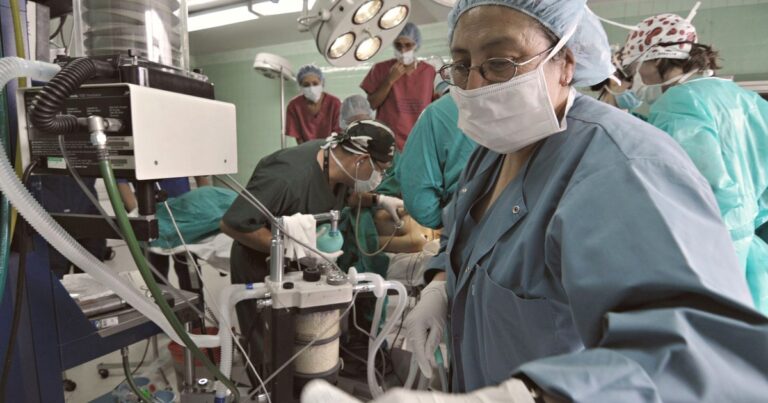
The lateral entry program, like the regular B.Sc, involves extensive practical training and clinical rotations in operation theatres, intensive care units (ICUs), and emergency departments. Students gain hands-on experience with anesthesia equipment, patient monitoring, drug administration, and assisting anesthesiologists in various surgical procedures.
Is NEET required for B.Sc {Lateral} in Anesthesia?
No, NEET (National Eligibility cum Entrance Test) is specifically for admission to MBBS and BDS courses. It is generally not required for admission to B.Sc {Lateral} in Anesthesia programs. Admission is typically based on state-level or university-specific entrance exams.
What are the higher study options after B.Sc {Lateral} in Anesthesia?
After completing B.Sc {Lateral} in Anesthesia, graduates can pursue higher studies such as an M.Sc in Anesthesia Technology, M.Sc in Critical Care Technology, or other related postgraduate diplomas and certifications to further specialize and enhance their career prospects.