B.Sc in Cardiology Admission 2026 India: Eligibility, Fees, Jobs
Nishit Kumar is a senior EdTech industry leader with over a decade of experience in building and scaling education platforms, shaping their product, content, and growth strategy. At…
Latest update: B.Sc in Cardiology 2026 admissions & dates updated. Read more ›
Welcome to the definitive guide for B.Sc in Cardiology Admission 2026 in India. This page is designed to provide prospective students and their parents with all the essential information needed to navigate the admission process for this vital paramedical course. A Bachelor of Science (B.Sc) in Cardiology is a specialized undergraduate program focused on the diagnosis, treatment, and management of cardiovascular diseases, preparing students for roles as cardiac technologists and assistants.
What is B.Sc in Cardiology?
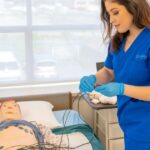
B.Sc in Cardiology is a 3-year undergraduate degree program that trains students in the technical aspects of cardiovascular care. Graduates work alongside cardiologists, performing diagnostic tests like ECGs, echocardiograms, and stress tests, and assisting in procedures such as catheterizations and pacemaker implantations. The curriculum combines theoretical knowledge with extensive practical training, making it a highly sought-after course in the healthcare sector.
What is the eligibility for B.Sc in Cardiology Admission 2026?
To be eligible for B.Sc in Cardiology Admission 2026, candidates must have successfully completed their 10+2 (or equivalent) examination with a strong emphasis on Science subjects, particularly Physics, Chemistry, and Biology (PCB). Most institutions require a minimum aggregate score, typically ranging from 45% to 50% in the qualifying examination.
Detailed Eligibility Criteria:
- Educational Qualification: Candidates must have passed 10+2 or an equivalent examination from a recognized board.
- Mandatory Subjects: Physics, Chemistry, and Biology (PCB) are compulsory subjects in 10+2. Some colleges may also consider candidates with Physics, Chemistry, and Mathematics (PCM) if they have a strong biology background or offer bridge courses.
- Minimum Marks: A minimum aggregate of 45-50% in the 10+2 examination is generally required. This percentage can vary between government and private institutions, with some top-tier colleges requiring higher scores.
- Age Limit: While not universally applied, some institutions may have a minimum age requirement, typically 17 years as of December 31st of the admission year. There is usually no upper age limit.
- Entrance Exams: Many prominent institutions conduct their own entrance examinations. Performance in these exams is often a crucial factor for admission.
What is the admission process for B.Sc in Cardiology in 2026?
The admission process for B.Sc in Cardiology in 2026 typically involves applying online, appearing for an entrance examination (if applicable), participating in counseling, and finally, document verification and fee payment. The exact steps can vary slightly depending on the institution.
Step-by-Step Admission Process:
- Application Form: Candidates need to fill out the online application form available on the respective college or university website. This usually opens between March and June 2026.
- Application Fee: A non-refundable application fee must be paid online.
- Entrance Examination: Many reputed colleges conduct their own entrance tests (e.g., AIIMS Paramedical, NEET-UG for some states/institutions, or university-specific exams). These exams typically assess knowledge in Physics, Chemistry, Biology, and sometimes General Aptitude.
- Merit List: Based on the entrance exam scores and/or 10+2 academic performance, a merit list is prepared.
- Counseling/Interview: Shortlisted candidates are called for counseling sessions, which may include an interview round to assess communication skills and aptitude for the medical field.
- Document Verification: Original documents (10th & 12th mark sheets, transfer certificate, caste certificate, etc.) are verified.
- Fee Payment: Upon successful verification, candidates pay the first installment of the tuition fee to confirm their admission.
Key Dates for B.Sc in Cardiology Admission 2026 (Tentative)
It’s crucial to keep track of important dates for application and entrance exams. These are approximate dates and may vary.
| Event | Tentative Dates (2026) |
|---|---|
| Application Window Opens | March – April |
| Application Window Closes | May – June |
| Admit Card Release | June |
| Entrance Exam Dates | June – July |
| Result Declaration | July – August |
| Counseling/Interview | August |
| Admission & Fee Payment | August – September |
| Classes Commence | September – October |
People Also Read

How much does B.Sc in Cardiology cost in India?
The cost of pursuing a B.Sc in Cardiology in India varies significantly based on the type of institution (government vs. private) and its reputation. Generally, government colleges offer more affordable fees compared to private universities.
Fee Structure (Annual Range):
- Government Colleges: INR 20,000 – INR 80,000 per annum. These institutions are often subsidized, making them highly competitive.
- Private Colleges/Universities: INR 80,000 – INR 3,00,000+ per annum. Fees in private institutions can be higher due to better infrastructure, advanced labs, and often, a higher faculty-to-student ratio.
Additional costs may include hostel fees, examination fees, study materials, and miscellaneous charges.
Is B.Sc in Cardiology worth it for jobs? What are the career prospects?
Yes, B.Sc in Cardiology is a highly valuable degree for job prospects, especially with the increasing prevalence of cardiovascular diseases and the growing demand for skilled paramedical professionals. Graduates find employment in hospitals, cardiac clinics, diagnostic centers, and research facilities.
Career Prospects and Job Roles:
- Cardiovascular Technologist/Technician: The primary role, involving performing diagnostic tests like ECG, Echo, TMT, Holter monitoring, and assisting in cath lab procedures.
- Echocardiographer: Specializes in performing and interpreting echocardiograms.
- Cardiac Sonographer: Similar to an echocardiographer, focusing on ultrasound imaging of the heart.
- Cath Lab Technologist: Works in the cardiac catheterization laboratory, assisting cardiologists during invasive procedures.
- Cardiac Perfusionist (with further specialization): Operates heart-lung machines during open-heart surgeries.
- Research Assistant: Assists in clinical trials and research related to cardiology.
Average Salary after B.Sc in Cardiology (Entry-Level to Experienced)
Salaries can vary based on experience, employer (private hospital vs. government), location, and additional certifications.
| Job Role | Entry-Level Annual Salary (INR) | Experienced Annual Salary (INR) |
|---|---|---|
| Cardiovascular Technologist | 2.0 – 3.5 Lakhs | 4.0 – 8.0 Lakhs+ |
| Echocardiographer | 2.5 – 4.0 Lakhs | 4.5 – 9.0 Lakhs+ |
| Cath Lab Technologist | 2.8 – 4.5 Lakhs | 5.0 – 10.0 Lakhs+ |
Which are the top colleges for B.Sc in Cardiology in India?
Several institutions across India offer excellent B.Sc in Cardiology programs. When choosing, consider factors like faculty expertise, clinical exposure, infrastructure, and placement records.
Some Reputed Institutions (not an exhaustive list):
- All India Institute of Medical Sciences (AIIMS), Delhi (offers B.Sc (Hons) in Medical Technology in Radiography/Radiotherapy which can lead to cardiac imaging roles, or specific paramedical courses)
- Postgraduate Institute of Medical Education and Research (PGIMER), Chandigarh
- Christian Medical College (CMC), Vellore
- Manipal Academy of Higher Education (MAHE), Manipal
- SRM Institute of Science and Technology, Chennai
- Jawaharlal Institute of Postgraduate Medical Education and Research (JIPMER), Puducherry
- Amrita Vishwa Vidyapeetham, Kochi
- NIMS University, Jaipur
- Saveetha University, Chennai
What is the difference between B.Sc in Cardiology and other paramedical courses?
B.Sc in Cardiology is a specialized paramedical course focused specifically on cardiovascular diagnostics and treatment, distinguishing it from broader paramedical fields like Medical Lab Technology or Radiology.
- B.Sc in Cardiology: Focuses on heart-related diagnostic procedures (ECG, Echo, TMT) and assisting in cardiac interventions (cath lab).
- B.Sc in Medical Lab Technology (MLT): Deals with laboratory tests, analyzing blood, urine, and other body fluids to diagnose diseases across various medical specialties.
- B.Sc in Radiology & Imaging Technology: Specializes in various imaging techniques like X-rays, CT scans, MRI, and ultrasound for diagnosing conditions throughout the body.
- B.Sc in Anesthesia Technology: Focuses on assisting anesthesiologists in administering anesthesia and monitoring patients during surgery.
While all are crucial paramedical roles, B.Sc in Cardiology offers a niche specialization with high demand in cardiac care units.
What subjects are covered in B.Sc in Cardiology?
The B.Sc in Cardiology curriculum is designed to provide a strong foundation in human anatomy, physiology, and specific cardiovascular concepts and technologies. The course is typically divided into six semesters.
Core Subjects Include:
- Human Anatomy and Physiology
- Biochemistry
- Pathology
- Pharmacology
- Microbiology
- Cardiac Anatomy and Physiology
- Electrocardiography (ECG)
- Echocardiography
- Cardiac Catheterization Techniques
- Cardiac Pharmacology
- Cardiac Intensive Care
- Medical Ethics and Patient Care
- Basic Life Support (BLS) & Advanced Cardiac Life Support (ACLS)
- Clinical Training/Internship
Explore more on FindMyCollege
Related pages for B.Sc in Cardiology aspirants on findmycollege.com:
Frequently Asked Questions
Is NEET required for B.Sc in Cardiology Admission 2026?
NEET is generally not mandatory for B.Sc in Cardiology admissions in most colleges. However, some state-level paramedical entrance exams or specific universities might consider NEET scores or conduct their own entrance tests. Always check the specific requirements of your target institutions.
Can I pursue an M.Sc after B.Sc in Cardiology?
Yes, after completing a B.Sc in Cardiology, you can pursue an M.Sc in Cardiovascular Technology, M.Sc in Echocardiography, or other related fields to specialize further and enhance your career prospects and earning potential.
What is the scope of B.Sc in Cardiology abroad?
The scope for B.Sc in Cardiology graduates is excellent abroad, particularly in countries like the USA, UK, Canada, Australia, and Gulf nations, which have advanced healthcare systems and a high demand for skilled cardiac technologists. You may need to clear specific licensing exams in those countries.
Are there any scholarships available for B.Sc in Cardiology students?
Yes, various government scholarships (e.g., state minority scholarships, national scholarships) and private institution-specific scholarships are available based on merit, financial need, or specific categories. Check with individual colleges and government scholarship portals.
What skills are essential for a B.Sc in Cardiology student?
Essential skills include strong analytical abilities, attention to detail, good hand-eye coordination, excellent communication skills, empathy, problem-solving capabilities, and the ability to work effectively in a team under pressure.
Is B.Sc in Cardiology a difficult course?
Like any medical-related field, B.Sc in Cardiology requires dedication and hard work. It involves understanding complex physiological concepts and mastering technical skills. However, with consistent effort and practical training, it is a manageable and rewarding course.
Can I open my own clinic after B.Sc in Cardiology?
No, a B.Sc in Cardiology qualifies you as a technologist to assist doctors. You cannot open your own clinic or practice independently as a cardiologist. Further medical education (MBBS followed by MD/DM in Cardiology) is required to become a cardiologist.