P.B.B.Sc. Nursing Duration in India 2026: Your Complete Guide
Nishit Kumar is a senior EdTech industry leader with over a decade of experience in building and scaling education platforms, shaping their product, content, and growth strategy. At…
Latest update: P.B.Bachelor of Science in Nursing 2026 admissions & dates updated. Read more ›
Navigating the academic landscape for a career in nursing requires clear information, especially regarding course duration and its implications. The P.B.Bachelor of Science in Nursing (P.B.B.Sc. Nursing) is a crucial post-basic program designed for registered nurses and midwives (R.N.R.M.) who wish to upgrade their knowledge and skills. This comprehensive guide details everything you need to know about the P.B.B.Sc. Nursing duration in India for the 2026 academic year, covering eligibility, admission, fees, and career outcomes.
What is the Duration of P.B.B.Sc. Nursing in India?
The standard duration for the P.B.Bachelor of Science in Nursing (P.B.B.Sc. Nursing) program in India is two academic years. This full-time program is typically divided into four semesters, with each year comprising two semesters. Some institutions may offer a part-time or distance education mode, which could extend the duration, but the full-time, regular program is consistently two years.
This two-year structure is designed to provide a comprehensive curriculum that builds upon the foundational knowledge acquired during the General Nursing and Midwifery (GNM) diploma. It focuses on enhancing critical thinking, leadership, and advanced nursing practice skills, preparing graduates for higher roles in healthcare.
What is P.B.B.Sc. Nursing and How Does it Differ from B.Sc. Nursing?
P.B.B.Sc. Nursing (Post Basic Bachelor of Science in Nursing) is a two-year undergraduate program specifically for registered nurses and midwives (R.N.R.M.) who have completed a GNM diploma. It allows them to obtain a bachelor’s degree, enhancing their academic qualifications and career prospects. In contrast, B.Sc. Nursing (Bachelor of Science in Nursing) is a four-year undergraduate program for 10+2 science stream students, serving as a direct entry into professional nursing without prior nursing qualifications.
The key difference lies in the target audience and the foundational knowledge assumed. P.B.B.Sc. Nursing builds on existing practical experience, while B.Sc. Nursing provides a complete, ground-up education in nursing science.
What is the Eligibility Criteria for P.B.B.Sc. Nursing in 2026?
To be eligible for the P.B.B.Sc. Nursing program in 2026, candidates must meet specific academic and professional requirements. The primary criteria include:
- Educational Qualification: Candidates must have passed the General Nursing and Midwifery (GNM) diploma course.
- Registration: Applicants must be a Registered Nurse and Registered Midwife (R.N.R.M.) with any State Nursing Registration Council. For male nurses who have not undergone midwifery training, they must have obtained a certificate in any nursing program of 6-9 months duration prescribed by the Indian Nursing Council (INC) in lieu of midwifery.
- Work Experience: While not universally mandatory for all colleges, some institutions or state entrance exams may require a minimum of one to two years of work experience as a registered nurse after GNM.
- Medical Fitness: Candidates must be medically fit.
People Also Read



How is the Admission Process for P.B.B.Sc. Nursing in 2026 Structured?
The admission process for P.B.B.Sc. Nursing in 2026 typically involves an entrance examination followed by counseling. Here’s a general overview:
- Application: Candidates apply online or offline to their chosen colleges or state-level entrance exam bodies.
- Entrance Exam: Many reputable institutions and states conduct their own entrance exams (e.g., AIIMS P.B.B.Sc. Nursing, JIPMER P.B.B.Sc. Nursing, state CETs). These exams usually test subjects like Nursing Foundations, Medical-Surgical Nursing, Community Health Nursing, Mental Health Nursing, Child Health Nursing, and English.
- Merit List: Based on the entrance exam scores, a merit list is prepared.
- Counseling: Shortlisted candidates are called for counseling, where they select their preferred college based on their rank and seat availability.
- Document Verification & Admission: Original documents are verified, and admission is granted upon payment of fees.
Key Dates for P.B.B.Sc. Nursing Admissions 2026 (Tentative)
Admission timelines can vary by institution and state. Below are tentative dates for major entrance exams:
| Event | Tentative Dates (2026) | Common Entrance Exams |
|---|---|---|
| Application Period | March – April | AIIMS P.B.B.Sc., JIPMER P.B.B.Sc., State CETs |
| Admit Card Release | May | |
| Entrance Exam Date | June | |
| Result Declaration | July | |
| Counseling & Admissions | August – September |
How Much Does P.B.B.Sc. Nursing Cost in India (2026 Fee Ranges)?
The cost of P.B.B.Sc. Nursing in India varies significantly between government and private institutions. Generally, government colleges offer much lower fees due to subsidies, while private colleges have higher fee structures.
| Institution Type | Annual Fee Range (INR) | Total Course Fee Range (INR) |
|---|---|---|
| Government Colleges | ₹10,000 – ₹50,000 | ₹20,000 – ₹1,00,000 |
| Private Colleges | ₹60,000 – ₹2,50,000 | ₹1,20,000 – ₹5,00,000 |
These figures are approximate for the 2026 academic year and may not include hostel fees, examination fees, or other miscellaneous charges, which can add to the overall cost.
What is the Syllabus and Semester Breakdown for P.B.B.Sc. Nursing?
The P.B.B.Sc. Nursing syllabus is designed by the Indian Nursing Council (INC) and typically covers advanced aspects of nursing, research, and management. The two-year program is usually divided into four semesters:
Year 1 (Semesters I & II)
- Nursing Foundation
- Nutrition & Dietetics
- Biochemistry & Biophysics
- Psychology
- Microbiology
- Maternal Nursing
- Child Health Nursing
- Medical-Surgical Nursing (Advanced)
- English (Communicative)
- Introduction to Computer Education
Year 2 (Semesters III & IV)
- Sociology
- Community Health Nursing
- Mental Health Nursing
- Introduction to Nursing Education
- Introduction to Nursing Administration
- Introduction to Nursing Research & Statistics
- Environmental Science
- Elective Subject (e.g., Oncology Nursing, Critical Care Nursing)
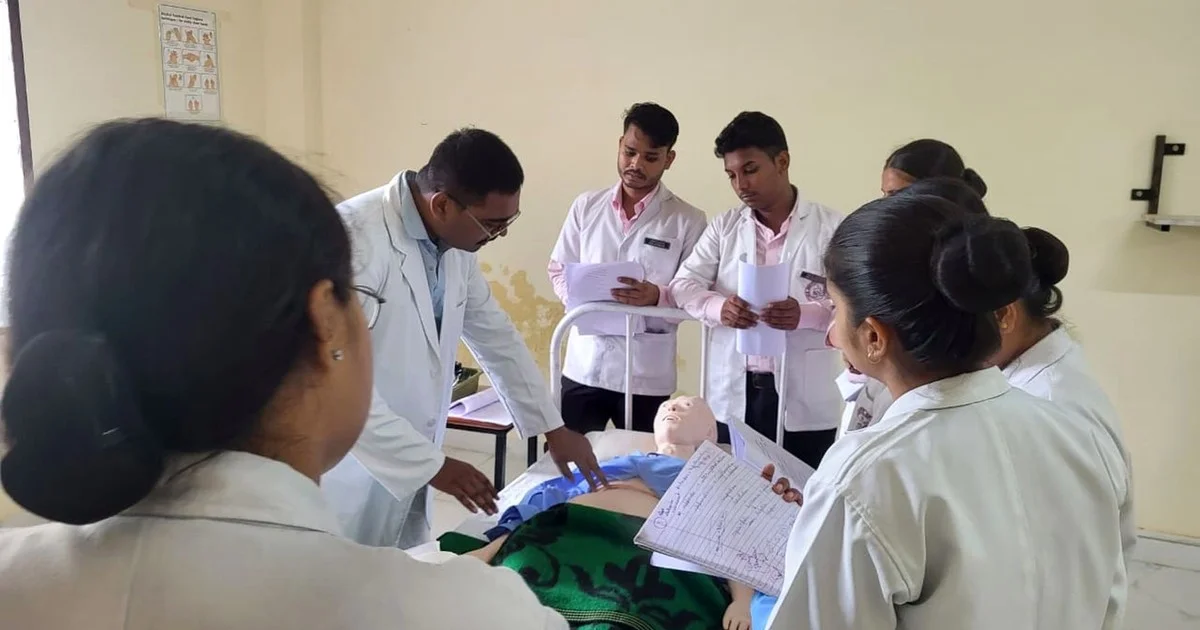
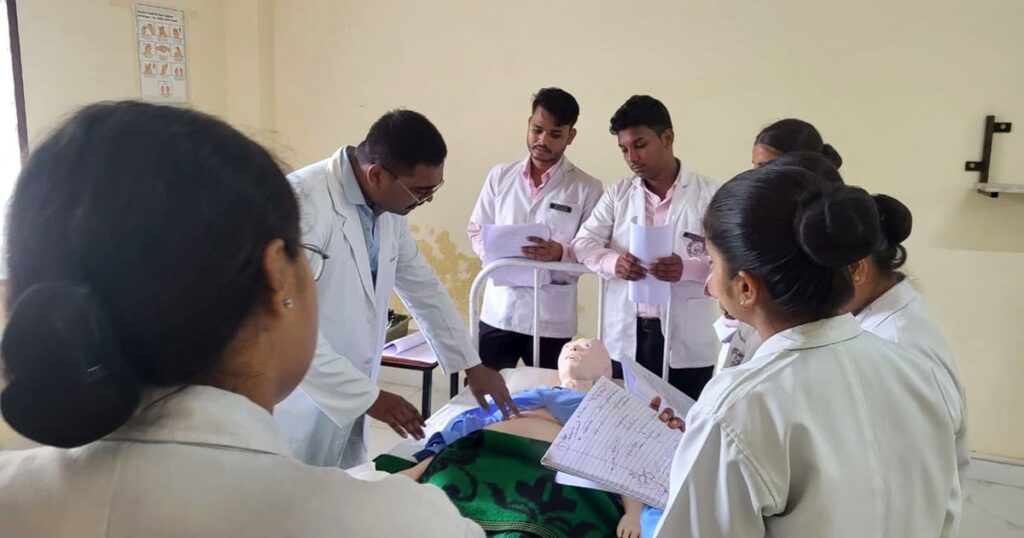
Practical training and clinical postings are integral components throughout both years, ensuring hands-on experience in various specialties.
Is P.B.B.Sc. Nursing Worth It for Career Advancement and Jobs?
Yes, pursuing a P.B.B.Sc. Nursing degree is highly beneficial for career advancement and opens up a wider range of job opportunities compared to a GNM diploma alone. It provides a university degree, which is increasingly becoming a minimum requirement for many advanced nursing roles, leadership positions, and academic pursuits.
Career Prospects After P.B.B.Sc. Nursing
- Staff Nurse: While GNM nurses can also be staff nurses, P.B.B.Sc. graduates often have an edge in competitive environments and may be preferred for specialized units.
- Ward Sister/Charge Nurse: With experience, P.B.B.Sc. graduates are well-positioned for supervisory roles.
- Clinical Instructor/Tutor: The degree qualifies individuals to teach in nursing schools and colleges.
- Community Health Nurse: Opportunities in public health programs and community outreach.
- Specialized Nurse: Roles in critical care, oncology, pediatrics, operation theatre, etc., often prefer degree holders.
- Nurse Manager/Administrator: Higher administrative roles in hospitals and healthcare facilities.
- Further Education: Eligibility for M.Sc. Nursing, M.Phil. Nursing, and Ph.D. programs.
Salary Expectations After P.B.B.Sc. Nursing
Salaries for P.B.B.Sc. Nursing graduates vary based on experience, employer (government vs. private), location, and specialization. Generally, degree holders command higher salaries than GNM diploma holders.
| Job Role | Average Annual Salary Range (INR) – Entry Level | Average Annual Salary Range (INR) – Experienced (3-5 years) |
|---|---|---|
| Staff Nurse (Private Hospital) | ₹2,50,000 – ₹4,00,000 | ₹4,00,000 – ₹7,00,000+ |
| Staff Nurse (Government Hospital) | ₹3,50,000 – ₹5,50,000 (as per pay commission) | ₹5,50,000 – ₹8,00,000+ |
| Clinical Instructor/Tutor | ₹3,00,000 – ₹5,00,000 | ₹5,00,000 – ₹8,00,000+ |
| Ward Sister/Charge Nurse | ₹4,00,000 – ₹6,00,000 | ₹6,00,000 – ₹10,00,000+ |
Can I Pursue P.B.B.Sc. Nursing Through Distance Education?
Yes, some universities and institutions in India offer P.B.B.Sc. Nursing through distance education or open learning modes. These programs are particularly beneficial for working nurses who wish to upgrade their qualifications without leaving their jobs. The Indira Gandhi National Open University (IGNOU) is a prominent institution offering a P.B.B.Sc. Nursing program via distance learning.
While the curriculum is similar, the duration might be flexible, often allowing students to complete the course within a minimum of 3 years and a maximum of 5-6 years, depending on the university’s regulations and the student’s pace. Practical components are typically covered through mandatory contact classes and clinical postings at approved healthcare facilities.
Explore more on FindMyCollege
Related pages for P.B.Bachelor of Science in Nursing aspirants on findmycollege.com:
Frequently Asked Questions
Is there any age limit for P.B.B.Sc. Nursing admission?
Generally, there is no upper age limit for P.B.B.Sc. Nursing admission in most institutions, as it is a post-basic program for working professionals. However, candidates must meet the minimum age requirement (usually 17 years) at the time of GNM completion.
What is the difference between GNM and P.B.B.Sc. Nursing?
GNM (General Nursing and Midwifery) is a 3 to 3.5-year diploma course that provides foundational nursing skills. P.B.B.Sc. Nursing is a 2-year bachelor’s degree program designed for GNM-qualified nurses to upgrade their academic qualifications and enhance their professional knowledge and skills.
Can male nurses pursue P.B.B.Sc. Nursing?
Yes, male nurses can absolutely pursue P.B.B.Sc. Nursing. If they have not undergone midwifery training, they must possess a certificate in any nursing program of 6-9 months duration prescribed by the Indian Nursing Council (INC) in lieu of midwifery, in addition to their GNM diploma and R.N. registration.
Are P.B.B.Sc. Nursing degrees recognized internationally?
Yes, P.B.B.Sc. Nursing degrees from INC-recognized institutions in India are generally recognized internationally. However, specific country requirements for licensure and practice may vary, often requiring additional exams (e.g., NCLEX for USA, OET/IELTS for English proficiency) or bridging courses.
What are the career prospects after M.Sc. Nursing, which I can pursue after P.B.B.Sc. Nursing?
After completing P.B.B.Sc. Nursing, you are eligible for M.Sc. Nursing, which opens doors to advanced roles such as Nurse Practitioner, Clinical Nurse Specialist, Nurse Educator, Nurse Administrator, Researcher, and even Ph.D. studies, leading to academic and leadership positions with significantly higher earning potential.
Do I need to clear NEET for P.B.B.Sc. Nursing?
No, NEET (National Eligibility cum Entrance Test) is not required for P.B.B.Sc. Nursing admissions. Admissions are typically based on state-level or institutional-specific entrance examinations, or sometimes direct merit from GNM scores, depending on the college.
What are the benefits of pursuing P.B.B.Sc. Nursing over just having a GNM diploma?
The primary benefits include a higher academic qualification (bachelor’s degree), improved career progression opportunities (e.g., supervisory, teaching, administrative roles), eligibility for postgraduate studies (M.Sc. Nursing), better salary prospects, and enhanced critical thinking and leadership skills, making you more competitive in the healthcare job market.
Is practical experience mandatory for P.B.B.Sc. Nursing admission?
While a GNM diploma and R.N.R.M. registration are mandatory, some institutions or state entrance exams may require a minimum of 1-2 years of post-GNM work experience. It’s crucial to check the specific eligibility criteria of your target colleges or entrance exams for 2026.