B.V.Sc Distance/Online in India 2026: Eligibility, Fees, Careers
Nishit Kumar is a senior EdTech industry leader with over a decade of experience in building and scaling education platforms, shaping their product, content, and growth strategy. At…
Latest update: B.V.Sc 2026 admissions & dates updated. Read more ›
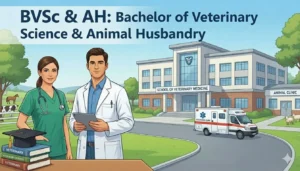
For aspiring veterinarians in India, understanding the landscape of B.V.Sc (Bachelor of Veterinary Science and Animal Husbandry) programs is crucial. This comprehensive guide focuses specifically on the availability, recognition, and implications of B.V.Sc Distance / Online education in India for the 2026 academic year, addressing common student and parent queries.
Is B.V.Sc (Bachelor of Veterinary Science) available through Distance or Online mode in India for 2026?
No, as of 2026, the Bachelor of Veterinary Science and Animal Husbandry (B.V.Sc & A.H.) program is NOT available through Distance Learning or Online mode in India. Veterinary education, regulated by the Veterinary Council of India (VCI) under the Indian Veterinary Council Act, 1984, mandates a rigorous, hands-on, and practical-intensive curriculum that cannot be adequately delivered through a distance or online format. All recognized B.V.Sc & A.H. degrees must be pursued through full-time, on-campus study at VCI-approved institutions.
The VCI’s regulations emphasize extensive practical training, including clinical rotations, laboratory work, animal handling, and surgical procedures, which are fundamental to developing competent veterinary professionals. These essential components necessitate physical presence at a veterinary college with appropriate infrastructure, livestock farms, and clinical facilities.
Why is B.V.Sc not offered in Distance or Online mode?
The B.V.Sc program is not offered in distance or online mode primarily due to its highly practical and clinical nature, which requires extensive hands-on training that cannot be replicated virtually. The curriculum is designed to equip students with practical skills in animal diagnosis, treatment, surgery, disease prevention, and animal husbandry, all of which demand direct interaction with animals and specialized equipment.
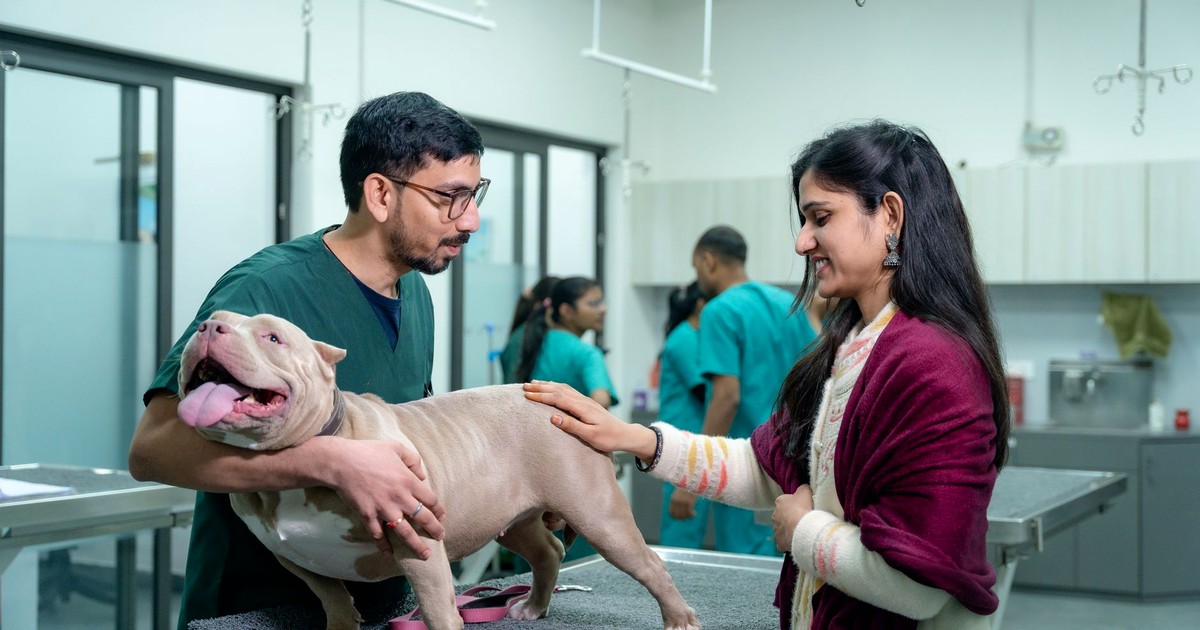
- Clinical Training: Students must gain practical experience in diagnosing and treating various animal diseases, performing surgeries, and managing animal health in real-world settings.
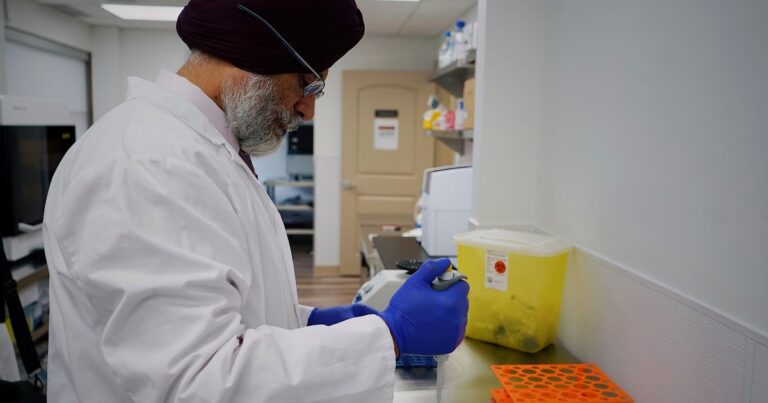
- Laboratory Work: A significant portion of the curriculum involves laboratory sessions for pathology, microbiology, parasitology, and pharmacology, requiring access to sophisticated lab equipment and direct supervision.
- Animal Handling: Proficiency in handling different species of animals, understanding their behavior, and performing procedures safely is a core competency developed through direct interaction.
- Infrastructure Requirements: VCI-approved colleges must possess extensive facilities including veterinary hospitals, livestock farms, dissection halls, and well-equipped laboratories, which are integral to the learning process.
- Regulatory Mandate: The Veterinary Council of India (VCI) strictly mandates a full-time, residential program to ensure the quality and standardization of veterinary education across the country.
People Also Read



What are the recognized alternatives or related fields for online study?
While a full B.V.Sc degree is not available online, students interested in animal care or related fields might explore online or distance learning options for certain diploma, certificate, or postgraduate programs. These programs typically focus on specific aspects of animal welfare, management, or allied sciences and do not qualify one as a registered veterinarian.
Related Online/Distance Programs (Non-B.V.Sc):
- Diploma/Certificate in Animal Welfare: Focuses on animal rights, ethics, and basic care.
- Diploma in Livestock Management: Covers aspects of farm animal rearing, nutrition, and basic health.
- Online Courses in Pet Grooming/Training: Vocational skills for pet care.
- M.Sc. in Animal Science/Zoology (Distance): Some universities offer postgraduate degrees in theoretical aspects of animal science, but these are not equivalent to a professional veterinary degree.
- Online Courses in Wildlife Conservation: Focus on ecological aspects and wildlife management.
It is crucial to understand that none of these programs provide the legal standing or professional registration required to practice as a veterinarian in India. Only a VCI-recognized B.V.Sc & A.H. degree from an approved institution allows for registration with the VCI.
What is the eligibility criteria for a full-time B.V.Sc program in India (2026)?
To be eligible for a full-time B.V.Sc & A.H. program in India for the 2026 academic year, candidates must meet specific academic and age requirements, primarily centered around their performance in science subjects at the 10+2 level and qualifying a national entrance examination.
- Educational Qualification: Candidates must have passed the 10+2 (or equivalent) examination with Physics, Chemistry, Biology/Biotechnology, and English as core subjects from a recognized board.
- Minimum Marks: A minimum aggregate of 50% marks in Physics, Chemistry, Biology/Biotechnology, and English is generally required for General category candidates. Reserved categories (SC/ST/OBC) usually have a relaxation of 5-10%.
- Age Limit: The candidate must have completed 17 years of age as of December 31st of the admission year and typically not exceed 25 years (with relaxations for reserved categories).
- Entrance Examination: Admission is primarily through the NEET (National Eligibility cum Entrance Test) UG. A certain percentage of seats (usually 15% All India Quota) are filled through NEET scores, while the remaining state quota seats are also often filled based on NEET scores or state-level veterinary entrance exams.
What is the admission process for B.V.Sc (Full-time) in India for 2026?
The admission process for B.V.Sc & A.H. programs in India for 2026 primarily involves appearing for the NEET UG examination, followed by counseling conducted by the VCI or respective state authorities.
- Appear for NEET UG: Candidates must register for and appear in the NEET UG examination, typically held in May.
- NEET Result Declaration: Results are usually declared in June.
- VCI Counseling (15% All India Quota): The Veterinary Council of India (VCI) conducts online counseling for the 15% All India Quota seats in VCI-approved veterinary colleges based on NEET UG scores. Registration, choice filling, and seat allotment occur in multiple rounds.
- State Quota Counseling (85% State Quota): Respective state admission authorities conduct counseling for the remaining 85% of seats. This may also be based on NEET UG scores or, in some states, through a separate state-level veterinary entrance examination.
- Document Verification & Admission: Shortlisted candidates must report to the allotted college for document verification and completion of admission formalities.
Key Dates & Exam Pattern (NEET UG 2026 – Tentative)
| Event | Tentative Dates (2026) |
|---|---|
| Application Start | February – March |
| Application End | March – April |
| Admit Card Release | April |
| Exam Date | First Sunday of May |
| Result Declaration | June |
| Counseling Begins | July |
NEET UG Exam Pattern:
- Mode: Offline (Pen and Paper)
- Duration: 3 hours 20 minutes
- Total Questions: 200 (180 to be attempted)
- Sections: Physics, Chemistry, Botany, Zoology
- Marking Scheme: +4 for correct answer, -1 for incorrect answer, 0 for unattempted.
What is the fee structure for a full-time B.V.Sc program in India?
The fee structure for a full-time B.V.Sc & A.H. program in India varies significantly between government and private institutions. Government colleges generally have much lower fees due to subsidies, while private colleges are considerably more expensive.
B.V.Sc & A.H. Fee Ranges (Annual, Tentative 2026)
| Institution Type | Annual Tuition Fee Range | Additional Costs (Hostel, Exam, etc.) |
|---|---|---|
| Government Colleges/Universities | INR 15,000 – INR 80,000 | INR 10,000 – INR 40,000 |
| Private Colleges/Universities | INR 1,00,000 – INR 4,00,000+ | INR 30,000 – INR 1,00,000+ |
These figures are approximate and can vary based on the specific college, state, and any revisions in fee policies for the 2026 academic year. Additional costs include hostel fees (if applicable), examination fees, library fees, laboratory charges, and miscellaneous expenses.
What are the career prospects and salary expectations after B.V.Sc?
A B.V.Sc & A.H. degree opens up diverse and rewarding career opportunities in both the public and private sectors, with strong demand for qualified veterinarians. Graduates can work with various animal species, including livestock, poultry, pets, and wildlife.
Career Paths:
- Veterinary Practitioner: Private practice (clinic owner), associate veterinarian in private clinics.
- Government Services: Veterinary Officer/Assistant Surgeon in state animal husbandry departments, municipal corporations, army (Remount and Veterinary Corps).
- Academia & Research: Teaching positions in veterinary colleges, research scientists in ICAR institutes, pharmaceutical companies.
- Poultry & Dairy Industry: Veterinary consultants, farm managers, quality control.
- Pharmaceutical Companies: R&D, sales, and marketing of animal health products.
- Wildlife & Zoo Veterinarian: Working with wildlife conservation organizations, zoos.
- Food Safety & Public Health: Inspection of meat and dairy products, zoonotic disease control.
- Animal Welfare Organizations: Working with NGOs dedicated to animal rescue and welfare.
Salary Expectations (Entry-Level, Annual, Tentative)
| Job Role | Average Annual Salary Range (INR) |
|---|---|
| Veterinary Officer (Govt.) | INR 6,00,000 – INR 9,00,000+ (as per pay commission) |
| Associate Veterinarian (Private Clinic) | INR 3,00,000 – INR 6,00,000 |
| Veterinary Consultant (Industry) | INR 4,00,000 – INR 7,00,000 |
| Academician/Researcher | INR 4,00,000 – INR 8,00,000+ |
Salaries can increase significantly with experience, specialization (e.g., surgery, internal medicine), and establishing a successful private practice. Government jobs often come with additional benefits and job security.
Explore more on FindMyCollege
Related pages for B.V.Sc aspirants on findmycollege.com:
Frequently Asked Questions
Can I become a registered veterinarian in India with an online B.V.Sc degree?
No, you cannot become a registered veterinarian in India with an online B.V.Sc degree because the Veterinary Council of India (VCI) does not recognize any distance or online veterinary programs. Registration with the VCI, which is mandatory to practice, requires a full-time B.V.Sc & A.H. degree from an approved institution.
Are there any part-time B.V.Sc courses available in India?
No, there are no part-time B.V.Sc courses available in India. The B.V.Sc & A.H. program is a full-time, intensive professional degree requiring dedicated on-campus study and practical training.
What is the duration of the B.V.Sc & A.H. course in India?
The B.V.Sc & A.H. course in India has a duration of 5.5 years, which includes 4.5 years of academic study and a compulsory 1-year rotating internship.
Which entrance exam is mandatory for B.V.Sc admission in 2026?
The NEET (National Eligibility cum Entrance Test) UG is the primary mandatory entrance exam for B.V.Sc & A.H. admission in India for 2026, covering both the 15% All India Quota and often the 85% State Quota seats.
Is it possible to pursue B.V.Sc after completing a Diploma in Veterinary Science?
While a Diploma in Veterinary Science provides foundational knowledge, it typically does not offer direct lateral entry into the B.V.Sc & A.H. program. Candidates usually still need to meet the 10+2 science eligibility criteria and qualify through NEET UG for B.V.Sc admission.
Are there any scholarships available for B.V.Sc students?
Yes, various scholarships are available for B.V.Sc students, including government scholarships (e.g., National Scholarship Portal, state-specific schemes), institutional scholarships offered by colleges, and private scholarships from NGOs or foundations supporting veterinary education. Eligibility criteria vary.
What is the scope of higher studies after B.V.Sc?
After B.V.Sc, graduates can pursue higher studies such as M.V.Sc (Master of Veterinary Science) in various specializations (e.g., Veterinary Surgery, Medicine, Pathology, Public Health, Animal Nutrition) and subsequently Ph.D. programs, opening doors to advanced research, teaching, and specialized clinical practice.
Which are some of the top B.V.Sc colleges in India?
Some of the top B.V.Sc colleges in India include Indian Veterinary Research Institute (IVRI), Bareilly; National Dairy Research Institute (NDRI), Karnal; Guru Angad Dev Veterinary and Animal Sciences University (GADVASU), Ludhiana; Tamil Nadu Veterinary and Animal Sciences University (TANUVAS), Chennai; and Karnataka Veterinary, Animal and Fisheries Sciences University (KVAFSU), Bidar, among others.
{“@context”: “https://schema.org”, “@type”: “FAQPage”, “mainEntity”: [{“@type”: “Question”, “name”: “Can I become a registered veterinarian in India with an online B.V.Sc degree?”, “acceptedAnswer”: {“@type”: “Answer”, “text”: “No, you cannot become a registered veterinarian in India with an online B.V.Sc degree because the Veterinary Council of India (VCI) does not recognize any distance or online veterinary programs. Registration with the VCI, which is mandatory to practice, requires a full-time B.V.Sc & A.H. degree from an approved institution.”}}, {“@type”: “Question”, “name”: “Are there any part-time B.V.Sc courses available in India?”, “acceptedAnswer”: {“@type”: “Answer”, “text”: “No, there are no part-time B.V.Sc courses available in India. The B.V.Sc & A.H. program is a full-time, intensive professional degree requiring dedicated on-campus study and practical training.”}}, {“@type”: “Question”, “name”: “What is the duration of the B.V.Sc & A.H. course in India?”, “acceptedAnswer”: {“@type”: “Answer”, “text”: “The B.V.Sc & A.H. course in India has a duration of 5.5 years, which includes 4.5 years of academic study and a compulsory 1-year rotating internship.”}}, {“@type”: “Question”, “name”: “Which entrance exam is mandatory for B.V.Sc admission in 2026?”, “acceptedAnswer”: {“@type”: “Answer”, “text”: “The NEET (National Eligibility cum Entrance Test) UG is the primary mandatory entrance exam for B.V.Sc & A.H. admission in India for 2026, covering both the 15% All India Quota and often the 85% State Quota seats.”}}, {“@type”: “Question”, “name”: “Is it possible to pursue B.V.Sc after completing a Diploma in Veterinary Science?”, “acceptedAnswer”: {“@type”: “Answer”, “text”: “While a Diploma in Veterinary Science provides foundational knowledge, it typically does not offer direct lateral entry into the B.V.Sc & A.H. program. Candidates usually still need to meet the 10+2 science eligibility criteria and qualify through NEET UG for B.V.Sc admission.”}}, {“@type”: “Question”, “name”: “Are there any scholarships available for B.V.Sc students?”, “acceptedAnswer”: {“@type”: “Answer”, “text”: “Yes, various scholarships are available for B.V.Sc students, including government scholarships (e.g., National Scholarship Portal, state-specific schemes), institutional scholarships offered by colleges, and private scholarships from NGOs or foundations supporting veterinary education. Eligibility criteria vary.”}}, {“@type”: “Question”, “name”: “What is the scope of higher studies after B.V.Sc?”, “acceptedAnswer”: {“@type”: “Answer”, “text”: “After B.V.Sc, graduates can pursue higher studies such as M.V.Sc (Master of Veterinary Science) in various specializations (e.g., Veterinary Surgery, Medicine, Pathology, Public Health, Animal Nutrition) and subsequently Ph.D. programs, opening doors to advanced research, teaching, and specialized clinical practice.”}}, {“@type”: “Question”, “name”: “Which are some of the top B.V.Sc colleges in India?”, “acceptedAnswer”: {“@type”: “Answer”, “text”: “Some of the top B.V.Sc colleges in India include Indian Veterinary Research Institute (IVRI), Bareilly; National Dairy Research Institute (NDRI), Karnal; Guru Angad Dev Veterinary and Animal Sciences University (GADVASU), Ludhiana; Tamil Nadu Veterinary and Animal Sciences University (TANUVAS), Chennai; and Karnataka Veterinary, Animal and Fisheries Sciences University (KVAFSU), Bidar, among others.”}}]}