Master of Chirurgiae in Urology (M.Ch Urology) Duration 2026
Nishit Kumar is a senior EdTech industry leader with over a decade of experience in building and scaling education platforms, shaping their product, content, and growth strategy. At…
Latest update: Master of Chirurgiae in Urology 2026 admissions & dates updated. Read more ›
The Master of Chirurgiae (M.Ch) in Urology is a highly specialized postgraduate medical degree in India, focusing on the surgical and medical management of conditions affecting the male and female urinary tract and the male reproductive system. For the academic year 2026, the standard duration for the M.Ch Urology program remains consistent across most recognized medical institutions in India.
What is the standard duration of M.Ch Urology in India for 2026?
The standard duration for the Master of Chirurgiae (M.Ch) in Urology program in India for 2026 is three (3) academic years. This full-time, intensive residency program is designed to provide comprehensive training in advanced urological surgical techniques, patient management, and research methodologies.
This three-year period includes rigorous clinical rotations, surgical training, academic sessions, thesis work, and mandatory research components. Students are expected to dedicate themselves fully to the program, which culminates in a final examination and submission of a dissertation.
What are the eligibility criteria for M.Ch Urology admission in 2026?
To be eligible for M.Ch Urology admission in 2026, candidates must possess an M.S. (Master of Surgery) in General Surgery or an equivalent recognized qualification from a university approved by the National Medical Commission (NMC) of India. Additionally, candidates must have successfully completed their MBBS degree and internship.
Specific eligibility requirements often include:
- Possession of an MBBS degree from an NMC-recognized institution.
- Completion of a compulsory rotating internship.
- Possession of an M.S. (General Surgery) degree from an NMC-recognized institution.
- Registration with the State Medical Council or the NMC.
- Often, a minimum aggregate score in the M.S. (General Surgery) examination is required, though this varies by institution.
- Successful qualification in the national-level entrance examination, typically NEET SS.
What is the admission process for M.Ch Urology in 2026, and how does it relate to the duration?
The admission process for M.Ch Urology in 2026 primarily involves qualifying a national-level entrance examination, followed by counseling, which directly leads to enrollment in the three-year program. The duration commences upon successful admission and registration.
The typical admission process includes:
- NEET SS Examination: Candidates must appear for and qualify in the National Eligibility cum Entrance Test for Super Specialty (NEET SS), conducted by the National Board of Examinations in Medical Sciences (NBEMS). This is the primary gateway for M.Ch admissions.
- Counseling: Based on NEET SS ranks, candidates participate in centralized counseling conducted by the Directorate General of Health Services (DGHS) for All India Quota seats, or by respective state authorities for state quota seats.
- Choice Filling & Locking: Candidates select their preferred institutions and specializations (Urology).
- Seat Allotment: Seats are allotted based on rank, choices, and availability.
- Reporting to Allotted College: Selected candidates must report to their allotted college within the stipulated time, complete admission formalities, and begin the three-year M.Ch Urology program.
Key Dates for NEET SS 2026 (Tentative)
While exact dates for 2026 are yet to be announced, based on previous years, candidates can expect the following timeline:
| Event | Tentative Month (2026) |
|---|---|
| NEET SS Application Window | July – August |
| NEET SS Examination Date | September |
| NEET SS Result Declaration | October |
| Counseling Rounds (All India & State) | November – December |
| Academic Session Commencement | January (2027) |
How much does M.Ch Urology cost in India, and does the duration impact fees?
The cost of M.Ch Urology in India varies significantly between government and private institutions, and while the three-year duration is standard, the total fee reflects the annual structure. Government colleges generally have much lower fees compared to private or deemed universities.
The fees typically cover tuition, examination charges, library access, and sometimes hostel accommodation. The total cost is directly proportional to the program’s duration, as fees are usually paid annually.
M.Ch Urology Fee Ranges (Annual, 2026 Tentative)
| Institution Type | Annual Fee Range (INR) | Total 3-Year Fee Range (INR) |
|---|---|---|
| Government Medical Colleges | ₹50,000 – ₹2,00,000 | ₹1,50,000 – ₹6,00,000 |
| Private/Deemed Universities | ₹10,00,000 – ₹35,00,000+ | ₹30,00,000 – ₹1,05,00,000+ |
These figures are approximate and can vary based on the specific college, its location, and any additional charges or scholarships.
What is the curriculum and training structure during the M.Ch Urology duration?
The three-year M.Ch Urology curriculum is meticulously structured to provide comprehensive training in all facets of urology, blending theoretical knowledge with extensive practical and surgical experience. The duration is divided into distinct phases of increasing responsibility and specialization.
The training typically includes:
- Clinical Rotations: Extensive rotations through various sub-specialties of urology, including Uro-oncology, Pediatric Urology, Reconstructive Urology, Endourology, Laparoscopic Urology, Neuro-urology, Andrology, and Renal Transplantation.
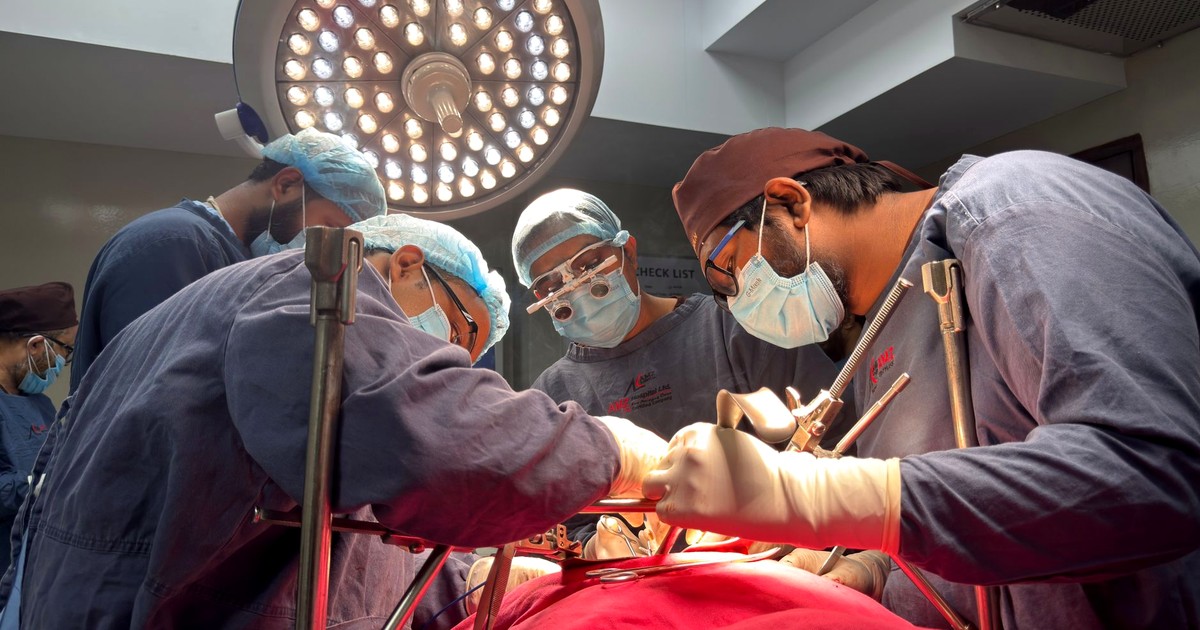
- Surgical Training: Hands-on experience in a wide range of open, endoscopic, laparoscopic, and robotic urological procedures. Residents progressively gain autonomy under supervision.
- Academic Sessions: Regular seminars, journal clubs, case presentations, grand rounds, and didactic lectures.
- Research & Thesis: Mandatory research project culminating in a dissertation, fostering critical thinking and scientific inquiry.
- Emergency Duties: Managing urological emergencies and providing on-call services.
- Conferences & Workshops: Encouragement to attend national and international conferences and workshops to stay updated with advancements.
Is M.Ch Urology worth the three-year duration for career prospects and salary?
Yes, pursuing an M.Ch in Urology is generally considered highly worthwhile given the excellent career prospects, high demand for specialists, and lucrative salary potential in India and globally. The intensive three-year duration equips graduates with advanced surgical skills and specialized knowledge that are highly valued in the medical field.
Upon completion of the M.Ch Urology, graduates can pursue various career paths:
- Consultant Urologist: Working in private hospitals, corporate hospitals, or government hospitals.
- Academician/Researcher: Joining medical colleges as faculty, involved in teaching and research.
- Private Practice: Establishing their own clinic or nursing home.
- Super-specialization: Further specializing in areas like Uro-oncology, Pediatric Urology, or Renal Transplantation.
Average Salary Ranges for M.Ch Urology Graduates (Annual, 2026 Tentative)
| Role | Experience Level | Annual Salary Range (INR) |
|---|---|---|
| Junior Consultant Urologist | 0-3 years post-M.Ch | ₹15,00,000 – ₹30,00,000 |
| Mid-level Consultant Urologist | 3-7 years post-M.Ch | ₹30,00,000 – ₹60,00,000 |
| Senior Consultant/HOD Urology | 7+ years post-M.Ch | ₹60,00,000 – ₹1,50,00,000+ |
| Academician (Assistant/Associate Professor) | Varies | ₹10,00,000 – ₹30,00,000 |
Salaries can vary significantly based on the hospital’s reputation, location (metro vs. non-metro), patient volume, and the individual’s surgical skills and experience.
How does M.Ch Urology compare to other super-specialty durations like DM or DNB?
The M.Ch Urology program, with its three-year duration, is comparable in length and academic rigor to other super-specialty degrees like Doctor of Medicine (DM) and Diplomate of National Board (DNB) Super Specialty programs. All these are advanced postgraduate qualifications pursued after a primary postgraduate degree (MD/MS).
- M.Ch (Master of Chirurgiae): Primarily a surgical super-specialty degree (e.g., Urology, Neurosurgery, Cardiothoracic Surgery). Duration is typically 3 years after MS.
- DM (Doctor of Medicine): Primarily a medical super-specialty degree (e.g., Cardiology, Neurology, Nephrology). Duration is typically 3 years after MD.
- DNB (Diplomate of National Board) Super Specialty: An equivalent qualification to M.Ch/DM, recognized by the National Board of Examinations in Medical Sciences (NBEMS). Duration is also typically 3 years after MD/MS.
The choice between M.Ch and DNB often depends on institutional preference and availability, as both are equally recognized for practice and academic positions.
Are there any options to shorten or extend the M.Ch Urology duration?
No, the M.Ch Urology duration is a fixed, full-time, three-year program as mandated by the National Medical Commission (NMC) and the respective universities. There are no provisions to shorten the duration. Extensions are typically only granted in exceptional circumstances, such as medical leave or other unforeseen events, and require official approval, potentially delaying graduation.
The curriculum is designed to be completed over three years, ensuring adequate exposure to clinical cases, surgical training, and research. Any deviation from this standard duration would compromise the comprehensive training required for a competent Urologist.
Explore more on FindMyCollege
Related pages for Master of Chirurgiae in Urology aspirants on findmycollege.com:
Frequently Asked Questions
What is the difference between M.Ch Urology and DNB Urology?
Both M.Ch Urology and DNB Urology are super-specialty qualifications in Urology and are recognized as equivalent for practice and academic purposes in India. M.Ch is awarded by universities, while DNB is awarded by the National Board of Examinations in Medical Sciences (NBEMS). The training structure and duration (3 years) are largely similar, though the institutions offering them and their examination patterns might differ slightly.
Can I pursue M.Ch Urology after an MD degree?
No, to pursue M.Ch Urology, you must have an M.S. (Master of Surgery) in General Surgery. An MD (Doctor of Medicine) degree is a prerequisite for medical super-specialties like DM (e.g., Cardiology, Nephrology), not surgical ones like M.Ch Urology.
Is there an age limit for M.Ch Urology admission in 2026?
Generally, there is no upper age limit specified for M.Ch Urology admission in India. Eligibility is primarily based on academic qualifications (MBBS, MS General Surgery) and performance in the NEET SS examination.
What kind of research is expected during the M.Ch Urology program?
During the M.Ch Urology program, residents are required to undertake a research project, typically culminating in a dissertation or thesis. This involves identifying a research question, designing a study, collecting and analyzing data, and presenting the findings. The research aims to contribute to the existing knowledge in urology and develop the resident’s critical thinking and scientific writing skills.
Are there any entrance exams other than NEET SS for M.Ch Urology?
For most M.Ch Urology seats in India, NEET SS is the primary and mandatory entrance examination. Some institutions, particularly certain deemed universities, might conduct their own entrance exams for a limited number of seats, but NEET SS remains the most significant gateway for admission to M.Ch programs across the country.
What are the career prospects for M.Ch Urology graduates abroad?
M.Ch Urology graduates from India are highly sought after globally. With additional licensing exams (e.g., USMLE for USA, PLAB for UK, AMC for Australia), they can pursue fellowships or practice as urologists in many countries. The comprehensive training received during the three-year program prepares them well for international opportunities.