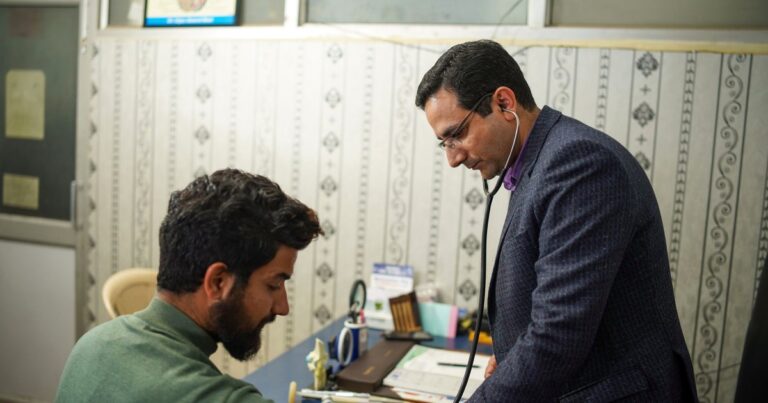

Master of Chirurgiae (M.Ch) in Urology: Scope & Career in India 2026
Nishit Kumar is a senior EdTech industry leader with over a decade of experience in building and scaling education platforms, shaping their product, content, and growth strategy. At…
Latest update: Master of Chirurgiae in Urology 2026 admissions & dates updated. Read more ›
The Master of Chirurgiae (M.Ch) in Urology is a highly specialized postgraduate medical degree focused on the diagnosis, treatment, and management of diseases of the male and female urinary tract, and the male reproductive system. This comprehensive guide provides an in-depth look at the M.Ch Urology scope and career prospects in India for 2026, addressing common questions posed by aspiring medical professionals and their families.
What is Master of Chirurgiae (M.Ch) in Urology?
M.Ch Urology is a super-specialty surgical training program designed to equip medical graduates with advanced knowledge and surgical skills in the field of urology. It typically spans three years after completing an MS/MD degree, focusing on both theoretical understanding and extensive practical, hands-on surgical experience.
Key Areas of Study in M.Ch Urology
- Uro-oncology: Cancers of the kidney, bladder, prostate, testes.
- Endourology: Minimally invasive procedures for stones, strictures.
- Laparoscopic Urology: Keyhole surgery for various urological conditions.
- Pediatric Urology: Urological issues in children.
- Female Urology: Incontinence, pelvic organ prolapse, voiding dysfunction.
- Andrology: Male infertility, erectile dysfunction, male sexual health.
- Renal Transplantation: Surgical aspects of kidney transplants.
- Reconstructive Urology: Repair of urinary tract defects.
What is the eligibility for Master of Chirurgiae in Urology in India?
To be eligible for M.Ch Urology, candidates must possess a recognized Master of Surgery (MS) degree in General Surgery from an MCI/NMC recognized institution. Additionally, they must clear a national-level or institutional entrance examination.
Detailed Eligibility Criteria for M.Ch Urology 2026
- Educational Qualification: MS (General Surgery) or an equivalent recognized postgraduate degree.
- Registration: Valid permanent registration with the Medical Council of India (MCI) or National Medical Commission (NMC) and/or State Medical Council.
- Entrance Exam: Qualification in NEET SS (National Eligibility cum Entrance Test for Super Specialty courses) is mandatory for most government and many private institutions. Some private universities may conduct their own entrance tests.
- Internship: Completion of a compulsory rotating internship.
- Age Limit: Generally, there is no upper age limit, but some institutions might have specific criteria.
How to get admission to M.Ch Urology in India for 2026?
Admission to M.Ch Urology programs in India is primarily through the NEET SS examination, followed by centralized counseling. The process involves application, examination, merit list publication, and subsequent counseling rounds.
M.Ch Urology Admission Process 2026 (NEET SS)
- NEET SS Application: Apply online for NEET SS, typically in July-August of the preceding year (e.g., 2025 for 2026 admissions).
- NEET SS Examination: Appear for the exam, usually held in September. The exam pattern includes 40% from the feeder broad specialty (General Surgery) and 60% from the super specialty (Urology).
- Result Declaration: NEET SS results are declared, usually in October.
- Counseling Registration: Register for centralized counseling conducted by the Medical Counseling Committee (MCC) for 50% All India Quota seats and deemed/central universities, or by respective state counseling authorities for state quota seats.
- Choice Filling & Locking: Select preferred colleges and specializations based on rank.
- Seat Allotment: Seats are allotted based on merit, choices, and availability.
- Reporting to College: Report to the allotted institution for document verification and admission formalities.
How much does Master of Chirurgiae in Urology cost in India?
The fee for M.Ch Urology varies significantly between government and private institutions, with government colleges being substantially more affordable due to subsidies. Private college fees can range from moderate to very high.
M.Ch Urology Fee Structure 2026 (Estimated Annual Range)
| Institution Type | Annual Fee Range (INR) |
|---|---|
| Government Colleges | ₹50,000 – ₹3,00,000 |
| Private Colleges/Deemed Universities | ₹10,00,000 – ₹35,00,000+ |
Note: These are estimated ranges for 2026 and can vary based on specific institutions, state policies, and management quotas. Additional costs include hostel fees, examination fees, and other miscellaneous charges.
Is Master of Chirurgiae in Urology worth it for jobs and career prospects?
Yes, M.Ch Urology is highly worth it for career prospects, offering excellent job opportunities, high earning potential, and significant professional satisfaction. Urologists are in high demand due to the increasing prevalence of urological conditions and the need for specialized surgical expertise.
Career Opportunities After M.Ch Urology
Graduates of M.Ch Urology have a wide array of career paths:
- Consultant Urologist: Working in private hospitals, corporate hospitals, or government hospitals.
- Academician/Professor: Teaching and research roles in medical colleges and universities.
- Researcher: Contributing to advancements in urological science and treatment.
- Private Practice: Establishing one’s own clinic or nursing home.
- Specialized Clinics: Focusing on areas like male infertility, stone clinic, or female urology.
- Medical Officer/Specialist: In armed forces or public health services.
What is the salary of a Urologist in India?
The salary of a Urologist in India is among the highest in the medical profession, reflecting the extensive training and specialized skills required. It varies significantly based on experience, location, type of hospital, and whether one is in private practice.
Urologist Salary in India 2026 (Estimated Annual Range)
| Experience Level | Annual Salary Range (INR) |
|---|---|
| Fresh M.Ch Graduate (Entry-Level) | ₹12,00,000 – ₹25,00,000 |
| Mid-Career (5-10 years experience) | ₹25,00,000 – ₹60,00,000 |
| Senior/Experienced (10+ years, Private Practice) | ₹60,00,000 – ₹1,50,00,000+ |
Note: These figures are highly variable. Urologists in metro cities, corporate hospitals, or successful private practices can earn significantly more. Performance-based incentives and surgical volume play a major role.
What are the top colleges for M.Ch Urology in India?
Several prestigious institutions across India offer high-quality M.Ch Urology programs, known for their clinical exposure, faculty, and research opportunities.
Leading M.Ch Urology Colleges (Illustrative List, not exhaustive)
- All India Institute of Medical Sciences (AIIMS), New Delhi
- Postgraduate Institute of Medical Education and Research (PGIMER), Chandigarh
- Jawaharlal Institute of Postgraduate Medical Education and Research (JIPMER), Puducherry
- Sanjay Gandhi Postgraduate Institute of Medical Sciences (SGPGIMS), Lucknow
- King George’s Medical University (KGMU), Lucknow
- Institute of Kidney Diseases and Research Centre (IKDRC), Ahmedabad
- Christian Medical College (CMC), Vellore
- Seth GS Medical College and KEM Hospital, Mumbai
- Grant Medical College and Sir JJ Group of Hospitals, Mumbai
- Madras Medical College, Chennai
What are the pros and cons of pursuing M.Ch Urology?
Like any super-specialty, M.Ch Urology comes with its unique set of advantages and challenges.
Pros of M.Ch Urology
- High Demand: Constant need for skilled urologists.
- Excellent Earning Potential: Among the highest-paid medical specialists.
- Intellectual Stimulation: Diverse range of conditions, complex surgeries, and continuous advancements.
- Impactful Work: Directly improving patients’ quality of life.
- Specialization Options: Further sub-specialization possible (e.g., uro-oncology, andrology).
- Respect and Prestige: Highly regarded medical profession.
Cons of M.Ch Urology
- Long and Rigorous Training: Requires significant dedication (MS + M.Ch = 6-8 years post-MBBS).
- High Stress and Pressure: Demanding surgical environment, long hours, dealing with critical cases.
- Competitive Admission: Very few seats and intense competition for M.Ch programs.
- Physical Demands: Long hours in the operating room.
- Emotional Toll: Dealing with serious illnesses and patient outcomes.
- High Cost of Education: Especially in private institutions.
Explore more on FindMyCollege
Related pages for Master of Chirurgiae in Urology aspirants on findmycollege.com:
Frequently Asked Questions
Is M.Ch Urology harder than MS General Surgery?
M.Ch Urology is generally considered harder and more specialized than MS General Surgery. It requires a deeper understanding of urological anatomy and physiology, advanced surgical techniques, and a higher level of precision and decision-making, building upon the foundational knowledge of general surgery.
Can I pursue M.Ch Urology after MD Medicine?
No, you cannot pursue M.Ch Urology directly after MD Medicine. The feeder qualification for M.Ch Urology is an MS (General Surgery) degree. MD Medicine graduates typically pursue super-specialties like DM Nephrology or DM Medical Oncology.
What is the difference between M.Ch Urology and DNB Urology?
Both M.Ch Urology and DNB Urology are recognized super-specialty qualifications in Urology. M.Ch is typically offered by universities and medical colleges, while DNB (Diplomate of National Board) is awarded by the National Board of Examinations (NBE). Both are considered equivalent for practice and academic purposes, though M.Ch often involves more structured university-based teaching and research components.
Are there any sub-specializations after M.Ch Urology?
Yes, after M.Ch Urology, many specialists pursue fellowships or further training in sub-specialties such as Uro-oncology, Endourology, Pediatric Urology, Andrology, Female Urology, or Renal Transplantation. These fellowships can be in India or abroad and typically last 1-2 years.
What is the future scope of Urology in India?
The future scope of Urology in India is excellent. With an aging population, increasing awareness of urological health, advancements in minimally invasive surgery (robotics, laparoscopy), and rising prevalence of lifestyle diseases (diabetes leading to kidney issues), the demand for skilled urologists is projected to grow significantly. Telemedicine and remote consultations are also emerging areas.
How competitive is NEET SS for M.Ch Urology?
NEET SS for M.Ch Urology is highly competitive. There are a limited number of seats available across India, and thousands of MS General Surgery graduates compete for them. A very high rank in NEET SS is usually required to secure a seat in a good government institution.