Bar Council of Maharashtra and Goa enrollment: fees fixed at ₹750 for general category
In short
- The Bar Council of Maharashtra and Goa enrolls advocates for legal practice in its jurisdiction, operating from 2nd Floor, High Court Extension, Fort, Mumbai- 400032.
- Eligibility requires an Indian national aged 21 or older with a recognised law degree, with no upper age limit for enrollment.
- A Supreme Court decision on 30 July 2024, in Gaurav Kumar v. Union of India, fixed the maximum enrollment fee at ₹750 for general category and ₹125 for SC/ST advocates.
- State Bar Councils cannot charge additional amounts for 'miscellaneous fee,' 'stamp duty,' or other charges beyond the prescribed enrollment fee.
- After enrollment and receiving a Sanad, advocates must clear the All India Bar Examination (AIBE) to obtain a certificate of practice from the Bar Council of India.
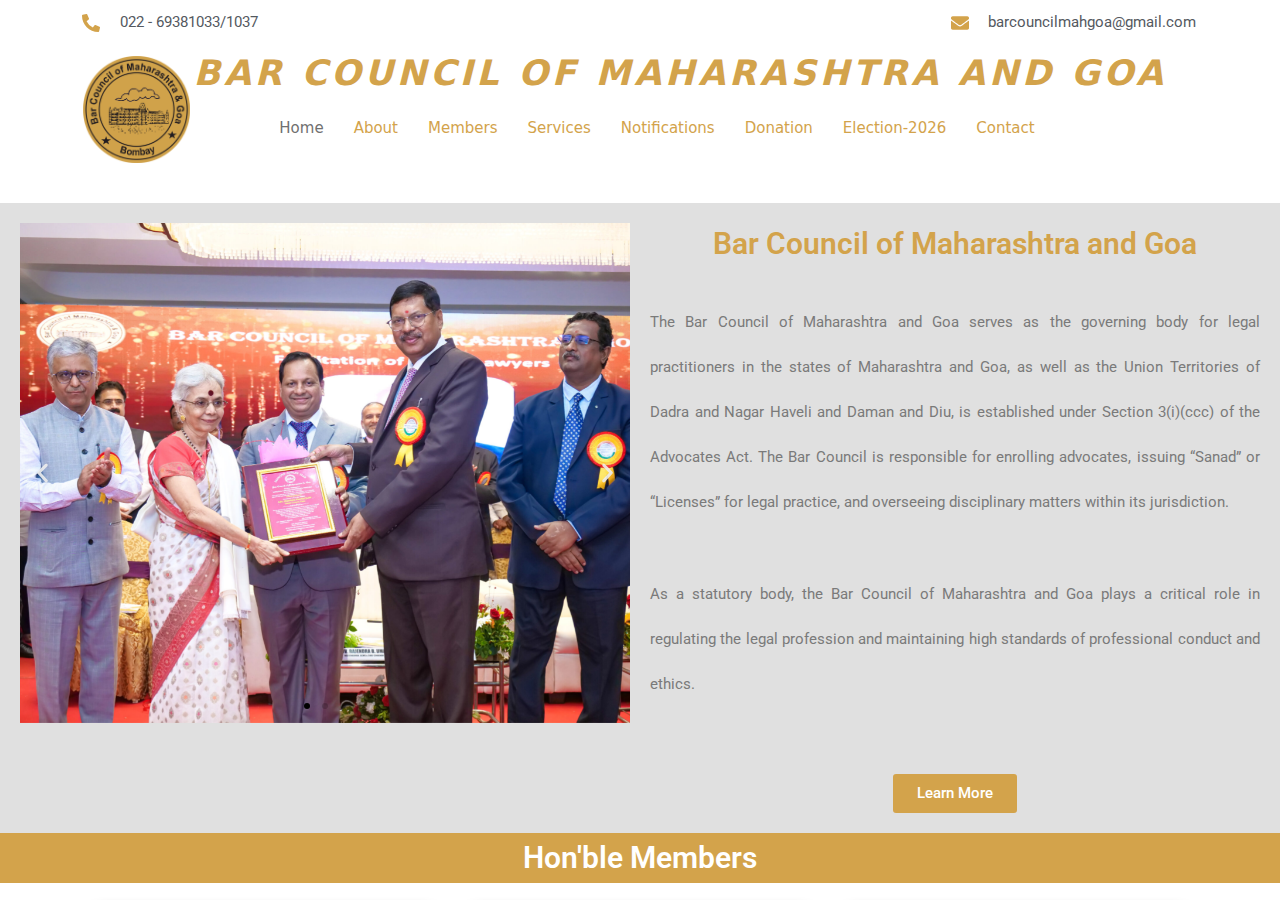
The Bar Council of Maharashtra and Goa is the statutory body responsible for the enrollment of advocates who wish to practice law in India, specifically within Maharashtra, Goa, Dadra and Nagar Haveli, and Daman and Diu. Established under Section 3(i)(ccc) of the Advocates Act, the Council issues ‘Sanad’ or ‘Licenses’ for legal practice and oversees disciplinary matters.
A significant Supreme Court decision on 30 July 2024, with Gaurav Kumar v. Union of India, has standardised the enrollment fees for advocates across the country, including for the Bar Council of Maharashtra and Goa. This ruling aims to eliminate varied and often high fees previously charged by State Bar Councils, which Chief Justice DY Chandrachud noted created barriers for marginalized individuals.
Eligibility for Advocate Enrollment
To be eligible for admission as an advocate with the Bar Council of Maharashtra and Goa, applicants must meet specific criteria. A primary requirement is the possession of a law degree from a university recognised by the Bar Council of India. This can include a 5-year integrated law course completed after 10+2, a 3-year law course pursued after graduation, or a law degree obtained from a foreign university that has been recognised by the Bar Council of India.
On top of educational qualifications, applicants must be Indian nationals and at least 21 years old. There is no specified upper age limit for enrollment. Also, applicants are required to satisfy any other conditions that may be specified by the State Bar Council through its rules.
Standardised Enrollment Fees
The Supreme Court’s decision on 30 July 2024, in the Gaurav Kumar v. Union of India case, has fixed the enrollment fees for advocates, which State Bar Councils and the Bar Council of India must adhere to. This ruling applies prospectively, meaning it affects only future enrollments and does not require refunds for previously paid excessive fees. The Court clarified that State Bar Councils cannot impose additional charges under categories such as ‘miscellaneous fee,’ ‘stamp duty,’ or other charges, as the Advocates Act does not support such additional fees for enrollment.
The prescribed fee structure, as per Section 24(1)(f) of the Advocates Act 1961 and affirmed by the Supreme Court, is now capped. While Bar Councils can charge for other services, these cannot be integrated into the enrollment fee itself. The Supreme Court emphasised that Section 24(1)(f) of the Advocates Act, a fiscal regulation, must be strictly followed.
| Category | Maximum Enrollment Fee | State Bar Council Share | Bar Council of India Share |
|---|---|---|---|
| General Category | ₹750 | ₹600 | ₹150 |
| SC/ST Category | ₹125 | ₹100 | ₹25 |
Process After Enrollment
After successfully enrolling with the Bar Council of Maharashtra and Goa and the Bar Council of India, an advocate receives their ‘Sanad’ along with a unique enrollment number. This ‘Sanad’ serves as the official license that permits law graduates to practice as advocates across India. This initial enrollment is a crucial step towards a legal career, as confirmed by the Bar Council of Maharashtra and Goa.
However, obtaining the ‘Sanad’ does not immediately grant the correct to practice law. Advocates must next clear the All India Bar Examination (AIBE). Passing the AIBE is mandatory to receive a certificate of practice from the Bar Council of India, which is the final requirement to commence legal practice. Applicants are advised to check their email regularly for updates and compliance notifications and to preserve required documents in scan format to avoid delays in filling out online forms, based on what the Bar Council of Maharashtra and Goa.

Further reading
📰 More Education News
- JAM 2026 scores accepted by 22 IITs, 20 NITs, IISc for 2,000 postgraduate seatsOct 19, 2026 • Nishit Kumar
- AIBE 22: Register by October 27 for November 29 examOct 19, 2026 • Nishit Kumar
- B.Pharma: Apply for 2026-27 admissions in Bhimavaram nowOct 19, 2026 • Nishit Kumar
- Apply for Sikkim B.Pharma admissions by October 18, 2026Oct 19, 2026 • Nishit Kumar